| This is an old, no longer maintained version of the website, for new one please visit: http://gsn.io.gliwice.pl |
|
|
|
|
|
|
||||

            |
 |

Gliwice Scientific Meetings 2010 ~~~ Poster abstracts ~~~ 1. SPLICE VARIANTS OF FJ 194940.1 GENE IN COLORECTAL CANCER
M. Bartczak1, M. Balcerczak2, A. Sałagacka1, M. Mirowski1, E. Balcerczak1
1Molecular Biology Laboratory Department of
Pharmaceutical Biochemistry, Faculty
Recently, sequence of whole transcript of FJ194940.1 gene was determined. Bioinformatical analysis has enabled us to establish genomic sequence of FJ 194940.1 gene, its chromosomal localization, and potential exon-intron structure. The aim of this study was to confirm potential exon-intron structure of FJ 194940. 1 gene, and to demonstrate the occurrence of alternatve splicing of the gene in colon cancer cells. To assess the usefulness of splice variants of FJ 194940.1 gene as a prognostic marker in colorectal cancer, the expression of particular exons and junctions between them and some histological features, grade and clinical stage of the neoplasm were compared. All investigated colon cancer cases (n=77) showed PCR products for possible exons V and also for junction I/II. Using primers complementary to exons II, III, IV and to junctions II/III, III/IV and IV/V the PCR products were present irregularly. The statistically significant correlations between present or absent exon II, junction I/II and II/III and grade of malignancy (p=0.04426) were determined. Exon II and junction I/II, II/III were present in more advanced cases, classified as G2 and G3, whereas in cases classified as G1 we probably observed possible splice variants of FJ 194940.1 gene that do not have at least one of this elements. We have also found a statistically significant dependence between present or absent exons IV and V and junctions III/IV and IV/V and grade of malignancy (p=0.00002). In G1 and G2 cases all these parts of transcript FJ 194940.1 gene were present, whereas in cases classified as G3 absence at least one of this elements was observed. This data suggest that FJ 194940.1 gene undergoes alternative splicing. The presence of all components of the first part of transcript and the absence of at least one of the elements in the second part of transcript is associated with better prognosis for patients.
Grant support: Medical University of Lodz, Poland 503-30-15-2.
2. NEW TISSUE SPECIFIC RUK/CIN85 FORM IN NORMAL AND TRANSFORMED HUMAN THYROID TISSUES
O.I. Basaraba1, Ya.P. Bobak2, G.V. Pasichnyk1, V.I. Kolomiytsev3, L.B. Drobot1
1Palladin Institute of Biochemistry, National
Academy of Sciences of Ukraine, Kiev, Ukraine; 2Institute of Cell
Biology, National Academy of Sciences of Ukraine, Lviv, Ukraine;
Tumorigenesis is a multistep process that involves genetic alterations driving the progressive transformation of normal cells into the malignant phenotype and is characterized by a dysregulation of numerous signalling pathways. One of the key components of the signalling networks involved in the control of cell physiology are adapter/scaffold proteins. In particular, by binding to numerous effector proteins the adapter protein Ruk/CIN85 assembles multimeric complexes implicated in down-regulation of receptor tyrosine kinases, negative regulation of PI 3-kinase, cytoskeleton reorganization, adhesion and invasion phenomena, etc. Ruk/CIN85 includes three N-terminal SH3 domains followed by proline- and serine-rich regions and C-terminal coiled-coil domain. Its multiple splice variants revealed up to date in a wide variety of cell types and tissues are truncated from N-terminus. Study of Ruk/CIN85 expression in samples of benign adenoma, adenocarcinoma and adjacent thyroid tissues using monoclonal antibody to N-terminal SH3A domain of Ruk/CIN85 revealed the presence of immunoreactive band that corresponds to protein with apparent molecular weights of 85 kDa. Using anti-RukS antibodies to C-terminal region of the analyzed protein, Ruk/CIN85 forms of 140, 100, 85, 70, 56, 40 and 34 kDa were detected in the majority normal and transformed thyroid tissue samples. Down-regulation of p85 was revealed in the majority of thyroid tumor samples in comparison with adjacent tissue samples. Additional feature of Ruk/CIN85 expression patterns in thyroid tissues is the presence of full-length p85 form in Triton X-100-derived extracts of normal adjacent tissues whereas it was not detected in the corresponding extracts of both benign adenoma and adenocarcinoma samples and was revealed only in the total fraction of SDS-soluble proteins. These data may reflect possible subcellular redistribution of p85 already at early stages of thyroid carcinogenesis. Taken together, these studies demonstrate that Ruk/CIN85 may represent a new prognostic molecular marker/therapeutic target in thyroid cancer.
3. EFFECTS OF UV RADIATION ON CANCER CELL LINES
M. Bieniek1, A. Chudzikiewicz1, A. Cichońska1, A. Ochab1, A. Cieślar-Pobuda2, S. Student2 , R. Bułdak3, M. Skonieczna2
1Student of the Faculty Of Automatic
Control, Electronics And Computer Science, Silesian University of Technology,
Gliwice, Poland; 2System Engineering Group, Institute
UV radiation may cause different effects in living organisms. On the molecular level one of them is the formation of double-stranded DNA breaks (DSBs) which is the most lethal type of DNA damage. These breaks trigger a series of cellular response mechanisms like phosphorylation of histone H2AX in Ser139 position. Phosphorylated histone (denoted as: γ-H2AX) can be measured using fluorescent microscopy as a number of nuclear foci per cell. During UV irradiation reactive oxygen species (ROS) are also generated. In the normal metabolism about 1-5% of O2 is transformed into ROS. Elevated levels of reactive oxygen species induce oxidative stress and cell damage. Reactive oxygen species interact with DNA and lead to its oxidative damage, resulting in single base damage, DNA strand breakage or adduct formation. Oxidative stress increases the metastatic potential, since it reduces cell adhesion to laminin and fibronectin, both of which are extracellular matrix proteins (ECM). During conformational changes of proMMP, active metalloproteinases (MMPs) responsible for the degradation of ECM are produced. This step is a prerequisite for the tumor cell migration after UV treatment. Especially MMP-2 (gelatinase A) and MMP-9 (gelatinase B) increase invasion, migration and metastasic abilities of tumor cells. After exposure to UV the behavior of irradiated cells changes, and some of them start to migrate outside the irradiated field. The main aim of this study was to assess the ROS and γ-H2AX levels in different cancer cell lines (Raji, HCT 116 p53+/+, HCT 116 p53-/- and Me45) after exposure to UV (2000 J/m2). In the Wound Healing Test the migration was studied by observing the cancer cells irradiated with 500, 1000 and 1500 J/m2 of UV radiation. The effects were observed at various time points after irradiation: for ROS and γ-H2AX assays were performed after 0, 1, 2 and 3h, and for Wound Healing Test, after 24, 48 and 72h, respectively. Additionally, expressions of some genes from the “DNA damage and repair” pathway were studied by the real-time RT-PCR reaction. The results confirmed that the effects of UV radiation in the studied cancer cells were dose-dependent, especially in in vitro experiments. The level of ROS, compared to the non-irradiated control cells, changed in time, similar to the level of DNA double-strand breaks detected as the histone γ-H2AX. Wound healing test showed lethal effects for doses above 500 J/m2 of UV, since only control cells and cells irradiated by lower doses of UV migrated efficiently. ROS and histone γ-H2AX levels induced by UV decreased at later time points, owing to protective mechanisms and DNA break repair processes activated in cancer cells.
This work was
supported by grants No. N N 518497639 from the Polish Ministry of Education and
Science,
4. MIXTURE MODEL OF NMR AND ITS APPLICATION TO DIAGNOSIS AND TREATMENT OF BRAIN CANCER
Franciszek Bińczyk1, Joanna Polańska1, Rafał Tarnawski2
1Institute of Automatic Control, Silesian University of Technology, Gliwice;
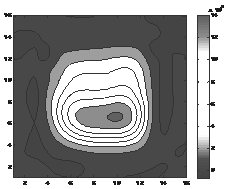
The aim of this project was to develop a system for pre-processing and modeling of NMR spectra. Such a system was used to determine impact of parameters and different modeling techniques on estimated tumor size. Medical data were collected at the Institute of Oncology in Gliwice. The data were originated from healthy individuals and from patients with tumors of different kind and stage. It was also possible to process spectra taken for patients undergoing treatment (after surgery). The first step was to study NMR phenomena to ensure what kind of data must be extracted and what kind of results is expected. All necessary constraints and demands were examined. During our investigation most commonly used methods for removing distortion from data were examined and implemented. It was necessary to remove baseline from the spectrum before modeling. Wander method was chosen, from all the examined ones, because the results obtained with it were satisfactory (according to assumed spectrum quality measure). Next step was devoted to noise removal. Savitzky - Golay filter was chosen as a proper one and its parameters were set according to an assumption that SNR in case of 1H MRS should be equal 5%. Methods of spectrum quality improvement, such as zero filling and phase correction, were implemented as well. Mixture model was created using a mean spectrum calculated from all voxels placed in tested area. Expectation-Maximization modeling algorithm was examined and its most proper application was discussed and implemented into the final software solution. Proper model was chosen by means of Bayesian Information Criterion. Worth noticing is that EM was performed only once for every patient. The obtained parameters/model were used to determine the amount of distinct metabolite visible in 1H human brain MRS. In line with the demand that data must be presented with reference it is possible to choose proper one before final computations. Results were reorganized in the same order as voxel placement in area under investigation. To improve quality of obtained heat map, the result matrices were spanned. Final results (Fig.1) were compared with MRI image. This idea enabled us to conclude whether it is possible to estimate tumor placement and size. Results of our computations are satisfactory, e.g. it is visible that metabolites which are not present in healthy voxels are visible in tumor parts, so the project will be continued in the future. In the next step we will investigate border area of tumors to check influence of treatment on tumor growth.
Fig.1. Example of heat map returned for tested area.
This work was partially supported by the grant MNiSW, N N402 350638.
5. PHYSICAL AND BIOLOGICAL STUDIES OF PHTHALOCYANINE DERIVATIVES – POSSIBLE PHOTOSENSITIZERS FOR PDT
B. Boroń1,
A. Szurko1,3, M. Rams-Baron1, R. Wrzalik1, J.
Nackiewicz2, K. Balin1,
1A. Chełkowski Institute of
Physics, University of Silesia, Katowice, Poland; 2Institute
Photodynamic therapy (PDT) is a novel modality in cancer treatment. It requires the presence of three factors which in cooperation lead to the destruction of cellular structures: a chemical compound called photosensitizer (which should selectively accumulate in cancer cells), molecular oxygen, and irradiation with light of appropriate wavelength (consistent with the absorption spectrum of such photosensitizer). Phthalocyanines and its derivatives are interesting candidates for photodynamic therapy because of their chemical structure which is closely related to some naturally occurring chromophores. In comparison with porphyrins, the phthalocyanines have absorption maxima shifted towards longer wavelengths which makes them potentially better photosensitizers. Two phthalocyanine derivatives were investigated in this study: a zinc (ZnPcOC) and a copper (CuPcOC) octacarboxyphthalocyanines. Examination of physical properties is usually the first step in determining PDT usefulness of a photosensitizer. The absorption spectra of zinc and copper octacarboxy-phthalocyanines in DMSO were recorded at two concentrations (0.5 and 5 μmol/dm3) and this yielded information about absorption maxima of these compounds. The fluorescence spectra recorded for the same concentrations of compounds gave information about interactions between the investigated compounds and the solvent used (DMSO). XPS spectroscopy was applied to determine chemical composition of the investigated compounds and the kind of chemical surroundings of each element in the molecule. IR and Raman spectroscopic investigations were carried out to confirm chemical composition of the compounds. In addition, this allowed identifying functional groups present in the analyzed compounds. Physical scrutiny of both octacarboxyphthalocyanine derivatives was supplemented by biological studies of their in vitro properties using the HCT 116 +/+ (Human Colon Carcinoma) cell line. Dark cytotoxicity of ZnPcOC or CuPcOC was examined at several concentrations (0.5 - 12 μmol/dm3 range). MTS assays were performed in order to assess the fraction of cells surviving the 24-hour incubation with a given compound. The ability of photosensitizers to accumulate in HCT 116 cells was assessed by checking cell lysate fluorescence at appropriate wavelengths (consistent with the absorbance spectrum of the respective photosensitizer). The lysates were obtained through detergent addition to cell cultures incubated with either compound for various time periods. The photocytotoxicity of both octacarboxyphthalocyanine derivatives was investigated for several concentrations and for two incubation periods (24 and 48 hours). Upon termination of incubation the cell cultures were irradiated with laser light of appropriate wavelength and MTS assay performed after additional 24 hours.
This study was supported by the Polish Ministry of Science and Higher Education (grant No. 0538/R/T02/2007/03). 6. Effects of high electric field pulses on human cell lines
Anna Choromańska1, Nina Skołucka1,
Małgorzata Daczewska2, Jolanta Saczko1,
1Department of Medical Biochemistry, Medical
University, Chalubinskiego 10 St., 50-368 Wroclaw, Poland; 2Department of General Zoology, Zoological Institute,
University
Cell membranes are sensitive to electromagnetic fields. Under certain conditions plasma membrane of a cell loses its continuity. This phenomenon is used in electroporation. Its exact mechanism is still not fully understood. Due to their small size, combined with their very high dynamics, electropores cannot be visually observed. This new pathway into the cytoplasm is non-selective and only controlled by the electric field parameters. Electroporation is regarded as the cleanest method of gene transfection, i.e. introducing foreign molecules into a cell. Electrically supported transport of drugs into cells has led to the development of electrochemotherapy (ECT). The barrier function of plasma membrane of normal human (gingival) fibroblasts and a cancer (breast adenocarcinoma) cell line exposed to high electric field was examined by ultrastructural analysis using an electron emission microscope (Zeiss EM 900) and the viability test (MTT assay). We investigated the effect of different parameters of electroporation (100, 400, 700, 800 or 1000 V/cm, 50 ms, 5 impulses). We used two thin stainless-steel parallel electrode plates placed 4 mm apart. The cytotoxicity effects in both cell lines were dependent on electroporation conditions. This technique can possibly be applied with success in chemotherapy to deliver drugs into tumor cells, because no significant ultrastructural changes can be observed.
7. A Novel Strategy
to Compare 3D Protein Structures Based
Paweł Daniluk, Bogdan Lesyng
Department of
Biophysics and CoE BioExploratorium, Faculty of Physics, University
Assessing similarities between proteins has always been a key problem in bioinformatics and molecular biophysics. Traditional solutions originate from the Smith-Waterman dynamic-programming algorithm, which has been in many ways generalized from comparing one-dimensional sequences to spatial structures. The problem itself is crucial in many biological contexts, such as searching for evolutionarily-related proteins, reconstructing filogenetic trees, protein modeling or various drug-design applications. Presently used methods pose many problems with so-called difficult similarities, which either contain sequential permutations or spatial distortions. Therefore, a demand exists for a robust and efficient approach overcoming these difficulties and this may lead to discoveries of previously unknown structural relationships. We present a novel strategy for the protein structure comparison based on formalism of the so-called “local descriptors of protein structure”. We demonstrate capabilities of this strategy in finding non-sequential and non-rigid-body alignments. When tested on difficult hand-curated alignments it is capable of achieving a 77% accuracy, whereas a commonly used state-of-the-art method- (DALI) exhibits a 60% accuracy. A multiple structure comparison approach is under development, and its basics will be briefly reported. A DEDAL service, capable of comparing pairs of structures, is available online at http://bioexploratorium.pl/EP/DEDAL.
Acknowledgements: These studies were supported by the MNiSW grant (2437/B/P01/2009/36).
8. Fuzzy Analysis in modelling OF magnetic membranes PARAMETERS
Gabriela Dudek, Aleksandra
Rybak, Monika Krasowska, Anna Strzelewicz,
Department of Physical Chemistry and Technology of Polymers, Faculty of Chemistry, Silesian University of Technology, Strzody 9, 44-100 Gliwice, Poland.
Oxygen has many commercial, industrial, and other uses that can be classified into four major categories: metallurgy, rocketry, chemical synthesis, and medicine. The best-known medical application of oxygen is in oxygen therapy, where patients who are having trouble breathing are given doses of pure or nearly pure oxygen. Oxygen is used in the treatment of a number of illnesses and states with underlying hypoxia, in surgery (heart or congenital defects), to control anaerobic infections, to increase the effectiveness of radiotherapy for malignant neoplasms, and in a number of other diseases. Oxygen can be separated by a number of methods and then either used immediately or stored for future use. The main types of sources for oxygen therapy are liquid storage (liquid oxygen is stored in chilled tanks), compressed gas storage (the oxygen gas is compressed in a gas cylinder), and instant usage (an electrically powered oxygen concentrator can create sufficient oxygen for a patient to use immediately). In our previous papers we proposed a concept of enriching air in oxygen by polymer membranes filled with neodymium powder and magnetized (“magnetic membranes”). The idea of implementing some external fields as a principle for gas mixtures separation (air in our case) is very promising. The idea of “magnetic membranes” is based on the observation that oxygen and nitrogen have quite different magnetic properties, i.e. oxygen is paramagnetic whereas nitrogen diamagnetic, which gives a real chance for their separation. Using fuzzy set theory, we created a system which helps to predict the best parameters of the magnetic membrane. We used the Mamdani model implemented in the Fuzzy Logic Toolbox in Matlab. As inputs in our system we took the following parameters: kind of polymer, magnetic induction, kind, amount and granulation of magnetic powder. Better estimates of membrane parameters will allow to obtain greater enrichment of air in oxygen. Choosing the best values of the magnetic membrane parameters can be very efficient and quick thanks to the fuzzy set theory.
9. THE INFLUENCE OF NOVEL ANALOGS OF VITAMIN D3 ON THE ANTIPROLIFERATIVE ACTIVITY OF TAMOXIFEN ON HUMAN BREAST CANCER CELL LINE MCF-7
B. Filip1, M. Milczarek1, A. Martowicz1, A. Kutner2,J. Wietrzyk1
1Department of Experimental Oncology, Ludwik
Hirszfeld Institute of Immunology
The analogs of vitamin D3 named PRI-2191, PRI-2201, PRI-2202, PRI-2205 were previously tested for their antiproliferative activity against different cancer cell lines. In general, all compounds have revealed similar or higher activity in cancer cell growth inhibition tests, as compared to calcitriol. In this paper, the effect of in vitro pretreatment with calcitriol (or its above-mentioned analogs) on antiproliferative activity of tamoxifen has been evaluated using MCF-7 cells. The cells were exposed to various concentrations of calcitriol, PRI-2191, PRI-2201, PRI-2202 or PRI-2205 and tamoxifen. The cytostatic effect was measured by the SRB assay and then the results were reported as IC50 (the half maximal inhibitory concentration), i.e. the dose of the tested compound which inhibits proliferation of cancer cells by 50%. The in vitro study of combined treatment with vitamin D3 analogs and tamoxifen using MCF-7 cell line showed an increase in cell proliferation inhibition when compared to tamoxifen alone. This effect was obtained by using lower doses of analogs (10, 1 or 0.1nM) or tamoxifen (1µg/ml). Using vitamin D analogs at the dose of 10 or 1nM allows reducing the dose of tamoxifen by 50% and still the same level of inhibition of cancer cell growth can be observed. Moreover, 100nM of PRI-2201 allows to decrease the tamoxifen dose up to 11.5 times. Cell cycle analysis showed an increase in the percentage of cells in G0/G1 phase and a decrease of those in S phase, when cells were treated with calcitriol or its analogs combined with 1µg/ml of tamoxifen. The highest percentage of cells in G0/G1 phase was obtained for tamoxifen combined with calcitriol or PRI-2201. Analogs used alone did not influence the cell cycle. We previously demonstrated synergistic antiproliferative activity of 1,24-(OH)2D3 in combination with some known antitumor drugs using an HL-60 human leukemia model [1, 2]. The antitumor effect of PRI-2191, PRI-2202 and PRI-2205, combined with cytostatics in mice mammary and lung cancer models was also evaluated [3].The results presented suggest that the improved therapeutic effect may be achieved in vivo by the combined application of the analogs of calcitriol (without calcemic activity) with antitumor agents also on human breast cancer cell line.
Keywords: calcitriol; vitamin D3 analogs antiproliferative activity References: [1]. Opolski A, Wietrzyk J, Siwinska A, Marcinkowska E, Chrobak, A. Radzikowski C, et al., Biological activity in vitro of sidechain modified analogues of calcitriol. Curr Pharm Des 2000;6:755–65. [2]. Siwinska A, Opolski A, Chrobak A, Wietrzyk J, Wojdat E, Kutner A, et al., Potentiation of the antiproliferative effect in vitro of doxorubicin, cisplatin and genistein by new analogues of vitamin D. Anticancer Res 2001;21:1925–9. [3]. Wietrzyk J., Nevozhay D., Filip B., Milczarek
M., Kutner A., The antitumor effect of lowered doses
10. THE HSPA2 OVEREXPRESION PREVENTS APOPTOSIS ACTIVATED BY BORTEZOMIB TREATMENT
Piotr
Filipczak1,2, Wojciech Pigłowski2, Magdalena
Głowala-Kosińska2,
1Centre of Polymer and Carbon Materials, Polish Academy of Sciences, Zabrze, Poland; 2Center for Translational Research and Molecular Biology of Cancer, Maria Skłodowska-Curie Memorial Cancer Center and Institute of Oncology, Gliwice Branch, Gliwice Poland; 3Department of Organic Chemistry, Bioorganic Chemistry and Biotechnology, Silesian University of Technology, Gliwice, Poland.
HSPA (HSP70) proteins are molecular chaperones and well-characterized cytoprotective agents. They can prevent toxic effects of various kinds of stress, such as hyperthermia, oxidative stress, drug treatment or radiation. The common feature of these chaperones is their ability to bind to other proteins and to stabilize their structure and to facilitate acquisition of proper conformation. The HSPA2 protein, which is a member of HSPA family, was first detected as spermatocyte-specific chaperone, crucial for meiotic division. Recently its expression has been detected in various specialized somatic cell types. The activation of HSPA2 expression was also reported by us in many cancer cell lines and in primary tumors. However, the role of this protein in somatic and cancer cells remains poorly characterized. The present work was aimed to determine whether the HSPA2 overexpression influences the resistance of normal somatic cells to various kinds of cytotoxic stimuli. To perform our study we created an in vitro model based on V79 Chinese hamster fibroblasts. By retroviral gene transfer, we developed two heterogenic cell pools: one transduced with the vector carrying HSPA2 coding sequence under the constitutive CMV promoter and another, transduced with the control vector. Next, we analyzed resistance of obtained cells to different cytotoxic agents used in cancer therapy. We found that the HSPA2 overexpression increased viability and reduced mortality of V79 fibroblasts treated with bortezomib and heat shock. On the other hand, no differences in cell pools sensitivity (control versus HSPA2-overexpressing) were observed after treatment with ionizing radiation, antimitotic drugs and DNA-damage inducing agents. Both V79 pools exposed to bortezomib intensively entered G2 arrest what resulted in induction of apoptotic death. In analyzed cells bortezomib treatment activates caspase-dependent apoptosis pathway. Cell cycle analysis and TUNEL assay analysis showed that in HSPA2-overexpressing cells the rate of apoptosis was significantly lower. Taking together, our results revealed that HSPA2 acts as an antiapoptotic agent able to specifically protect V79 fibroblasts against harmful effects of proteotoxic stress caused by bortezomib.
11. HSPA2 EXPRESSION AND FUNCTIONAL SIGNIFICANCE IN NON-SMALL CELL LUNG CARCINOMA
Piotr Filipczak1,2,
Aleksandra Rusin2, Wojciech Pigłowski2, Zdzisław Krawczyk2,3,
1Centre of Polymer and Carbon Materials, Polish Academy of Sciences, Zabrze, Poland; 2Center for Translational Research and Molecular Biology of Cancer, Maria Skłodowska-Curie Memorial Cancer Center and Institute of Oncology, Gliwice Branch, Gliwice Poland; 3Department of Organic Chemistry, Bioorganic Chemistry and Biotechnology, Silesian University of Technology, Gliwice, Poland.
HSPA2 is the member of heat shock protein HSPA (HSP70) family, originally found in spermatocytes as a protein crucial for meiotic division. HSPA2 is expressed in cell-type specific manner in some normal somatic tissues, however, its high level has been detected in various cancer cell lines and primary tumors. It has been also found that inhibition of HSPA2 expression in breast and bladder cancer cell lines my affect cells proliferation and viability. The presented study aims to investigate the HSPA2 protein expression in non-small cell lung carcinoma (NSCLC) primary tumors and to characterize possible role of HSPA2 in NSCLC cancer cell lines. In normal lung HSPA2 protein was found only in bronchial epithelium. Analysis of primary lung squamous cell carcinoma cases (n=61) showed that HSPA2 protein is expressed in 61% of tumors. The HSPA2 expression was more frequently detected in lower volume tumors (T2 versus T3, p=0.005). There was also a strong tendency for less frequent HSPA2 expression at more advanced stages (IB/IIIB, 74%/44%). Thus, the results of immunohistochemistry indicate that HSPA2 expression can be downregulated during NSCLC progression. To search for functional significance of HSPA2 expression in NSCLC, we performed an in vitro study in NCI-H1299 cells which express HSPA2 at high level. The HSPA2 expression was downregulated in these cells by retroviral RNAi-inducing constructs. Two stable pools of cells were established (antibiotic selection after transduction): one, with significantly reduced HSPA2 synthesis and the control with unaffected HSPA2 level. Surprisingly, no differences in proliferation rate were observed between both pools cultured under normal conditions. Subsequently, cells were screened for its sensitivity to the drugs used in lung cancer therapy. The HSPA2-negative cells sustained higher proliferation potential and showed lower mortality after cisplatin treatment than the control. Analysis of LC3-GFP protein localization indicated that cisplatin triggers macroautophagy in NCI-H1299 cells. In the HspA2-negative cells treated with cisplatin lysosomal fraction increase was significantly higher what suggests more intensive global pro-survival autophagy. Taking together, our study showed that HSPA2 is synthesized efficiently in NSCLC primary tumors and its level decreases during progression of disease. Downregulation of HSPA2 in NCI-H1299 cells increased their resistance to cisplatin treatment. Mechanism of this phenomenon is unknown at present, however our preliminary results suggest that HSPA2 can affect effector phase of autophagy and finally sensitize NCI-H1299 cells to cisplatin treatment. However, the question whether HSPA2 can be the marker of cisplatin sensitivity in NSCLC remains open.
12. ZINC, COPPER, MANGANESE AND METALLOTHIONEIN CONCENTRATION LEVELS IN INTRACRANIAL MENINGIOMA CELLS
Bolesław Floriańczyk1, Robert Kaczmarczyk2, Jacek Osuchowski2, Tomasz Trojanowski2
1Department of Environmental Hygiene and Parasitology, Institute of Agricultural Medicine, 2 Jaczewskiego str., Lublin, Poland; 2Department of Neurosurgery and Paediatric Neurosurgery Clinic, Medical University of Lublin, Poland. Metallothioneins take part in the homeostasis of metals which are necessary for proper metabolism and they also take part in the detoxication of toxic metals from the tissues. They also protect tissues from the effects of reactive oxygen species, radiation, electrophilic pharmacologic agents used in the cancer therapy and from mutagens. The objective of the presented study was to determine the relation between metallothioneins and the microelements - zinc, copper, and manganese – in meningioma (type of brain tumor) cells. The study material were brain neoplastic samples of tissue resected during neurosurgery. All of the study material (G1 meningiomas; n = 23; patients’ age: 42-68) was obtained from Neurosurgery and Pediatric Neurosurgery Clinic, Medical University in Lublin. The level of metallothioneins was determined by the cadmium-hemoglobin affinity assay using a cadmium isotope (109Cd); the concentration of microelements was determined by atomic absorption spectrometry. In the meningioma cells the following values of correlation coefficients were determined: between levels of metallothionein and of zinc (0.37, p = 0.085), between levels of metallothionein and of copper (0.60, p = 0.022), and between levels of metallothionein and of manganese (-0.42, p = 0.045). In our own studies positive correlation was observed between the levels of metallothionein and zinc, and between the levels of metallothionein and copper. Negative correlation between the concentration of metallothioneins and manganese ions, that has been found in neoplastic tissues indicates that their roles are independent.
13. REGULATION OF HSP GENE EXPRESSION BY HYPOXIA
Anna Habryka1,2, Katarzyna Krzemień1, Magdalena Olbryt1, Katarzyna Klarzyńska1, Zdzisław Krawczyk1, Dorota Ścieglińska1
1Center for Translational Research and
Molecular Biology of Cancer, Maria Skłodowska-Curie Memorial Cancer Center and
Institute of Oncology, Gliwice Branch, 44-101 Gliwice, ul. Wybrzeże Armii
Krajowej 15, Poland; 2Department of Organic Chemistry, Bioorganic
Chemistry and Biotechnology, Faculty of Chemistry, Silesian University of
Technology,
Hypoxia is a common feature of tumor microenvironment caused by insufficient oxygen supply of rapidly proliferating tumor cells. Low oxygen tension stimulates expression of many genes crucial for tumor growth processes such as: angiogenesis (VEGF), cell proliferation, glucose metabolism (GLUT1), apoptosis (BNIP3) or invasion (LOX). A well known family of proteins involved in cellular response to stress is that of Heat Shock Proteins (HSPs), cytoprotective agents able to increase cell resistance to various stressful and cytotoxic stimuli. Recently it has been shown that hypoxic conditions can induce expression of heat shock proteins; however data on this issue are equivocal. In the presented study we investigated whether expression of selected HSP genes (HSPB1, HSPA1, HSPA2, HSPA8, HSP90AA1, HSP90AB1 and HSPH1) is activated by hypoxia in tumor cells originating from various human cancers (skin – A431, lung – NCIH1299, prostate - PC3). Tumor cells were cultured under hypoxic (1% oxygen) and standard (21% oxygen) conditions for 1 - 48 hours. Subsequently, total RNA was isolated and used for semiquantitative analysis of gene expression (semiqRT-PCR). As positive controls of hypoxic condition known hypoxia-regulated genes were used (CAIX, GLUT1 and NDRG1); the reference genes were 18SRNA and cyclophilin A. We show that the expression of HSPB1, HSPA1 and HSPA8 is modulated by hypoxia in the analyzed cell lines, though the kinetics and level of the expression changes differed between the cell types. Only HSP27 upregulation was found in all analyzed cell lines. We did not detect elevated transcription levels for HSPA2, HSP90AA1, HSP90AB1 and HSPH1 genes in any of the studied cell lines under hypoxic conditions. To sum up, our results clearly show that hypoxia induces expression of selected HSP genes in a gene-specific and cell-type specific manner. Thus, we postulate that findings about hypoxia-regulation of HSP genes pertaining to a given cell type must not necessarily be applicable to other ones.
14. 1H-INDOLE-3-CARBOXALDEHYDE – THE STARTING MATERIAL TO DEVELOP POTENTIAL ANTITUMOR AGENTS
Barbara Hachuła, Anna Jarczyk
Institute of Chemistry, University of Silesia, Szkolna 9, 40-006 Katowice.
The indole ring system is a structural element of many natural and/or synthetic organic compounds exhibiting biological and pharmacological activities, such as anti-allergic and antimicrobial, antifungal, antibacterial, as well as anticancer properties [1]. 1H-Indole-3-carboxaldehyde (I3CA) is the starting material to synthesize 1H-indole-3-carbinol (I3C) and its metabolites exhibiting potential anticancer properties. I3C is the substance found in a wide variety of plants, including members of the Cruciferous family, and it is easily converted in vivo to DIM (3,3’-diindolylmethane), which is also biologically active [2]. I3C has received special attention as a possible chemopreventive agent because of its anticarcinogenic effects in experimental animals and humans [2]. I3C has also been found to inhibit the growth of various types of cancer cells (i.e. breast, prostate, colon and cervical cancer) and possibly to inhibit breast cancer invasion and migration [2]. One of the primary mechanisms by which I3C prevents tumorigenesis is the selective beneficial alteration of Phase I and Phase II carcinogen-metabolising enzymes [3]. I3C has also been shown to have antiestrogenic activity that is proposed to account for its protective and antiproliferative effects on estrogen-responsive tissues [3]. Structural modifications of I3C/DIM to develop novel indole derivatives with improved potency have been the focus of many recent investigations. This medicinal chemistry effort has led to several different classes of novel agents with distinct pharmacological activities [4-6]. The novel I3C-derivatives are potent antitumor agents that modulate multiple aspects of cancer cell cycle regulation and survival, including intracellular kinase signaling, cell cycle checkpoint control, mitochondrial integrity and caspase activation. This broad spectrum of antitumor activities in conjunction with low toxicity suggests their viability as part of a therapeutic strategy for cancer [4-6]. 1H-Indole-3-carboxaldehyde, as well as its deuterium isotopomer, have also been the subject of a study exploring the mechanism of IR spectra generation of hydrogen-bonded molecular crystals [7]. The spectroscopic studies were preceded by X-ray crystal structure analysis of I3CA [8, 9]. The spectra revealed a non-random distribution of protons and deuterons in the lattices of the isotopically diluted crystals of I3CA. The dynamic co-operative interactions are the source of a specific natural phenomenon of mutual recognition of the hydrogen isotope atoms. The new kind of cooperative interactions seems to be responsible for the changes in the metabolic processes in the heavy water environment.
References: [1]. B. Hachuła, A. Pyzik, M. Nowak, J. Kusz, Acta Cryst. C64 (2008) o398. [2]. F. H. Sarkar, Y. Li, J. Nutr. 134 (2004) 3493S. [3]. M. J. Anderton, M. M. Manson,
R. D. Verschoyle, A. Gescher, J. H. Lamb, P. B. Farmer, W. P. Steward, [4]. J.-R. Weng, C.-H. Tsai, S. K. Kulp, C.-S. Chenc, Cancer Lett. 262 (2008) 153. [5]. J.-R. Weng, C.-H. Tsai, S. K. Kulp,
D. Wang, C.-H. Lin, H.-C. Yang, Y. M. A. Sargeant, C.-F. Chiu, [6]. L. Jong, W.-R. Chao, (2010) U.S. Pat. 7,666,897B2. [7]. H. T. Flakus, B. Hachuła, A. Pyzik, under review. [8]. A. Hameed, G. Ravi, R. Dhanasekaran, Y. Ramasamy, J. Cryst. Growth 212 (2000) 227. [9]. S. W. Ng, Acta Cryst. E63 (2007) o2732.
15. BYSTANDER EFFECT INDUCED BY FRACTIONATED IRRADIATION
Katarzyna Hetmańska1, Maria Wideł2
1Biotechnology Student, Faculty of Energy and Environmental Engineering and 2System Engineering Group, Institute of Automatic Control, Silesian University of Technology, Gliwice.
Introduction and aim: A phenomenon known as radiation induced bystander effect based on single-dose radiation experiments in vitro and in vivo has been well documented in the literature. However, information on the bystander effect after fractionated doses of ionizing radiation is lacking. Bystander effect, which induces some changes (usually of a destructive nature) in cells adjacent to the irradiated cells, mediated by molecular signals emitted by hit cells is likely to have clinical significance. Therefore, our study was aimed to explore the radiation dose fractionation on bystander effect in an in vitro system. The most important observations gained in the experiments are presented. Materials and Methods: Co-incubation system which allows a long term contact of irradiated and neighbor cells was applied. Human malignant melanoma Me45 cells growing in 6-well plates were irradiated in situ with 1.5, 3.0, 4.5 and 6.0 Gy given as single dose or as dose divided into 3 fractions of 0.5, 1.0, 1.5 and 2.0 Gy given on 3 consecutive days. The X-rays generated by a therapeutic accelerator (Clinac 600) were used. Non-irradiated control cells were sham-exposed. After irradiation, neighbor cells growing in inserts with 0.4 µm pore size membrane separating the cells but allowing medium circulation between both culture systems, were inserted into wells with irradiated cells and co-incubated. Before irradiation medium in wells and inserts was replaced with fresh one (in fractionated system inserts were transferred from irradiated wells into empty wells and returned after each fractionated irradiation). To observe the response of hit and bystander cells, after the assumed time of incubation (0, 24, 48 h) we performed the following tests: microscopic analysis of micronuclei and apoptosis and classical clonogenic assay. Results: The results obtained show that both single-dose irradiation and fractionation of the dose into three daily fractions effectively induced bystander effect in Me45 malignant melanoma cells. However, factionated irradiation appears to be much more effective in inducing micronuclei in directly hit and bystander cells, especially at low doses (1.5-3.0 Gy). Higher apoptosis induction was clearly seen in hit (especially in bystander) cells at all doses in the fractionated system. Whereas clonogenic cell survival of hit cells is comparable in both systems of irradiation, the survival of bystander cells drops to much lower values for a single low dose of 1.5 Gy, but between 3.0 – 6.0 Gy it is roughly the same for both. Conclusion: We suggest that fractionation of radiation dose directs the cells to apoptotic way of death, whereas single dose probably kills the cells mostly through necrosis. The knowledge of bystander effects in a dose fractionation system can be particularly important for treatment planning in case of patients undergoing fractionated radiotherapy.
This work was supported by grant No N N518 497 639 from the Polish Ministry of Education and Science.
16. COMPARISON of GENE Expression AssociaTed with PHASE I AND II biotransformation in ENDOMETRIAL adenocarcinoma
Grażyna Janikowska1, Ewa Nowakowska-Zajdel3, Celina Kruszniewska-Rajs2, Marta Plato2, Szymon Jonczyk2, Magdalena Kimsa2, Urszula Mazurek2
1Department of Analytical Chemistry, 2Department
of Molecular Biology, 3Department
Many endogenous and exogenous substances important to human health, such as fatty acids, cholesterol, bile acids, prostaglandins, hormones, vitamins, environmental contaminants, drugs that interfere with processes of biosynthesis and metabolism, a cascade of biochemical changes associated with its origins in the hypothalamic-pituitary-adrenal and hypothalamic-pituitary-gonad axes, and - above all - various substrates and products of these changes, all of them affect the genes encoding cytochrome P450 enzymes and, indirectly, the phase II biotransformation processes. It has been proven, for example, that the expression of cytochrome P450 in the liver may be affected by different substances decreasing or increasing its level [1-4]. CYP1A1, 1A2 and 3A4 metabolize procancerogenic substances, such as benzo(a)pyrene found in grilled foods, smoke, fumes, etc., as well as endogenous and exogenous estrogens, which can be converted to carcinogenic derivatives and initiate carcinogenesis [5-7]. Imbalances in the transcriptional activity of genes involved in phase I and II biotransformation may lead to the accumulation of carcinogenic derivatives. The aim of this work was to compare the expression of genes encoding enzymes I and II -phase of biotransformation processes at different clinical stages of endometrial adenocarcinoma. Total RNA from frozen tissue homogenate was extracted using Trizol ® Reagent from Invitrogen. Purified cRNA was labeled and hybridized with HG-U133A microarrays. The results obtained from the G2500A scanner, were statistically documented by the Microarray Suite 5.1 program and normalized using RMA Express. Identification of transcripts from the microarray was based on the panel of genes active in phase I and II of biotransformation. The obtained results were clustered and compared between samples using statistical methods (Statistica 7.1 program). The expression levels of CYP 1B1 and UGT1A6 and UGT1A10 in the tested endometrial adenocarcinoma samples was increased, depending on the clinical stage of cancer.
References: [1]. Lin J.H., Lu A.YH., Interindividual variability in inhibition and induction of cytochrome P450 enzymes. Annu. Rev. Pharmacol. Toxicol. 2001; 41: 535-567. [2]. Hines R.N., Luo T., Cresteil T., g R., Prough R.A., Fitzpatrick J.L., Ripp S.L., Molecular regulation of genes encoding xenobiotic-metabolizing enzymes: mechanisms involving endogenous factors. Drug Metab. Dispos., 2001, 29, 623-633. [3]. Morgan E.T.,
Sewer M.B., Iber H., Gonzalez F.J., Lee Y.H., Tukey R. H., Physiological [4]. Conney A.H., Induction of drug-metabolizing enzymes: a path to the discovery of multiple cytochromes P450. Annu. Rev. Pharmacol. Toxicol. 2003, 43: 1-30. [5]. Ito K., Utsunomiya H., Yaegashi N., Sasano H., Biological roles of estrogen and progesterone in human endometrial carcinoma--new developments in potential endocrine therapy for endometrial cancer. Endocr J. 2007, 54(5):667-79. [6]. Bartsch H., Nair U., Risch A., Rojas M., Wikman H., Alexandrov K., Genetic polymorphism of CYP genes, alone or in combination, as a risk modifier of tobacco-related cancers. Cancer Epidemiol Biomarkers Prev. 2000, 9 (1):3-28. [7]. Willing C., Peich M., Danescu A., Kehlen A., Fowler P., Hombach-Klonisch S., Estrogen-independent actions of environmentally relevant AhR-agonists in human endometrial epithelial cells. Mol. Hum. Reprod. (2010) doi: 10.1093/molehr/gaq081.
17. Transcriptional Activity of carbohydrate metabolism genes In Colorectal Cancer
Tomasz Janikowski, Urszula Mazurek
Department of Molecular Biology, Medical University of Silesia, Katowice.
The broad concept of carbohydrate metabolism involves many catabolic and anabolic biochemical processes associated with glycolysis, Krebs cycle, pentose phosphate pathway, gluconeogenesis, respiratory chain, distribution and glycogen synthesis, and all of the proteins involved in these processes. About five hundreds different molecules make up the mutual interdependence landsdcape of these processes. Impaired physiological performance of any of them affects wrong information transfer and may contribute to the emergence of tumor cells. In the present study we attempted to determine the changes in the transcriptional activity of genes associated with metabolism of carbohydrates in the colon cancer at different clinical stages. For this purpose, homogenates of surgical specimens of intestinal RNA was isolated and processed in accordance to the Affymetrix HG-U133A microarray. Statistical data analyses were conducted using the GeneSpring software. During the analysis three transcripts associated with metabolism of carbohydrates were distinguished. Significant increases of REG1A and CEL and decreases PYY were found. REG1A - regenerating islet-derived 1α, (209752_at), this gene encodes a protein (lithostathine -1-alpha, responsible for regulation of cell proliferation) that is secreted by exocrine pancreas. It is associated with islet cell regeneration and diabetogenesis. It may be involved in pancreatic lithogenesis, hencefrom its name. CEL - carboxyl ester lipase (bile salt-stimulated lipase, 205910_s_at), is a gene that encodes an enzyme produced by the pancreas in adults, aiding in the digestion of fats. It has been found in the pancreatic secretions of all species. PYY – peptide YY(207080_s_at), this gene encodes a protein which exerts its action through NPY receptors (Neuropeptide Y receptor). It inhibits gastric motility and increases water and electrolyte absorption in the colon and may suppress pancreatic secretion. It is responsible of cell motility, cytoskeleton organisation and biogenesis as well as cell proliferation. These genes play an important role in the endocrine and exocrine pancreas function and may regulate energy and glucose homeostasis in colorectal cancer.
18. THE NF-kB SIGNALING PATHWAY IS INHIBITED BY HEAT SHOCK INDEPENDENTLY OF ACTIVE TRANSCRIPTION FACTOR HSF1 AND INCREASED LEVELS OF HSP70I.
Patryk Janus1, Magdalena Kalinowska-Herok1, Małgorzata Pakuła1, Natalia Kashchak1, Katarzyna Szołtysek1, Wojciech Pigłowski1, Marek Kimmel2,3, Piotr Widłak1
1Maria Sklodowska-Curie Memorial Cancer
Center and Institute of Oncology, Gliwice,
Background: NF-kB transcription factor regulates numerous genes important for inflammation, the immune response and cell survival. HSF1 is the primary transcription factor activated under stress conditions that is responsible for induction of genes encoding heat shock proteins. However, the NF-kB activation pathway is blocked by heat shock. Here we have investigated whether active HSF1 is responsible for blocking the NF-kB activation pathway. Material and methods: Activation of the NF-kB pathway and expression of NF-kB-dependent genes was analyzed in TNFa-stimulated U2-OS human osteosarcoma cells that were either preconditioned with hyperthermia or engineered to express a constitutively active form of HSF1 in the absence of heat shock. Results: We found that hyperthermia resulted in a general blockade in the degradation of the IkBa inhibitor, nuclear translocation of NF-kB and expression of NF-kB-dependent target genes. In marked contrast, the presence of constitutively active HSF1 did not block TNFa-induced activation of the NF-kB pathway or general expression of the NF-kB-dependent genes. Conclusion: We have proven that, in the absence of heat shock, the NF-kB activation pathway is not inhibited by active HSF1 transcription factor nor by increased levels of HSF1-induced HSP70i.
19. POTENTIAL ANTITUMORAL PROPERTIES OF HEAVY WATER
Anna Jarczyk, Barbara Hachuła
Institute of Chemistry, University of Silesia, 9 Szkolna Street, 40-006 Katowice, Poland.
It was an important component of nuclear reactors during World War II, but nowadays more and more it is used to measure certain physiologic conditions in humans. We are talking about heavy water. From the physicochemical point of view, the heavy water differs little from the “normal” water, but these small differences are significant in biological systems. Deuterium oxide manifests a few toxic biological effects in cancer cells and tissues [1-5]. Experiments in animals have shown that the toxicity of deuterium water is irrelevant, if the degree of deuteration doesn’t exceed 25% of the total quantity of liquids [6]. Also, a small amount of D2O administrated orally (or parenterally), isn’t dangerous for people. However, after transcending the limit value, it decreases the efficiency of deoxyribonucleic and ribonucleic acids replication, causes dysfunction of mitosis and membrane functioning and, in effect, leads to cell cycle arrest [3,7]. In recent years several investigation leads were focused on D2O antitumor, cytostatic and cytoxoxic properties. This diametric difference in biological processes between light and heavy water, effectively explains the relatively new theory of H/D “self-organization” isotopic effects in hydrogen bond system. For a mixed H/D isotopic crystalline samples there is a non-random distribution of H and D between the hydrogen bridges. And, of greatest potential biological importance, it seems that this effect exists irrespectively of the size of H/D isotopic exchange. This effect is the result of dynamic co-operative interactions in small crystals system hydrogen bonds, such as dimers. In the deuterium oxide environment, these mechanisms are probably responsible for some significant changes in metabolic processes affecting living organisms. We suppose that these dynamic cooperative interactions occur also in biomolecules, and their better understanding could be helpful in developing new anticancer therapies. The energy of discussed interactions varies by isotope dilution and affects the properties of biological compounds (such as conformation of proteins and peptides) [8].
References: [1]. A. Kohen, H.-H. Limbach, Isotope effects in Chemistry and Biology, CRC Press, New York, 2006. [2]. J.F. Thomson, Biological Effects of deuterium, New York, The MacMillan Company, (1963). [3]. K.B. Goodall, In Search of the Fountain of Youth, Preliminary Analysis of Deuterium's Role in DNA Degradation, (2003) 1-15. [4]. H. J. Altermatt, J. O. Gebbers, J. A. Laissue, Cancer, 62 (1988), 462. [5]. H.H. Takeda, Y.Nio, H.Omori, K.Uegaki, N.Hirahara, S.Sasaki, K.Tamura, H.Othani, Anti-Cancer Drugs, 9 (1998), 715. [6]. H. Rosen, E. F. Geever, C. W. Berard, S. M. Levenson, N Engl J Med., 270 (1964), 1142-1149. [7]. J.Lampert, European J. Cell Biology, 51 (1990), 303-312. [8]. H. T. Flakus, A. Pyzik, Chemical Physics, 1, 1,(2007), 49-59.
20. Radiation-induced damage in cardiac endothelial cells as a mouse model for radiobiology
Karol Jelonek1, Anna Walaszczyk1, Dorota Gabryś1, Monika Pietrowska1, Julia Haagen2, Wolfgang Doerr2, Chryso Kanthou3, Piotr Widłak1
1Maria Skłodowska-Curie Memorial Cancer Center and Institute of Oncology, Gliwice, Poland; 2Klinik und Poliklinik für Strahlentherapie und Radioonkologie, Dresden, Germany; 3Cancer Research UK Tumour Microcirculation Group, University of Sheffield, Sheffield, UK.
Cardiovascular disease associated with radiotherapy has been recognized as an important clinical problem. However, only few radiobiological models relevant for assessment of cardiotoxic effects of ionizing radiation are available at the moment. Here we describe isolation of mouse primary cardiac endothelial cells, a possible target for cardiotoxic effects of radiation, which were then tested in in vitro culture. Cells were isolated from hearts of adult animals (up to one-year-old), both control ones and irradiated with a 2- or 8-Gy doses. In addition, cells isolated from the hearts of juvenile mice were cultured and irradiated in vitro. We observed dose-dependent formation of histone H2A. X foci at places of DNA breaks after direct in vitro irradiation. However, endothelial cells were resistant to induction of DNA breaks after exposure to conditioned media from irradiated cells (endothelial cells, cardiomyocytes and lymphocytes). In another experiment CECs, extracted from hearts of few-days-old mice and kept in culture for one month, showed prominent feature of accelerated senescence, an increased SA-β-galactosidase activity. Increased levels of actin stress fibres were observed in the cytoplasm of cardiac endothelial cells isolated from irradiated animals; elevated levels of such fibres were detected even in cells isolated 20 weeks after irradiation. A high dose of radiation (16 Gy) did not increase permeability for Dextran 40000 of the monolayer formed by the isolated endothelial cells. Up-regulated expression of Vcam1 and E-sel genes was observed after 8 Gy irradiation in vitro and in cells isolated few days after irradiation in vivo. In addition, irradiation of animals resulted in elevated expression of Hsp70i gene detected in cells isolated 20 and 40 weeks after the exposure. Radiation-related changes observed in cardiac endothelial cells isolated long time after the exposure of animals, i.e. persistence of actin stress fibres and elevated expression of Hsp70i, might be relevant for long-term cardiotoxic effects of ionizing radiation.
21. DESIGNING CUSTOM COMPUTATIONAL TOOLS FOR LONG-TERM MONITORING OF PATIENTS AND ASSESSING EFFICACY OF TREATMENT
Michał Karzyński
Genomika Studio Informatyczne, ul. Fr. Sokoła 102, 81-603 Gdynia, contact@genomikastudio.com.
Design of novel treatment strategies requires extensive and strict monitoring of patients' condition and reaction to therapy. This process is aided by specialized software solutions, which serve a double role as a repository of information and a tool for statistical analysis of the collected knowledge. Unfortunately, smaller scientific projects conducted in clinical and academic contexts often lack the resources and interdisciplinary skills needed for development and implementation of custom software solutions which would serve their particular needs. In this situation a wealth of information about patients becomes not easily accessible and remains mostly dormant. Together with a group of doctors at the Medical University of Gdańsk we have developed a web-based software platform which allows for easy storage and retrieval of patients' data, including medical history, diagnostic results, information about treatment, etc. The data is accessible through an intuitive interface and can easily be visualized, charted, analyzed and searched using both simple and complex queries. The software is flexible enough to allow for storage of practically any type of medical information and extensible enough to include most statistical analysis tools. The platform is cloud-based and may be used by collaborative projects with users and patients distributed across multiple sites. An elaborate system of permissions separates information accessible by particular users and all data is exchanged over secure encrypted connections. Our platform is currently deployed at the Medical University of Gdańsk and it is used for clinical follow-up studies of patients with neuroendocrine tumors. The software platform assists researchers in their daily work with patients, while the knowledge collected by the study will be used to design new treatment strategies and statistically assess their efficacy over time. Further implementations are currently under development. In the future we hope to use the platform to assist other researchers conducting similar studies. We are also planning to expand the software with further statistical analysis tools and data interchange standards (e.g. HL7, DICOM).
22. NOVEL DERIVATIVES OF 5,8-QUINOLINODIONE as POTENTIAL ANTIVIRAL AND ANTICANCER drug candidates
Magdalena Knaś, Paweł Mazur, Halina Niedbała, Jarosław Polański
Department of Organic Chemistry, Institute of Chemistry, University of Silesia, 40-006, Katowice, ul. Szkolna 9, Poland.
Our investigations focus on the design and chemical synthesis of new HIV inhibitors and anticancer drug candidates. New compounds were designed using the so-called fragment-based design [1]. We use quinoline as a basic scaffold providing the basic system for new compounds. Quinolines are an important class of biological effectors, which posses a broad spectrum of activity, e.g. we described previously quinolines having the activity against HIV inegrase [2]. Antifungal, antiasthmatic and antibacterial properties, have also been identified [3,4]. 5,8-Quinolinodione is an interesting quinoline related system, that shows a wide spectrum of activity, i.e. in natural antibiotics such as lavendamycin or streptonigrin [5]. Enediyne antibiotics are another
interesting target of potential anticancer therapy. They have an extraordinary
structure and a rare mechanism of action. Esperamicin, dynemicin, shishijimicin
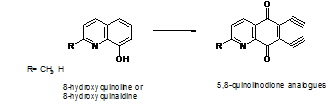
or calicheamicin are examples of enediyne-type compounds [6]. The main aim of our research was to chemically synthesize and biologically evaluate the compounds connecting both systems, i.e. 8-quinolinodiones and enediynes (Scheme 1). This provides simple model compounds having the enediyne function.
Scheme 1.
The result of combining these structures will hopefully provide an insight into new dual-mode action of these drug candidates. We are greatly enhancing our knowledge related to the potential meaning of these compounds in pharmaceutical chemistry. We will show here the preliminary results of our synthetic approaches.
Financial support from MNISW grant No. N N405 178735 is kindly acknowledged.
References: [1]. D.C. Rees, M. Congreve, C.W. Murray, R. Carr, Nature drug disc., 2004, 3, 660. [2]. J. Polański, H. Niedbała, R. Musioł, et al., Letters in Drug Design and Discovery, 2006, 3, 175-178. [3]. R. Musioł, J. Jampilek, K. Kralova, D.R. Richardson, et al., Bioorg. Med. Chem., 2007, 15, 1280. [4]. R. Musioł, J. Jampilek, V. Buchta, H. Niedbała, et al., Bioorg. Med. Chem., 2006, 14, 3592. [5]. S. Neidle, M. J. Warning (ed.), Verlag Chemie, Basel 1983. [6]. (a) K.C. Nicolau, W-M. Dai, Angew. Chem. Int. Ed. Engl.,1991, 30, 1397 (b) W-M. Dai, Curr. Med. Chem., 2003, 10, 2265 (c) M. Gredicak, I. Jeric, Acta Pharm., 2007, 57, 133-150. [7]. (a) B. Konig, Eur. J. Org. Chem., 2000, 381 (b) W. Tuntiwechapikul, W.M. David, D. Kumar, et al., Biochemistry, 2002, 41, 5283 (c) L. Banfi, G. Guanti, A.Basso, Eur. J. Org. Chem., 2000, 939.
23. THE ROLE OF BYSTANDER EFFECTS IN THE RESPONSE OF CELLS IRRADIATED INSIDE A WATER PHANTOM UNDER THERAPY CONDITIONS
1Center for
Translational Research and Molecular Biology of Cancer, 2Department
Purpose: Linear electron accelerators generate non-mono energetic radiation. During passage through an absorbing medium, with increasing penetration depth, this radiation is scattered and its energy spectrum becomes altered. Because biological effectiveness of radiation is energy-dependent, such alterations in energy spectrum may affect biological response of irradiated cells. In this study, electron radiation (22 MeV) dose distribution in a water phantom was compared with biological effects (formation of micronuclei and induction of apoptosis) in irradiated cells. The cells placed beside the beam axis were exposed to scattered radiation at very low dose so we tested if bystander effects could play a role in the response of cells exposed to radiation in the beam axis and outside the radiation field. Materials/Methods: Experiments were performed using normal bronchial epithelial cells (BEAS-2B) and lung cancer cells (A549). Measurements were performed for different phantom depths (3-16 cm). Irradiated cells were placed in the beam axis or outside the radiation field. In the bystander experiments the irradiation conditioned medium (ICM) was transferred to non-irradiated (bystander) cultures on the same line as well as medium from irradiated cancer cells was transferred to non-irradiated normal cells. The frequency of micronuclei and condensation of chromatin characteristic for apoptosis process were evaluated using the cytokinesis-block micronucleus test. Chromosomal aberrations were analyzed on Giemsa-stained metaphase on microscopic slides. Cell cycle phase distribution was analyzed by flow – cytometry. Results: Discrepancy exists between the distribution of physical dose at different depths of the water phantom and biological effects. It is of special meaning in case of irradiation at bigger depths or placed outside the field during the exposure. When bystander cells were incubated using medium transferred from cells exposed outside the radiation field the number of apoptotic and micronucleated cells was similar to that observed after direct irradiation. Conditioned medium collected from irradiated cancer A549 when transferred to non-irradiated normal BEAS-2B cells induced in them micronuclei, apoptosis chromatid and chromosomal aberrations but not change cell cycle phase distribution. This suggests that the genetic damages observed in cells exposed to scattered radiation can be caused by factors released by irradiated cells into the medium. Conclusions: Our results can be explained by bystander effects induced by low-energy scattered radiation generated during penetration of medium in a water phantom either in the beam axis or outside of the radiation field. The bystander signals emitted from irradiated cells may be responsible for the observed discrepancy between physical dose distribution and biological effects. Our results suggest that healthy cells exposed outside the radiation field during radiotherapy can be damaged to a greater extent than can be predicted from the dosimetric curve of absorbed dose. Our finding suggest that healthy cells lying outside the beam field may be damaged as a result of irradiation during radiotherapy – this is important in both, treatment planning and in clinical practice.
This study was supported by a grant from the Ministry of Science and Higher Education, No. NN 402 4447 33.
24. WWOX TUMOUR SUPPRESSOR GENE IS AFFECTED IN GLIOBLASTOMA MULTIFORME
K. Kosla1, E. Pluciennik1, K. Seta1, M. Nowakowska1, M. Zelazowski1, A. Kurzyk1, A. Jesionek-Kupnicka2, R. Kordek2, P. Liberski3, A. K. Bednarek1
1Department of Molecular Cancerogenesis,
Medical University of Lodz, Poland; 2Department of Pathology,
Medical University of Lodz, Poland; 3Department of Molecular
Pathology
Glioblastoma multiforme (GBM) is the most common type of primary brain tumor in adults. This neoplasm is highly lethal with an average survival of about 1 year. WWOX, a tumor suppressor gene located in a common fragile site FRA16D, is involved in carcinogenesis and cancer progression in many different cancers. Reduced WWOX expression is associated with more aggressive phenotype and poor patient outcome in several cancers. Our aim was to investigate WWOX expression alternations and its correlations with proliferation, apoptosis and signal trafficking in GBM. We evaluated methylation level of WWOX promoter and percentage of loss of heterozygosity (LOH) in WWOX genomic region. We also analysed the correlation between mRNA level of WWOX and other cancer related genes such as Ki67, Bcl2, Bax, EGFR, ErbB4 (splice variants: JM-a and JM-b). Using real-time RT-PCR we analysed expression levels of 7 genes in 59 cases of GBM. LOH was assessed in 63 patients by high resolution melting. Allelic losses were analyzed for three microsatellite markers: D16S504, D16S518, D16S3096. Methylation detection was performed for two regions of WWOX promoter with high contents of CpG. The examination was conducted by MethylScreen method in 67 patients. We observed a relatively high percentage of LOH for two out of three analysed microsatellites: 38.5% (D16S3096) and 54.5% (D16S504), respectively. Concurrent analysis of WWOX expression level in reference to promoter methylation and microsatellite markers state revealed a difference in WWOX expression in homo- and heterozygotes. The highest expression was exhibited by unmethylated, heterozygous samples while the lowest by methylated homozygous ones. Loss of heterozygosity lowered expression level in unmethylated samples (with the exception of D15S504). Promoter methylation considerably reduced WWOX expression both in hetero- and homozygous cases. There was a positive correlation between expression level of WWOX and marker of proliferation Ki67 (Rs=0.5440; p<0.0001), antiapoptotic gene Bcl2 (Rs=0.7092; p<0.0001) and JM-a isoform of ErbB4 mRNA level (Rs=0.7102; p<0.0001). Our results suggest that loss of heterozygosity (relatively frequent in GBM), along with promoter methylation may decrease the WWOX tumor suppressor expression. We also confirmed that WWOX is correlated with ErbB4 signalling pathway, as well as with proliferation and apoptosis in glioblastoma multiforme.
25. THE ROLE OF EARLY LIFE NUTRITION ON DNA REPAIR AND METHYLATION IN NEWBORN ANIMAL BRAINS
Paweł Kowalczyk1, Sabine A.S. Langie2, Bart Tomaszewski2, Roger W.L. Godschalk3, Barbara Tudek4,5, Frederic J. van Schooten3, Romuald Zabielski6, John C. Mathers2
1Interdisciplinary Centre for Mathematical
and Computational Modelling, University
Aging has been associated with an accumulation of oxidative DNA damages, resulting from increased exposure to reactive oxygen species (ROS) from exogenous and endogenous source. If oxidative DNA lesions are not removed by DNA repair mechanisms, they can become self-perpetuating mutations that contribute to age-related cellular dysfunction and degenerative diseases. The brain is particularly vulnerable to the deleterious effects of ROS due to its high utilization of oxygen and relatively low antioxidants levels. Also, damaged neurons cannot be replaced through cell division. The proper functioning of DNA repair mechanisms is thus of outmost importance for neuronal survival. In addition, changes in methylation status of DNA repair genes’ promoters, through altered gene expression, can have great impact on DNA repair and thus modulate susceptibility to oxidative DNA damage. Moreover, oxidized DNA inhibits DNA methylation which suggests important interactions between these DNA modifications. We aimed to study the role of DNA repair in neuronal cell survival and the role of epigenetic mechanisms in mediating the effects of environmental exposures. We investigated the effect of supplementation of pregnant sows with polyunsaturated fatty acids and antioxidants on oxidative DNA damage and DNA repair in brain of their offspring. Hippocampus tissues were collected from piglets at 1,2,4,7,14, and 28 days after birth. Levels of 8-oxo-7,8-dihydro-2’-deoxyguanosine (8-oxodG) were higher in hippocampi of control versus supplemented piglets (P=0.001) immediately after birth. Neither base excision repair (BER) capacity nor global genome methylation was increased significantly in hippocampus tissues of supplemented piglets compared with controls. However, BER capacity was correlated inversely (R2=0,1; P=0.026) with global DNA methylation for individual piglets. We then investigated changes in methylation of the promoter of the BER-related APE1 gene and observed significantly higher (P=0.001) methylation in the control group compared with additional animals. There was no correlation between BER capacity and APE1 methylation, but we observed a significant correlation (R2=0.204; P=0.001) between 8-oxodG levels and the extent of methylation of the APE1 promoter. We hypothesise that increased oxidative stress may stimulate APE1 expression, possibly involving an epigenetic mechanism. Moreover, APE1 also has a redox function and it is possible that its role in redox regulation rather than DNA repair might be responsible for the decrease in 8-oxodG.
26. ANTIFUNGAL PROPERTIES OF QUINOLINE DERIVATIVES
Wioleta Kowalczyk, Robert Musioł
Institute of Chemistry, University of Silesia, Szkolna 9, 40007 Katowice, Poland.
Over the last years, the number of fungal infections has risen considerably [1]. There are some reasons of this phenomenon such as growing population of immunocompromised patients and appearance of new drug resistant fungal strains. Thus, searching for novel drugs remains as one of the major challenges in this area. Quinoline derivatives are very important in medicinal chemistry because of their wide occurrence in natural products and drugs. A number of quinolines are described possessing a wide spectrum of biological activities (antifungal, antineoplastic and herbicidal) [2]. For this reason quinoline moiety may be regarded as a privileged structure - especially valuable for drug design [3].
In the presented study we were exploring the styrylquinoline derivatives that possess strong antifungal activity, especially derivatives containing 8-hydroxyquinoline that had been explored during our former research [4]. Some of these studied compounds indicated in vitro antifungal activity comparable or higher to that of Fluconazole. On the basis of analyzing the structure-activity relationship we are able to design new analogues of Terbinafine.
References: [1]. Bastert, J.; Schaller, M.; Korting, H. C.; Evans, E. G. V., Current and future approaches to antimycotic treatment in the era of resistant fungi and immunocompromised hosts. Int. J. Antimicrob. Agents 2001, 17, 81-91. [2]. Musiol, R.; Jampilek, J.; Kralova, K.; Richardson, D.R.; Kalinowski, D.; Podeszwa, B.; Finster, J.; Niedbala, H.; Palka, A.; Polanski, J., Investigating biological activity spectrum for novel quinoline analogues. Bioorg. Med. Chem. 2007, 15, 1280-88. [3]. Musiol, R., Serda, M., Hensel-Bielowka, S., Polanski, J., Quinoline-based Antifungals. Curr. Med. Chem. 2010, 17, 1960-73. [4]. Musiol, R.; Jampilek, J.; Buchta, V.; Niedbala, H.; Podeszwa, B.; Palka, A.; Majerz-Maniecka, K.; Oleksyn, B.; Polanski, J., Antifungal properties of new series of quinoline derivatives. Bioorg. Med. Chem. 2006, 14, 3592-98. 27. STRUCTURE AND MORPHOLOGY OF MAGNETIC MEMBRANES USED IN THE AIR SEPARATION
Monika Krasowska, Aleksandra
Rybak, Anna Strzelewicz, Gabriela Dudek,
Department of Physical Chemistry and Technology of Polymers, Faculty of Chemistry, Silesian University of Technology, Strzody 9, 44-100 Gliwice, Poland.
Study of transport processes through membranes is a difficult research problem, especially if structure-morphology aspects have to be taken into account. The traditional geometry theory cannot give us a good understanding about it. Fractal theory is a new tool to analyzing natural phenomena, which allows the characterization of objects in terms of their self-similar (scale-invariant) properties (i.e. parts of the object are similar to the whole after rescaling). In this work we were analyzing the complex behavior of non-classical membrane systems. We have considered the air separation on magnetic membranes. These are polymer membranes filled with neodymium powder and magnetized. The system considered has been studied using the phenomenological (ideal Fickian or non-ideal) and molecular (random walk on a fractal lattice) approach. We have found that the magnetic membranes have fractal structure. These fractals have stochastic characteristics (multifractal spectrum has a light asymmetry). Such fractals have smaller complexity, larger homogeneity and self-similarity which grows with increased amounts of magnetic powder and decreased powder granulation. Graphs f(a) have a well‑developed crest and right-hand side, which indicates domination of forms with larger areas (aggregates formed).
28. binding of genistein derivatives to the epidermal growth factor receptor kinase - modeling studies
Krystiana A. Krzyśko, Bogdan Lesyng
Department
of Biophysics and CoE BioExploratorium, Faculty of Physics, University
Genistein derivatives inhibit activity of tyrosine kinases, including c-Src and v-Abl kinases. In 2008, during the Gliwice Scientific Meetings conference we presented the results of modeling the inhibition of Abl and Lck kinases by genistein derivatives. It is also known now that genistein derivatives cause disintegration of microtubules of the central spindle in cancer cells. This year, we present the results of modeling studies on the binding of these derivatives to Epidermal Growth Factor Receptor Kinase (EGFR kinase). In our modeling studies we optimized structures of selected genistein derivatives. Their most stable conformers were identified. The structure of EGFR kinase was taken from crystallographic data of the active dimer (2GS6 – pdb id). The ATP binding site was chosen as the docking site. Selection of the most promising derivatives and their most probable poses will be presented and discussed. Experimental results obtained by A. Rusin, Z. Krawczyk and coworkers also reported during this conference have been accounted in our modeling studies. Conclusions are formulated in the context of these results.
Acknowledgements: These studies were supported by the BST 1434/BF and 7C-COI/PBZ/2008 funds.
29. VALIDATION OF AUTOMATIC PROGRAM “COUNT FOCI” FOR HISTONE GAMMA H2AX ANALYSIS
Aleksandra Krzywoń1, Roman Bednorz2, Maria Wideł3
1Biotechnology Student and 2Biotechnology
graduate, Faculty of Automatic, Electronic
Introduction and aim: Recently, phosphorylated histone H2AX (γH2AX) has been extensively used as a marker of DNA double strand breaks (dbs) induced by radiation or chemicals. Histone γH2AX is formed immediately after dbs induction and it can be visualized as fluorescent dye-joined monoclonal antibodies foci. Counting those foci is, however, a very laborious and time-consuming task. We have created an automatic program dubbed “Count Foci” which quantifies these foci very quickly and makes the analysis easy, user-friendly and reliable. The aim of this paper is to compare manual analysis of gamma H2AX foci with the automatic quantification by “Count Foci” and to validate its usefulness in biological studies. Materials and methods: Human colorectal carcinoma HCT116) and K562 myelogenous leukemia cells have been irradiated with 2 or 4 Gy (X-rays 6 MeV generated by therapeutic accelerator) and incubated alone (HCT116) or co-incubated with non irradiated (bystander) cells (K562) for varying intervals. Cells harvested after 0, 1.0, 2.0, 3.0, 6.0 and 24 hours after post-irradiation incubation were fixed in suspension, incubated with anti-phospho-histone H2AX mouse monoclonal antibodies and then with goat anti mouse IgG labeled with fluorescent dye (Alexa fluor 488) and finally cytospun on microscope slides. Pictures of at least 50 cells were taken at each time-point. The induction of DNA dbs and their rejoining were estimated on the basis of manual scoring of γH2AX foci and the same pictures were analyzed by Count Foci program which is described below. Description of Count Foci algorithm: The algorithm has been implemented in MATLAB and consists of a few steps. In brief: reading in the image and binarization using the Otsu method, which assumes the image to be thresholded contains two classes of pixels (e.g. foreground and background). It calculates the optimum threshold separating those two classes, so that their combined spread (intra-class variance) is minimal. Then the Sobel method is used to extract the edges at points where the gradient is maximal. After removing the objects lying on the border of the image and too small objects being the artifacts the program proceeds with morphological operations, detection of nuclei on the basis of calculated shape coefficients, extraction of the nuclei, cutting the background and, finally, counting the foci. The speed of the program is about 3 seconds per image. The option to export the data into a spreadsheet enables further analysis. Conclusion: Our test proves that automatic quantification of γH2AX foci is in good agreement with visual perception and the application we present can serve as a valuable instrument in biological studies. The Program "Count Foci" written in MATLAB, allows the user to automate tedious process of scoring foci, probably not only of phosphorylated Histone H2AX, but generally the areas of increased brightness due to accumulating fluorescent dye in the nucleus. We are going to make this program accessible on the website of the Institute of Automatics, Silesian Technical University in Gliwice, Poland.
This work was supported by grant No N N518 497 639 from the Polish Ministry of Education and Science. 30. DNATRAFFIC – A DATABASE OF DNA REPLICATION, DNA DAMAGE AND REPAIR PATHWAYS WITH CONNECTION TO HUMAN DISEASES AND DRUG TREATMENT
Krzysztof Kuchta1, Daniela Barszcz2, Elżbieta Grzesiuk2, Joanna Krwawicz2
1Laboratory of Bioinformatics and Bioengineering, Interdisciplinary Centre for Mathematical and Computational Modelling, University of Warsaw, Pawinskiego 5a, Warsaw, Poland; 2Institute of Biochemistry and Biophysics Polish Academy of Sciences, 5A Pawinskiego Str., 02-106 Warsaw, Poland, asiak@ibb.waw.pl.
DNAtraffic database was established to be the first comprehensive database resource for systems biology of nucleic acids organization and replication, as well as DNA damage and repair pathways. The main goal of DNAtraffic is to collect data from other well known and commonly used databases, organize them, as well as connect all data within our database in the following types of information: (i) DNA damage linked to drugs and environmental mutagenic and cytotoxic agents, (ii) pathways comprising individual processes and enzymatic reactions involved in DNA metabolism or the removal of damage, (iii) proteins participating in DNA replication, recombination, transcription, repair and modification, (iv) diseases correlated with mutations in genes encoding the DNA traffic proteins, (v) keywords for quick access to the most common keywords used to annotate the database entities according to biological processes and enzymatic activities. In the nearly future DNAtraffic will contain information about main DNA metabolism pathways: chromatin organization (histone modifications), DNA replication and translesion synthesis (TLS), DNA recombination, DNA transcription, DNA damage signaling, DNA damage repair (DRR, BER, NER, MMR, HRR, NHEJ) and DNA degradation. The pathway/protein dataset is currently limited to one model organism – Homo sapiens, but in the future it will collect data for the other model organisms: Escherichia coli, Saccharomyces cerevisiae, and some bacteriophages. DNAtraffic will be queried by the name of pathway, protein, enzymatic complex, damage, disease and some keywords, and will provide the links to internal data sources and external databases. DNAtraffic will be freely available and accessed at http://dnatraffic.ibb.waw.pl/.
The research was supported by the Polish-Norwegian grant Nr. PNRF-143-AI-1/07.
31. OVARIAN CANCER CELL LINES EXPRESS DIFFERENT LEVELS OF SEVERAL EXTRACELLULAR MATRIX PROTEIN mRNAs
Katarzyna Kujawa1,
Tomasz Kujawa1, Izolda Mrochen-Domin2, Beata
Kaleta2,
1Center for Translational Research and Molecular Biology of Cancer, Maria Skłodowska-Curie Memorial Cancer Center and Institute of Oncology, Gliwice Branch, Wybrzeże Armii Krajowej 15, 44-101 Gliwice, Poland; 2Department of Clinical Oncology, Maria Skłodowska-Curie Memorial Cancer Center and Institute of Oncology, Gliwice Branch, Wybrzeże Armii Krajowej 15, 44-101 Gliwice, Poland.
Ovarian cancer is characterized by asymptomatic development until its advanced stages. Due to the late diagnosis it is one of the most deadly gynecological malignancies. Better diagnostic and treatment options that will improve survival rates will rely on wider understanding of the biology of ovarian cancer cell. Previously, we studied 100 ovarian cancer specimens by DNA microarray technique. Unsupervised analysis revealed the two subtypes of serous ovarian cancers that differ significantly by gene expression pattern. In our study these two subtypes showed differences in overall survival of the patients. The genes with differential expression patterns between two subtypes of ovarian cancer are mostly connected with structure and properties of stroma and extracellular matrix. From the whole list we have chosen for further analyses 12 genes with high-fold change (FC>3). Our first aim was to check whether these genes are certainly expressed by cancer cells. Five ovarian cancer cell lines were analyzed by semi-quantitative RT-PCR: ES2, OAW42, OVCAR3, OVP10 and SKOV3. Surprisingly, we observed that the genes the expression of which is usually ascribed only to stromal cells can be active also in ovarian cancer cells. Their expression is variable, depending on the cell line analyzed. Our next aim was to study the role of selected genes and their influence on the biology of cancer cells (cell motility, invasiveness, etc.). Three genes, FAP-α, THBS2 and ITGBL1, were selected for functional studies. FAP-α expression is induced in activated fibroblasts responding to wounding and the reactive stroma responding to cancer cells; additionally FAP-α may be expressed by at least some types of malignant cells of epithelial origin. In some cancers FAP-α expression promotes tumor growth and increases angiogenesis whereas in others FAP-α expression causes tumor suppression. THBS2 is a potential tumor suppressor protein and it takes part in inhibition of angiogenesis. The role of ITGBL1 in carcinogenesis is unknown. According to the results of RT-PCR analysis we have chosen ovarian cell lines in which these genes are inactive. Currently, we use the Retroviral Gene Transfer and Expression system (Clontech) to construct isogenic cell lines where the genes of interest will be overexpressed. Isogenic cell lines that differ by the ability to express a studied gene will be subject to several tests in order to evaluate cell morphology, viability, proliferation rate, induction of apoptosis, adhesiveness, motility and drug resistance.
This work was supported by Maria Skłodowska-Curie Memorial Cancer Center and Institute of Oncology, Gliwice Branch internal grant coordinated by Elżbieta Nowara, Ph.D. and Katarzyna Lisowska, Ph.D.. This work was supported by the European Community through the European Social Fund within the RFSD 2 project.
32. VALIDATION OF PROGNOSTIC SIGNIFICANCE OF POTENTIAL MOLECULAR MARKERS FOR SEROUS OVARIAN CANCER – PRELIMINARY RESULTS
Tomasz Kujawa1, Katarzyna Kujawa1, Monika Kowal2, Katarzyna Lisowska1
1Center for Translational Research and Molecular Biology of Cancer, Maria Skłodowska-Curie Memorial Cancer Center and Institute of Oncology, Gliwice Branch, Wybrzeże Armii Krajowej 15, 44-101 Gliwice, Poland; 2Department of Nuclear Medicine and Oncological Endocrinology, Maria Skłodowska-Curie Memorial Cancer Center and Institute of Oncology, Gliwice Branch, Wybrzeże Armii Krajowej 15, 44-101 Gliwice, Poland.
Ovarian cancer is often called the ‘silent killer’ because of the lack of specific symptoms until the disease has progressed to an advanced stage. About 50-75% of ovarian cancers are diagnosed in stage III and IV. While 5-year relative survival reaches 90% when diagnosed in stage I, it is less than 20% in stage III/IV. Thus, ovarian cancer is the leading cause of death from gynecologic cancers. Current molecular studies are aimed to discover specific prognostic and prediction markers that may help to individualize treatment and thus improve survival rate. In our previous study we analyzed gene expression profiles of 100 ovarian cancer samples by DNA microarray (Affymetrix). We found that among serous tumors, two molecular subtypes can be distinguished with strikingly different gene expression profile. The genes that show differential expression between two subtypes code mostly for the extracellular matrix proteins. Interestingly, the two molecular subtypes of serous ovarian carcinoma correlate with distinct overall survival. Thus, the genes showing differential expression between two subtypes can be considered as potential prognostic markers. Our aim was to validate by qRT-PCR differential expression of selected genes identified in the microarray study. Genes to be validated were selected based on the criterion of high fold change (FC>3). The expression of COL11A1, CSPG2, DSPG3, FAP, MFAP5 and LOX genes was measured using specific TaqMan probes (Universal ProbeLibrary, Roche). The amount of cDNA copies was calculated using comparative ΔCt method. ΔCt values of the samples of interest were compared with a calibrator. The Ct values of both the calibrator and the samples of interest were normalized to an appropriate endogenous housekeeping genes. The results show that the expression of analyzed genes is indeed significantly different between the two molecular subtypes of serous ovarian carcinoma (Mann Whitney U test). Further studies are necessary to confirm whether these genes may serve as prognostic markers for serous ovarian cancer.
This work was supported by the European Community through the European Social Fund within the RFSD 2 project.
33. ENCAPSULATED IR-780 IN PHOTODYNAMIC THERAPY OF MCF-7/WT CELLS
Julita Kulbacka1, Iwona
Kamińska3, Jolanta Saczko1, Jadwiga Pietkiewicz1, 1Department of Medical Biochemistry, Medical University of Wroclaw, Chalubinskiego 10, 50-368 Wroclaw, Poland; 2Department of Chemistry, Wroclaw University of Technology, Wybrzeze Wyspianskiego 27, 50-370 Wroclaw, Poland; 3Department of Pathomorphology and Clinical Cytology, Medical University of Wroclaw, Borowska 213, 50-556 Wroclaw, Poland.
PDT requires a photosensitizer that targets tumor cells to produce a photochemical reaction following administration of light of proper wavelength. Some cyanines are novel photosensitisers used in studies aimed at anticancer photodynamic therapy (PDT). However, their interactions with normal cells are not preferable because of concurrent side effects. Thus, our photodynamic studies focused on effective delivery of a hydrophobic cyanine to targeted cells. The progress in nanotechnology makes it possible to formulate these compounds using safe biocompatible carriers. We can thus load our cyanines in nanocapsules which allow transport of the drug into the cells. The aim of our study was to investigate oxidative stress markers of lipid peroxidation and the level of thiol and carbonyl groups in human breast carcinoma MCF-7/WT cells. In the present study we used a human breast cancer (MCF-7/WT)-doxorubicin sensitive cell line. For photodynamic therapy we used cyanine IR-780 and oil-cored poly(n-butyl cyanoacrylate) nanocapsules loaded with cyanine IR-780. The cells were irradiated for 10 min (λ= 760÷800 nm). After irradiation of MCF-7/WT cells we observed an increased concentration of lipid peroxidation products and the presence of carbonyl group which correlate with decreased levels of thiol groups. This change in oxidative stress after PDT with IR-780 formulated in oil-cored poly(n-butylcyanoacrylate) nanocapsules were compared with controls. The results indicate that it is possible to apply our drug-loaded nanocapsules in photodynamic anticancer treatment as efficient carriers of such hydrophobic photosensitizers.
34. Drug architecture by database mining: Global mapping of pharmacological space
Agata Kurczyk, Tomasz Magdziarz, Andrzej Bąk, Jarosław Polański
Institute of Chemistry, University of Silesia, 40-007 Katowice, Szkolna 9, Poland, akurczyk@us.edu.pl.
Chemoinformatics is a rapidly growing scientific discipline which is of particular interest to pharmaceutical research and medicinal chemistry. Chemoinformatics routines are already used widely in drug discovery processes and many efficient and potent approaches have been described and implemented. Notably, in recent years chemoinformatics has seen an explosion of molecular information resources available, e.g. more than 50 million compounds were synthesized and catalogued. Moreover, in silico molecular simulations, an increasingly important component of current medicinal chemistry, have further contributed. A number of molecular databases are publicly available and can be used in drug design, e.g. PubChem, ZINC, ChemDB, ChemBank, ChEMBL and DrugBank databases contain ca. 37, 8, 4.1, 1.2, 0.6 and 0.04 million compounds, respectively. Here we report the application of a novel and unique molecular and structural database managing system, MoStBioDat[1] for the analysis of large ligand libraries. MoStBioDat is not only a dual purpose storage/extraction database platform maintaining the high-standard data integrity and reliability, but consistent environment providing software-based solutions for the massive in silico protocols parallely analyzing small molecule ligand and protein data. Thus, we analyzed intramolecular hydrogen bonded motifs in catechols searching within the combined data of available databases. Certain substructures are common molecular components of active drugs. The term privileged structure was indeed first applied to the benzodiazepine nucleus by Evans et al. in their search for CCK-A antagonists derived from the natural product, asperlicin[2]. The concept of privileged structure is grounded in the observation that certain substructures confer potency within a class of targets. By screening databases we can estimate the population of such (sub)structural motifs[3] or investigate the evolution of organic chemistry which has a well-defined modular architecture[4]. However, we cannot be sure if overpopulation of a certain structural feature, in fact, does result from its real polypharmacological advantages in biological systems or from a chemist synthetic preferences. Thus, we analyzed by database mining, the frequency of occurencies of the selected azanaphthalene scaffolds. The comparison of the Beilstein and DrugBank database hits of quinoline and isoquinoline fragment containing molecules clearly suggests that quinoline system is more popular than the isoquinoline one. Also, among the collection of all possible molecular ensembles created on the basis of ten considered diazanaphthalene scaffolds we have noticed a differentiation in drug population concerning synthetic availability and occurrence. This led us to conduct comprehensive investigation of azanaphthalene polypharmacology to designate privileged structural drug architecture and druglikeness topology in this class of compounds.
35. HSF1, THE MAIN REGULATOR OF THE HEAT SHOCK RESPONSE, CAN ACT AS TRANSCRIPTIONAL REPRESSOR
Małgorzata
Kus-Liskiewicz1, Joanna Polańska2, Magdalena Olbryt3, Joanna Korfanty3,
Aleksandra Wojtas3, Oksana Shtapenko3, Natalia Vydra3,
Agnieszka Toma3,
1Branch Campus of the Faculty of
Biotechnology, Rzeszów University, Kolbuszowa 36-100, Sokołowska 26, Poland; 2Institute of Automatic Control, The
Silesian University
In somatic cells elevated temperature induces activation of the heat shock transcription factor 1 (Hsf1) what leads to heat shock proteins (HSPs) synthesis and cytoprotection. However, in male germ cells (spermatocytes) upon HSF1 activation, caspase-3 dependent apoptosis is induced and spermatogenic cells are actively eliminated. To elucidate the mechanism of such diverse Hsf1 activity we carried out genome-wide transcriptional analysis in control and heat-shocked cells, either isolated spermatocytes or hepatocytes. Genes that are differently expressed after hyperthermia in both types of cells have been identified. Additionally, to find direct molecular targets of active HSF1 we used chromatin immunoprecipitation assay (ChIP) combined with analysis of isolated DNA on promoter microarrays (ChIP on chip). This approach enabled identification of all genes targeted by this transcription factor, in either somatic or male germ cells. In spite of Hsf1 binding to promoter sequences of Hsps genes in both types of cells, Hsps and other chaperones are up-regulated only in hepatocytes. Also in hepatocytes, but not in spermatocytes, independently of Hsf1 binding, expression of genes coding for some transcription factors and genes involved in growth and proliferation is strongly activated. Some genes coding for anti-apoptotic proteins are activated due to Hsf1 binding only in hepatocytes. In both types of cells the heat shock induces expression of genes involved in inflammatory and immune response, independent on Hsf1 binding. In spermatocytes, expression of some genes essential for spermatogenesis is down-regulated and is associated with Hsf1 binding after the heat shock. Examples of such genes include Spo11 (sporulation protein, meiosis-specific, SPO11 homolog) and Dazl (deleted in azoospermia-like). Mutations in those genes have been linked to severe spermatogenic failure and infertility in males. Also, expression of some genes involved in synaptonemal complex organization is deregulated and depends on Hsf1 binding. We found that Hsf1 binds to promoters and up-regulates several genes encoding transcriptional regulators, e.g. Spen (transcriptional repressor) and Btf3l4 (basic transcription factor). The obtained results reveal that Hsf1 binding to DNA is not sufficient to change expression of targeted genes. Some additional events are necessary and this step of Hsf1 action is differentially regulated in spermatocytes and hepatocytes. Moreover, it seems that Hsf1 can act as transcriptional repressor.
J.K and A.T. were supported by the Regional Graduate Studies Fund within the framework of the Integrated Regional Operational Programme financed by the European Social Fund.
36. GENE SELECTION PROBLEM IN IDENTIFICATION OF PATIENTS OVER-RESPONSIVE TO LOW DOSE RADIOTHERAPY
Michał Marczyk1, Roman Jaksik1, Joanna Polańska1, Andrzej Polański2,3
1Institute of Automatic Control, 2Institute of Informatics, Silesian University of Technology, 3Polish-Japanese Institute of Information Technology.
Healing effects of radiotherapy depend mainly on total dose delivered to targeted tumor issue, which in many cases is limited in order to minimize late side effects to normal tissue. Clinical observations of adverse effects indicate large variations in individual patients. Ability to adjust the dose to the individual radiosensitivity will help in reducing the negative effects of radiation while increasing the efficiency of cancer treatment. The goal is to identify potential genetic components of relevance to occupational, environmental and medical exposure to low-dose radiation by the use of microarray technology. Selection of significant genes for sample classification is a common task in most gene expression studies, where a goal is to discover the smallest possible set of genes that can achieve good predictive performance. The analyzed data contained two groups of breast cancer patients showing significant differences in their normal tissue response to radiotherapy. This represents 10 samples from over-responders and 10 samples from normal responders. Data pre-processing included RMA background correction, normalization and cleaning expression data by removing genes, the expression values of which were below noise level given by Gaussian mixture model. The area of interest included selection of significant genes and construction of a classifier which can predict the status of the sample on the basis of the expression profile. Five procedures of the recruitment of the genes were applied: t-test, modified Welch test (MWT), Mann-Whitney U-test, the so called algorithm of the recurrent feature replacement (RFE) and its version containing fuzzy C-Means clustering (FCM-RFE). The discrimination function was constructed by using the support vector machine (SVM) methodology, with two types of kernels, linear and radial Gaussian (rbf). Also semi-supervised approach was adapted using least squares transduction support vector machine (LS TSVM). Due to the small size of the dataset, the validation step was based on the leave-one-out approach. As a result of applying the above-described algorithms, it was possible to construct a classifier that could discriminate patients based on their late response to low dose radiotherapy treatment, with a 10% error rate. When comparing methodologies of feature selection recruitment MWT, which deals with unequal variability of genes between groups, displayed the best performance. However, it was possible to see the lowest error rate for several constructions of classifiers. Finally, we obtained a signature of the most significant genes which are potential genetic markers of low-dose radiation risk.
This work was supported by the European Program FP6 – 036452, GENEPI-lowRT.
37. MDM1 GENE EXPRESSION IN SPERMATOCYTES IS REGULATED BY THE HEAT SHOCK TRANSCRIPTION FACTOR 2
Manuela Mikolajec1,
Aleksandra Wojtas1, Oksana Shtapenko1, Joanna Korfanty1,
1Center for Translational Research and Molecular Biology of Cancer, Maria Skłodowska-Curie Memorial Cancer Center and Institute of Oncology, Gliwice Branch, Wybrzeże Armii Krajowej 15, Gliwice, Poland; 2Branch Campus of the Faculty of Biotechnology, Rzeszów University, Kolbuszowa 36-100, Sokołowska 26, Poland.
The mouse Mdm1 (transformed mouse 3T3 cell double minute 1), similarly to Mdm2 (transformed mouse 3T3 cell double minute 2 ), was described as a 25 to 30-fold amplified gene in transformed mouse cells containing numerous double minute chromatin particles. However, in contrast to Mdm2, very little is known about the functions of Mdm1. Mdm1 is expressed at high level in testes and retina, and at low level in some other mouse tissues. The global gene expression analysis by Affymetrix microarrays revealed an elevated expression of Mdm1 in isolated spermatocytes subjected to heat shock. Here we aimed to analyze further the Mdm1 gene expression in mouse testes subjected to hyperthermia. The level of Mdm1 transcript assessed by RT-PCR in isolated spermatocytes was elevated up to 24h after one hour treatment at 38 or 430C (compared to its expression at physiological temperature, 330C). In a search for putative sequences that bind heat shock transcription factors (Hsf1 or Hsf2) in Mdm1 promoter we found HSE (heat shock element)-like sequence located 627-612 bp upstream of ATG codon. Hsf1 is the main regulator of the heat shock response, while Hsf2 is only active during spermatogenesis and embryogenesis, with no clear correlation with HSPs expression. Using the chromatin immunoprecipitation (ChIP) the binding of Hsf2 (but not Hsf1) to the Mdm1 promoter in spermatocytes was found to be increased after the heat shock. Expression of Mdm1 protein in testes was analyzed by immunohistochemistry. The protein was detected in all cells of control testes excluding myoid cells and spermatozoa. Very strong staining of Mdm1 protein was observed in cytoplasm of metaphase to telophase spermatocytes. In pachytene spermatocytes the heat shock induced redistribution of Mdm1 from a cytoplasmic to paranuclear localization, which started 2 hours after the treatment at 420C. It has been shown that in spermatocytes the first features of the hyperthermia-induced apoptosis are detected within 2 hours after treatment. Importantly, the hyperthermia-induced re-localization of Mdm1 was similar to redistribution of mitochondria and Bax observed in apoptotic germ cells. Our observation suggests the involvement of Mdm1 in the hyperthermia-induced apoptosis of spermatocytes, which leads to infertility.
J.K and A.T. were supported by the Regional Graduate Studies Fund within the framework of the Integrated Regional Operational Programme financed by the European Social Fund.
38. THIOSEMICARBAZONE DERIVATIVES – ANTICANCER ACTIVITY, MOLECULAR DOCKING AND PHOTOCHEMICAL STUDIES
Anna Mrozek-Wilczkiewicz1,2, Agnieszka Szurko1,3, Marzena Rams-Baron1, Robert Musioł2, Paweł Mazur2, Des Richardson4, Jarosław Polański2, Alicja Ratuszna1
1Institute of Physics, University of
Silesia, ab.mrozek@interia.pl; 2Institute
of Chemistry, University of Silesia; 3Maria Sklodowska-Curie
Memorial Cancer Centre and Institute
Thiosemicarbazone derivatives have a wide spectrum of activity – they have antineoplastic, antibacterial, antiviral and antifungal properties. One of the possible mechanisms of anticancer action of these compounds is inhibition of ribonucleotide reductase - mammalian enzyme which playing crucial role in the DNA replication and repair. Another possible mechanism consists in iron chelating, which causes depletion of iron and generate toxic complexes. Iron is a microelement necessary for the most important processes and it’s a cofactor of protein (hemoglobin, myoglobin), enzymes (catalase, RR, peroxydase) and cytochromes. Cancer cells have increased demand for iron than normal cells which makes them more susceptible to the effects of depletion. Furthermore chelates are believed to be responsible for generation of reactive oxygen species in Fenton reaction. In present study we attempt to investigate interactions between iron chelators and ribonucleotide reductase using molecular modeling and molecular mechanics simulations. The enzyme file (pdb 2VUX) was used for docking of molecules collected as virtual combinatorial library of known active inactive and designed structures. The input set was prepared for docking by standard procedure included the structure optimization using the MMFF94x forcefield and calculation of the partial atomic charges using PM1 alghoritm. Protomers and tautomers were generated wherever it was possible. Classifying docking results were realized using London dG (LdG) scoring function (SF). We generated 3D receptor-ligand interactions diagrams of preferred compounds and additionally 2D one for each 3D figure to investigate the interactions more precisely. To demonstrate influence of thiosemicarbazones on DNA and cytoskeleton we performed bioassays on HCT116 cell line (human colon carcinoma) stained with FITC-phalloidin and DAPI to visualize F-actin and DNA. Photochemical studies included the implementation of the absorbance and fluorescence spectra measurements of thiosemicarbazones and biophysical investigation of the effect of iron chelators on the generation of singlet oxygen species. This was achieved by flash photolysis of the studied compounds.
The study has been financed by a grant from the Ministry of Science and Higher Education, No. R 05 043 03 and in part by project UPGOW for A. M-W and M. R-B.
39. THE ROLE OF WWOX TUMOR SUPRESSOR GENE IN COLORECTAL CANCEROGENESIS; A MICROARRAY-BASED STUDY ON HT29 COLON CANCER CELL LINE
Magdalena Nowakowska1, Karolina Seta1, Urszula Lewandowska2, Elżbieta Płuciennik1, Maciej Żelazowski1, Katarzyna Kośla1, Andrzej K. Bednarek1
1Department of Molecular Cancerogenesis, Medical University of Lodz, Poland; 2Department of Medical Enzymology, medical University of Lodz, Poland. Colorectal cancer is one of the leading causes of cancer-related deaths in both men and women in Western countries. Nowadays, there are three recognized distinct molecular pathways of colon cell cancer transformation. The most common is acquisition of chromosomal instability (CIN). Microsatelite instability phenotype(MSI) and CpG Island Methylator Phenotype(CIMP) form the two other pathways. Each of this cancerogenesis phenotypes is characterized by molecular profile of genomic, transcriptomic and proteomic alterations. WWOX is a tumor suppressor gene that spans the common fragile site FRA16D. It has been proven that WWOX participates in controlling expression of genes which are responsible for tissue morphogenesis and cell differentiation. Its altered expression has been demonstrated in many tumor types. Moreover, reduction of WWOX expression correlates with more aggressive disease stage and higher mortality rate( breast, gastric, lung cancer). Experiments were performed on HT29 colon cancer cell line transfected with WWOX cDNA. Using real-time RT PCR we estimated relevant expression level of 8 cancer marker genes (apoptosis, proliferation, adhesion and cell cycle regulation genes). We employed whole genome, oligonucleotide microarrays(Human OneArray™;Phalanx Biotech) to assess the influence of WWOX on gene expression profiles. Moreover, we performed biological test of anchorage independent growth. Analysis of microarrays evaluated over 300 differentialy expressed genes as a result of increased WWOX expression (p<0.05). Our study demonstrated that WWOX inhibits expression of genes that are involved in cell cycle progression, WNT and Cadherin signaling pathways and cytoskeletal regulation by Rho GTPase. Genes related to apoptosis and FAS signaling pathway are upregulated. Microarray results are consistent with real time RT-PCR and will be confirmed with Western-Blott and RT-PCR for chosen genes. Moreover, there was a complete inhibition of cell growth in soft agar in cell culture with higher expression of WWOX gene. Microarray gene expression study confirmed the role of WWOX in regulation of important pathways in cancerogenesis. As we assumed, it has a major impact on apoptosis, cell cycle regulation and WNT pathway inhibition in HT29 colon cancer cells.
40. CYCLING VS CHRONIC HYPOXIA RESPONSE IN TUMOR CELLS
Magdalena Olbryt1, Michał Jarząb2, Anna Habryka1,4, Tomasz Tyszkiewicz3, Katarzyna Lisowska1
1Center for Translational Research and
Molecular Biology of Cancer, 2Clinical Oncology Clinic, 3Nuclear
Medicine and Endocrine Oncology Department, Maria Skłodowska-Curie Memorial
Center and Institute of Oncology, Gliwice Branch, Poland; 4Department
One of the most important features of tumor microenvironment, imposing adverse effect on patient prognosis, is low oxygen tension. There are two types of hypoxia that may occur within tumor mass: chronic and cycling. Their specific impact on tumor growth and progression is currently investigated. Preliminary studies point at cycling hypoxia as being more relevant in induction of aggressive phenotype of tumor cells, though little is known about the molecular mechanism of this phenomenon. In this study, we compared molecular responses of tumor cells to those two types of hypoxia. For this purpose, using Affymetrix microarrays platform, we analyzed global gene expression profile of ovarian cancer (SK-OV-3), prostate cancer (PC-3) and melanoma (WM793B) cells exposed to experimental cycling and chronic hypoxic conditions. The analysis revealed that: (1) cellular response to hypoxic conditions differs significantly between the three analyzed cell lines; (2) the expression profiles induced by the two studied types of hypoxia are similar within each cell line, though cycling hypoxia exerts approximately a two-times lower impact on expression change of the most affected genes; (3) cycling and chronic hypoxia differentially affect selected signaling pathways, e.g. those regulated by P53, as well as reactive oxygen species and AKT/mTOR; (4) AREG, EPHA2 and CXCL2 are specifically induced by cycling hypoxia in a cell type-dependent manner. To sum up, our results show that, in the experimental setting we explored, cycling hypoxia induces similar expression profile to that evoked by long-term hypoxia; however, there are signaling pathways and genes specifically regulated by each of those experimental conditions. 41. RNA INTERFERENCE USING CHEMICALLY MODIFIED siRNA TO INCREASE BIOVIABILITY AND SAFETY – INVESTIGATION OF SEGMENTALLY INTEGRATED SMALL INTERFERING RNA (sisiRNA) AND UNA-MODIFIED RNA FOR POSSIBLE THERAPEUTIC USE
Małgorzata Maria Pakuła-Cis1,2, Jesper B. Bramsen1, Shan Gao1,2, Jesper Wengel3, Jørgen Kjems1,2
1Department of Molecular Biology, Aarhus University, DK-8000 Aarhus, Denmark; 2Interdiciplinary Nanoscience Center, Aarhus University, DK-8000 Aarhus, Denmark; 3Nucleid Acid Centre, University of Southern Denmark.
Small interfering RNAs (siRNAs) are now
established as a favourite tool to reduce gene expression by RNA interference
(RNAi) in mammalian cell culture. However, limitations in potency, duration,
delivery and specificity of the gene knockdown (KD) are still major obstacles
that need further addressing. Recent studies have successfully improved siRNA
performance by the introduction of several types of chemical modifications.
Here we explore the effect of incorporating unlocked nucleic acid (UNA) into
siRNA designs.
Reference: Laursen*, M., Pakula*, M. M., Gao, S., Fluiter, K., Mook, O. R., Baas, F., Langklær, N., Wengel, S. L., Wengel, J., Kjems, J., Bramsen, J. J., (2010), Utilization of unlocked nucleic acid (UNA) to enhance siRNA performance in vitro and in vivo. Mol. BioSyst., 6, 862-870. *Contributed equally to this work.
42. DETECTING GENES EXPRESSED DIFFERENTIALLY IN THYROID FOLLICULAR ADENOMAS AND CARCINOMAS: A META-ANALYSIS
Aleksandra Pfeifer, Małgorzata Oczko-Wojciechowska, Bartosz Wojtaś, Małgorzata Kowalska, Tomasz Stokowy, Michał Jarząb, Barbara Jarząb
Nuclear Medicine and Endocrine Oncology Department, Maria Skłodowska-Curie Memorial Center and Institute of Oncology, Gliwice Branch.
Follicular adenomas (FA) and carcinomas (FTC) are thyroid tumors that are indistinguishable in the fine needle aspiration biopsy. Tumor type discrimination is only possible with histopathologic review but in many cases it is problematic. There is a need to find genes differentiating between adenomas and carcinomas, as they could improve the diagnosis of follicular tumours. Many research groups select genes differentiating between FTC and FA, but their findings are not fully consistent and none of these genes is used in routine diagnosis. Thus, we decided to perform meta-analysis of their data in two different ways: by differentially expressed genes review and raw data analysis. We compared data from 13 publications, in which one of the high-throughput gene expression profiling methods were used (in most cases microarrays). We extracted the lists of differentiating genes and combined them. In the investigated reports we found 534 significant genes in one publication, 40 significant genes in 2 publications and 7 significant genes in 3 publications. None of the genes were significant in more than three publications. In the analysis of the raw data (available in four publications) we partially confirmed the results; however, we also found further interesting genes. The results of this study show that lists of differentially expressed genes partially overlap. They also point at genes that are worthy of further analysis and validation.
43. DETECTION OF RADIATION-RELATED CHANGES IN SERUM PROTEOME OF PATIENTS TREATED WITH RADIOTHERAPY BECAUSE OF HEAD AND NECK CANCER
Monika Pietrowska1, Katarzyna Wojtkiewicz2, Andrzej Wygoda1, Tomasz Rutkowski1, Krzysztof Składowski1, Łukasz Marczak3, Maciej Stobiecki3, Michał Marczyk2, Joanna Polańska2, Andrzej Polański2, Piotr Widłak1
1Maria Skłodowska-Curie Memorial Center and Institute of Oncology, Gliwice Branch; 2Faculty of Automatic, Electronic and Informatics, Silesian University of Technology, Gliwice; 3Institute of Bioorganic Chemistry PAS, Noskowskiego 12/14, 61-704 Poznan, Poland.
Background: Radiotherapy, either alone or in combination with chemotherapy, is a rather efficient treatment in the head and neck squamous cell cancer. Such therapy could preserve structure and function of a target organ. However, radiation-induced damage to normal cells, resulting in acute and/or late injury response, could significantly affect patient’s comfort and effectiveness of therapy. Thus, selecting patients for radical radiotherapy would be greatly facilitated if reliable predictive molecular markers of radio-resistance/radio-sensitivity were available in the clinical practice. Aim: In this work we used mass spectrometry-based analysis of blood proteome to identify radiation-related changes is peptide signatures as well as to find out possible markers for prediction of individual responses of head and neck cancer radiotherapy patients. Methods: Forty six patients (80% men, age 45-87 years) with squamous cell cancer located in the larynx were enrolled on the study. Patients were treated with definitive radiotherapy and received total doses from 51 to 72 Gy. The acute/early reaction of the oral cavity mucosa was assessed using Dische scoring system every 3-4 days during whole radiotherapy. Blood samples were collected from each patient before the start of therapy (sample A), in the middle of the treatment (sample B) and 1-2 months after the end of therapy (sample C). The low-molecular-weight region of the serum proteome (2000 to 14000 Da) was analyzed by MALDI-ToF mass spectrometry and 312 peptides (spectral peaks) were identified. Correlation between clinical data and features of blood proteome profiles were identified due to statistical analyses. Conclusions: (1) the proteome mass profiles were different in serum samples collected before radiotherapy from patients with different size of tumor (T-staging). Noteworthy, detected differences diminished in samples collected during and after the end of RT; (2) the registered mass profiles of serum proteome changed significantly in consequence of radiotherapy. However, major differences were observed between samples collected during RT and after the end of RT, but not between samples collected before RT and during RT; (3) the abundance of several peptides in serum samples collected after the end of radiotherapy was correlated with the total dose of radiation received by patients; (4) the significance of correlation found between maximal intensity of the acute mucosal reaction (AMR) in patients treated with RT and the features of serum proteome profiles was only marginal in the analyzed samples.
Project was supported by the Ministry of Science and Higher Education, Poland, grant no. N402 450339.
44. NEW APPROACH TO MODELLING OF ANTIANGIOGENIC TREATMENT ON THE BASIS OF HAHNFELDT ET AL. MODEL
Jan Poleszczuk, Marek Bodnar, Urszula Foryś
Faculty of Mathematics, Informatics and Mechanics, Inst. Appl. Math. Mech., University of Warsaw, Banacha 2, 02-097 Warsaw, Poland.
In adults normal physiological role of angiogenesis is restricted to wound healing, the menstrual cycle and pregnancy. Unfortunately, it is also essential for successful development and growth of solid tumours. After reaching avascular dormant state a tumor can grow further only by inducing host tissue to sprout capillary tubes which migrate towards and, ultimately, penetrate the tumour, providing it with blood supply and, therefore, an additional source of nutrients. On the basis of the idea that the carrying capacity for any solid tumour depends on its vessel density Hahnfeldt et. al developed in 1999 a mathematical model of tumor growth under angiogenic signalling. Dr. Moses Judah Folkman, who discovered the process of tumor angiogenesis, proposed that tumors can be treated by influencing that process. On the basis of the model proposed by Hahnfeldt et. al numerous protocols of antiangiogenic treatment have been advanced. Unfortunately, recent studies show that tumor angiogenesis is highly pathological. Long lasting over-expression of proangiogenic factors (like VEGF) causes impairment and malfunction of newly formed vessels. Some trials which where developed to investigate tumor biology revealed that most of administrated dose of a drug is not even absorbed by the tumor. Moreover, the absorbed dose part is not distributed evenly in particular tumor regions. We propose a new methodology in modelling of antiangiogenic treatment on the basis of the Hahnfeldt et al. model. The proposed modification of the original model describes better the situation when the treatment focused on blocking angiogenic signalling is applied. We also incorporate recent experimental results concerning the pathology of tumor angiogenesis process. We analyse basic mathematical properties of the proposed model and present herein the results of fitting the model to experimental data. We present also some results concerning the optimization of antiangiogenic therapy scheduling.
45. SYNTHESIS AND EVALUATION OF THE ANTIPROLIFERATIVE PROPERTIES OF NATURAL ISOTHIOCYANATES AND THEIR DERIVATIVES
Mateusz Psurski1, Joanna Wietrzyk2, Józef Oleksyszyn1
1Wroclaw University of Technology, Division of
Medicinal Chemistry
A number of natural compounds with potential antitumor activity are found in our diet. Among them there is a large group of compounds known as isothiocyanates (ITC), the majority of which occur in plants, especially in Cruciferous vegetables like broccoli, cauliflower, cabbage and others. Up to this day, about 120 isothiocyanates were isolated from plants. Among them many chemically diverse compounds like alcohols, esters, ketones and others can be found, but only a small fraction of this large and diverse group was tested in in vitro studies. In here we report the synthesis and examination of antiproliferative activity of a group of natural isothiocyanates and their major metabolites, N–acetylocysteine and cysteine adducts. In vitro studies were performed using several lung, breast and colon (multidrug resistant (MDR) and non-MDR) cancer cell lines. We show that isothiocyanates are very
potent antiproliferative compounds but their biological activity strongly
correlates with chemical and physical properties of the side chain. For example,
pentyl isothiocyanate demonstrated a 10-fold lower activity than Moreover, our studies indicate that isothiocyanates metabolites not only posses antiproliferative activity, but in many cases this activity is greater than activity of isothiocyanates. This fact, combined with lower toxicity, better water solubility and stability leads to the conclusion that these compounds could be used not only as a part of cancer therapy, but also as an element of a chemopreventive diet.
46. THERAPEUTIC EFFECT AND SUBCELLULAR ACCUMULATION OF NOVEL CHLORIN DERIVATIVES – PROMISING CANDIDATES FOR APPLICATION IN PDT
Marzena
Rams-Baron1, Agnieszka Szurko1,2, Ewa Talik1,
Franz-Peter Montforts3,
1August Chełkowski Institute of Physics,
University of Silesia, Uniwersytecka 4, 40-007 Katowice, Poland; 2Maria
Skłodowska-Curie Memorial Cancer Center and Institute
Photodynamic therapy (PDT) is an interdisciplinary and rapidly growing approach to cancer treatment combining knowledge of physics, chemistry and biology. Photodynamic therapy involves the administration of a photosensitive agent, called photosensitizer, which is then activated by light of a specific wavelength. Successful translation of photodynamic treatment in clinical practice requires, however, developing novel chemical formulas of photosensitizers with improved photophysical properties and targeted against different types of malignancies. Chlorins seem to be an attractive and promising new class of candidates for PDT applications. The presented report shows the results of preliminary in vitro investigation of six novel chlorin derivatives synthesized with the aim of improving the photosensitizing effect. In our experiments we tested PDT sensitivity of human colon cancer cell line (Hct 116). The influence of photodynamic treatment on cell structure was evaluated using cryo scanning electron microscopy (cryo-SEM). Our study included examination of cell surface and elemental composition. Accumulation of the studied photosensitizers inside cells was assessed by spectrophotometric measurements of cell lysates. Three-dimensional emission vs. excitation spectra were recorded in order to confirm accumulation of a given compound inside cells. Performing the measurements for different transfection times allowed us to determine the time after which the accumulation of the compound inside the cell was the highest. Furthermore, using MTS cell proliferation assay we measured in vitro cytotoxicity and phototoxicity of the investigated compounds. The presented results confirm effective penetration of Hct 116 cells by the examined chlorins. Electron microscopy micrographs of cells exposed to the examined compounds and light show significant differences compared to those of control cells. Cryo-SEM investigation of cell chemical composition confirmed the accumulation of chlorin photosensitizers inside Hct 116 cells. This accumulation was also corroborated by spectrophotometric measurement of cell lysates. Incubation times of 3 to 4 hours, depending on particular compound, were required to reach maximum accumulation inside cells. In the examined concentration range the studied chlorins exerted no significant cytotoxic effects; instead, their high phototoxicity was observed. These results make the examined novel chlorins attractive PDT candidates.
This study was supported by the Polish Ministry of Science and Higher Education (grant No. R05 043 03).
47. LIPOPHILICITY OF NEW MONOALKYL-TETRA-(HYDROXYPHENYL) PORPHYRIN DERIVATIVES
M. Rojkiewicz, G. Zięba, V. Kozik, K. Jarzembek, A. Jarczyk, P. Kuś
Institute of Chemistry, University of Silesia, 9, Szkolna Street , Katowice.
Lipophilicity of organic compounds (e.g. drugs) is an important physicochemical parameter which is very helpful in the prediction of drug accumulation in the human body and, generally, of its biological activity. Photodynamic therapy (PDT) is one of the non-invasive and quickly developing methods for treating cancer diseases. PDT is based on the interaction of chemical compounds with light of appropriate energy. A very important feature of a compound suitable for PDT applications is its selectivity to penetrate pathological tissues. The transport ability of the photosensitizer to the cells could be increased by placing it into different kind of carriers, e.g. liposomes. Porphyrin-liposome systems could overcome potential drug delivery problems. In this study we determined lipophilicity of new monoalkyl-tetra-(hydroxyphenyl) porphyrin derivatives using reversed phase thin-layer chromatography as a quick and convenient method alternative to traditional shake-flask method.
48. OXIDATIVE STRESS INDUCED BY IONIZING RADIATION IN K562 CELLS RESULTS FROM MITOCHONDRIAL DYSFUNCTION
Yuriy
Saenko1,2, Artur Cieślar-Pobuda3, Waldemar Przybyszewski1,
1Center for Translational Research and
Molecular Biology of Cancer, Maria
Skłodowska-Curie Memorial Cancer Center and Institute of Oncology, Gliwice,
Poland; 2Center
Introduction: Mitochondria are involved in several vital cellular processes: energy production, apoptosis, pyrimidine biosynthesis, fatty acid metabolism and calcium homeostasis. Gross mitochondrial changes are seen in association with cancer and oxidative stress caused by respiratory defects through inhibition of complex IV. Mitochondria have been long suspected to play a role in carcinogenesis beginning with Otto von Warburg’s hypothesis that cancer cells have impaired respiratory function. Furthermore, in non-transformed cells, most cellular ROS production is derived from cytosolic membrane enzyme NADPH oxidase, whereas in transformed cells, the increased ROS production was of mitochondrial origin. In the presented study we investigated the relationship between ROS accumulation and mitochondrial potential in irradiated K562 cells. Materials and Methods: Human K562 (myelogenous leukemia) cells were exposed to 4 Gy and 12 Gy of ionizing radiation. Intracellular reactive oxygen species were assayed using the 2,7-dichlorofluorescein (DCF) probe with detection by flow cytometry. The mitochondrial membrane potential was measured with tetramethylrhodamine ethyl ester (TMRE) with detection by flow cytometry. We used rotenone as an inhibitor of mitochondrial respiratory chain to determine the source of ROS. Results: After the exposure of K562 cells to 4 and 12 Gy of X-rays we observed similar accumulation of ROS in cells. A significant rise in ROS production was observed 24 h after irradiation. At this timepoint ROS production was about 1.5 times higher in cells irradiated with 4 or 12 Gy than in the non-irradiated controls. 48 h after irradiation ROS level further increased and in 4 Gy-irradiated cells it achieved 2.2 fold level, and in 12 Gy- irradiated cells a 3.5 fold increase, compared to control. The level of mitochondrial membrane potential (MMP) correlated with ROS accumulation. After 24 hours, in 4 Gy- and 12-Gy irradiated cells the MMP was 848±14, 1037±46 and 1491±36 fluorescence units above control, respectively. After 48 hours 4-Gy and 12-Gy irradiated cells showed further changes in MMP: 735±32, 874±16, 1678±20 fluorescence units above control, respectively. To assay the source of ROS in K562 cells after irradiation we used the rotenone which is able to inhibit mitochondrial respiratory chain. Rotenone application resulted in two-fold decrease of ROS production in irradiated K562 cells. Conclusion: Exposure of K562 cells to ionizing radiation induced accumulation of ROS after 24–48 hours post treatment. This ROS increase was driven by mitochondrial respiratory chain.
This work was supported by the Ministry of Science and Education, Poland, grant # NN 518497639, National Cancer Institute – Office for International Affairs, NIH, Bethesda, MD, USA and by the European Community from the European Social Fund within the RFSD 2 project.
49. APoptotOSIS-Related gene expression in chronic lYmphocytic leukemia
Aleksandra Sałagacka1,
Ida Franiak-Pietryga2, Ewa Balcerczak1,
Malwina Bartczak1,
1Molecular Biology Laboratory Department of
Pharmaceutical Biochemistry, Faculty
Chronic lymphocytic leukemia (CLL) is the most common B-cell malignancy in the Western world. The low proliferative index and slow accumulation of malignant cells in chronic lymphocytic leukemia suggest that this disease is caused by a defect in apoptosis regulation. Better understanding of changes in apoptosis-related gene expression during CLL pathogenesis could be of utmost importance in diagnosing and managing this disease. The aim of the study was to assess and compare the expression of 93 apoptosis-related genes in mononuclear cells obtained from 18 previously untreated CLL patients and 5 healthy volunteers. Total RNA was isolated, reverse transcribed and amplified using TaqMan® Low Density Array (Applied Biosystems). The obtained results were processed using DataAssistTM Software (Applied Biosystems). The results show a distinct expression pattern of the investigated genes in CLL and normal cells. Significant expression changes concerned genes involved in intrinsic, extrinsic and executive apoptosis pathways. Expression of 31 genes was upregulated, and only 3 genes were downregulated. Among the upregulated genes the highest changes affected ESRRBL1, CASP8AP2, DIABLO, CASP3, LTB (RQ from 44.08 to 9.30). The most downregulated gene was DAPK1 (RQ: 0.19). The obtained results suggest that many genes involved in different part of apoptotic process could be important in pathogenesis of chronic lymphocytic leukemia.
50. C3435T POLYMORPHISM OF ABCB1 GENE - IMPACT ON GENETIC SUSCEPTIBILITY TO PEPTIC ULCER
Aleksandra Sałagacka1, Mariusz
Balcerczak2, Robert Janiuk2, Malwina Bartczak1,
Functional single nucleotide polymorphism (SNP) C3435T in exon 26 of the ABCB1 gene encoding the xenobiotic transporter P-glycoprotein (P-gp, MDR1, ABCB1) may influence susceptibility to several diseases as well as clinical outcome of treatment with P-gp substrates. Exposure to environmental chemicals is thought to be involved in the pathogenesis of peptic ulcer and in the future stomach cancer development. About 80% of ulcers are associated with Helicobacter pylori infection which is one of the risk factor of stomach cancer development. P-gp-transported drugs are also used in treatment of H. pylori. Lack of effectiveness in eradication therapy can lead to chronic stomach inflammation and can promote cancerogensis.In this study, 196 patients with peptic ulcer were divided into two groups with and without H. pylori infection and 96 healthy controls were genotyped for the ABCB1 C3435T SNP. PCR-RFLP method was used for genotyping.We observed a trend towards higher incidence of 3435TT genotype among peptic ulcer patients compared to controls (p=0.0983). Likewise, in patients’ group the 3435T allele was observed more frequently. The association was nearly of statistical significance (p=0.0538). The statistically significant dependences between the analyzed genotypes and H. pylori infection was stated (p =0.0372). CT genotype was found to be connected with 1.56 and TT genotype with 2.45 much higher prevalence of the infection, compared to CC genotype. A similar association between C3435T genotype and H. pylori infection was present in the subgroup of men with peptic ulcer (p=0.0090).
51. DIFFERENTIAL EXPRESSION OF HSPA1 AND HSPA2 PROTEINS IN HUMAN TISSUES
Dorota Ścieglińska1, Wojciech Pigłowski1, Mykola Chekan2, Agnieszka Mazurek1, Zdzisław Krawczyk1,3
1Center for Translational Research and Molecular
Biology of Cancer, Maria
Skłodowska-Curie Memorial Cancer Center and Institute of Oncology, Gliwice
Branch, Wybrzeże Armii Krajowej 15, 44-101 Gliwice, Poland; 2Department
of Pathology, Maria Skłodowska-Curie Memorial Cancer Center and Institute of
Oncology, Gliwice Branch, Wybrzeże Armii Krajowej 15, 44-101 Gliwice, Poland; 3Silesian
University of Technology, Department
Heat shock proteins constitute a large group of chaperone proteins found in virtually all organisms. The largest family is the HSPA (HSP70) which in humans includes 13 genes. In human cells genes of this family exhibit a highly differentiated expression pattern, intracellular localization and function. Although important knowledge has been gathered on the differential expression of HSPA genes in various pathologies, notably in cancer, much less is known about their expression pattern in normal human tissues in vivo. This issue seems to be especially important in case of two groups of HSPA genes. The first one consists of inducible members of HSPA family, which are believed to be expressed at a very low level (if any) in normal tissues at physiological conditions. The second one groups HSPA genes, the expression of which was originally ascribed exclusively to specific non-somatic cell types. In the presented study, using tissue microarrays (TMA), we performed an immunohistochemical investigation in search for possible human cell-type specific expression of HSPA2 and HSPA1 proteins. Our study revealed that both proteins are expressed only in some tissues among 24 ones examined. The HSPA2 was detected in adrenal gland, bronchus, cerebellum, cerebrum, colon, esophagus, kidney, skin, small intestine, stomach and testis, but not in adipose tissue, bladder, breast, cardiac muscle, diaphragm, liver, lung, lymph node, pancreas, prostate, skeletal muscle, spleen nor thyroid. Expression of HSPA1 was detected in adrenal gland, bladder, breast, bronchus, cardiac muscle, esophagus, kidney, prostate, skin, but not in other tissues examined. Moreover, HSPA2 and HSPA1 proteins were found to be expressed in a cell-type specific manner. The most pronounced cell-type expression pattern was found for HSPA2 protein. In case of stratified squamous epithelia of the skin and esophagus as well as in ciliated pseudostratified columnar epithelium lining respiratory tract, the HSPA2 positive cells were located in the basal layer. In the colon, small intestine and bronchus epithelia, the HSPA2 was detected in goblet cells. In adrenal gland cortex the HSPA2 expression was limited to cells of zona reticularis. The presented results clearly show that certain human tissues constitutively express varying levels of HSPA1 and HSPA2 proteins in a highly differentiated way. Thus our study constitutes guidelines for designing experimental models suitable to determine cell- and tissue-type specific functional differences between HSPA2 and HSPA1 proteins in human tissues.
52. ROLE OF CXCR7 RECEPTOR IN BIOLOGY OF CERVICAL CARCINOMA
Małgorzata Sekuła, Katarzyna Miękus, Marcin Majka
Department of Transplantation, Polish-American Institute of Pediatrics, Jagiellonian University Medical College, 265 Wielicka Str, 30-663 Kraków, Poland, malgorzata_sekula@wp.pl.
Cervical carcinoma is one of the most common cancer in women in the developing countries. Usually, the majority of tumors are diagnosed at advanced stages which results in high mortality. Chemokines are a family of small chemoattracting cytokine-like proteins, which signal through G-protein-coupled seven transmembrane domain receptors. Recent studies demonstrate, that stromal derived factor-1 (SDF-1) and interferon-inducible T-cell alpha chemoattractant (I-TAC) bind to CXCR7 receptor and play an important role in cancer development. The aim of this study was to investigate the role of CXCR7 receptor in biology of human cervical carcinoma cells. HTB-35 cell line with stable down-regulation of CXCR7 receptor (HTB-35 shCXCR7) was prepared using BLOCK-iT™ Lentiviral RNAi Expression System. Confirmation of knockdown of CXCR7 gene was performed at mRNA and protein level by Real-time PCR and Western blot analysis respectively. MTT and proliferation assays were used to assess proliferation of the cells. Expression levels of CXCR4, CXCR7, HIF-1α, VEGF, MMP-2, MMP-9, TIMP-1, TIMP-2, E-cadherin and N-cadherin genes was performed by real-time PCR analysis. Wild type HTB-35 (HTB-35 WT) and HTB-35 cell line with entry construct expressing shRNA targeting the LacZ gene (HTB-35 shLacZ) were used as controls. We observed no difference in proliferation between HTB-35 shCXCR7 and both HTB-35 WT and HTB-35 shLacZ cells. Stimulation with I-TAC resulted in phosphorylation of MAPK p42/44 in HTB-35 WT and HTB-35 shLacZ cell lines but no phosphorylation was observed for HTB-35 shCXCR7 cells. At the mRNA level we observed increased expression of CXCR4, TIMP-2, HIF-1α, VEGF genes, a decrease in CXCR7, MMP-9 mRNA levels with no differences in MMP-2, TIMP-1 E-cadherin and N-cadherin mRNA levels. CXCR7 receptor has no influence on proliferation in cervical carcinoma cells. Interestingly, this receptor modulates the expresion of genes related with angiogenesis and metastasis. We suppose that SDF-1/CXCR7 and I-TAC/CXCR7 axis are potential targets in cancer therapy, and its inhibition can be helpful in working out new treatment strategies. Further experiments, such as chemotaxis assay, matrigel invasion assay, cell cycle analysis and adhesion test are planned.
53. QUINOLINE-BASED IRON CHELATORS; FROM IN SILICO STUDIES TO BIOPHYSICAL APPLICATIONS
Maciej Serda1, Tomasz Magdziarz1, Andrzej Żądło2, Tadeusz Sarna2, Jarosław Polański1
1 Institute of Chemistry, University of Silesia, 9 Szkolna Street, 40-006 Katowice, Poland; 2Laboratory for Photobiophysics, Department of Biophysics, Faculty of Biochemistry, Biophysics and Biotechnology, Jagiellonian University, 7 Gronostajowa Street, 30-387 Cracow.
We report here the study on a potential therapy involving iron chelation. This includes in silico molecular design of potential chelators, organic synthesis of the novel compounds as well as extensive biological tests of the compounds obtained. Iron is one of the most important bioelements in human biochemical system. It plays a role in a variety of physiological cellular processes such as oxygen transport, energy metabolism, electron transport and DNA synthesis [1]. However the excess of iron is harmful, due to its ability to generate reactive oxygen species (mainly hydroxyl radical) via Fenton reaction [2]. In our recent studies we chose quinoline derivatives with semicarbazone function as a potential ROS generator. The first step of our research was SAR analysis. We have selected the series of quinoline semicarbazone derivatives described in the literature for which inhibition of cell proliferation were measured for several cell lines [3]. The molecular data were preprocessed and CoMSA 3D-QSAR models combined with variable selection were calculated. This allows us for extensive insight into structure-activity relationships of quinoline-semicarbazone moiety. The next step of our work was a microwave-assisted synthesis of several new quinoline derivatives containing thiosemicarbazone moiety. We complexed the obtained compounds with ferric ions to create redox active complexes. Additionally, we used an EPR spin-trapping method to confirm the generation of hydroxyl radicals. Due to the difficulties with solubility of the aforementioned complexes our experiments performed in methanol indicated carbon-centred radicals formed in a reaction between hydroxyl radical and the solvent. In the last step we investigated the influence of iron complexes on lipid peroxidation (liposomal retinal lipids). Further studies on structure optimization will be performed using in silico methods; additional cytotoxicity tests and redox potential measurements of Fe-complexes, will be carried out to explore the mechanisms of action of this class of iron chelators.
References: [1]. D.R. Richardson, Biochimica et Biophysica Acta, 2009, 1790, 702–717. [2]. D. Kalinowski, D.R. Richardson, Pharmacol. Rev., 2005, 57, 4, 547-583. [3]. H. Huang, J. Med. Chem., 2010, 53, 3048-3064.
54. The role of WWOX, a tumour suppressor gene, in breast cancer; A microarray-BASED study oN MDA-MB-231 cell line
Karolina Seta1, Magdalena Nowakowska1, Urszula Lewandowska2, Elżbieta Płuciennik1, Maciej Żelazowski1, Andrzej K. Bednarek1
1Department of Molecular Cancerogenesis, 2Department
of Medical Enzymology,
WWOX is a tumor suppressor gene, located at 16q23.3-24.1, which spans the region of FRA16D - one of the common fragile sites. Changes in the WWOX coding region are the most common genetic changes in breast cancer - deletion in this area is observed in more than 80% cases of this type of tumour. Suppressive character of WWOX gene has been confirmed in numerous studies. It has been demonstrated that increased expression of WWOX in breast cancer cell line MDA-MB-231 inhibits cell proliferation in suspension and reduces tumour growth rates in xenographic transplants. At the same time the higher level of WWOX enhances cell migration through the basal membrane and changes morphology of colonies formed in Matrigel. Reduced expression of WWOX in breast cancer patients correlates with more aggressive course, higher relapse rate and higher mortality. Initial experiments were performed on low-density oligonucleotide microarrays, Human Discover Chips™ (ArrayIt®), containing 380 genes involved in major cellular pathways. The experiment confirmed altered expression of cell structure, proliferation and differentiation genes. The study was then extended to whole genome microarray analysis, in which Human OneArray™ (Phalanx Biotech), containing 30 985 probes, were used. For both experiments human breast cancer MDA-MB-231 cells were transduced with WWOX cDNA. Verification of the obtained results was done by real-time RT-PCR. Additional validation will be performed by means of quantitative methods, enabling protein level measurements. Analysis of the microarray results, not only confirmed literature reports, concerning WWOX participation in Wnt/β-catenin pathway inhibition, but also allowed the identification of other differently expressed genes involved in key biological pathways. Differential expression of over 900 genes was found to be significant (p<0.05). According to the molecular function, numerous transcription factors, signaling molecules, kinases, and numerous cytoskeletal proteins were identified. On the basis of the obtained microarray results, we concluded that WWOX takes part in differentiation and breast tissue remodeling. Due to differential expression of numerous cytoskeletal proteins and based on the data obtained from biological experiments, we presume that WWOX may be involved in formation of normal mammary gland structures. Restoration of WWOX cellular functions suppress cancer specific phenotype and leads to lowered tumourigenicity of MDAMB-231 cell line. 55. Qualitative analysis of barley proteins using 2D gel electrophoresis and mass spectrometry
Klaudia Sikorska, Paweł Rodziewicz, Łukasz Marczak, Maciej Stobiecki
Institute of Bioorganic Chemistry PAS, Noskowskiego 12/14, 61-704 Poznan, Poland.
Proteomics is a discipline of science that explorates and tries to understand the fundamental processes of growth and development through global analysis of proteins present in cell, tissue or whole organism. By using differential proteomic techniques combined with mass spectrometry it is possible to separate and identify proteins, accordingly enable to create proteomic maps. One of the widely used method for separating proteins is two-dimensional electrophoresis (2-DE), which consists of isoelectric focusing (IEF) in pH gradient, where proteins are separated by their pI value and as a second dimension sodium dodecyl sulfate polyacrylamide gel electrophoresis (SDS-PAGE), which separates proteins by their masses. Proteins can be then detected by several methods; among them the most popular are silver staining and Coomassie Brilliant Blue. Visualised proteins can be then identified by mass spectrometry. One of used techniques is Matrix Assisted Laser Desorption/Ionization (MALDI), which is the most informative method for protein studies. Identification of proteins using MALDI mass spectrometry is based on comparison of theoretically calculated masses of peptides derived from digestion of a given protein, with masses of peptides measured with a mass spectrometer. In this approach it is required to register in the mass spectrometer masses of peptides with the highest possible accuracy. This analytical method is in opposition to LC/MS/MS identification technique, in which even sequence of one peptide can result in identification of protein. In the case of MALDI/TOF it is substantial to confirm first if protein or DNA sequences of the investigated organism are present in accessible internet databases. In other cases it is only possible to predict a protein relying on extensive homology of two organisms. Above mentioned facts demonstrate that MALDI mass spectrometers working in normal mode have many limitations in protein identification. Careful preparation of protein samples and/or applying special techniques like PSD (Post Source Decay) analysis of chosen peptides, might be very helpful in omitting these restrictions. In this project barley proteins were isolated and analysed using MALDI-TOF mass spectrometer. Protein samples were obtained from leafs of barley seedlings by phenol extraction, so generally all organelle proteins were present in the extract. To isolate proteins, electrophoretic methods in denaturating 2D gels were applied. Protein spots corresponding to particular proteins were excised from gel, digested with trypsin and analysed with the above-mentioned mass spectrometric method. Peptide mass fingerprinting was a basic method for protein identification. As a result, gel-separated proteins and tables with identified proteins from barley are presented.
56. ULTRASTRUCTURAL ANALYSIS OF CANCER CELLS BY ELECTRON MICROSCOPY FOLLOWING ELECTROCHEMOTHERAPY
Nina Skołucka1, Malgorzata Daczewska2,
Jolanta Saczko1, Julita Kulbacka1,
1Department of Medical Biochemistry, Medical University, Chalubinskiego 10 St., 50-368 Wroclaw, Poland; 2Department of General Zoology, Zoological Institute, University of Wroclaw, Sienkiewicza 21 St., 50-335 Wroclaw, Poland; 3Department of Pathomorphology and Clinical cytology, Medical University, Borowska 213 St., 50-556 Wroclaw, Poland; 4Institute of Biomedical Engineering and Instrumentation, Wroclaw University of Technology, pl. Grunwaldzki 13, 50-370 Wroclaw, Poland.
Introduction: Electrochemotherapy is a new technique to combat cancer. Electropermeabilization of the cell membrane in combination with chemotherapeutic drugs could increase their transport into cells. Permeabilization depends on pulse duration, pulse amplitude, the number of pulses delivered. Materials and Methods: The aim of this study was to perform ultrastructural analysis by electron emission microscope (Zeiss EM 900). We investigated the effect of electroporation with and without doxorubicin on human doxorubicin-sensitive and resistant breast adenocarcinoma cell line (MCF-7/WT and MCF-7/DOX). Doxorubicin (Sigma) was used at 10 µg/ml concentration. The electroporation parameters were: 600 V/cm, 50 ms, 5 impulses. As electrodes we used two thin stainless-steel parallel plates (4 mm gap). Results: We observed ultrastructural cell changes after electroporation with doxorubicin in comparison to control cells. We observed strong vacuolization and the differences in mitochondria morphology (number of combs decreased, membranes had lighter stains).
Keywords: electrochemotherapy, electroporation, doxorubicin, ultrastructural analysis.
57. DOSE-DEPENDENT OXIDATIVE STRESS AND NUCLEAR DAMAGE IN THE HCT116 AND RAJI CANCER CELLS FOLLOWING IONIZING RADIATION EXPOSURE
M. Skonieczna1, A. Cieślar-Pobuda1, S. Student1, R. Bednorz1, M. Wideł1, J. Rzeszowska-Wolny1,2
1System Engineering Group, Institute of
Automatic Control, Silesian University
Exposure of cells to ionizing radiation (IR) induces the formation of free radicals with the most common - reactive oxygen species (ROS). Harmful effects of ROS lead to DNA damage, cell death and arrest of proliferation. Oxidative damage to nucleic acids, such as strand breaks or base oxidation leads to changes in the primary structure of DNA or RNA. Modification in the primary structure of nucleic acids influences their interactions with protein components and other factors. Double strand breaks (DSBs) in DNA activate repair machinery, the first step of which is the histone H2AX phosphorylation and broken strands rejoining. Histone γH2AX appears immediately after DSBs induction as the foci which can be visualized by monoclonal antibodies joined with fluorescent dye. The level of oxidative stress in cells can be measured directly as the level of ROS in the cytoplasm and nuclear compartments, using flow cytofluorimetry. This method uses the oxidation of carboxy-dichloro-dihydro-fluorescein introduced into cells. This compound is converted to a fluorescent derivative by free radicals, and the fluorescence intensity is proportional to the cellular ROS level. However, ROS induced by IR have extremely short lifetimes (nanoseconds) and cannot be observed directly by methods which require long manipulations. Therefore, oxidative stress can be estimated on the basis of damage to cellular macromolecules. The presence of 8-oxodG in cellular DNA measured at a different time points after irradiation reflects the presence of cellular free radicals, but it also depends on the repair ability of the cell because DNA damage is removed by cellular repair systems (e.g. base excision repair, BER). Therefore, oxidized nucleotides, 8-oxoG were measured in RNA from irradiated cells. The high pressure liquid chromatography with electrochemical detection (HPLC-EC) was used. Oxidative stress may cause changes in progression through the cell cycle, which can be dependent on ROS level. Cell cycle was analyzed by flow cytometry. Changes in ROS level, 8-oxoG in RNA, number of γ-H2AX foci per cell and the cell cycle distribution in the colon carcinoma HCT116 p53+/+ and p53-/- and leukemia Raji cells exposed to different doses of IR (4 and 12 Gy, X-rays from a Clinac GMV) were used as the endpoints. The highest level of ROS measured directly was observed about 8-12 hours after irradiation. At the same time the cell cycle in all cell lines was arrested in the G2 phase. Furthermore, this G2 block was considerably higher in HCT116 p53-/- than in p53+/+. However, the longest arrest was observed in Raji cells. The HPLC technique showed dose dependent increase of 8-oxoG level in RNA. DSBs quantified by histone γ-H2AX in HCT116 cells indicate dose dependent increase of initial damage. However, kinetics of DSBs rejoining differs in both lines, being slower in p53-/- cells. Our studies indicate the differences between cell lines in response to IR exposure. Reactive oxygen species induced few hours after irradiation correlate with RNA damage in HCT 116 p53+/+ cells. Arrest of the cell cycle in G2 phase seems not to correlate with RNA damage, but depends on the presence of P53 protein.
This work was
supported by grants: N N514 411 936, N N518 497 639 from the Ministry of
Education
58. 8-OXOGUANINE INCISION ACTIVITY IS IMPAIRED IN LUNG TISSUES OF NSCLC PATIENTS WITH THE POLYMORPHISM OF OGG1 AND XRCC1 GENES
Elżbieta Speina1, Maja Swoboda1, Justyna Janik1, Beata Janowska1, Jarosław M. Cieśla1, Daniel Gackowski2, Janusz Kowalewski3, Ryszard Oliński2, Barbara Tudek1,4
1Department of Molecular Biology, Institute
of Biochemistry and Biophysics, Polish Academy of Sciences, Pawińskiego 5a,
02-106 Warsaw, Poland; 2Department of Clinical Biochemistry,
Collegium Medicum, Nicolaus Copernicus University, Karłowicza 25, 85-092
Bydgoszcz, Poland; 3Department and Clinic of Thoracic Surgery and
Tumours, Collegium Medicum, Nicolaus Copernicus University, Karlowicza 24,
85-092 Bydgoszcz, Poland; 4Institute
Decreased repair of oxidative DNA damage is a risk factor for developing certain human malignancies. We have previously found that the capacity of 8-oxo-7,8-dihydroguanine repair was lower in leukocytes of NSCLC patients than in controls. To explain these observations, we searched for mutations and polymorphisms in the OGG1 gene among 88 NSCLC patients and 79 controls. One patient exhibited a heterozygous mutation in exon 1, which resulted in Arg46Gln substitution. Normal lung and tumor tissue carrying this mutation showed markedly lower 8-oxoG incision activity than the mean for all patients. The predominant polymorphism of OGG1 was Ser326Cys. A significant difference was observed in the frequencies of the OGG1 variants between populations of NSCLC patients and controls. The frequency of the Cys326 allele was higher among patients than controls. In individuals with either Ser326Cys or Cys326Cys genotype 8-oxoG incision rate was lower than in those with both Ser326 alleles, either in lung or in leukocytes. Moreover, 8-oxodG level was higher in lung tissue and leukocytes of patients carrying two Cys326 alleles and in leukocytes of patients with the Ser326Cys genotype. We also screened for polymorphisms of the XRCC1 gene. Only heterozygotes of the XRCC1 variants Arg194Trp, Arg280His and Arg399Gln were found among patients and controls, with the frequency of Arg280His being significantly higher among patients. NSCLC patients with Arg280His or Arg399Gln polymorphism revealed lower 8-oxoG incision activity in their lung tissues, but not in leukocytes. We can conclude that the OGG1 Ser326Cys polymorphisms may have an impact on the efficiency of 8-oxoG incision in humans and the XRCC1 His280 and Gln399 may influence the OGG1 activity in tissues exposed to chronic oxidative/inflammatory stress. Higher frequency of the OGG1 Cys326 allele among NSCLC patients may partially explain the impairment of the 8-oxoG repair observed in their leukocytes.
59. CONCENTRATION OF HSP 27 PROTEIN AND 5-YEAR SURVIVAL IN PATIENTS WITH COLON ADENOCARCINOMA
Joanna Katarzyna Strzelczyk1,
Łukasz Krakowczyk2, Aleksander Owczarek3,
1Chair and General Medical Biology
Department, Medical Faculty in Zabrze, Medical University of Silesia in
Katowice; 2Surgical Oncology Clinic, Maria
Sklodowska-Curie Memorial Cancer Centre and Institute of Oncology, Gliwice
Branch; 3Department
Heat shock proteins play an important role in both pro- and eukaryotic cells. They are synthesized constitutively but their concentration rises sharply upon stressor stimulus. There have been numerous reports concerning change of their expression in neoplastic cells. A link has been determined between HSP level and tumor progression. However, expression-related clinical implications are unequivocal. We aimed at determining the relationship between HSP 27 concentration in tumor sections as well as distal margins and a 5-year patient survival in a group of patients with colon adrnocarcinoma tumor. Colon tumor and distal margin samples were collected from 47 patients during surgery. Total protein was determined in tissue homogenates (Sentinel Diagnostics, Italy) along with HSP 27 concentration (ELISA Kit QIA 119, Calbiochemâ, Germany). The study group was classified according to Duke’s staging of the tumor, its histological differentiation, localization and size as well as according to patients’ age and sex. A 5-year survival analysis was conducted and the results were analyzed statistically with multidimensional proportional hazard analysis (Cox). The survival curves were calculated using Kaplan-Meier method. The rate of 5-year survival in the studied
group of patients was 51%. No statistically significant differences were found
between HSP 27 tumor concentration and that in tumor margin samples, depending
on patient’s survival period in the 5-year survival analysis.
60. MAJOR SOURCES OF VARIABILITY IN GENE EXPRESSION PROFILE OF OVARIAN CANCER: PLS ANALYSIS
Sebastian Student1,
Krzysztof Fujarewicz1, Magdalena Olbryt2,
Weronika Marszałek1,
1Department of Automatic Control, Silesian
University of Technology, Gliwice, Poland; 2Center for Translational Research and Molecular
Biology of Cancer, Maria Skłodowska-Curie Memorial Cancer Center and Institute
of Oncology, Gliwice Branch, Gliwice, Poland; 3Department of Molecular Pathology, Maria Skłodowska-Curie
Memorial Cancer Center
Ovarian cancer is characterized by asymptomatic development until its advanced stages. Due to the late diagnosis, ovarian cancer is the leading cause of death from gynecologic cancers. Better diagnostic and treatment options that may improve survival rates will rely on wider understanding of biology of ovarian cancer cell. We studied 100 ovarian cancer specimens by DNA microarray technique. Microarray data were analyzed using partial least square algorithm (PLS). In contrast to PCA (principal component analysis) criterion based on maximization the variance of a linear combination of genes, the PLS extract components by maximizing the sample covariance between the class variable and linear combination of genes. The information of genes included in each described PLS components can be directly related to the biology of the analyzed groups of samples. We found that the major source of variability in gene expression profile is connected with cancer histology type. Endoimetrioid tumors, together with clear cell cancers, on the one side, and serous together with undifferentiated tumors on the other side, formed two partially separated clusters. This phenomenon may be due to the distinct pathocellular origin of these tumors. We then analyzed the data according to sensitivity of tumors to chemotherapy. We observed that samples were located gradually from higher to lower values in third PLS component, corresponding to the level of sensitivity to the treatment. Similar distribution was observed when analyzed in relation to the size of residual tumor left after surgery. Samples from patients with most successful surgery were placed high in third PLS component, while samples from patients with greatest residual tumor were placed low. Similar, but less clear trend was observed when we analyzed tumor response after completion of the first line of chemotherapy. Tumor samples from patients with hereditary BRCA1 mutation formed a cluster located in the center of a whole group of samples. This cluster was located in the lower middle part of the graph, according to the third PLS component. Most striking was the result of the analysis performed in relation to the patient survival. Gene expression profile was analyzed in the tumor samples obtained from initial surgical procedure, that means practically at the time of diagnosis. Surprisingly, we observed two clusters of samples depending on the current status of the patient (dead vs. alive). This suggests that, at the time of diagnosis, ovarian cancers may already have distinct molecular profiles associated with patient prognosis. This result encourages us to search for the potential prognostic ovarian cancer markers.
This work was supported partially by grants (S.S and K.F) BK 221/Rau1/2010/t3 from the Silesian University of Technology.
61. TNFa-INDUCED ACTIVATION OF NFkB SIGNALING AFFECTS REGULATION OF P53-DEPENDENT GENES IN IRRADIATED HCT116 CELLS
K. Szołtysek1, P. Janus1, K. Puszyński2, M. Kimmel2, P. Widłak1
1Maria Sklodowska-Curie Memorial Cancer Center and Institute of Oncology, Gliwice, Poland; 2Silesian University of Technology, Gliwice, Poland.
Background: Signaling pathways that depend on p53 or NFkB transcription factors are essential components of cellular responses to stress. In general, p53 is involved in either activation of cell cycle arrest or induction of apoptosis, while NFkB exerts mostly anti-apoptotic functions. Both regulatory pathways interfere with each other yet several details of such interactions remain to be clarified. A mathematical model describing functional interactions between p53- and NFkB-dependent pathways has been recently constructed by Puszyński & Lipniacki [1], that suggested different functional output (i.e., either enhanced survival or apoptosis) depending on the time sequence of each pathway activation. Here we aimed to verify experimentally effects of NFkB pathway on activation of p53-dependent genes. Materials and Methods: Colon carcinoma HCT116 cell line was used, in two congenic variants either containing or lacking transcriptionaly competent p53. Cells were incubated with TNFa cytokine to induce NFkB, and/or treated with ultraviolet/ionizing radiation to induce p53 pathway; both factors were used in two different time combinations: TNF stimulation was placed either 3 hours before irradiation or 6 hours after irradiation. Activation of NFkB and p53 pathways was monitored by Western-blotting. Expression levels of selected p53-dependent genes (MDM2, p21/WAF1, PTEN, NOXA) were assessed by quantitative real-time Q-RT-PCR at different time points after irradiation. Results: We have observed that radiation-induced activation of p53-dependent genes was affected in cells exposed to TNF-a cytokine. UV-induced expression of MDM2 and PTEN was further up-regulated when activation of NF-kB followed activation of p53, while activation of NF-kB prior to p53 reduced expression of these genes. UV-induced expression of p21/WAF1 and NOXA was down-regulated when NF-kB pathway was activated in either time combination. IR treatment resulted in induction of p21/WAF1gene; its expression was further up-regulated when stimulation of NFkB preceded p53 activation and down-regulated when reverse time sequence of stimulation was applied. Conclusions: Our preliminary data indicated that activation of NFkB pathway modulated radiation-induced activation of p53-dependent genes. This effect was gene- and time-specific, which in part confirmed predictions of the mathematical simulation.
Reference: [1]. Puszynski K, Bertolusso R, Lipniacki T, Crosstalk between p53 and NF-κB systems: pro- and anti-apoptotic functions of NF-κB. IET Sys. Biol. (in press).
This work was supported by the Ministry of Science and Higher Education, Grant N514-411936.
62. LEVELS OF CONSTITUTIVELY ACTIVE HSF1 DETERMINE LEVELS OF HSP GENES EXPRESSION IN MOUSE MELANOMA B16(F10) CELLS
Agnieszka Toma, Wojciech Pigłowski, Krystyna Klyszcz, Wiesława Widłak, Natalia Vydra
Center for Translational Research and Molecular Biology of Cancer, Maria Skłodowska-Curie Memorial Cancer Center and Institute of Oncology, Gliwice Branch, Wybrzeże Armii Krajowej 15, Gliwice, Poland.
Heat stress response, based on the activation of heat shock protein (hsp) synthesis, is an ancient adaptive mechanism, which enhances survival of organisms in the face of several environmental challenges, such as heat shock, ischemic injury and others. At the transcriptional level the response is mediated by heat shock factors (HSFs), which are inactive at normal physiological conditions and are activated in response to stress stimuli. Dominant-positive mutant forms of HSF1 that activate the stress protein response in the absence of stress are useful for studying the role of HSF1 in different biological processes. In order to study the role of HSF1 in development of drug resistance of cancer cells to cytotoxic agents we have constructed a model of mouse B16(F10) melanoma cells with overexpression of constitutively active, human HSF1 with deletion of regulatory domain (amino acids 221-315, HSF1ΔRD). The HSF1ΔRD cDNA was cloned in the pLNCX2 vector and introduced into cells by retroviral gene transfer technology which is widely used for efficient and stable transduction of genetic material into the genome of any dividing cell type. Simultaneously, we established stable clones by lipofectamine transfection of B16(F10) cells with HSF1ΔRD cDNA under the control of the human β-actin gene promoter. All transfectants were selected on G-418. The expression of the human HSF1ΔRD was confirmed in transduced/transfected cells on mRNA and protein levels, but the level of HSF1DRD expression is higher in B16(F10) cells stable transfected with plasmid vector containing HSF1DRD cDNA under the human b-actin promoter. Increase in expression of inducible Hsp genes (Hsph1, Dnajb1, Hspb1, Hspc1) was observed in stable clones obtained by both methods, but with greater extent in stable pools of HSF1ΔRD transfected cells. The expression of inducible Hspa1a genes is detected only in stable pools of B16(10)-HSF1DRD cells selected after LipofectamineTM2000-mediated transfection. The high level of HSF1ΔRD and following high level of Hsp gene expression conferred the thermoresistance on B16(F10)-HSF1DRD cells selected after LipofectamineTM2000-mediated transfection. This indicates that the mutant HSF1ΔRD protein is transcriptionally active. The level of Hsp gene expression is dependent on the level of HSF1ΔRD expression. The threshold of HSF1DRD protein is insufficient to induce Hsp gene expression at high level in mouse melanoma B16(F10) cells infected with HSF1DRD retroviruses and protects them from the lethal effect of high temperature.
A.T. was supported by the Regional Graduate Studies Fund within the framework of the Integrated Regional Operational Programme financed by the European Social Fund.
63. COMPARATIVE RESEARCH ON CpG ISLANDS METHYLATION OF ALKBH1-3 GENES PROMOTERS IN HEALTHY HUMAN TISSUES AND TUMOR CELL LINES VERSUS ALKBH1-3 PROTEINS LEVEL IN TUMOR CELL LINES AND TUMOR TISSUES Szymon Tomczyk, Kamila Kowa, Jan Piwowarski, Elżbieta Grzesiuk, Joanna Krwawicz
Institute of Biochemistry and Biophysics, Polish Academy of Sciences, 02-106 Warsaw, 5A Pawinskiego Str., Poland; asiak@ibb.waw.pl.
Bacterial dioxygenase AlkB protein oxidatively demethylates 1meA and 3meC in DNA resulting in the recovery of the natural adenine (A) and cytosine (C) bases. Among human homologues of bacterial AlkB, ALKBH1-9, there are two proteins, ALKBH3 (PCA, prostate cancer antigen) and ALKBH9 (FTO, fat mass- and obesity-associated), known to affect human health. The level of mRNA expression of human AlkB homologues was found to be different in various tissues which indicates epigenetic control of this expression. DNA methylation is a widely studied epigenetic mechanism that affects cell function and genome stability by altering gene expression and refers to the covalent addition of methyl group, catalyzed by DNA methyltransferase (DNMT). This results in the appearance of 5meC in a CpG islands and leads to down-regulation of gene expression. To study DNA methylation profiles of ALKBH1-3 genes promoters, DNA was modified using sodium bisulphite to convert unmethylated cytosines to uracils. Subsequently, methylated cytosines were detected using methylation-specific PCR (MSP). DNA methylation profiles have been studied in healthy human tissues (brain, heart, lung, liver, spleen, small intestine, prostate, testis, ovary, skeletal muscle) and cell lines (PC3, HeLa). These profiles of ALKBH1, ALKBH2, and ALKBH3 promoters in various tissues and cell lines have been established and seem to be similar independently of the studied healthy human tissue. Moreover, we studied the protein level of ALKBH1, ALKBH2 and ALKBH3 in tumor cell lines and tumor tissues. The results show that the studied proteins are over-expressed in the different tumor tissues in contrast to the healthy periphery of the studied ones. The studies concerning comparative research are not finished yet, and we puzzle over the explanation of the lack of correlation between mRNA and protein levels, as well as, between CpG island methylation and mRNA levels in healthy and tumor human tissues, and tumor cell lines.
The research was supported by the Polish-Norwegian grant Nr. PNRF-143-AI-1/07.
64. RADIATION-INDUCED DAMAGE IN MOUSE HEART TISSUE – PRELIMINARY STUDY
Anna Walaszczyk1,
Karol Jelonek1, Monika Pietrowska1, Dorota Gabryś1,
1Maria Sklodowska – Curie Memorial Cancer Center and Institute of Oncology, Gliwice, Poland; 2Institute of Biology, Jan Kochanowski University, Kielce, Poland.
Background: Radiation-induced damage of cardiovascular system is one of reported side effects of radiotherapy. Epidemiologic evidence suggests that exposure of the heart to low and moderate radiation doses may result in a moderate, but significant increase in cardiovascular mortality. The pathogenesis of radiation induced heart disease has not been studied in detail so far. However, patho-histological studies suggest that damage to cardiac micro-vasculature plays a crucial role in the development of radiation induced heart disease. Material and Methods: Hearts of male C57BL/6J mice were irradiated in vivo with 0.2, 2, 8 and 16 Gy doses of ionizing radiation. Animals were sacrificed at different time points after irradiation (from 12 hours to 40 weeks after the treatment). Endothelial cells were detected in heart tissue by immunohstochemistry (IHC) with CD31 Ab. Number of apoptotic cell was estimated by TUNEL test. Expression levels of several genes were analyzed by RT-PCR in whole heart tissue. Additionally, heart sections were analyzed by transmission electron microscopy to reveal possible radiation-induced changes in cell ultrastructure. Results: 1. Only minor changes in density of cells stained with CD31 were observed after irradiation. 2. Appearance of apoptotic cells was observed in heart tissue samples only at short times (12 – 120 hours) after irradiation. 3. Increased expression of radiation-induced (Jun), stress-induced (Hsp70i) and hypoxia-related (Bnip3) genes was observed in heart tissue collected 4 weeks after irradiation. In addition, elevated expression of Hsp70i protein was detected by IHC in heart tissue from irradiated animals long time after the treatment. 4. Analysis of ultrastructure of cardiomyocytes revealed the presence of mitochondia with not typical morphology: the organelle were dilated with apparently lysed cristae, which putatively reflected radiation-induced damage. Number of damaged mitochondria was substantial at a short time after irradiation (36 hours), and reduced at longer times after the exposure (20 weeks). In addition, in heart tissue of irradiated animals analyzed at longer times after the exposure, mitochondria with markedly increased volume were detected, which supposedly reflects an increased rate of metabolism in such tissue.
This work was supported by the SP5-Euroatom 221403 Grant CARDIORISK.
65. ABERRANT REPAIR OF ETHENO–DNA ADDUCTS IN LEUKOCYTES AND COLON TISSUE OF COLON CANCER PATIENTS
Alicja
Winczura1, Elżbieta Speina1, Tomasz Obtułowicz1,
Maja Swoboda1, Justyna Janik1, Beata Janowska1,
Jarosław M. Cieśla1, Paweł Kowalczyk2, Arkadiusz Jawien3,
1Institute of Biochemistry and Biophysics, Polish Academy of Sciences, 02-106 Warsaw, Poland; 2Interdisciplinary Center for Mathematical and Computational Modeling, Warsaw University, Warsaw, Poland; 3Department of Surgery, Collegium Medicum, Nicolaus Copernicus University, Bydgoszcz, Poland; 4Department of Clinical Biochemistry, Collegium Medicum, Nicolaus Copernicus University, Bydgoszcz, Poland; 5Public Central Teaching Hospital, Medical University of Warsaw, Warsaw, Poland; 6German Cancer Research Center, D-69120 Heidelberg, Germany; 7Laboratoire Lésions des Acides Nucléiques, Service de Chimie Inorganique et Biologique, UMR-E 3 CEA-UJF, CNRS FRE 3200, CEA/DSM/INAC, CEA-Grenoble, France; 8Institute of Genetics and Biotechnology, Warsaw University, Warsaw, Poland.
To assess the role of lipid peroxidation-induced DNA damage and repair in colon carcinogenesis, the excision rates and levels of 1,N6-etheno-2′-deoxyadenosine (εdA), 3,N4-etheno-2′-deoxycytidine (εdC), and 1,N2-etheno-2′-deoxyguanosine (1,N2-εdG) were analyzed in polymorphic blood leukocytes (PBL) and resected colon tissues of 54 colorectal carcinoma (CRC) patients and PBL of 56 healthy individuals. In PBL the excision rates of 1,N6-ethenoadenine (εAde) and 3,N4-ethenocytosine (εCyt), measured by the nicking of oligodeoxynucleotide duplexes with single lesions, and unexpectedly also the levels of εdA and 1,N2-εdG, measured by LC/MS/MS, were lower in CRC patients than in controls. In contrast, the mRNA levels of repair enzymes, alkylpurine- and thymine-DNA glycosylases and abasic site endonuclease (APE1), were higher in PBL of CRC patients than in those of controls, as measured by QPCR. In the target colon tissues εAde and εCyt excision rates were higher, whereas the εdA and εdC levels in DNA, measured by 32P-postlabeling, were lower in tumor than in adjacent colon tissue, although a higher mRNA level was observed only for APE1. This suggests that during the onset of carcinogenesis, etheno adduct repair in the colon seems to be under a complex transcriptional and posttranscriptional control, whereby deregulation may act as a driving force for malignancy.
66. THE ACTIVATION OF p53 PATHWAY BY AMP-MIMETIC DRUG AICAR IS mTOR KINASE-DEPENDENT; A NOVEL ASPECT OF p53 REGULATION
Artur Zajkowicz, Marek Rusin
Center for Translational Research and Molecular Biology of Cancer, Maria Skłodowska –Curie Memorial Cancer Center and Institute of Oncology, Gliwice Branch, 44-101 Gliwice, Poland.
A moderate caloric restriction extends the life-span of model organisms. In humans, excessive food intake is a risk factor for many life-threatening conditions, e.g., cardiovascular diseases, diabetes type II and some cancers. We studied the molecular mechanisms that regulates the proper energy balance at cellular level. The reduced energy supply results in increased cellular level of AMP. AICAR is the AMP-mimetic substance able to activate the energy-sensing AMPK kinase. AMP activates AMPK in concert with LKB1 protein coded by a tumor suppressor gene. Experiments using lung cancer cell line A549 showed that AICAR-induced p53 activation was associated with increased expression of the two major p53 targets - the genes for p21 and MDM2 proteins. The p53 activation was attenuated by caffeine. Moreover, the lack of LKB1 in A549 cells indicates that p53 responds to AICAR in LKB1-independent fashion. Thus, we detected apparently a novel mechanism of p53 activation. The AICAR-induced p53 accumulation was associated with increased amount of p53 phosphorylated at serines 15, 37, 392 and acetylated at lysine 382. In contrast to resveratrol, which induces DNA damage response, AICAR-induced upregulation of p21 and MDM2 was prevented by rapamycin – the inhibitor of mTOR kinase. This kinase is a crucial regulator of cell growth. Unlike resveratrol, AICAR did not induce a substantial increase of cellular senescence which was associated with moderate accumulation of p21 and posttranslationaly modified p53 and strong accumulation of MDM2. Apparently, in AICAR-treated cells the MDM2 prevents strong upregulation of p53 pathway and induction of cellular senescence. The Q-PCR results suggest that MDM2 is destabilized in resveratrol-treated cells by a posttranscriptional mechanism. We conclude that moderate activation of p53 pathway, which is not associated with cellular senescence, is mTOR-dependent. Moreover, AICAR-induced p53 activation is dependent on protein inhibited by caffeine.
AZ is supported by RFSD – the Regional Ph.D. Fellowship Program.
67. LIPOPHILICITY OF CARBOXYALKYLPHENYL-TRI-TOLYLPORPHYRINS - THE POTENTIAL PHOTOSENSITIZERS
G. Zięba, M. Rojkiewicz, A. Jarczyk, V. Kozik, K. Jarzembek, P. Kuś
Institute of Chemistry, University of Silesia, 9, Szkolna Street , Katowice.
Lipophilicity is an important parameter which
specifies the ability of a chemical compound to dissolve in oils, fats and
lipids. The lipophilic substances have a capacity In the presented study lipophilicity for the
carboxyalkyl derivatives of phenyl-tri-tolylporphyrin has been precisely
determined using this technique. The discussed group
References: [1]. A.C. Serra, M. Pineiro, A.M.d’A. Rocha Gonsalves, M. Abrantes, M. Laranjo, A.C. Santos, M.F. Botelho, Halogen atom effect on photophysical and photodynamic characteristics of derivatives of 5,10,15,20-tetrakis(3-hydroxyphenyl)porphyrin, Journal of Photochemistry and Photobiology B: Biology, 92, 61–67, 2008. [2]. R. Mannhold,
R. F. Rekker, The hydrophobic fragmental constant approach for calculating log
P
68. Generation of induced pluripotent stem cells from human meSenchymal and hematopoietic cells
Marek Żurawski, Maria Walewska, Tomasz Adamus, Marcin Majka
1Department of Transplantation, Polish–American Institute of Pediatrics, Jagiellonian University Medical College, Wielicka 265, 30-663 Krakow, Poland, marek_zurawski@o2.pl.
Introduction of pluripotency-specific genes such as KLF-4, SOX-2, OCT-3 and NANOG into terminally differentiated somatic cells causes reversal of cell differentiation and generation of induced pluripotent stem cells (iPS). The process is marked by the restoration of features such as multiple cell division ability, telomerase activity and increased expression of pluripotency-specific genes in modified cells. This approach gives chance for generation of cells of any lineage directly from patient’s somatic cells and constitutes an alternative to the use of embryonic stem cells and therapeutic cloning, which are both technically difficult and posing ethical problems. The aim of this study was to introduce iPS generation protocol to our laboratory. The protocol covers production of vectors for gene transfer and preparation of feeder cells (mice embryonic fibroblasts-MEF). These cells are required for generation and support of iPS cell growth and pluripotency. Genes responsible for pluripotency (KLF-4, SOX-2, OCT-3 and NANOG) were obtained from Addgene and cloned into pDONR-221 plasmid (Invitrogen). This gave us four constructs which served as gene donors for lentiviral expression system plasmid pLENTI/UbC/V5-DEST (Invitrogen). Four plasmids were generated and used for production of four species of lentiviral vectors, each with different gene within. To derive MEF cells, pregnant mice were sacrificed at 10-14 day of gestation. Embryos were isolated from uterus, deprived of head and internal organs. Acquired carcasses were finely minced with scalpel blade. Homogenized tissue was briefly treated with 0.25x trypsin-EDTA for further tissue dissociation and the trypsynization mixture was resuspended in DMEM High Glucose supplemented with 20% FBS. Passage 0 cells were grown overnight and then passaged in order to dissociate remaining tissue fragments. After 1-2 days 80-90% confluent cells of passage 1 were frozen in FBS containing 10% DMSO. We have succeeded in introduction of KLF-4, SOX-2, OCT-3 and NANOG into lentiviral expression system plasmids. Following this we completed production of four lentiviral vector types harboring the aforementioned genes. Additionally, we have introduced and optimized a protocol for efficient isolation and maintenance of mouse embryonic fibroblasts, which were successfully inactivated with mitomycin C to form a feeder layer for future generation and maintenance of iPS cells. In the nearby future we plan to to generate iPS cells from mesenchymal and hematopoietic cells isolated from a patient with monogenic disease. Next, we will perform in-vitro gene therapy of generated iPS cells and their differentiation into desired tissue free of genetic defect.
69. ALKYNYL DERIVATIVES OF BETULIN AS ANTICANCER AGENTS
Ewa Bębenek1, Małgorzata Matyja1, Monika Kadela1, Anna Nasulewicz-Goldemann2, Katarzyna Kempińska2, Joanna Wietrzyk2, Stanisław Boryczka1
1Medical University of Silesia, Department
of Organic Chemistry, 41-200 Sosnowiec,
Betulin [lup-20(29)-ene-3β,28-diol] 1 is a naturally occuring pentacyclic lupane-type triterpene, which possesses a wide spectrum of biological activities, such as anticancer, antibacterial, antivirial, anti-inflammatory and hepatoprotective one [1]. The structure of 1 has two hydroxyl groups: secondary at C-3, primary at C-28 and alkene moiety at C-19, where chemical modification can be easily perfomed. So for only little attention has been paid to betulin derivatives containing alkyne groups [2, 3]. Here we report our results on the synthesis and evaluation of cytotoxic activities in vitro, new acetylenic derivatives of 1. Starting compound 1 was isolated from birch bark by dichlorometane extraction. Treatment of 1 with propiolic acid or phenylpropiolic acid or alkynyl chloroformates produced mono- and diesteres 2. Oxidation of 1 with Jones reagent gave betulonic acid 3, which was converted into derivatives 4 by treatment with alkynyl bromides in the presence K2CO3 in DMF. Monoesteres 5 were prepared from 4 by reduction with NaBH4 in THF.
The obtained acetylenic compounds were tested for their anticancer activity in vitro against human (CCRF/CEM, T47D, SW707) and murine (P388, Balb3T3) cancer cell lines. The most active compound 2a has the ID50 values ranging from 0.024 to 2.6 µg/ml.
References: [1]. Tolstikova T, Sorokina I, Tolstikov G, Flekhter O., Russ.J.Bioorg.Chem. 2006, 32: 37-40. [2]. Bi Y, Xu J, Wu X, Ye W, Yuan S, Zhang L., Bioorg.Med.Chem.Lett. 2007, 17:1475-1478. [3]. Vasilevsky S F, Govdi A I, Shults E E, Shakirov M M, Sorokina I V, Tolstikova T G, Baev D S, Tolstikov G A, Alabugin I V., Bioorg.Med.Chem. 2009, 17: 5164-5169.
70. DYNAMIC LOG FILES IN DAY-TO-DAY CONTROL OF MLC LEAVES POSITION IN DYNAMIC TREATMENT PLANS
Wojciech Osewski, Łukasz Dolla, Aleksandra Grządziel, Krzysztof Ślosarek
Maria Skłodowska Curie Memorial Cancer Center and Institute of Oncology Gliwice Branch, Gliwice, Poland.
Purpose: The major aim of this paper is to introduce new method of using dynamic log file information to daily automatic control of MLC leaves positions between every fraction of treatment time. Materials and methods: For all measurements Varian 120 - leaf Millenium multileaf collimator system with Clinac 23EX accelerator (Varian Medical Systems) was used. DynaLog files. These files are the records of the actual dose fraction (dose dynamics) or gantry angle (arc dynamics) versus actual MLC leaf position from a dynamic treatment, generated in ASCII format. The DynaLog data are taken every 50 ms by the MLC controller for each bank (A and B) separately. The recording continues until the dynamic treatment is completed or terminated. DynaLog files store information such as: dose fraction, gantry angle, beam-hold flag, gantry position, gantry and collimator rotation, jaws position, actual and expected position of each leaf. MLCtracker software. It is a fully automated software which controls and compares MLC leaves position between every fraction of treatment time. During the analysis the movement deviation for every single leaf, from each bank A and B, is calculated. For that root mean square (RMS) is used. Errors mark out curved line. MLCtracker calculates surface under the curved line using trapeze method of calculating integrals. Calculations are made for collimator bank A and B. It was decided to calculate integrals to avoid single leaf deviation and to focus attention on mean deviations of all leaves. The maximum leaves position deviation from each bank is detected. The assumption was made that first fraction fields are the reference ones. The next fraction fields are assessed according to the reference ones. Results: Almost 92000 fields (IMRT and RapidArc) were analyzed. In case of failure-free performance of the equipment the differences between integrals value for treated field are around 5%. For maximum deviation values these differences are about 8%. We also noticed that chosen dose rates (100 – 600 [MU/min]) do influence the calculated values. The higher dose rate was used the higher differences were noted, but the calculated values were still acceptable. Conclusions: The new software gives us the opportunity to verify dynamic MLC leaves movements during overall treatment time and to react when MLC does not work correctly. Automation of MLCtracker reduces time spent for QA by the physicist and gives many options to solve a problem when one occurs. It is a convenient tool for IMRT and arc IMRT everyday QA.
[1] A. Bąk, J. Polański, A. Kurczyk, Molecules, 2009, 14, 3436; A. Bąk, J. Polański, T. Stockner, A. Kurczyk, Comb. Chem. & HTS., 2010, 13, 366 [2] B. E. Evans, K. E. Rittle, M. G. Bock, R. M. DiPardo, W. L. Whitter, D. F. Veber, J. Med. Chem., 1988, 31, 2235 [3] K. Grabowski, G. Schneider, Current Chemcial Biology, 2007, 1, 115; A. M. Aronov, B. McClain, C. Stuver Moody, M. A. Murcko, J. Med. Chem., 2008, 51, 1214 [4] M. Fialkowski, K. J. M. Bishop, V. A. Chubukov, C. J. Campbell, B. A. Grzybowski, Angew. Chem. Int. Ed., 2005, 44, 7263; B. A. Grzybowski, K. J. M. Bishop, B. Kowalczyk, C. E. Wilmer, Nature Chemistry, 2009, 1, 31 |
 |
|