| This is an old, no longer maintained version of the website, for new one please visit: http://gsn.io.gliwice.pl |
|
|
|
|
|
|
||||

            |
 |

Gliwice Scientific Meetings 2011 ~~~ Poster abstracts ~~~ 1. Dyes dependent quantitative RT-PCR assay of gene expression in cancer cells
A. Adamus1, W. Bensz1, A. Jarosz1,
A. Kołoczek1, S. Student2, M. Iwanaszko2,
1Students Silesian University of Technology, Gliwice, Poland; 2Institute of Automatics Control, Silesian University of Technology, Gliwice, Poland
The principal goal of this study was to investigate expression level of NFκB and NOS genes in irradiated K562 leukemia cancer cells. For quantitative real-time PCR we used most common fluorescent dyes, mainly SYBR Green I and its modification EVA Green (A&A Biotechnology). During the analysis we observed that expression level strongly depends on concentration of used dyes. Although chosen genes are involved in cell response to the ionizing radiation (e.g. DNA damage, chromosomal rearrangement apparatus, malignant transformation, an emergence of genomic instability or cell death), the K562 cells irradiated with 4 Gy did not exhibit typical expression patterns for NFκB and NOS, even when samples were collected at different time points after ionizing radiation exposure (0h, 1h, 3h, 5h, 7h, 24h). Isolated total RNA was transcribed using cDNA iScript reverse transcription kit (Biorad) and RealTime PCR was performed using mRNA-specific primers (Genomed) and different MasterMix: SYBR Green, EVA Green Kit (A&A Biotechnology), LCGreen PLUS (Lightscanner) and Mesa Blue (Eurogentec). All reactions were done using Chromo4 RealTime PCR Detection System (BioRad) and reactions for NFκB gene were repeated with the CFX96 real-time PCR detection system (BioRad). All estimations for genes expression levels were done using the cycle threshold technique and analyzed with ΔΔCt method. As a reference gene for relative expression level measurement RPL41 was chosen. Repeated experiment for NFκB and NOS, with EVA Green, SYBR Green I, LCGreen PLUS and Mesa Blue MasterMix kits showed activation of these genes directly after irradiation. The strongest correlation between gene expression and sensitivity of used dye were observed for NFκB gene. These findings suggest that binding between dyes and non-specific double-stranded amplification products are at different level in each of the tested MasterMix kits and can impact on the finally results. For different concentrations of SYBR Green I (kits A, B, C, where C was the most concentrated one) we evaluated expression for NFκB gene. The studies have shown low expression for NFκB even 3 hours after irradiation. Probably, this factor is inhibited by IκBα, because of masking the nuclear localization signals for NFκB proteins and keeping them sequestered in an inactive state in the cytoplasm, also after oxidative stress induction. The summary conclusion from these studies is that estimation of gene expression in tested cells after irradiation depends on temporary changes in expression profile and sensitivities of reagents used in quantitative RT-PCR assay.
This work was supported by grants No. N N518497639 from Ministry of Science and Higher Education, and ZIS - BK/ 274 /2011 t.13 from Silesian University of Technology in Gliwice
2. A DOSE-FINDING STUDY OF G-CSF DURING HEMATOPOIETIC STEM CELL MOBILIZATION FOR HEMATOLOGICAL TRANSPLANTATION
Tomasz Adamus, Wojciech Czogała, Marcin Majka
Department of Transplantation, Polish – American Institute of Pediatrics, Jagiellonian University Medical College, Cracow, Poland, e-mail: tomekadamus@ovi.com
Granulocyte colony stimulating factor (G–CSF) plays a crucial role in hematopoietic cells migration. Use of this factor as a mobilization agent allows acquiring stem cells directly from peripheral blood. However, the optimal dose of this factor still remains unknown. Currently, there are no data on the effects of a wide range of G–CSF doses applied for hematopoietic stem cell mobilization and transplantation. The aim of this study was to optimize G–CSF dose during hematopoietic stem cell mobilization. In our experiment we expected an increase in the efficiency of stem cells amount mobilized by granulocyte colony stimulating factor. As experimental material murine BALB strain was used. G–CSF subcutaneous injection (0-500 μg/kg body weight/day), stem cell isolation from peripheral blood and syngeneic cells reinfusion into irradiated recipient mice were performed. The number of hematopoietic stem cells, their ability to settle spleen and in vitro proliferation potential, as well as hematological system recovery rapidity were evaluated. The results show that with higher doses of G–CSF will increase the amount of mobilized stem cells. We have found that 500 μg/kg/day dose results in statistically significant increase (α=0.05) in mobilized stem cells number, as well as in better hematopoietic reconstitution. Moreover, cells’ ability to spleen settlement confirmed previous results. In vitro proliferation assay proved that higher doses of G–CSF provide greater ability of progenitor cells to differentiate into colonies. We found that the optimal dose of G–CSF for hematopoietic stem cell mobilization and immune system recovery rapidity is 500 μg/kg/day for the BALB strain. Furthermore, we described a stimulating effect of granulocyte colony stimulating factor on stem cell proliferation potential. 88. Segmentation of
Aggregate objects on THE example
Artur Bal
System Engineering Group, Institute of
Automation, Silesian University of Technology,
In many biomedical experiments where image processing and analysis is used, the image segmentation plays a pivotal role. In the study the problem of segmentation of aggregate objects, that is objects which are formed by the set of unconnected elements smaller than the object, was tackled. Images with such type of objects are very difficult to achieve segmentation. These types of objects are obtained, for example, as a result of DNA strand break comet assay or immunocytochemical assays of lectins. In comet assay images of comet region are formed by unconnected fragments of DNA. Due to unsatisfying results of comet segmentation by the usage of standard methods, a new method for segmentation of such images has been developed. The new method works in two stages. First stage is the image segmentation and the result of this stage is a set of comets elements ei which represent DNA fragments. In the second stage the minimum spanning trees Tp on the base of elements ei is created — graph vertexes vi represent elements ei, and length dij of edge eij between vertexes vi and vj is equal to closes distance between pixels of elements ei and ej; then for each connected tree Tp its convex hull is created, which defines region of comet Kp. In case of defects appearing in comet images the incorrect region can be rejected, e.g. by usage of geometrical feature of regions.
3. Automatic image analysis in cytochemical experiments. Should we always believe the commercial programs?
D. Bednarczyk, A. Bal
System Engineering Group, Institute of
Automation, Silesian University of Technology,
The analysis of microscopic images is the most important part of cytobiological experiments and in patophysiological medical assessments. For obtaining reliable results, hundreds and sometimes thousands of objects must be classified in images on the basis of their brightness, color, size, shape, etc. and this is a very difficult and time-consuming task. The aim of this study was to check the suitability of commonly used image segmentation methods to the segmentation of microscopic images obtained in immunocytochemical assays of lectins, poly(ADP-ribose) and histone γH2AX, and in micronuclei as well as DNA strand break comet assay. In order to compare the segmentation results obtained with the selected methods the set of reference images created by manual segmentation was generated. To compare the test images to reference images index AVE [1] defined as the arithmetic mean of four classification indicators: misclassification error (ME), edge mismatch (EMM), relative foreground area error (RAE) and region non-uniformity (NU) was used. We show that methods commonly used in digital image processing are not universal, and the results of the segmentation of the same image types may vary depending on segmentation methods. Our results suggest that dedicated software for image analysis should be developed, even in the case when apparently similar microscopic pictures are analyzed.
Reference: [1] Sezgin M., Sankur B.: Selection Of Thresholding Methods For Non-Desctructive Testing Applications; International Conference on Image Processing 2001, Thessaloniki , Greece, 7-10 October.
4. SYNTHESIS OF C-5’ SUBSTITUTED URIDINE DERIVATIVES
Tadeusz Bieg1, Jadwiga Paszkowska1, Ilona Wandzik1
1Silesian University of Technology, Faculty of Chemistry, Department of Organic Chemistry, Bioorganic Chemistry and Biotechnology, Krzywoustego 4 Street, 44-100 Gliwice, Poland
Glycosyltransferases are key enzymes responsible for biosynthesis of glycoconjugates that influence various intercellular and intracellular processes, such as bacterial or viral infection, adhesion in inflammation, tumor metastasis or activation of the innate immune system [1]. Development of glycosyltransferases’ inhibitors allows modulating their activity and may lead to development of potential therapeutic agents. UDP-sugars are
natural donor substrates for glycosyltransferases. They bind to a divalent Mn2+
ion in the active site of the enzyme through pyrophosphate group. The reported
inhibitors of glycosyltransferases which are analogues of UDP-sugars contain
various linkages mimicking the diphosphate unit [2]. We designed a set of
uridine derivatives coupled with aromatic systems. In these compounds the
pyrophosphate unit is replaced with
Target compounds were synthesized using protected uridine and salicyl chlorides in series 1 and 2’-bromo-2-benzyloxyacetophenone for compound 2. Synthetic details will be presented.
References: [1] Murata S., Ichikawa S., Matsuda A., Tetrahedron, 24, 5837-5842, 2005. [2] Wang R., Steensma D.H., Takaoka Y., Yun J.W., Kajimoto T., Wong C.-H., Bioorg Med Chem, 4, 661-672, 1997.
Acknowledgement Research studies part-financed by the European Union Structural Funds in Poland (UDA-POKL.04.01.01-00-114/09-01) and the Polish State Committee for Scientific Research (Grant No N N209 186338). 5. AUTOMATIC PHASE CORRECTION TECHNIQUES AS A WAY
Franciszek Binczyk1, Rafał Tarnawski2, Joanna Polanska1
1Institute of Automatic Control, Silesian University of Technology in Gliwice;
Nuclear magnetic resonance phenomenon occurs in precessing nucleons. In case of 1HNMR it pertains to chemical compounds containing 1H isotope protium. 1HNMR is used in clinical practice to determine metabolism of brain tumors. Data obtained by means of such a procedure should be pre-processed in order to remove unwanted components and then post-processed to determine information about chemical structure of the tested area. The main aim of the project was accuracy improvement of already developed and published system for processing and modeling 1HNMR brain tumor spectra “GMM NMR“. The proposed software differs from all others in post-processing Gaussian mixture modeling. The results were achieved with using clinical data obtained from Gliwice Cancer Center, as well as with simulated set of spectra. In order to improve what we already have proposed, we performed numerous tests to found out all drawbacks. The results suggest that some inaccuracies of final results may be caused by inefficient pre-processing methods. In case of 1HNMR data pre-processing steps are as follows: baseline subtraction, phase error correction and noise filtering. As a first step we decided to improve part devoted to phase error. There exist two possible ways to deal with the problem. First option is to perform correction manually, using human expert knowledge as a measure of quality. Second, in our opinion a better one, is to use automatic algorithm with predefined quality criterion. There exists plenty of techniques differing in the way of signal correction as well as in assumed quality measure. We have chosen five most popular ones: automics, edispa, entropy minimization, dispersion integral minimization and dispersion versus absorption. We briefly studied and implemented all of them into our system. The next idea was to propose a technique of choosing the best method according to the nature of data,which in our opinion are noise and baseline level. We proposed an experiment with use of simulated data set. Such a data set is more proper than clinical ones because it is possible to define phase error and factors that might have an influence on the final result. Such data were created for different levels of given phase error, noise and baseline. In order to obtain a comprehensive comparison of all proposed techniques we used quality measure based on dispersion versus absorption spectrum plot for last significant peak of spectrum. After that we performed the same scenario but using clinical data in order to check correlation between the obtained results. To conclude, we compared final results (metabolite maps) obtained for the first version of “GMM NMR“ with those obtained for “GMM NMR 2.0“, with implemented new pre-processing routines. After numerical comparison we found that the modified system is more precise and accurate in comparison with commercial software available, while at the same time it is more open and functionalities might be developed just on demand.
This work was partially supported by Institute of Automatic Control, SUT grant for Young Researchers BK/ 274 /2011.
6. NON-INVASIVE BIOMARKERS IN MONITORING CHILDREN’S ENVIRONMENTAL EXPOSURE TO PAHs
Ewa Błaszczyk1, Izabela Fulara1,
Danuta Ligocka2, Sławomir Brzeźnicki2,
1Institute for Ecology of Industrial Areas, 6 Kossutha St.,40-844 Katowice, Poland; 2Nofer Institute of Occupational
Medicine, 8 Teresy St., 91-348 Łódź, Poland; 3Medical University
Humans and other living organisms are exposed to a number of chemical pollutants released into the environment, including PAHs. PAHs are classified as promutagens, i.e. compounds that convert to mutagens after metabolic activation in a human organism. These chemicals can be found in tobacco smoke, coffee, tea and meat cooked at high temperature, or can be released to the environment from anthropogenic sources. Very useful biomarkers of exposure to PAHs occurring in the environment are: urinary mutagenicity, 1-hydroxypyrene, cotinine and analysis of DNA adducts. A biomarker of early biological effect is micronucleus frequency, which provides information about genetic damage, cytogenetic defects, proliferative potential and/or cell death. Using this set of biomarkers allows to assess the children's environmental exposure to PAHs. The examined population included 106 children 4-8 years old, who lived in Dąbrowa Górnicza (an urbanized industrial community) and Janów (rural-type community). In the present study the mutagenic activity of urine was determined using YG1024 Salmonella typhimurium strain, with and without metabolic activation (± S9). Concentration of urinary 1-hydroxypyrene was determined by HPLC and level of urinary cotinine was measured by LC-MS/MS. BPDE-1-DNA adducts were analyzed in buccal cells using an immunohistochemical method based on specific monoclonal antibodies and immunoperoxidase detection. Buccal cells were also used in micronucleus assay, where Feulgen staining was applied. The obtained results show significantly higher direct urinary mutagenicity (- S9) and level of binucleated cells in the studied group from Dąbrowa Górnicza, in comparison to the population from Janów community. Also, concentration of cotinine, level of indirect urinary mutagenicity (+ S9) and frequency of micronuclei in buccal cells were higher, but not statistically significant. However, a higher level of the BPDE-1-DNA adducts in buccal cells was observed in children from Janów community. Concentrations of 1-hydroxypyrene in urine were at the same level in both groups. 7. IN VItro studies of genistein derivatives of different lipophilicity AS THE COMPOUNDS THAT PROTECT AGAINST UV RADIATION
Ewa Borowska1, Magdalena Skonieczna2, Wiesław Szeja3
1Department of Environmental Biotechnology, Silesian
University of Technology, Gliwice, Poland; 2System Engineering
Group, Institute of Automatic Control, Silesian University
Introduction: Reactive Oxygen Species can be harmful for the cells when the natural protective cell systems are insufficient in ROS neutralization. In this case ROS can cause cancerogenesis. ROS removal then can minimize the risk of cancer development. The antioxidant properties of genistein have been already proven. In this study, biological properties (including antioxidant potential) of three genistein derivatives of lipophilicity higher that of genistein were investigated and compared with biological properties of the parent compound under conditions of exposure to oxidative stress. The aim of introduced modification was to improve the compound’s capability to interact with cell membranes and improve compound availability for the cells. Materials and methods: The investigation concerned n-pentyl 7-O-genistein carbonate (W5-Gen), benzyl 7-O-genistein carbonate (WBn-Gen) and 4’-genistein dodecanate (4’-L-Gen). Biological properties of genistein derivatives were investigated using healthy cell line NHDF and cancer cell line Me45, using genistein (Gen) as the reference compound. Cytotoxicity was determined by MTS test, the antioxidant properties were measured using flow cytometry for ROS estimation and genetoxicity was determined in micronucleus (MN) test. All of the experiments were performed with and without exposure to oxidative stress caused by UV-C radiation (2000 J/m2 dose). Results: The investigated compounds are more toxic for NHDF than for Me45 cells. Under conditions of no exposure to UV-C radiation these genistein derivatives do not cause ROS production. After oxidative stress induction the derivative of the highest lipophilicity has the most distinct antioxidant properties. Unfortunately, this compound is also the most genotoxic. Conclusion: Chemical modification of genistein changes its biological properties. No clear relation between lipophilicity and antioxidant potential was observed which suggests that lipophilicity is not the only factor which affects biological properties. During design of the compounds which are supposed to protect against UV radiation, apart from lipophilicity, also the structure of the substituent and position of substitution should be considered. 8. Computational study of vascular tumour growth under
Damian Borys1,2, Krzysztof Psiuk-Maksymowicz1
1Institute of Automatic Control, Silesian University of
Technology, ul. Akademicka 16,
Microvascular network plays a crucial role in the development of solid tumours. It constitutes a source of nutrients for the tumour and enables its continuous growth. However, due to fast metabolism of the tumour cells hypoxic regions may appear. Such regions lead to tumour necrosis. The phenomenon of hypoxia is important because it may trigger angiogenesis and, additionally, it is the reason of lower efficiency of various anticancer therapies. The main interest of the authors is to develop effective numerical methods for simulations of the vascularised tumour growth under the influence of different types of therapy. A system of partial differential equations is introduced in order to simulate growth of tumour and normal cells as well as the dynamics of the diffusing nutrient and anti-angiogenic or chemotherapeutic factors within the tissue. The equations originate from the multiphase theory. In order to simulate physiological picture, the heterogeneity of nutrient and xenobiotics’ concentration is ensured. Different numerical techniques are applied in order to generate simulation results. We tested various implicit methods to find the optimum one. Finally, the one-step Lax-Wendroff method is applied for the transport equations and standard forward time centered space for the diffusion equations. Various scenarios of tumour growth subjected to the combined therapies are presented.
This work was supported by the National Science Centre (NCN) in Poland under Grant No. N- N519-647840. 91. XANTHOHUMOL – CANCER CHEMOPREVENTION THROUGH REDOX MODULATION?
Lidia Brodziak-Jarosz1,2, Clarissa Gerhäuser1, Tobias Dick2
1Division of Epigenomics and Cancer Risk Factors, 2Division of Redox Regulation, German Cancer Research Center (DKFZ), 69120 Heidelberg, Im Neuenheimer Feld 280, Germany
Xanthohumol (XN), a chalcon-based chemical derived from hop, exerts cancer chemopreventive activities, driven through different mechanisms, which are still not fully understood. Since redox-modulating properties of XN are also well documented, these data collectively prompted us to investigate if at least some of XN anti-cancer mechanisms are mediated through modification of intracellular redox processes. Our study focuses on XN in the context of its pro-oxidative and electrophilic properties, both of which may trigger redox-sensitive pathways, like the Nrf2 and NFkB signaling, contributing to cell survival/death decision. In contrary to previous findings showing XN as an anti-oxidant, recent publications have pointed at its pro-oxidative nature demonstrated by the superoxide anion radical (O2-.) production in the mitochondria. Similarly our results show an increase in dihydroethidium oxidation in response to XN treatment. Furthermore, concerning the intracellular conversion of O2-. into hydrogen peroxide (H2O2), we decided to analyse the redox status of peroxiredoxins (Prxs), which play a role in H2O2 scavenging. We observed that Prx3, exclusively present in the mitochondria, but not the cytosolic Prxs, undergoes oxidation, further supporting the idea that this compartment is the origin of ROS. Disturbance of mitochondrial redox homeostasis may trigger signaling leading to decrease of cell viability. Whether XN-mediated ROS generation is necessary and sufficient for apoptosis induction has to be further elucidated. Additionally, XN is recognized as electrophile bearing Michael acceptor site in form of unsaturated ketone. This position may be attacked by reactive thiols of certain proteins causing their functional changes. The spectral analysis revealed that the typical absorbance peak of XN shifts during incubation with glutathione (GSH). The attack of GSH cysteine on XN’s unsaturated ketone may be responsible for such a change in absorbance, what is currently investigated by NMR analysis. The treatment with pro-oxidative or electrophilic agent may trigger redox signaling aiming at resetting the redox balance. Focusing on this protective aspect we analyzed the activation of the Keap1-Nrf2 pathway responsible for cellular detoxification and augmentation of antioxidative defense. Data obtained in reporter gene assay, in which luciferase is expressed in response to activation of the antioxidant-response element, showed that treatment of HEK cells with XN significantly increases the release of Nrf2 from Keap1, and its translocation to the nucleus, where it can act as a transcription factor stimulating expression of genes involved in cytoprotection. Nevertheless, further investigations are necessary to determine which of both possibilities is responsible for Keap1 cysteins modification – oxidation by ROS or alkylation with XN. 9. Substitution of genistein at c4’ vs. C7 position renders different effect on cell cycle
Anna Byczek1, Jadwiga Zawisza-Puchalka2, Aleksandra Gruca2, Kamila Siepetowska2, Katarzyna Papaj2, Wiesław Szeja2, Zdzisław Krawczyk1,2, Aleksandra Rusin1
1Center for Translational Research and Molecular Biology of Cancer, Maria Skłodowska-Curie Memorial Cancer Center and Institute of Oncology, Gliwice Branch, ul. Wybrzeże Armii Krajowej 15, 44-101 Gliwice, Poland; 2Department of Organic Chemistry, Bioorganic Chemistry and Biotechnology, Faculty of Chemistry, Silesian University of Technology
Background and purpose: There are many examples of genistein derivatives which show better pharmacological characteristics compared to the parent compound, including altered binding affinities to estrogen receptors and enhanced antiproliferative activities. Among the latter are glycoconjugates substituted with mono- and disaccharides at C7 position of the molecule. Some of these compounds were shown to affect microtubule assembly at low micromolar concentration, while the effects of genistein on microtubules occur at high micromolar concentration. Here we present the effects of derivatives substituted with a sugar moiety at C4’ phenyl group of genistein on the proliferation of cancer cells, cell cycle and mitosis; we also assessed derivatives’ genotoxicity. Material and methods: Cytotoxicity of the compounds was assessed by MTT assay. Cell cycle phases distribution was determined with flow cytometer. Mitotic index was evaluated under microscope. Micronuclei were counted in specimens treated with cytochalasin B. p53 and p21 protein was analyzed in Western blots. Comet assay was used to assess double and single strand brakes. Decatenation test (TopoII assay kit) was used to assess topoisomerase II inhibition in cell-free system. Results: Four of seven compounds substituted at C4’ position of genistein exhibit higher activity than genistein. These compounds, in contrast to genistein and to previously tested analogs substituted at C7 inhibit the cell cycle at G1 in p53-dependent manner. Although these compounds reveal a potential to inhibit topoisomerase II in cell-free system, they are not genotoxic to cells. Conclusion: Type of genistein substitution changes mode of action of the derivatives. The C4’ substituted genistein derivatives may help to control tumor growth by controlling the cell cycle without the risk of genotoxicity.
The study was supported by Polish State Committee for Scientific Research (Grant No. N N204 203340) 89.
INDUCTION
OF APOPTOSIS BY PHOTODYNAMIC REACTION
Anna Choromańska1, Jolanta
Saczko1, Julita Kulbacka1, Nina Skołucka1,
1Wroclaw Medical University, Department of Medical
Biochemistry, Chałubińskiego 10,
The photodynamic therapy (PDT) is a method of selective tumor treatment, which uses a photosensitive substance and suitable wavelength of light. Photosensitizer localizes in the plasma or subcellular membranes, making these structures especially sensitive to the photooxidative damage. The application of cell membrane electroporation (EP) in combination with cytotoxic drugs could increase their transport into cells. EP and PDT are low-invasive and targeted methods. Proper therapy conditions could limit necessity of surgical interventions, as well as give better prognoses in treatment the tumors. The aim of this study was to examine the effect of combining both methods applied in vitro. Photodynamic reaction enhanced by electroporation was tested on human melanoma cells (MEWO). Photofrin was used as PDT photosensitizer. The cells were incubated for 18 h in DMEM with 20 µg/ml of Ph. They were then irradiated 10 min with light (10 mW/cm2 intensity) using a lamp with polarized light and red filter (632.8 nm). As apoptosis markers examined were: caspase-3, caspase-8 and caspase-12. For the detection of apoptosis, TUNEL assay method was used. Strong immunocytochemical reaction which determined protein expression was observed after PDT for each type of caspase. TUNEL assay demonstrated high percentage of apoptotic cells after photodynamic reaction, but the highest numbers of apoptotic cells were observed after EP-PDT.
Acknowledgment: This work was supported by a grant of the Polish Ministry of Science and Higher Education, grant No. 5409/B/P01/2011/40 (A. Gamian) 10. CLONING OF THE THROMBOSPONDIN 2 GENE
(THBS2)
Alexander Cortez, Katarzyna Kujawa, Tomasz Kujawa, Katarzyna Lisowska
Center for Translational Research and Molecular Biology of Cancer; 2Tumor Pathology Department, Maria Skłodowska-Curie Memorial Cancer Center and Institute of Oncology, Gliwice Branch, Wybrzeże Armii Krajowej 15, 44-101 Gliwice, Poland
Growing evidence suggests that thrombospondin 2 (THBS2) may play a role in etiology and progression of different neoplasms. Our preliminary data from microarray experiments indicated potential role of THBS2 in ovarian cancer where its expression level seemed to be correlated with survival time of the patients. These results were confirmed by quantitative RT-PCR. Thus, we tried to clone THBS2 in the expression vector in order to study its biological role in ovarian cancer cells using in vitro model. We planed to compare two isogenic ovarian cancer cell lines that would differ only by the ability to express THBS2. These cells were planed to be analyzed according to their morphology, viability, proliferation rate, chemosensitivity, motility, etc. THBS2 gene coding sequence was amplified from cDNA derived from human normal fibroblasts GMO7532. Due to its large size, coding sequence was amplified in two smaller fragments. Appropriate primers were designed that contained ClaI restriction site that was used for joining two fragments of cloned gene. In addition one of the primers was designed to contain the (His)6 tag for easy immunocytological detection of the gene product. It was necessary due to the fact that currently there is no commercially available antibody for THBS2 protein. The two inserts were cloned using TOPO TA Cloning Kit, then cleaved out from the vector, joined together and ligated to the pLNCX2 expression vector. Restriction analysis revealed that ligation was successful and we obtained recombinant pLNCX2-THBS2 plasmid of the desired structure. However, we were not able to transform competent bacterial cells with this vector and produce viable transformants. We checked several modifications of transformation procedures using chemo-competent and electro-competent bacterial cells of different strains. Control vectors of even bigger size were transformed successfully, while pLNCX2-THBS2 vector was not in neither experimental setting. Using bacterial strains of different phenotypes and distinct transformation procedures we excluded the possibility that the cause of this failure is either the size of the construct or the presence of sequences that cause enhanced recombination. Thus, we conclude that the most probable cause of failure in obtaining viable recombinants is that THBS2 protein may be translated in bacterial cells and is toxic for the host. We would appreciate the discussion and feedback on how to overcome this problem and successfully clone the THBS2 gene.
Acknowledgments: This work was supported by the European
Community from the European Social Fund within the RFSD 2 project.
11. EFFECT OF VITAMIN C AND SOME DISEASES ON THE ACTIVITY
Gabriela Dudek, Anna Strzelewicz, Aleksandra Rybak
Department of Physical Chemistry and Technology of Polymers, Faculty of Chemistry, Silesian University of Technology, Strzody 9, 44-100 Gliwice, Poland
Since about 10 years, saliva has been a convenient clinical diagnostic material alternative to blood serum. It can reveal physiological condition of the body as well as its pathologies. In contrast to blood, the use of saliva as diagnostic material is non-invasive and painless, both in young children and the elderly. In this study, we tested changes of salivary amylase activity, induced by various inhibitors. To this purpose, we examined a group of healthy people who took vitamin C and a group of sick people whose disease was caused by viral and bacterial infections (eg. colds, flu). For each case, the activity of salivary amylase was determined by Wohlgemuth method. Evaluated values of the activity of salivary α-amylase indicate that both disease and vitamin C reduce the activity of this enzyme. We observed that bacterial and viral diseases are a source of stronger α-amylase inhibitor than ascorbic acid.
12. ANALYSIS OF p53-DEPENDENT GENES EXPRESSION IN ENDOMETRIAL CANCER
Sławomir Dudek1, Grzegorz Hibner1, Łukasz Witek2, Urszula Mazurek1
1Department of Molecular Biology, Medical University of
Silesia, Narcyzów 1,
Endometrial cancer is the fifth most common cancer in women. In recent years, a steady increase in the incidence of endometrial cancer has been observed. Numerous studies confirm that high expression of the p53 gene is associated with endometrial cancer. p53 gene is an important tumor suppressor in the endometrium. It controls the cell entry into synthesis phase of the cell cycle (G1/S). p53 induces mechanisms of repair, and when the damage is irreparable, it introduces the cell in the process of apoptosis. p53 gene mutations result in transmission of the damaged genetic material to daughter cells. Inability to start apoptosis in daugther cells makes them immortal. Samples from patients with varying degrees of severity of endometrial cancer (CSI, CSII, CSIII and K - control) were analyzed using HG-U133A oligonucleotide microarrays (Affymetrix). Selected group of 886 p53-dependent genes (http://www.affymetrix.com/) was analyzed using GeneSpring 11.0 for selecting statistically significant marker genes. In the case of cancer CSI stage 44 genes, with FC>2, were selected. p-value>0.05 makes them only candidates for being marker genes. For the second group – CSII 2 genes with FC>2 and p-value<0.05 were selected: MYL9 and PERP. In the final study group – CSIII 50 genes were selected which, if confirmed by further research, may become marker genes.
Key words: endometrial cancer, p53, oligonucleotide microarray 13. DFT and TDDFT-PCM investigations of electronic structure and spectra of porphyrin
Mateusz Dulski1, Patrycja Kozub2, Marta Małkiewicz2, Alicja Ratuszna2, Roman Wrzalik1
1Department of Experimental and Clinical Radiobiology, 2Department
of Solid State Physics,
Density functional theory (DFT) and time-dependent DFT (TD-DFT) calculations at the level of B3LYP/6-31G(d)/6-31+G(d) are applied to the study of two π-conjugated porphyrins with symmetrical hydroxy- and methoxy- substituents at meso-substituents. The solvation effects on the excitation energies for these porhyrin derivatives in acetone are taken into account by using the continuum model (PCM) combined with TDDFT, and this method allows a closer agreement with the experimental values, especially for the B-bands of these objects. Great efforts have been made in investigating the influences of the substituents on the activity and absorption properties, as these can be particularly important for many applications. The solvent effect has been investigated, and close agreement was obtained between calculated and measured UV-VIS spectra. However, solvation studies show that the presence of symmetrical dimetoxy-substituents in the structure of porphine causes that Q-bands as well as B-bands are red-shifted. Addition of the electrostatic potential maps for both studied porphyrin has been made. These maps show which parts of molecules are acceptors and which are donors. These theoretical data would be helpful in designing new porphyrins for the photodynamic therapy and dye-sensitized solar cell applications.
References: [1] Zhu Y., Zhou S., Kan Y., Su Z.: Electronic Structures And Spectra of porphyrin with fused benzoheterocycles; DDF and TDDFT-PCM Investigations, Int J Quant Chem, 107, 1614–1623, 2007. [2]
Venkataramanan N.S., Suvitha A., Nejo H., Mizuseki H., Kawazoe Y.: Electronic
structures and spectra 14. p16INK4a, p19INK4d AND CDC25B AS
NEGATIVE PREDICTIVE
A. Felisiak-Golabek1, A. Rembiszewska1,
L. Szafron1, J. Chodzynska2, E. Kwiatkowska1,
1Department of Molecular Pathology, The Maria Sklodowska-Curie Memorial Cancer Center and Institute of Oncology, Warsaw, Poland; 2Laboratory of Bioinformatics and Biostatistics, The Maria Sklodowska-Curie Memorial Cancer Center and Institute of Oncology, Warsaw, Poland
Aim: The CDKN2A (p16INK4a), CDKN2D (p19INK4d) and CDC25B are key genes in cell cycle regulatory pathway. Their expression is commonly disordered in various cancers. The aim of our study was to evaluate a clinical significance of p16INK4a, p19INK4d and CDC25B expression in advanced stage ovarian cancers, with respect to the TP53 status. Material and Methods: p16INK4a, p19INK4d and CDC25B expression was evaluated immunohistochemically on archival ovarian carcinomas from 199 patients treated with taxane-platinum (TP) agents. mRNA levels were examined in 74 ovarian carcinomas from these patients. Statistical analyses (univariate/multivariate Cox proportional hazards model, logistic regression model and Kaplan-Meier method) were performed in the entire group, and additionally in tumors with (TP53+) and without TP53 accumulation (TP53-). Results: High p16INK4a expression decreased odds of platinum sensitivity (OR 0.35, p=0.015) in the TP53(+) group, only in univariate analysis. High CDKN2D (p19INK4d) gene expression at the mRNA level correlated with enhanced risk of death (HR 2.94, p=0.008) in the TP53(-)group, and it was confirmed by the immunohistochemical analysis (univariate: HR 2.03, p=0.014; multivariate: HR 2.00, p=0.016). Similarly, high CDC25B gene expression at the mRNA level negatively influenced overall survival (HR 24.01, p=0.011). This result was confirmed at the protein level (HR 1.41, p=0.046). Additionally, high CDC25B expression was associated with lower odds of complete remission (univariate: OR 0.53, p=0.037; multivariate: OR 0.42, p=0.012); however in the entire group only. Neither p16INK4a, p19INK4d nor CDC25B expression showed associations with disease-free survival. Conclusions: In the presented study we demonstrated the clinical importance of p16INK4a, p19INK4d (for the first time) and CDC25B expression in ovarian cancer.
This study was supported by the grant no. N N401 236134 of the Polish Ministry of Science and Higher Education. 15. APPLICATION OF 2,3-anhydroSUGARS
IN THE SYNTHESIS
Katarzyna Goj1, Wiesław Szeja1, Aleksandra Rusin2, Zdzisław Krawczyk1,2
1Silesian University of Technology, Department of Organic Chemistry, Bioorganic Chemistry and Biotechnology, 44-100 Gliwice, ul. Krzywoustego 4, Poland; 2Department of Tumor Biology, Maria Skłodowska-Curie Memorial Center and Institute of Oncology, Gliwice Branch, 44-101 Gliwice, ul. Wybrzeże Armii Krajowej 15, Poland
Genistein, due to its recognized chemopreventive and antitumor potential, is a molecule of interest as a lead compound in drug design. Although multiple molecular targets have been identified or suggested, the major mechanism by which genistein impedes growth of cancerous cells is still in the area of interest. Previous experiments, among genistein modified at C7 by different mono and di-unsaturated sugars, revealed that several compounds appeared more active than parent compound in preliminary screening for inhibition of cancer cell proliferation. The most potent glycoconjugate was Ram-3, where genistein is linked with a 2,3-unasaturated sugar moiety through an alkyl chain containing three carbon atoms [1]. The role of sugar moiety as a structural element essential for antimitotic propreties of genistein derivatives is significant. In here we report the synthesis of new compound linking genistein with an oxirane ring in sugar moiety. Epoxidation of the sugar moiety to form a 2,3-anhydro derivative may have an important role in stereochemical molecule docking in the active site. The half-chair conformation of sugar moiety is maintained. Suitable chemical transformations, such as epoxide ring opening, gives a wide range for the preparation of various interesting derivatives. All glycoconjugates have been tested for inhibition of cancer cell proliferation at the Maria Sklodowska-Curie Memorial Cancer Center and Institute of Oncology in Gliwice.
Fig.1
References: [1] Rusin A., Zawisza-Puchałka J., Kujawska K., Gogler-Pigłowska
A., Wietrzyk J., Świtalska M.,
Research studies part-financed by the European Union Structural Funds in Poland (UDA-POKL.04.01.01-00-114/09-01) and the Polish State Committee for Scientific Research (Grant No N N209 186338). 16. INFLUENCE OF DOXORUBICIN ON GENE EXPRESSION OF IMR-32 HUMAN NEUROBLASTOMA CELLS
Anna Górka, Sylwia Krzanik, Joanna Drożniak, Hanna Rokita, Irena Horwacik
Faculty of Biochemistry, Biophysics, and
Biotechnology, The Jagiellonian University,
Neuroblastoma is the most common extracranial childhood solid tumor. Diverse clinical behaviors are a hallmark of this neoplasm. On the one hand, spontaneous remissions can be observed in the group of children diagnosed with the biologically favorable (low-risk) stage-4S disease, but on the other hand, children with the high risk disease are at danger for poor outcome. The fact stresses the need for more research to elucidate pathways that govern neuroblastoma biology. In our project, we aimed to analyze changes in gene expression in one of the model human neuroblastoma cell lines (IMR-32), in vitro upon a treatment with a doxorubicin. Therefore, we applied RT-PCR to analyze changes in expression of six genes, i.e., ACTA2, CDKN1A, PPM1D, RPS27L, SESN-1, and TNFRSF10B. We observed that treatment of IMR-32 cells with doxorubicin, applied in two concentrations (15 nM and 30 nM) for 24 hours, increased the level of mRNA of all the genes listed above, except for ACTA2. In separate experiments, we followed the time course of the observed changes in the mRNA levels of PPM1D, RPS27L, and SESN-1. Finally, using Western blot method, we show that the treatment with doxorubicin increased the level of the RPS27L protein, while levels of the WIP1 protein (encoded by PPM1D), and the sestrin-1 (encoded by SESN-1) remained unchanged in IMR-32 cells treated with both concentrations of the cytotoxic drug for 24 hours. Our data help to gain more insight into gene pathways influenced by doxorubicin treatment in the neuroblastoma model.
The study was supported by the grant from
the Polish Ministry of Science and Higher Education awarded 17. Synthesis of uridine glycosyl thiophosphates derivatives - potential inhibitors of glycosyltransferases
Marta Grec, Gabriela Pastuch, Piotr Świerk, Wiesław Szeja
Department of Organic Chemistry, Bioorganic Chemistry and Biotechnology, Silesian University of Technology, 44-100 Gliwice, ul. Krzywoustego 4, Poland
Glycosyltransferases (GT) catalyze the transfer of a monosaccharide from a donor (usually a nucleotide-sugar donor Fig.1a) to different acceptors [1] and are responsible for forming the glycosidic bonds in nature. Products of reactions catalyzed by GTs– glycoconjugates - play a fundamental role in many important biological processes, thus studies of control of glycosyltransferases activity are interesting and evolving. There are known analogues of natural donor substrates GTs (e.g. UDP-glucose), which block biosynthesis of oligosaccharides and applications as novel therapeutics for a wide range of diseases were found [2]. Previously, we proposed protected 5’-uridine derivatives connected with (5-amino-2-pyridyl) 1-thio-β-D-glycosides with a succinic linker as analogues of natural substrate of GTs with potential inhibition activity, which showed inhibition ability of the classical swine fever virus (CSFV) propagation without significant toxicity for mammalian cells [3]. In this report we present a group of glycoconjugates, in which selectively protected uridine derivatives were connected by thiophosphoester fragment with 1-thiosugar (2,3,4,6-tetra-O-acetyl-1-thio-β-D-glucose or 2,3,4,6-tetra-O-acetyl-1-thio-β-D-galactose) (Fig.1b).
Selectively protected uridine derivatives were subjected to phosphitylation with the use of solution of N,N-diisopropyl chlorophosphoamidite and N,N-diisopropylamine in benzene as phosphitylating agent. In next step was the substitution of N,N-diisopropyl part of uridines phosphoramidites with alcohol (2-bromoethanol and 3-bromopropanol) which was followed by oxidiation in the presence of sulphur. Products of these reactions were connected with 1-thiosugars. We obtained final products as disubstitute derivatives and diastereoisomeric mixtures of monosubstitute uridine derivatives which structures resemble natural GTs nucleotide-sugar donor. We are going to verify biological activity of obtained glycoconjugates in glycosylation reaction catalysed by GTs. Our future plan is to synthesize analogues of the aforementioned compound with oxygen in place of sulfur in the thiophosphoester fragment. Finally, we are going to compare potential inhibitory activity of both groups of compounds.
References: [1] Placic M.: Biotechnology 10, 616, 1999. [2] Galan M., Dodson C.S., Venot A.P., Boons G.-J.: Bioorg Med Chem Lett, 14, 2205, 2004. [3] Pastuch-Gawołek G., Bieg T., Szeja W., Flasz J.: Bioorg Chem, 37, 77-83, 2009.
Research studies financed by Polish State Committee for Scientific Research (Grant No. N N209 186338) 18. Application of
5-amino-2-pyridyl 1-thioglycosides
Marta Grec1, Gabriela Pastuch1, Wiesław Szeja1, Katarzyna Dzierzba2, Andrzej Gamian2,3
1Silesian University of Technology, Department of
Organic Chemistry, Bioorganic Chemistry and Biotechnology, Krzywoustego 4,
44-100 Gliwice, Poland; 2Wroclaw Medical University, Department of Medical
Biochemistry, Chalubinskiego 10, 50-368 Wroclaw, Poland; 3Polish
Academy of Sciences, Institute of Immunology and Experimental Therapy, Weigla
12,
Non-sugar substituents are frequently localized in the natural bacterial structures e.g. in peptidoglycans, lipoteichoic acids and particularly in lipopolysaccharides (LPS) [1,2]. Their biological importance has not been explained sufficiently. Structural and functional studies are complicated because of their lability. The glycine epitope presented in these structures could play an important role in the immunological response after bacterial infections occurred during sepsis or septic shock. Modified thioglycosides conjugated with glycine residue could be used for broadly reactive antibodies production which would be able to neutralize endotoxin biological activity. The biological properties of this antigen would be helpful in vaccines construction against bacterial sepsis induced by different bacterial strains which are the most frequently isolated organisms responsible for severe sepsis. Sepsis leads to multiple organs dysfunction syndrome (MODS), acute respiratory distress syndrome (ARDS) and to death. In this report we describe preparation of 5-amino-2-pyridyl 1-thioglycosides derivatives of monosugars such as D-glucose and D-galactose as well as disaccharides: melibiose, lactose and maltose, according to an earlier published procedure [3,4]. These 1-thioglycosides were acylated with N-acetylglycine and finally the nitro group present in aglycone of 1-thioglycosides was reduced into an amine group. Obtained compounds containing glycine epitope should be introduced to therapeutics as potential vaccines against pathological bacterial strains contributing to sepsis propagation.
References: [1] Gamian A., Mieszala M., Katzenellenbogen E., Czarny A., Zal T., Romanowska E.: FEMS Immunol Med Microbiol., 13, 261-268, 1996. [2] Zielińska-Kuźniarz K., Mieszała M., Lipiński T., Gamian A.: Post Hig Med Dośw, 57, 473-483, 2003. [3] Pastuch G., Szeja W.: Carbohydr Lett, 2, 281–286, 1997. [4] Pastuch G., Wandzik I., Szeja W.: Tetrahedron Lett, 41, 9923–9926, 2000.
Acknowledgement Research studies part-financed by the Polish State Committee for Scientific Research (Grant No. N N209 186338), the PhD thesis framework is supported by research fellowship within POKL.08.02.02-02-001/10. 19. GENISTEIN DERIVATIVES Decrease egfr AUTOPHOSPHORYLATION ELICITED BY IONIZING IRRADIATION
Aleksandra Gruca1, Jadwiga Zawisza-Puchalka1, Wieslaw Szeja1, Zdzislaw Krawczyk1,2, Aleksandra Rusin2
1Department of Organic Chemistry, Bioorganic Chemistry
and Biotechnology, Faculty
EGF receptor (epidermal growth factor receptor, EGFR) is a cell surface protein binding extracellular ligands and which plays crucial role in oncogenesis. It is frequently overexpressed in many types of human tumors what correlates with poor prognosis and increased mortality. EGFR autocrine pathways contribute to several processes relevant to tumor development and progression. Morover, ionizing irradiation increases EGFR tyrosine phosphorylation level and is therefore considered as the mechanism underlying radioresistance. The possibility of combining radiotherapy with agents specifically interfering with pathways controlling cell cancer proliferation, survival and invasion is a matter of great interest. In the present study the effects of genistein and its derivatives as new class of EGFR antagonists were studied. K-LISA test was used to evaluate tyrosine activity inhibition level. EGFR phosphorylation inhibition was determined using western blotting analysis. Human colon cancer cells (HCT116) and prostate cancer cells (Du145) were exposed to genistein derivatives G21, Ram2, Ram3, Ram5 followed by ionizing radiation. Synergistic/additive effects of genistein derivatives in combination with radiotherapy were studied by clonogenic analysis. Chou–Talalay’s algorithm was used for calculation of the dose effect curves and the combination indices. Flow cytometry and fluorescence microscopy analyses were used to evaluate cell cycle arrest in a radiosensitive G2/M phase. The results show that a new class of EGFR antagonists, i.e. genistein derivatives, decrease cancer cell proliferation in combination with ionizing radiation, either synegisticaly or additively. Moreover, newly synthesized genistein derivatives prevented radiation-induced autophosphorylation of EGFR. Ram3 arrested the cell cycle at the radiosensitive G2/M phase. Genistein derivatives may be considered as drugs useful in combined-modality chemoradiotherapy.
Research studies part-financed by the European Union Structural Funds in Poland (UDA-POKL.04.01.01-00-114/09-01) 20. MECHANISM REGULATING HSPA2 GENE EXPRESSION IN
CANCER
Anna Habryka1,2, Agnieszka Klockiewicz1, Katarzyna Klarzyńska1, Anna Płachetka3, Zdzisław Krawczyk1,2, Dorota Ścieglińska1
1Center for Translational Research and Molecular
Biology of Cancer, Maria Skłodowska-Curie Memorial Cancer Center and Institute
of Oncology, Gliwice Branch, ul. Wybrzeże Armii Krajowej 15, 44-101 Gliwice,
Poland; 2Department of Organic Chemistry, Bioorganic Chemistry and
Biotechnology, Faculty of Chemistry, Silesian University of Technology,
Heat Shock Proteins (HSPs) are a group of proteins involved in cellular response to stress. HSPs are a cytoprotective agents able to increase cells resistance to various stressful and cytotoxic stimuli. The human HSPA2 gene, a poorly characterized member of HSPA (HSP70) family, shows a very distinctive expression pattern. Originally it was characterized as a counterpart of rodent testis-specific gene encoding chaperone crucial for spermatogenesis. Recently HSPA2 was found to be expressed in certain somatic cell-types and in various tumor cell lines and primary tumors. So far, however, neither the mechanisms of activation nor repression of the HSPA2 gene transcription are known. Here we present our preliminary results of searching for mechanism that regulates the HSPA2 gene expression in normal and cancer cell lines. We performed in silico analysis of the HSPA2 promoter in order to identify putative cis regulatory elements responsible for cell-type specific and stress-induced expression of the HSPA2 gene. We have identified a number of presumed regulatory sequences recognized by testis-specific and neuronal system-specific transcription factors as well as several ones involved in regulation of stress response. One from them is hypoxia responsive element (HRE). As there are several premises suggesting that the HSPA2 gene expression could by modulated HIF-1 transcription factor, we analyzed whether HSPA2 expression could be activated in response to hypoxia. We found that although hypoxic environment strongly activated marker hypoxia-inducible genes and decreased ATP content, levels of the HSPA2 mRNA or protein remained stable. Thus, it seems that HIF-1 is not involved in the regulation of the HSPA2 gene expression in the analyzed cell lines. Our findings also indicate that, at least in the studied cell lines, the putative HIF1 responsive cis element is not functional in the HSPA2 promoter. We also found that promoter methylation regulates cell-line specific silencing of the HSPA2 gene expression. By sodium bisulfite treatment method and methylation-specific PCR (MS-PCR) we found HSPA2 promoter methylation only in hepatoma HepG2 cells, which do not express the HSPA2 gene. In contrast, in A549 and NCIH292 cell lines, as well as in and in normal human tissues (testis, thyroid), in which the HSPA2 gene is transcribed at various levels, no methylation of the promoter region was detected.
Research studies part-financed by the European Union Structural Funds in Poland (UDA-POKL.04.01.01-00-114/09-01) 21. SYNTHESIS OF GLYCOSIDES FROM GLYCALS IN THE
PRESENCE
Przemysław Hahn, Anna Kasprzycka, Wiesław Szeja
Silesian University of Technology, Department of
Chemistry, Krzywoustego 4,
Carbohydrates are now one of the main targets of biologically-oriented chemical research. Macromolecules containing several multifunctional monosaccharides with different stereochemistry can create more complex carbohydrates, and conjugates have been found to play an important role in various types of biochemical recognition. The synthesis of these compounds and their mimetics will provide insight into their biological role and allow the rational design of drugs1. The chemical synthesis of this type of functionalized complex molecules requires methods that use often many selective protection and deprotection steps which can be avoided using enzymes. The mild enzymatic reactions conditions (room temperature, aqueous solution, neutral pH) and the high stereoselectivity and regioselectivity exhibited by enzymes, lead to protective group reduced to a minimum [1]. Glycosidases exhibit absolute selectivity with regard to the stereochemistry at the anomeric centre and show a high degree of chemoselectivity for different hydroxyl groups of primary, secondary alcohols and phenols [2]. β-Glycosidase from different sources has been used for efficient synthesis of 2-deoxy-β-glycosides and for stereochemical studies of the glycals reactions with acceptors (alkyl alcohols and carbohydrate derivatives) [3,4]. 2-Deoxy-β-glycosyl moieties are present in biologically active natural products such as compactin, olivimycin, mithramycin, daunomycin, calicheamicin. The anomerically selective enzymatic synthesis of 2-deoxy-β-glycosides is a very interesting approach in contrast to multi-stage chemical synthesis requiring the use of temporary groups equatorially disposed at C(2) which must be removed in later steps, often lowering reaction yields [5]. In this communication we report the synthesis 2-deoxy-β-galactosides starting with galactal as a donor and different alcohols as acceptors among which were both aromatic and aliphatic alcohols containing additional functional groups. In our syntheses we utilized β-galactosidase from Aspergillus oryzae.
References: [1] Moracci M., Cobucci-Ponzano B., Perugino G.,
Giordano A., Trincone A., and Rossi M., Recent Developments in the Synthesis of
Oligosaccharides by Hyperthermophilic Glycosidases in: Handbook [2] van Rantwijk F., Woudenberg-van Oosterom M., Sheldon R.A., J Mol Catal B: Enzymatic, 6, 511-532, 1999. [3] Trincone A., Pagnotta E., Rossi M., Mazzone M., Tetrahedron: Asymmetry, 12, 2783–2787, 2001. [4] Petit J. M., Paquet F., Beau J. M., Tetrahedron Letters, 32, 6125–6128, 1991. [5] Marzabaldi C. H., Franck R. W., Tetrahedron, 56, 8385–8417, 2000.
Acknowledgements Research studies part-financed by the European Union Structural Funds in Poland (UDA-POKL.04.01.01-00-114/09-01) and the Polish State Committee for Scientific Research (Grant No N N209 186338).
22. DISTINCT MOLECULAR PROFILES OF HEAD AND NECK CANCER PATIENTS REVEALD BY PCR ARRAY ANALYSIS OF CELL CYCLE GENE EXPRESSION
Robert Herok1,
Grzegorz Woźniak3, Mirosław Śnietura2, Wojciech Pigłowski2,
1Center for Translational Research and Molecular Biology of Cancer, 2Department of Tumor Pathology,3Department of Radiotherapy, 4Department of Surgical Oncology,Maria Sklodowska-Curie Memorial Cancer Center and Institute of Oncology, Gliwice Branch, ul. Wybrzeże Armii Krajowej 15, 44-101 Gliwic,e Poland; 5ENT Department Silesian Medical University, The Medical University of Silesia, 41-800 Zabrze, ul. Traugutta 2, Poland; 6Department of Otolaryngology,The Medical University of Silesia, ul. Medyków 16, 40-752 Katowice, Poland
Squamous cell carcinoma belongs to the most frequent tumors of head and neck region. One of the essential features of this type of neoplasm is the ability of clonogenic cells to accelerated repopulation between irradiation fractions. This phenomenon has been observed already during the first weeks of postsurgical treatment. Investigations of gene expression, especially cell cycle control genes, can help discovering mechanisms that determine the outcome of radiation treatment. Postsurgical samples of squamous cell carcinoma of head and neck region of different stages were used. Over 80 genes were analyzed using cell cycle quantitative real-time RT-PCR Array method. We also checked presence of HPV DNA in frozen or paraffin-embedded tumour histopathological samples. It was made using RealTime High Risk HPV test that can detect 14 high-risk HPV types in the same reaction. To analyze results of gene expression we used different hierarchical clustering method. Differentially expressed genes (DEGs) between selected groups of patients divided based on physiological data and tumor histopathologic features were identified using Wilcoxon rank sum test with significance level. Corelograms with attached dendrograms were created using Bioconductors package gplots based on a large variety of hierarchical clustering methods and Spearman rank correlation coefficient based on identified DEG genes. Two categories of patients emerged based on the results of analyzed expression profiles, clearly separating males with tongue tumor. We also observed a minor correlation of the recurrence and number of invaded neck nodes within the chosen subsets of genes. Hierarchical clustering analysis revealed the existence of patient subpopulations which correlated with clinicopathological data.
The study was financed by the Polish Ministry of Science and Higher Education (grant no. N 402180134) 23. CYCLOSPORINE
INCREASES EXPRESSION OF GENES ASSOCIATED
Grzegorz Hibner, Sławomir Dudek, Magdalena Kimsa, Jolanta Adamska, Urszula Mazurek
Department of Molecular Biology, Medical
University of Silesia, Narcyzów 1,
Cyclosporine is a cyclic nonribosomal peptide with immunosuppressive activity. The drug inhibits calcineurin, a transcriptional activation pathway mediator of interleukin 2 gene. Cyclosporine therapeutic activity takes place in the early phases of the cell cycle (G0, G1) and results from inhibition of cellular and humoral immune responses and modification of inflammatory reactions. Very little is known about cyclosporine molecular mechanism of action, particularly about its influence on gene expression and responses induced at the cellular level. The object of our study was to assess the impact of cyclosporine exposure (8 hours, early cell response) on the expression of genes associated with DNA repair in normal human dermal fibroblasts (NHDF). Using oligonucleotide microarray technique HG–U133A 2.0 (Affymetrix) we compared transcriptional activity of genes associated with DNA repair in NHDF cells exposed to cyclosporine (100 ng/ml; t = 8h) in relation to control cells. GeneSpring GX 11.5 fluorescence signal analysis of 1514 probes, which reflected the expression of 875 genes selected from the NetAffx Analysis Center database, has demonstrated increased expression of BRCA1, RAD51, TOP2A, EXO1, RRM2, CDK1 and FEN1 (p<0,01; FC>2). Detailed characterization and recognition of genes with modified activity are important for determining the drug action mechanisms and resistance formation pathways. Such knowledge also enables the design of new, more effective drugs and increases the effectiveness and safety of post-transplant patients treatment.
Keywords: cyclosporine, DNA repair, NHDF, oligonucleotide microarray 24. TRANSCRIPTOME AND PROTEOME STUDIES OF THE EFFECT
Irena Horwacik, Paulina Węgrzyn, Małgorzata Durbas, Elżbieta Kamycka, Elżbieta Boratyn,Ewa Skotnicka, Hanna Rokita
Faculty of Biochemistry, Biophysics and Biotechnology, Jagiellonian University, Gronostajowa 7, 30-387 Kraków, Poland
GD2 ganglioside, an antigen highly expressed by neuroblastoma cells and limited distribution in healthy tissues, constitutes an ideal target for both active and passive immunotherapy. Recent studies show that the GD2-specific antibodies may exhibit cytotoxic effects without involvement of the immune system and our recent studies showed that, at particular chemopreventive drug concentrations, the 14G2a mAb exerts a synergistic anti-proliferative effect with doxorubicin and topotecan, as well as an additive effect with carboplatin in killing IMR-32 cells in vitro. Molecular mechanisms of the 14G2a antibodies’ effect on neuroblastoma were studied using the genome-wide transcriptional analyses (Illumina Human WG-12 v3) monitoring approximately 49 000 transcripts simultaneously. Over 19 000 transcripts (with the signal exceeding statistically significant threshold) were analysed. Genes with different profiles of expression after 14G2a antibody treatment were identified. Surprisingly, a small group of upregulated and down-regulated genes was found. The results were verified by qRT-PCR and Western blot for some chosen genes. Moreover, results obtained using a proteomic array have shown significant temporal changes in phosphorylation of several intracellular proteins. It was found that addition of the anti-GD2 antibody causes inhibition of the pro-mitotic mTOR pathway through dephosphorylation of Akt, mTOR and p70S6 proteins, leading to their decreaesed activity. Moreover, dephosphorylation of two aminoacid residues in cyclin-dependent kinase inhibitor p27 abolishes its cytoplasmic mislocalization. Also, phosphorylation of an important aminoacid residue of the mTOR inhibiting AMPK kinase was found to be increased. These results contribute to the knowledge of anti-GD2 antibodies’ cytotoxicity mechanism in human neuroblastoma cells.
The study was supported by the Polish Ministry of Science and Higher Education grant N301 158635. 25. THE JOURNEY TOWARDS UNDERSTANDING THE COMPOSITIONAL PROPERTIES OF VERTEBRATE GENOMES Roman Jaksik, Joanna Rzeszowska-Wolny Biosystems Group, Institute of Automatic
Control, Silesian University of Technology, Vertebrate genomes show very specific, complex landscapes of genes correlated with large-scale variations in the DNA base composition very rarely found in other organisms. Variations in gene density along genomes and changes in gene and regulatory element composition originate from mechanisms such as nonhomologous end joining, homologous recombination, point mutations and gene transposition which have influenced the evolution of genes and the development of their regulatory systems. Some of these mechanisms are acting continually, other were acting in the past, and the sequence of events leading to contemporary existing genomes is difficult to establish. Searching for early steps in the evolution of regulatory mechanisms, we compared the nucleotide composition and the distribution of sequence motifs in coding sequences, upstream regions, and 3’/5’-untranslated regions of genes using our custom-made application (available at www.bioinformatics.aei.polsl.pl). The analysis covered over 1.3 mln transcript sequences as well as the surrounding regions of corresponding genes originating from 19 most well-annotated vertebrates, including human. Our results show the existence of sharp boundaries in both the average GC content and the potential for creation of regulatory sequence elements between coding sequences and 5’- and 3’-regions of similar length in most genes across all considered species. Comparison of the frequencies of transcription factor binding sites (TFBS) in promoter regions where binding has a proven role in regulation with those in more distant upstream sequences showed that for most of the sites their frequency in the regulatory region significantly decreases, showing that different regulatory circuits may have developed by elimination of TFBS from regulatory regions selecting only sites which are crucial for the appropriate functioning of the organism. We further found that the distribution of regulatory elements is highly correlated with the GC content of the gene sequence and its corresponding genome region. GC-rich sequence regions were found to contain significantly less regulatory elements such as TFBS, miRNA target sites and RNA binding proteins although they contain the highest amount of genes. On the basis of the GC content in genes and their adjacent sequences, similar in all species studied here, and the distribution of regulatory motifs, we hypothesize that the evolution of most contemporary genes existing today started by recombination or nonhomolohous joining of large sequence fragments with different structural characteristics, one with a structure predisposing to a coding role and the other to a regulatory role with a higher potential to create regulatory motifs. This work provides insights into the compositional properties of vertebrate genomes, taking full advantage of modern bioinformatic approaches to nucleotide sequence analysis and providing a detailed view of the distribution of sequence elements involved in the complex regulation of gene expression. The work was supported by grant N N518 497639. 26. ENDOMETRIAL ADENOCARCINOMA EXPRESSION PROFILES
Grażyna Janikowska1, Agnieszka Jeda2, Joanna Orchel3, Andrzej Witek2, Urszula Mazurek3
1Department of Analytical Chemistry; 2Department and Clinic of Obstetric and Gynecology; 3Department of Molecular Biology, Medical University of Silesia, Katowice, Poland
Endometrial adenocarcinoma is an estrogen-dependent tumor the differentiation and aggressiveness of which depend on the presence as well as the profile of concentration changes affecting estrogen receptor isoforms, and featuring total or partial loss of hormone-dependency of cancer cells. Pathomechanism of this phenomenon is not fully understood. One hypothesis assumes that, to a large extent, it depends on a protein family responsible for biotransformation of these endobiotics, endogenous estrogen. Biotransformation of pseudoestrogens, (i.e. environmental pollutants) proceeds in same manner for species which have similar chemical structure, and estrogen receptors are not directly a mount point but only hydrocarbon receptors. Therefore, assessing expression profile of genes involved in biotransformation of endo- and xenobiotics and genes encoding their receptors should help to clarify the pathomechanism of the formation of endometrial adenocarcinoma. For this purpose, RNA was isolated, from intraoperatively collected endometrial tissues using Chomczynski et al. method, and assessed spectrophotometrically. Eight control samples and seventeen endometrial adenocarcinoma samples (after histopathological evaluation) were selected for further study. HG-U133A microarrays (Affymetrix) were performed according to the protocol. Statistical analysis of fluorescence level of 92 probes for transcripts linked to biotransformation of endo- and xenobiotics was carried out. Gene expression profiles associated with biotransformation of endo- and xenobiotics and their receptors, when compared to control samples of the endometrium, showed decreased expression of such genes responsible for detoxification of pseudoestrogens.
27. GLYCOLYSIS IN ENDOMETRIAL CANCER
Tomasz Janikowski1, Agnieszka Jeda2, Joanna Orchel1, Andrzej Witek2, Urszula Mazurek1
1Department of Molecular Biology; 2Department and Clinic of Obstetric and Gynecology, University of Silesia, Katowice, Poland
The incidence of endometrial cancer has been falling in the last three decades. The reasons are not clear. Estrogens have been implicated as a causative factor, because of their association with hyperestrogenic states. There is a fine line between atypical adenomatous hyperplasia and endometrial carcinoma. Histopathologists recognize three major types of endometrial carcinoma. All types have identical symptoms and signs. Glycolysis is one of the best known metabolic pathways regulated by accelerating or slowing down particular reactions. The hexokinase, phosphofructokinase, and pyruvate kinase are regulated enzymes. It has been known that gycolysis in cancer cells is up to 200 times higher than that in normal tissues. The aim of this work was to investigate trancriptional activity of all the genes that encode enzymes participating in glycolysis in the three histopathological types of endometrial cancer and to learn the differences between them. Fourty nine probes of transcripts linked to glycolysis allowed assessment of differential changes in PDK1, ENO1, PGK1, GAPDH, PKM1, GPI and PFKM expression in the studied material. 28. CO-REGULATION OF EXPRESSION OF
NFκB-DEPENDENT GENES
Patryk Janus1, Magdalena Kalinowska-Herok1, Małgorzata Pakuła-Cis2, Wojciech Pigłowski1, Katarzyna Szołtysek1, Adam Makuchowski3, Marek Kimmel3, Piotr Widłak1
1Maria Sklodowska-Curie Memorial Cancer enter and Institute of Oncology, Gliwice, Poland; 2University of Aarhus, Aarhus, Denmark; 3Silesian University of Technology, Gliwice, Poland
NFκB- and HSF1-dependent pathways are essential components of cellular responses to stress. They play major roles in pathogenesis of serious human diseases, including cancer and response to therapeutic treatments. Both of these transcription factors regulate several genes involved in cell proliferation, apoptosis, immune and inflammatory responses. Here we aimed to identify NFκB-dependent genes the expression of which is affected by active HSF1. Activation of the NFκB pathway and expression of NFκB-dependent genes was analyzed in U2-OS human osteosarcoma cells stimulated with TNFα cytokine. Cells were either preconditioned with hyperthermia to activate endogenous HSF1, or engineered to express a constitutively active form of HSF1 in the absence of heat shock. The expression of NFκB-dependent genes was analyzed by quantitative RT-PCR, using both NFκB-pathway-oriented PCR-Array and gene-specific reactions. Binding of HSF1 to promoters of NFκB-dependent genes was analyzed by chromatin immunoprecipitation assay (ChIP) with anti-HSF1 Ab (genes with hypothetical sites of HSF1 binding were pre-selected based bioinformatics analysis). We found that hyperthermia results in general blockade of the NFκB signaling activation as well as of NFκB-dependent gene expression. In marked contrast, the presence of constitutively active HSF1 did not block TNFα-induced activation of the NFκB pathway and general expression of the NFκB-dependent genes in the absence of heat shock. However, the presence of HSF1 affected expression of several specific NFκB-dependent genes activated by TNFα. Four of these genes, namely TNFA, IL-6, FASLG and AGT contained functional binding sites for HSF1 in their promoter regions. We conclude that expression of several NFκB-dependent genes is modulated by HSF1-dependent mechanisms. Some of these genes could be co-regulated by HSF1 directly due to binding of HSF1 transcription factor to their promoter regions.
29. Influence of amygdalin on biology of cervical carcinoma cells
Danuta Jarocha, Marcin Majka
Department of Transplantation Polish-American Institute of Pediatrics, Jagiellonian University Medical College, Krakow, Poland
The aim of the study was to evaluate possible anticancer effect of amygdalin (vitamin B-17) on cervical cancer cells. Influence of amygdalin on cancer cells’ biology was studied including proliferation potential, cell cycle, apoptosis induction and mechanisms that might be involved in the observed effects were explored. HTB-35 cell line, a model of cervical carcinoma was used. Cultured HTB-35 cells were exposed to amygdalin (from 0.003 to 0.03M) and their proliferation (using MTT test and cell count), cell cycle (cytofluorimetric analysis of PI-stained cells) and apoptosis (using FITC Annexin-V Apoptosis Detection Kit I) was assessed and compared to controls. The level of activation of AKT, MAPK and STAT3 kinases was evaluated using Western Blot analysis. Amygdalin at two highest concentrations (0.015 and 0.03M) decreased mitochondrial activity of HTB-35 cells and cell numbers were reduced to 50 and 30% of control cells, respectively, after three-day exposure to the tested agent. Similarly, amygdalin increased percentage of cells in G1 phase in a concentration- and time-dependent manner. Furthermore, a three-day exposure to amygdalin caused ca. 15% cell death, part through apoptotic and part through necrotic pathways. Finally, we observed that amygdalin decreased the level of activated AKT, MAPK and STAT3 kinases. Amygdalin reduces proliferation potential, accumulates cells in G1 phase and leads to cell death. The effects are mediated by decreased activation of AKT, MAPK and STAT3 kinases. The obtained results indicate that amygdalin could be considered as an anticancer agent. 30. Investigation of -308G>A AND -1031T>C polymorphisms withIN the Tumor Necrosis factor alpha gene Promoter in peptic ulcer patients
Agnieszka Jeleń1, Mariusz Balcerczak2, Robert Janiuk2, Marek Mirowski1, Ewa Balcerczak1, Aleksandra Sałagacka1
1Molecular Biology Laboratory Department of
Pharmaceutical Biochemistry, Faculty
Tumor necrosis factor alpha (TNF-α) encoded by TNFA gene is known to be a key mediator in the inflammation process which is a preliminary condtition for peptic ulceration. Elevated TNFα concentration was found in stomach mucosa of Helicobacter pylori-infected patients. Large variability of the manifestations in H. pylori-associated diseases that range from mild gastritis and ulcer disease to gastric carcinoma or primary gastric lymphoma cannot be explained by the diversity of the microbe alone. The constitutive host immune response determines the degree of the mucosal inflammation or could influence the development of an ulcer disease or even a malignant tumor. Several polymorphisms in promoter region of TNFA gene are known that influence its transcriptional activity. Transitions G>A at position -308 and T>C at position -1031 are responsible for increased TNFA transcription and cause increased production of TNFα. Accordingly, the polymorphisms could influence the risk of peptic ulceration and its connection with H. pylori infection. In the study, 177 patients with peptic ulcer were divided into two groups, with and without H. pylori infection, and were genotyped for the TNFA -308G>A and -1031T>C SNPs by means of PCR-RFLP. Genotyping results were compared with data obtained earlier in healthy subjects and correlated with presence of H. pylori infection, as estimated by rapid urease test. No difference in the frequency of genotypes for both investigated polymorphisms was found between the group of peptic ulcer patients and healthy subjects (p=0.8775 for -308G>A; p=0. 9663 for -1031T>C).There was no statistically significant difference in genotype distribution when H. pylori-infected and H. pylori-uninfected peptic ulcers patients were compared (p=0.7981 for -308G>A; p=0.7772 for -1031T>C). For both investigated polymorphisms, heterozygosity or mutant homozygosity was found to be connected with only slight increase in the risk of H. pylori infection compared to wild (-308G>A: OR 1.09, 95% CI 0.57- 2.06; -1031T>C: OR 1.09, 95%CI 0.59-2.03). homozygosity. Similar results were obtained in the subgroup including women and in the subgroup including men (-308G>A, women: p=0.1573, men: p=0.1515; -1031T>C, women: p=0.9748, men: p=0.6653).The investigated polymorphisms (-308G>A and -1031T>C) within the TNF-α-coding gene seem to be neither genetic factors for susceptibility to peptic ulcer nor to H. pylori infection in peptic ulcer patients.
31. INFLUENCE OF THE SUBSTITUENTS POSITION ON PHYSICOCHEMICAL PROPERTIES OF PORPHYRIN PHOTOSENSITIZERS
M. Kempa1, P. Kozub1, A. Szurko1, M. Rojkiewicz2, P. Kuś2, A. Ratuszna1
1A. Chelkowski Institute of Physics, University of Silesia, Uniwersytecka 4, 40-007 Katowice, Poland; 2Institute of Chemistry, University of Silesia, Katowice, Poland
One of the directions of photodynamic therapy development is the search for new photosensitizers. By modifying substituents and their localization, new compounds are synthesized in an attempt to gain an improved (if not ideal) photosensitizer exhibiting desired properties. Derivatives of porphyrin are one group of compounds which hold interest for researchers. The subject of this research was to compare, using different spectroscopic methods, - physicochemical properties of two photosensitizers from the porphyrin family: meso-tetra(3-methoxy-4-hydroxyphenyl)-porphyrin (porphyrin A) and meso-tetra(3,5-dimethoxy-4-hydroxyphenyl)-porphyrin (porphyrin B). Using XPS spectroscopy, chemical composition and purity of both compounds were verified. Characterization of singlet and triplet states was performed. Quantum yield of fluorescence and lifetime of molecule in triplet state were also determined. Using laser flash photolysis technique, efficiency of singlet oxygen generation was obtained for photosensitizers under investigation. Measurements were performed for compounds dissolved in acetone. Results from the performed measurements showed that the absorption spectra of both compounds are similar. Lifetime of porphyrin B in triplet state is slightly longer than that of porphyrin A. Moreover, it generates more singlet oxygen. Porphyrin A shows insignificantly higher generation of fluorescence. 32. GENE
EXPRESSION ASSOCIATED WITH INFLAMMATORY RESPONSE
Magdalena Kimsa, Grzegorz Hibner, Sławomir Dudek, Jolanta Adamska, Małgorzata Kimsa, Urszula Mazurek
Department
of Molecular Biology, Medical University of Silesia, Narcyzów 1,
The inflammatory response is one of the body’s defense mechanisms against pathogenic agents. Cytokines are crucial molecules for the induction and regulation of this process. The balance between pro- (IL1α, IL1β, IL2, IL6, TNFα) and anti-inflammatory cytokines (IL4, IL10, IL16, TGFβ) determines the degree and extent of inflammation, and thus can lead to different effects. It has been demonstrated that cyclosporine (CsA), an immunosuppressant drug which modifies inflammatory response, binds to a cytosolic protein (cyclophilin). This complex inhibits calcineurin which, under normal circumstances, is responsible for activating the transcription of interleukin 2. However, the effect of CsA on changes at the molecular level is still little known. The present study focuses on influence of cyclosporine on gene expression associated with inflammatory response in normal human dermal fibroblasts. Normal human dermal fibroblasts (NHDF cell line) were obtained from Clonetics (San Diego, CA) and routinely maintained in FBM medium (Lonza, Basel, Switzerland). The cells were exposed to cyclosporine (100ng/ml) for 8 hours. The expression of genes involved in inflammatory reaction was compared in NHDF cells exposed to cyclosporine and untreated control cultures using HG–U133A 2.0 oligonucleotide microarrays (Affymetrix, Santa Clara, CA, USA). Analysis of the fluorescence signals from 683 probes selected from the NetAffx Analysis Center database revealed that genes related to inflammatory response upregulated by CsA include FOS, CXCL2, PTGS2, PILRB, TRAIP, AVIL (p<0.05; FC>1.5) and downregulated include IL33, PLA2G2A, AOX1 (p<0.05; FC>1.5). The cyclosporine induces altered gene expression associated with inflammatory reaction during early cell response. Better understanding of these mechanisms may play an important role in transplant medicine and may establish new treatment strategies in many diseases.
Keywords: inflammatory response, NHDF, cyclosporine, oligonucleotide microarray 33. EVALUATION OF IMPACT OF BORRELIA BURGDORFERI sensu lato INFECTION ON EXPRESSION PROFILE OF GENES ASSOCIATED WITH MAJOR HISTOCOMPATIBILITY COMPLEX IN NORMAL HUMAN DERMAL FIBROBLASTS
Małgorzata
Kimsa1, Grzegorz Hibner1, Karol Juszczyk1,
Sławomir Dudek1,
1Department of Molecular Biology, Medical University of
Silesia, Narcyzów 1,
Lyme disease is a chronic bacterial infection with characteristic phases. This Borrelia spirochete multisystem infection may lead to various autoimmune diseases. The aim of this study was to assess the impact of B. burgdorferi sensu stricto, B. garinii, and B. afzelii infection on expression of genes associated with major histocompatibility complex (HLA) in normal human dermal fibroblasts (NHDF). The use of HG–U133A oligonucleotide microarrays (Affymetrix) enabled comparison of expression levels of genes associated with HLA in NHDF cells infected with B. burgdorferi sensu lato in relation to control cells. Analysis of fluorescence signal from 605 probes which measured expression of 455 genes selected from the NetAffx Analysis Center database, has demonstrated increased expression of PRR3, SLC11A1, PPP1R10, CCR10, TNXA and inhibition of CSNK2B, SNRPD2, RPL10A and RPP21 in case of B. afzelii infection. B. garinii increased the expression of TNXB, while BTN2A1 was inhibited in NHDF cells. B. burgdorferi sensu stricto infection resulted in inhibition of HIVEP2, EHD1, DHX16 and RPP21. Changes in gene expression profiles may indicate cells’ attempts to adapt to stress conditions, such as, e.g., intracellular spirochete infection. Analysis of the transcriptional activity of genes associated with HLA may be a complementary marker in clinical diagnosis of Lyme disease.
Keywords: Lyme disease, major histocompatibility complex, oligonucleotide microarray, gene expression, NHDF 34. High throughput Hanging drop method for establishment of cancer spheroids used in cytotoxicity studies
Radosław Kitel, Anna Byczek, Aleksandra Rusin
Center for Translational Research and
Molecular Biology of Cancer,
Background and purpose: Multicellular spheroids are commonly regarded as an appropriate in vitro system for studying tumor response to therapeutic agents. 3D cultures simulate tumor microenvironment much better than traditional 2D cultures. However, applicability of spheroids as a 3D tumor model for cytotoxicity assays has certain limitations. The precision of cytotoxicity assays depends on size distribution among spheroids. Spheroids obtained by culture of cells in agar coated plates are nonuniform in size and lead to inconsistent results. Hanging drop method allows to better control the size of spheroids. Material and methods: Cancer cell spheroids were obtained by aggregation of cancer cells in hanging drops in 384-well format plate in 20 µL of media with different fetal bovine serum contents. Spheroids were fed daily by replacing small amount of medium. Established spheroids were subcultured in agar coated plates to prevent adhesion to the dish bottom. The growth of spheroids was assessed under inverted microscope. The internal structure of spheroids was analyzed in paraffin sections under microscope. Cell cycle phases distribution and side population contents was determined with flow cytometer. Results: Spheroids formed by aggregation of HCT 116 cells were uniform in size and relatively dense, cells inside the spheroids were actively dividing, however many apoptotic events were also observed. Colon cancer cells grown in 3D suspension culture were markedly enriched in side population (2.3%) in comparison with 2D culture (0.1%). Conclusion: High throughput hanging drop method of cancer cell cultivation is a convenient technique to establish uniformly sized spheroids for further cytotoxicity studies. 35. Effect of extracellular
calcium on the differentiation
Agnieszka Klockiewicz1, Anna Habryka1,2,
Mariusz Kryj2, Zdzisław Krawczyk1,3,
1Center for Translational Research and Molecular Biology of Cancer, 2Oncologic Surgery Clinic, Maria Skłodowska-Curie Memorial Cancer Center and Institute of Oncology, Gliwice Branch, ul. Wybrzeże Armii Krajowej 15, 44-101 Gliwice, Poland; 3Department of Organic Chemistry, Bioorganic Chemistry and Biotechnology, Faculty of Chemistry, Silesian University of Technology, , ul. Krzywoustego 4, 44 – 100 Gliwice, Poland
The epidermis is the most superficial layer of skin composed of stratified squamous epithelium. Keratinocytes are the dominant cell type of the epidermis, and are part of the system, involved in the keratinization of the skin. New keratinocytes are continuously formed in the lowest part of epidermis – the basal layers, which is closest to the basal lamina and to the underlying dermis. Epithelial cells of basal layer are characterized by undifferentiated phenotype, high proliferative potential and expression of markers such as keratin 5 and keratin 14. Other layers of epidermis are composed of keratinocytes at increasing differentiation levels. In differentiating keratinocytes the cell cycle is arrested, proliferation is stopped and cells express characteristic markers (keratin 1, keratin 10 and involucrin). Keratinocyte differentiation can be regulated by several mechanisms and factors. One of them is extracellular calcium level. High calcium level induces the differentiation of keratinocytes whereas low calcium level favors undifferentiated phenotype of keratinocytes. Human HSPA2 is a molecular chaperone belonging to the HSPA (Hsp70) family of heat shock genes. The gene was originally identified as spermatocytes-specific and essential for male fertility. However, we showed recently that HSPA2 is expressed in human somatic tissues in a cell-type-specific manner. Specifically, strong HSPA2 expression was detected in keratinocytes constituting the basal layers of epidermis and esophageal and bronchial epithelia. The mechanisms regulating the HSPA2 expression in basal keratinocytes and the function of corresponding protein are unknown at present. The aim of this study was to test whether calcium-induced differentiation in a human keratinocyte cell line model (HaCaT cells) affects the level of HSPA2 gene expression. We studied HaCaT keratinocytes switch from proliferative to differentiated state over 14 days. Cells were cultured in low 0.03 mM (LC) or high 2.8 mM (HC) calcium growth media. Afterwards, the levels of differentiation markers (cytokeratins, involucrin) and HSPA2 protein were assayed. We found that the HSPA2 expression increases in undifferentiated HaCaT cells cultured in LC medium.
Research studies part-financed by the European Union Structural Funds in Poland (UDA-POKL.04.01.01-00-114/09-01) 36. EFFECTIVE HALF-LIFE OF 131I, BLOOD AND BONE
MARROW DOSE
A. Kluczewska-Gałka, J. Roskosz, K. Gorczewski, D.
Borys, B. Bekman,
Department of Nuclear Medicine and Endocrine Oncology, M. Skłodowska-Curie Memorial Cancer Center and Institute of Oncology, Wybrzeże Armii Krajowej 15 St., 44-101 Gliwice, Poland
The radioactive iodine therapy of differentiated thyroid cancer is a standard procedure for the ablation of remnant thyroid tissue following surgery and for the treatment of iodine avid metastases. The level of activity administered in radionuclide therapy is often limited by hematological toxicity resulting from the absorbed dose delivered to the bone marrow. The purpose of this study was to evaluate the effective half-life (Teff) of 131I, blood (Abl) and bone marrow dose (DRM) in patients with differentiated thyroid carcinoma (DTC). In 416 patients, the measurement of exposure rate was performed at 4, 8, 18, 24, 30, 42, 54, 66 hour after administration of Na131I using ISOMED 1010 well plate chamber. It enables studying potential dose evaluation and Teff of the radionuclide. The administrated activity was 100-103 mCi (about 3.7 GBq). The reported data are important to radioprotection policy of patients and were gained using MIRD scheme. The results show that most of the activity is excreted by the patient during the first 3 days following Na131I administration. The effective half-life of 131I ranged from 4 to 37 hours. In accordance with activity administered, the evaluation of total dose absorbed by patients’ red marrow (88 subjects) ranged from 5.5×10⁻⁴ to 3.1×10⁻¹ Gy (Fig. 1). Patients were sorted in descending order according to red marrow-absorbed dose. Moreover, the dependence or relation between Teff and TSH level in the blood, patients’ sex, age and uptake by remnant tissue or metastases will be performed.
Fig. 1. Cumulated activity in blood per administrated activity and total absorbed dose to red marrow.
Using the effective half-life, a realistic dose from patients to surroundings during Na131I therapy may be calculated. This enables establishing liberal patient criteria to ensure public safety and, blood activity measurements permitting, use them to evaluate red marrow total absorbed dose by patients treated with Na131I during thyroid anticancer therapy.
37. Derivatives of 2-phenylpropionic acid as molecular rotors in thin-layer chromatography systems
Magdalena Knaś1, Monika Gontarska2,
Mieczysław Sajewicz2, Teresa Kowalska2,
1Department of Organic Chemistry, 2Department of General Chemistry and Chromatography, Institute of Chemistry, University of Silesia, 9 Szkolna Street, 40-006 Katowice, Poland
Molecular and chiral rotors are molecules able to produce a variety of special effects, due to their ability for the specific rotational motion, however, these effects are not well recognized [1]. In this study we showed that, in the thin-layer chromatography (TLC) systems, the chiral rotors can deviate their migration route from the expected straight-line direction. Although lateral relocation has been theoretically predicted for the fluxes of rotating molecules, such phenomena have never been observed in the experiment. Profen drugs investigated by means of TLC show lateral relocation of the analyte spots in planar chromatograms. The investigated chiral 2-phenylpropionic acid derivatives, i.e., ibuprofen, naproxen, katoprofen or flurbiprofen, and variety of other compounds, while migrating with the solvent on the vertical and horizontal TLC plates, deviated from the straight-line route [2]. Research of chiral propellers is an important part of nanotechnology, where the application of molecular mechanisms, nanorotors or nanomotors, mimicking the real macroscopic objects, such as aircraft propellers or windmills, plays a key role. Rotating molecules can be used in the construction of the so-called nanomachines. Use of collective rotation of certain classes of compounds, including profens, could bring the possibility of creating molecular nanorotors. Currently, researchers are trying to adapt these small-molecule phenomena in larger-scale objects [3].
References: [1] Kottas G.S., Clarke L.I., Horinek D., Michl J.: Chem Rev, 105, 1281, 2005. [2] Sajewicz M., Piętka R., Drabik G., Namysło E., Kowalska T., J Planar Chrom, 19, 273, 2006.
38. synthesis and potential spectrum of biological activities of Sugar derivatives of quinoline and isoquinoline
R. Komor1, W. Kowalczyk2, R. Musioł2, G. Pastuch1, J. Polański2, M. Serda2, W. Szeja1
1Department of Organic Chemistry, Bioorganic Chemistry and Biotechnology, Silesian University of Technology, Gliwice/PL, 2Institute of Chemistry, University of Silesia, Katowice/PL
Small azanaphthalenes such as quinoline or isoquinoline can be considered as privileged structures [1]. They are present in many synthetic drugs and natural products with spectrum of activity covering antifungal, anticancer and antiviral effects [2,3]. Nevertheless, bioeffectors designed on the core of quinoline moiety still suffer from poor bioavailability/membrane transport. This prompted us to incorporate biologically relevant sugar scaffold into some quinoline-related inhibitors of HIV integrase. In the presented compounds sugar part is a monosaccharide connected to quinoline derivatives by amide bond. Choice of sugar part structure was dictated by research performed earlier [4,5]. We have chosen aryl 1-thioglycosides derivatives of D-glucose or D-galactose containing amino group in aglycon. Obtained structures and their expected and examined biological activity will be presented.
References: [1] Musiol R., Serda M., Hensel-Bielowka S., Polanski J.: Curr Med Chem 17,1960-73, 2010. [2]
Musiol R., Jampilek J., Buchta V., Silva L., Niedbala H., Podeszwa B., Palka
A., [3] Majerz-Maniecka K., Musiol R., Skórska-Stania A., Tabak D., Mazur P., Oleksyn B.J., Polanski J.: Bioorg Med Chem, 19, 1606-1612, 2011. [4] Pastuch-Gawolek G., Bieg T., Szeja W., Flasz J.: Bioorg Chem, 37, 77-83, 2009. [5] Pastuch G., Komor R., Grec M., Szeja W.: Acta Polon Pharm – Drug Res, 67, 642-651, 2010.
Acknowledgment Research studies part-financed by the European Union Structural Funds in Poland (UDA-POKL.04.01.01-00-114/09-01) and Polish State Committee for Scientific Research (Grant No. N N209 186338). 39. Synthesis of α-1-thioglycosides
and their application
Roman Komor, Gabriela Pastuch, Agnieszka Sobania, Paweł Waluś, Wiesław Szeja
Silesian University of Technology, Faculty of Chemistry, Department of Organic Chemistry, Bioorganic Chemistry and Biotechnology, ul. Krzywoustego 4, 44-100 Gliwice, Poland
Enzymes which belong to the glycosyltransferases (GTs) family are responsible for biosynthesis of complex sugars and glycoconjugates. Inhibition of glycosyltransferases has an enormous significance in controlling the synthesis of cell-surface glycoconjugates because the former catalyze transfer of sugar moiety from glycosyl donor to the acceptor molecule (oligosaccharide, peptide, lipid or other small molecule) [1]. It leads to the modulation of oligosaccharide biosynthesis and enables recognition of their biological functions. Therefore, some of such inhibitors might be of therapeutic interest [2]. Three different moieties can be distinguished in the structure of GTs donor type natural substrates: carbohydrate part, diphosphate linkage and nucleoside moiety (mostly it is uridine). Our previous research on glycosyltransferase inhibitors revealed that some of synthesized sugars connected with aglycon part by β-1-thioglycosidic bond exhibit biological activity against classical swine fever virus (CSFV) [3, 4]. Synthesis of GTs donor-type natural substrate analogues, in which carbohydrate moiety is connected to aromatic aglycon (nitropyridine derivative) via α-1-thioglycosidic bond is very challenging and presents many difficulties. Our recent research led us to obtain glycoconjugate derivatives of D-glucose, D-galactose, 2-deoxy-D-glucose and 2-deoxy-D-galactose including 1-α-thioglycosidic part connected through amide bond to selectively protected uridine.
Research studies part-financed by the European Union Structural Funds in Poland (UDA-POKL.04.01.01-00-114/09-01) and Polish State Committee for Scientific Research (Grant No. N N209 186338). 40. IDENTIFICATION OF A NOVEL MURINE PROTEIN LOCALIZED
Joanna Korfanty, Agnieszka Toma, Aleksandra Rusin, Natalia Vydra, Wiesława Widłak
Center for Translational Research and Molecular Biology of Cancer, M. Skłodowska-Curie Memorial Cancer Center and Institute of Oncology, Gliwice Branch, Wybrzeże Armii Krajowej 15, 44-101 Gliwice, Poland
In many mammals successful fertilization involves binding of capacitated spermatozoa to the egg extracellular coat and induction of acrosome reaction. Biogenesis of acrosome is far more complicated than has been proposed and not all proteins involved in this process are known. In this study, we cloned a novel mouse RIKEN cDNA 1700094C09 gene, which is expressed exclusively in testes. During the postnatal development transcripts of the gene could be detected at a very low level in 18-day-old mouse testes and at a higher level in 21-day-old mouse testes and later, what corresponds to round spermatids expansion. Subcellular localization prediction (http://wolfpsort.seq.cbrc.jp/) showed that 1700094C09Rik might be an extracellular protein. In the stably transfected PT67 cells, 1700094C09Rik fused with EGFP was predominantly localized in the Golgi apparatus. In some cells strong accumulation of the fusion protein was observed and green fluorescence was also visible as spots (vesicles) located peripherally. Occasionally, green spots were found outside the cell what suggests protein release from cells. In transgenic mice testes, the fluorescence of the fusion protein could be noticed as a weak spot in some spermatocytes, stronger spots grouped together in early stages of round spermatids or as a caplike shape in later stages of spermatids, resembling the way of acrosome formation. Finally, EGFP fluorescence originating from fusion protein was found in spermatozoa isolated from caput or cauda of epididymis as a sickle-shape located at the tip of the head. Confocal microscopy studies revealed that the protein is rather intra-acrosomal, not membrane-associated what suggests that the protein can be released during acrosome reaction and involved in fertilization. On the basis of
results presented above, 1700094C09Rik gene was approved (by the
International Committee on Standardized Genetic Nomenclature for Mice and the
Mouse Genomic Nomenclature Committee) to be named Spaca7 (Sperm acrosome
associated 7). 41. NEW CHLORIN DERIVATIVES AS POTENTIAL ANTICANCER DRUGS
P. Kozub1, M. Kempa1, A. Szurko1, F.P. Montforts2, D. Bauer2, A. Ratuszna1
1A. Chelkowski Institute of Physics, University of Silesia, Uniwersytecka 4, 40-007 Katowice, Poland; 2Institute of Organic Chemistry, University of Bremen, D-28359 Bremen, Germany
Chlorin derivatives are used as photosensitizers in photodynamic therapy, which aims to destroy cancer cells. The photosensitizer applied in therapy should have specific physical, chemical and biological properties. An ideal drug should be selectively accumulated in the target tissue, be rapidly removed from the body, have a short time interval between administration and maximum accumulation in the tissue, be chemically pure and safe for patient and not cause any toxic effect or allergic reaction. Due to the fact that there are only few photosensitizers approved for clinical use, researchers are trying to find better photosensitizers to achieve appropriate therapeutic effects in photodynamic therapy. In this study, chlorin derivatives (chlorin e6 derivative and palmityl chlorin derivative) were investigated. Chemical composition and electronic structure of the test compounds were examined with X-ray photoelectron spectroscopy (XPS). Absorption spectra and stability of those chlorin derivatives were measured using UV-Vis spectroscopy. An Hitachi F-7000 spectrophotometer was utilized to determine the fluorescence quantum yield. Using laser flash photolysis the lifetime of photosensitizer in triplet state can be found by measuring the kinetics of triplet-triplet state absorption decay. The obtained results are similar for both chlorins. However, the absorption bands of chlorin e6 - derivative are shifted in the direction of longer wavelengths in comparison with palmityl chlorin derivative. The examined compounds generate stronger fluorescence than the reference compound (TPP). 42. FRACTAL ANALYSIS OF POLYMER NETWORK FORMED
Monika Krasowska, Izabela Barszczewska-Rybarek
Department of Physical Chemistry and Technology of Polymers, Faculty of Chemistry, Silesian University of Technology, Strzody 9, 44-100 Gliwice, Poland
In this study the influence of dimethacrylate monomer chemical structure on structural heterogeneity and physico-mechanical properties of the resulting polymer networks were investigated. Rigid aromatic dimethacrylate (Bis-GMA), triethylene glycol dimethacrylate (TEGDMA) and flexible aliphatic urethane-dimethacrylate (UDMA) were chosen for room-temperature homopolymerizations and copolymerizations induced by camphorquinone/N,N-dimethylaminoethyl methacrylate photoinitiating system [1]. Atomic force microscopy (AFM) was used for visualizing the morphology of poly(dimethacrylate)s, which was described by: the fractal dimension (DF), the generalized fractal dimensions (Dq and ΔD), as well as the modified fractal dimension (Db) [2]. Estimated fractal characteristics were correlated with polymer density, hardness and impact strength. AFM images of fractured surfaces revealed highly complex morphology of dimethacrylate polymer networks. They were found to possess fractal character. The fractal parameters were observed to be proportional to the density, hardness and impact resistance of investigated polymers. ΔD appeared to be a good indicator of the structural heterogeneity of dimethacrylate networks. The results suggest that the fracture behaviour of poly(dimethacrylate) matrix of dental materials can be controlled by the fractal morphology. Correlating morphological studies with mechanical tests would be beneficial in defining the role of morphology in the mechanical behavior of dimethacrylate networks and consequently, they would lead to the development of a reliable method for identifying the cause of dental material failures under stress. On that basis it would be possible to determine their clinical survival. Thus, fractal analysis could become one of the key elements in designing and developing dental materials.
References: [1] Barszczewska-Rybarek I.: Structure-property relationships in dimethacrylate networks based on Bis-GMA, UDMA and TEGDMA. Dent Mater, 25,1082-1089, 2009. [2] Grzywna Z.J., Krasowska M., Ostrowski L., Stolarczyk J.: Can generalized dimension (Dq) and f(a) be used in structure – morphology analysis? Acta Phys Pol B, 32, 1561-1578, 2001.
43. GERMLINE MUTATIONS IN TP53 GENE -
IDENTIFICATION
Małgorzata Krześniak, Dorota Butkiewicz, Iwona
Matuszczyk, Ewa Grzybowska,
Center for Translational Research and Molecular Biology of Cancer, M. Skłodowska-Curie Memorial Cancer Center and Institute of Oncology, Gliwice Branch, ul. Wybrzeże Armii Krajowej 15, 44-101 Gliwice, Poland
p53 tumor suppressor plays a central role in coordinating cell response to diverse stress factors. p53 activity leads to stimulation of repair processes and defense mechanisms, or to cell cycle arrest and induction of apoptosis. The p53 also influences metabolic processes and aging. Among the most important p53 activities is its ability to regulate expression of numerous genes. Loss of p53 function is observed in almost every cancer and is caused by either mutations in TP53 gene or by inactivation of p53 signaling pathways. The TP53 gene is the most frequently mutated gene in human cancer. In more than half of human cancers, TP53 gene is deleted or mutated in both alleles. The germline TP53 mutations appear in individuals with Li-Fraumeni syndrome, which is an inherited disease characterized by high predisposition to various types of cancer at a very early age. Identification of germline TP53 mutations in cancer patients may be useful for their treatment as well as for their family members who may be at high risk of cancer. The oncogenic TP53 mutations occur mainly in exons 5, 6, 7 and 8, which code for DNA binding domain of p53 protein. When the critical sites are mutated, the structure of the protein is destroyed and mutated protein lacks the ability to bind DNA. Our inclusion criteria for the TP53 analysis were: breast cancer and several cancer cases in a family, or bilateral breast cancer together with no mutation in BRCA1/2 genes. Another criterion was very young age at cancer diagnosis and at least one cancer case in a family. To search for TP53 germline mutations in exons 5-8 we used direct sequencing of PCR products. We found two families with hereditary sequence alteration: one with 245:GGC>AGC mutation and one with unknown alteration 190:CCT>CGT. To test the influence of the novel DNA alteration in codon 190 on p53 activity, we used luciferase reporter assay system. In the target vector, the firefly luciferase gene was transcriptionally controlled by BAX promoter, which is transactivated by p53. The expression vector with wild-type or mutated TP53 gene was transfected into U-2 OS and NCI-H1299 cell lines together with the target vector and the luciferase activity was measured 24 hours post-transfection. We found that the 190:CCT>CGT sequence alteration in TP53 gene completely destroys the protein’s ability to transactivate the BAX promoter; therefore it is the germline mutation.
44. BYSTANDER EFFECT INDUCED BY UVC IN NORMAL AND CANCER CELLS
Aleksandra Krzywoń, Maria Wideł
Institute of Automatic Control, Silesian University of Technology, Akademicka 16 Street, 44-100 Gliwice, Poland
Bystander effect induced by ionizing radiation is a phenomenon well known in literature, however it is less known in terms of response to UV. Ultraviolet radiation is a natural factor emitted by the Sun in three forms: UVA, UVB and UVC. UVA and UVB radiation reaches the surface of the Earth, while UVC is completely absorbed by the ozone layer. UVC is the most damaging to cell, because its wavelength coincides with maximum absorption in the ultraviolet light by a molecule of DNA. Although UV induces specific type of photodamage in DNA, UVC can induce DNA strand breaks, similarly to ionizing radiation. It is interesting what type of damage, if at all, can be induced by UVC in bystander cells of different origin. The aim of this project was to compare the kinetics of appearance and repair of DNA damage induced by ultraviolet radiation using single cell gel electrophoresis (SCGE), the “Comet assay”. The transwell system based on co-incubation of irradiated cells (growing in wells) with no irradiated cells growing in inserts was used. Normal cell lines (neonatal dermal fibroblasts, NHDF, and alveolar epithelial cells, BEAS-2B) and cancer cell line (colorectal carcinoma HCT116 p53 positive and HCT116 p53 knockout cells, myelogenous leukemia, K-562 cells and malignant melanoma, ME45) were selected for the study. Cells were irradiated by UVC (10J/m2 and 20J/m2) and co-incubated with non irradiated cells of the same lines. UVC was generated by CL-1000 UV Crosslinker (254 nm shortwave ultraviolet radiation). Cells were collected for comet assay after 0, 0.5, 1, 3 and 24 h of co-incubation post irradiation. The olive moment was used for comparison. Our results show that normal and cancer cells respond differently to UVC radiation. The most sensitive to UVC are Me45 and NHDF, i.e. skin tissue derived cells. Other cell lines are less sensitive to UVC, but are worse to cope with DNA repair. This pertains especially to K562 and both HCT116 cell lines. Furthermore, we observed that most vulnerable also to molecular bystander signals sent to the medium by directly irradiated cells are Me45 cells. The most important information gained from our experiments is that NHDF fibroblasts did not exhibit bystander effect at all after doses used and when assessed on the basis of DNA strand breaks. BEAS-2B normal epithelial cells were moderately sensitive to UVC-evoked DNA strand breaks and to induction of bystander effect. The comet assay reflects mostly the DNA single strand breaks, but our initial experiments show that double strand breaks also confirm the behavior of cell lines observed in comet assay.
Performed experiments were partly supported by the grant No N N518 497 639 from the Polish Ministry of Science and Higher Education. 45. PERIOSTIN (POSTN) MAY POTENTIALLY SERVE AS PROGNOSTIC MARKER FOR SEROUS OVARIAN CANCER
Tomasz Kujawa1, Katarzyna Kujawa1,
Monika Kowal2 Ewa Zembala-Nożyńska3,
1Center for Translational Research and Molecular
Biology of Cancer, 2Department
Ovarian cancer is characterized by asymptomatic development until its advanced stages. Due to late diagnosis it is the most deadly among gynecological malignancies. Better diagnostic and treatment options that may improve survival rates rely on wider understanding of ovarian cancer cell biology and finding novel molecular markers. Previously, we studied 100 ovarian cancer samples by DNA microarray technique. We observed two subtypes of serous ovarian cancers with significantly different gene expression pattern. Interestingly, the two molecular subtypes of serous ovarian carcinoma have correlated with distinct overall survival. Thus, the genes showing differential expression in both subtypes could be considered as potential prognostic markers. The aim of our present studies was to validate potential usefulness of selected genes as molecular markers. The validation step was performed using two methods: quantitative RT-PCR and immunohistochemistry. Selected genes were validated by qPCR in two series of samples: i) 70 tumor samples chosen from among those that were previously analyzed by microarrays and ii) in the independent group of 33 tumor samples. Immunohistochemical validation was performed on a third group of samples: an independent collection of 50 ovarian tumors. We measured the expression level of several selected genes: POSTN, COL11A1, SFRP2, DSPG3, COL10A1, ITGBL1, LOX, HNT, MFAP5, CSPG2, FAP, THBS2, COMP, FN1 and PLAU by quantitative RT-PCR. We used specific TagMan probes (Universal ProbeLibrary, Roche). The amount of cDNA copies was calculated using comparative ΔCt method. ΔCt values of the samples of interest were compared with a calibrator. The Ct values of both the calibrator and the samples of interest were normalized to the selected endogenous housekeeping genes. The results show that expression of POSTN, THBS2 and PLAU significantly differentiates (Mann Whitney U test) between two molecular subtypes of serous ovarian carcinoma identified in our previous microarray experiment. Moreover, expression of POSTN (periostin) was correlated with overall survival. Patients with lower expression of this gene lived longer than those with higher expression. We also analyzed the expression level of two proteins: MFAP5 and PLAU, by immunohistochemistry. Using paraffin embedded surgical specimens we analyzed its correlation with clinical data (histopathology and grade of the tumor). These preliminary validation experiments indicate that it may be possible to select novel molecular markers that could be used as supplementary factors supporting prognosis based on classical clinical factors. The mst promising potential marker is periostin (POSTN).
Acknowledgments This work was supported by the European Community from the European Social Fund within the RFSD 2 project. 46. Changes in gene
expression profile in primary culture
A. Kuklin1, B. Tokovenko1, N. Makogon2, B. Jarząb3, M. Obolenskaya1
1Institute of Molecular Biology and Genetics NAS, Ukraine; 2Institute of Physiology NAS, Ukraine; 3Marie Skłodowska-Curie Memorial Cancer Center and Institute of Oncology, Gliwice, Poland
Interferon alpha (IFN-α) is a cytokine of the innate immune system. IFN-α has been widely used in clinical practice for antiviral and anticancer therapy. Nowadays, IFN-α in combination with ribavirin is the most effective therapy for viral hepatitis and associated hepatocellular carcinoma. The majority of former and current investigations of IFN-α effects on liver cells are conducted on transformed cell lines, arguably stressing its importance in treatment of liver cancer but clearly omitting physiological relevance. In this study, we aimed to determine pure hepatocyte response to IFN-α. We cultivated primary rat hepatocytes and treated them for 3 and 6 hours with 250u/ml IFN-α, a dose similar to IFN-α concentration during liver regeneration (LR). The gene expression profile was assayed with Affymetrix Rat Genome 230 2.0 microarrays. In-house bioinformatics analysis included custom Bioconductor pipeline, computational identification of transcription factor binding sites, pathways and GO enrichment analysis using 3rd-party tools. 124 genes with the fold-change >2 were defined as differentially expressed. Validation with real-time qPCR confirmed high correspondence with the results of microarray experiment. Differentially expressed genes were attributed, substantially, to GO categories related to “immune response”, but considerable enrichment was also observed in GO category “modification-dependent protein degradation” pointing to IFN-α activated catabolic processes. We have analyzed whether the differential expression occurs as a result of activation of Jak/STAT, Jak/STAT/ISGF3 and p38 signaling pathways involved in IFN-α response. For this purpose we conducted the search of appropriate transcription factor binding sites for STATs (1, 3, 4, 5, 6), ISGF3, IRF1, CREB1, CEBP, NFkB, Max/Myc, MEF2A/C, NFAT, SP1, ELK1 within promoter regions of differentially expressed genes. Our results support the activation of multiple signaling pathways and corresponding transcription factors by IFN-α. The signaling pathways Jak/STAT, Jak/STAT/ISGF3 and p38 are represented in descending order according to the extent of their involvement in IFN-α response. Majority of differentially expressed genes contained binding sites for more than one of the transcription factors listed above, which may be a base for more precise regulation of gene expression, activated by IFN-α, where each transcription factor makes certain contribution to the activation of transcription. The presented work has been the first step towards elucidation of IFN-α role in triggering LR.
47. Probing pharmacological
space for the analysis
Agata Kurczyk, Andrzej Bak, Tomasz Magdziarz, Jaroslaw Polanski
Institute of Chemistry, University of Silesia, Szkolna 9 Street, 40-006 Katowice, Poland e-mail: akurczyk@us.edu.pl
Determining the relationship between chemical, biological and pharmacological space is nowadays one of the challenges of drug discovery. Use of molecular fragments that enables a widespread examination of chemical space is one of the approaches that can be employed to investigate more profitable paths to discovery. Here we report an application of a novel and unique molecular and structural database-managing system, MoStBioDat [1] for the massive in silico protocols parallely analyzing small molecule ligand and protein data. In this study, a compilation of various publicly available databases of small molecules has been analyzed to map fragmental drug-likeness topology. Mining small molecule databases relevant to drug discovery could be also a fruitful method for classifying chemical compounds as being drug-like and/or lead-like. In some case it is possible to identify common molecular fragments, so-called privileged motifs, which ease ligand binding to an individual receptor or particular receptor family. The term privileged structure was indeed first applied to the benzodiazepine nucleus by Evans et al. in their search for CCK-A antagonists derived from the natural product asperlicin [2]. Although privileged substructures are intended to be target class-specific it has been shown that this separated molecular subunits also appeared in compounds active against other target families [3]. Frequency of occurrences of that kind generic drug-like molecular fragment among drug populations and bioactive compounds ensembles could be a valuable index of privileged structures estimation. By screening databases we can estimate the population of privileged (sub)structural motifs [4]. This forced us to perform comprehensive exploration of azanaphthalene polypharmacology to designate privileged structural drug architecture and fragmental drug-likeness topology in this class of compounds. Quinoline scaffold is frequently used in drug design [5]. One would wonder how it compares to other possible “fragmental” azanaphthalens. We attempted to test the attractiveness of the different azanaphhthalene scaffolds in chemical space. Hence, we analyzed a number of the PubChem registered compounds having a given azanaphthalene scaffold. Quinoline appeared the most frequent hit. What is the origin of this popularity: practical applications, synthetic availability or else? To test the different possibilities, we considered two parameters: range of interest and b-value, representing respectively the number of compounds tested to all hits and active to tested ratio (b-value), which are the simplest measures of attractiveness and drug-likeness.
References: [1] Bak A., Polanski J., Kurczyk A.: Molecules, 14, 2009; Bak A., Polanski J., Stockner T., Kurczyk A.: Comb Chem High Throughput Screen, 13, 2010; Bak A., Magdziarz T., Kurczyk A., Polanski J.: Drug Dev Res, 72, 2011. [2] Evans B.E., Rittle K.E., Bock M.G., DiPardo R.M., Whitter W.L., Veber D.F.: J Med Chem, 31, 1988. [3] Schnur D.M., Hermsmeier M.A., Tebben A.J.: J Med Chem, 49, 2006. [4] Grabowski K., Schneider G.: Curr Chem Biol, 1, 2007; Aronov A.M., McClain B., Moody C.S., Murcko M.A.: . Med Chem, 51, 2008. [5] Musiol R., Serda M., Hensel-Bielowka S., Polanski J.: Curr Med Chem, 17, 2010.
This study was supported by the UPGOW project for A. Kurczyk. 48. Alteration of miRNA profiles in irradiated human cancer cells
Anna Lalik1,2, Laura Korybska2, Sebastian Student1,2, Joanna Rzeszowska-Wolny1,2
1Systems Engineering Group, Institute of Automation, Silesian
University of Technology
MicroRNAs (miRNAs) are small non-coding RNAs (22-25 nt) which control key biological processes including cell growth, cell proliferation, apoptosis and nucleic acid metabolism. A single miRNA can regulate as many as 200 mRNAs and a single mRNA can be regulated by several different miRNA. In presented study we focused on alteration of miRNA profiles in irradiated colorectal HCT116 (both wild-type and p53 knockout), Me45 melanoma and K562 lymphoblastoid cells. Human cells were exposed to ionizing radiation (4Gy) and 12h later total RNA was isolated. We used “miRNA Microarray System with miRNA Complete Labeling and Hyb Kit” (Agilent) for miRNA expression analysis. The preparation and labeling of miRNA, hybridization, washing and scanning of microarrays were performed according the manufacturer’s protocol. Microarray analysis has shown that miRNAs expression profile is altered in response to ionizing radiation. The results of our preliminary study show that the expression profile of 17 miRNAs were altered in all four cell lines. These miRNAs can regulate expression of genes involved in cell adhesion, cell-cell connection, cell transformation, transcription and apoptosis.
This work was supported by grants N N518 283 640 and N N518 497 639 from the National Science Centre.
49. CLOFARABINE
REGULATES TRANSCRIPTIONAL ACTIVITY
Katarzyna Lubecka-Pietruszewska1, Agnieszka Kaufman-Szymczyk1, Katarzyna Majda1, Barbara Cebula2, Piotr Smolewski2, Krystyna Fabianowska-Majewska1
1Department
of Biomedical Chemistry, Medical University of Lodz, 6/8 Mazowiecka Street,
92-215 Lodz, Poland; 2Department of Experimental Haematology,
Medical University
Sporadic breast cancer is frequently associated not only with genetic changes but also with epigenetic alterations (e.g. aberrations in DNA methylation patterns). These gene modifications are reversible and responsive to physiological, environmental and pharmaceutical factors. As a number of tumour suppressor genes have been reported to be transcriptionally silenced by promoter hypermethylation during carcinogenesis, interference in DNA methylation process seems to be substantial target for epigenetic strategy of anticancer treatment. In the present study, we investigated influence of clofarabine (2-chloro-2’-fluoro-2’-deoxyarabinosyladenine) on methylation and expression (on mRNA level) of selected tumour suppressor genes (PTEN, RARbeta2, and APC) in MCF-7 and MDA-MB-231 breast cancer cell lines, representing early and late development stages of breast cancer. Promoter methylation and expression of the tested genes were estimated using methylation-sensitive restriction analysis (MSRA) and real-time PCR, respectively. The cytostatic indexes (IG50) for clofarabine in MCF-7 and MDA-MB-231 cells cultured for 96 h amount to 640 and 50 nM. Treatment with clofarabine of non-invasive MCF-7 cells induced apoptosis of approximately 48% of cells, whereas invasive MDA-MB-231 cells were resistant to the induction of apoptosis by clofarabine. Moreover, in MCF-7 cells the drug led to significant demethylation of all tested gene promoters (PTEN by 83%, RARbeta2 by 64%, APC by 48%). It was associated with stimulation of PTEN (by 27%), RARbeta (by 475%) and p21 (by 310%) expression, and with decrease in mRNA level of APC (by 47%) and DNMT1 (by 42%) genes. It may suggest a complex regulatory effect of clofarabine action on the DNA methylation machinery. In control MDA-MB-231 cells PTEN promoter was completely methylated. Treatment of these cells with clofarabine caused decrease in methylation level of the gene promoter (by 12%), what was associated with insignificant increase in its expression (by 9%). In these cells the drug did not cause any changes in APC and DNMT1 expression, but led to over 2-fold increase in mRNA level of p21 and RARβ (in spite of no alterations in RARβ2 promoter methylation). The results show that the mechanism of clofarabine action includes not only inhibition of DNA synthesis, but also epigenetic regulation of tumour suppressor gene expression (silenced by hypermethylation of their regulatory regions), what pertains mainly to cells in early stage of carcinogenesis. This effect constitutes a new important element of drug action and should be taken into consideration in an attempt to understand anticancer activity of clofarabine, as well as in future introduction of clofarabine into therapy of other cancer types including breast cancer.
Grant support: Medical University of Lodz, Poland 503/6-099-01/503-01.
50. POTENTIAL ANTI-TUMOURIAL PROPERTIES OF DEUTERIUM OXIDE (D2O)
Aleksandra Majchrowska
Institute of Chemistry, University of Silesia, 9 Szkolna Street, 40-006 Katowice, Poland
Cancer is a serious disease, nowadays still remaining treatment-refractory and often causing death. Modern medicine tries to find the best way to eradicate this problem. The most popular treatments in cancer therapy are: surgery, radiation therapy and chemotherapy [1,2]. It has been found that some chemical compounds, for instance appropriately modified porphyrins and corroles, are able to destroy cancer cells [3]. Moreover, it was also found that deuterium oxide, (“heavy water”), exhibits anticancer properties and manifests toxic biological effects on cancer cells and tissues. Experiments show that small concentration of D2O was not toxic for people. However, for the concentration values in the body higher than 25%, it may cause perturbations in the DNA and RNA synthesis, disfunctioning of the membranes and mitosis and, in effect, in the cell cycle arrest [4,5]. D2O exerts a strong impact on processes taking place in living organisms. The new theory H/D “self organization” isotopic effects in hydrogen bond system explains differences between cellular processes occurring in the H2O and D2O environment. Distribution of H and D in hydrogen bonded associates in crystalline samples is generally non-random. In practice, in the case of hydrogen-bonded dimers formed in samples of mixed H/D isotopic contents almost exclusively dimers with identical hydrogen isotope atoms in the hydrogen bridges, the HH and DD - type dimers. This effect exist irrespective of the size H/D isotopic exchange and it is the most important observation and conclusion for properties of biological systems in heavy water. A better understanding of these dynamical cooperative interactions in biomolecules could help in developing antitumourial therapy [6].
References: [1] Bader Y., Hartmann J.: Cancer Letters, 259, 231-239, 2008. [2] Medina D.C., Li X., Springer Ch.S. Jr: Phys Med Biol, 50, 2127-2139, 2005. [3] Aviv I., Gross Z.: Chem Commun, 20, 1987-1999, 2007. [4] Kohen A., Limbach H.H.: Isotope effects in Chemistry and Biology, 2006. [5] Bahk J.Y., Lee J-H.: J Ind Eng Chem, 501-507, 2007. [6] Flakus H.T., Pyzik A.: Chem Physics, 49-59, 2007.
90. Identification and isolation of human Cardiac Stem
S. Matuszczak1, M. Kobusińska1,
M. Jarosz1, J. Wiktorczyk1, R. Smolarczyk1,
T. Cichoń1,
1Center for Translational Research and Molecular
Biology of Cancer, Maria
Skłodowska-Curie Memorial Cancer Center and Institute of Oncology, Wybrzeże
Armii Krajowej 15,
The notion that heart contains a pool of undifferentiated, clonogenic and multipotent cells capable of self-renewal has challenged contemporary belief in heart as the organ incapable of self-regeneration. Discovery of the cardiac stem and progenitor cells had opened way for new concepts of cellular transplantation and myocardial regeneration. CSC are characterized by the presence of the c-kit receptor. However, c-kit can also be found on the surface of the mast cells that often infiltrate myocardial tissue. Therefore the aim of this study was to isolate and characterize CSC from the failing human heart. METHODS: Tissue from five explanted human hearts obtained during heart transplantation procedure was assessed. Immunostaining for c-kit and mast cell marker – tryptase was performed. Cultured cells were treated with c-kit, CD45 and CD105 antibodies. RESULTS: Mean number of c-kit POS tryp NEG cells was 1.05 +/- 0.22 cells/mm2 in samples taken from the right ventricle; 0.56 +/- 0.29 from the left ventricle; 0.64 +/- 0.34 from interventricular septum and 0.75 +/- 0.27 in the left ventricular apex accounting for 19.91% of c-kit POS cells. After first stage of cell culture 6.9% c-kit POS cells were obtained, among which 0.4% were c-kit POS CD45 POS and mast cells. Most of the c-kit POS were also CD105 POS indicating its early progeny. 51. Detection of novel mutations in MSH2 and MLH1 in Lynch Syndrome patients using HRM analysis
Agnieszka Mazurek1, Anna Fiszer-Kierzkowska1,
Agata Gacioch1, Magdalena Pierzyna1,
1Center for Translational Research and Molecular Biology of Cancer, 2Outpatient Clinic, Maria Skłodowska-Curie Memorial Cancer Center and Institute of Oncology, Gliwice Branch, Wybrzeże Armii Krajowej 15, 44-101 Gliwice, Poland
Lynch syndrome, also known as Hereditary Non-Polyposis Colorectal Cancer (HNPCC), is an autosomal dominant inherited disease caused by germline mutation in MMR genes (DNA mismatch repair) mainly in MLH1 and MSH2. Lynch syndrome is characterized by an early-onset colorectal cancer as well as other cancers (including endometrium, ovary, stomach, urinary tract). Identifying families at high risk for the Lynch Syndrome is based on family history - “Amsterdam Criteria” or recently developed combination of family history, histopathology and other clinical characteristics of cancer called “Bethesda Guidelines”. Microsatellite instability (MSI) testing or immunohistochemical (IHC) testing of the tumor tissue are preliminary testing strategies used to select patients for subsequent molecular diagnostic. Identification of mutation carriers is particularly important in order to offer preventive screening for at-risk family members. Nevertheless, the main difficulty of the mutation screening is that hundreds of distinct genomic variants have been identified throughout these genes while there are no mutation hot spots, and whole gene sequencing is recommended as a gold standard to identify them. However, sequencing can be preceded by several techniques such as SSCP (single stranded conformational polymorphism) or dHPLC (denaturing high performance liquid chromatography), and in next step altered DNA segments are sequenced. Recently, a novel, close-tube, PCR-based method called High Resolution Melting (HRM) has been proposed to analyze genetic variations. HRM is post-PCR analysis of double-stranded PCR products based on their dissociation (melting) behavior as they transition from double-stranded DNA to single-stranded DNA with increasing temperature. In this study we present results of HRM analysis of DNA samples of 5 patients, carefully pre-selected by immunohistochemistry. A total of 31 primary colorectal/endometrium cancer specimens were obtained from 31 patients meeting Bethesda criteria. All 31 tumor samples were investigated by immunohistochemistry for staining of MLH1 and MSH2. Seven samples (from seven patients) were not suitable for IHC analysis because of tissue degradation. Abnormal expression of MLH1 in one patient and lack of MSH2 in 4 patients have been observed. In the next step, HRM analysis was done to the aforementioned 5 patients. QPCR was done on 20ng of genome DNA (extracted from whole blood) using Real-Time HS Master Mix EvaGreen. Twenty two primer sets were applied for MLH1 gene, 25 for MSH2 to obtain amplicons with a size between 200 and 250 bp. The primers were designed to target exons and flanking intron fragments. Post-PCR products were computed and modified curves were obtained using Precision Melt Analysis Software. A mutated amplicon appears as a normalized and temp-shifted melting curve with a shape different from that of a wild-type amplicon. Altered amplicons visible as different from that of control were sequenced. MLH1 weak expression was visible in 1 tumor. In this patient the affected exons identified by HRM analysis of MLH1 were confirmed by sequencing and missense mutation was found. Lost of expression of MSH2 was visible in 4 tumors. In those patients HRM analysis was done to scan the whole coding sequence of MSH2 gene. Sequencing of affected exons identified 2 new nonsense mutations: one mutation in exon 8 and second in exon 6 of MSH2. HRM analysis of the DNA from the remaining 2 patients did not revealed mutation in MSH2 and both will be subjected for large deletion/duplication analysis by other technique. Both mutations in MSH2 are protein-truncating. Consequently, MSH2-mutant colorectal tumors show absence of MSH2 expression (by IHC). However, the mutations in MLH1 represent typical (frequent) missense mutations that may result in mutant proteins that is inactive but antigenically intact. Thus, assessing of IHC of MLH1 mutant proteins is difficult and may result in a false-normal staining pattern. In our opinion the results of immunohistochemistry of MMRs in Lynch syndrome are not unambiguous and reliable at least in case of missense mutations. 52. Downregulation of MET receptor influences rhabdomyosarcoma cell differentiation
Katarzyna Miękus1, Ewa Łukasiewicz1, Grażyna Drabik2, Marcin Majka1
1Department of Transplantation, Jagiellonian
University, Medical College, Cracow, Poland; 2Department of Clinical
Immunology, Polish-American Institute of Pediatrics,
Introduction: MET receptor, encoded by MET proto-oncogene, belongs to the family of growth factor receptors with intrinsic tyrosine kinase activity. It has been shown that deregulation of MET activity is a key event underlying tumor metastasis and MET overexpression and hyperactivation has been reported to correlate with metastatic ability of tumor cells. Physiologically, Met is rapidly downregulated at the onset of myogenic differentiation. Rhabdomyosarcoma (RMS) seems to be a good candidate for differentiation therapy because RMS cells are blocked on their way to terminal muscle differentiation. The precise molecular mechanism responsible for the disruption of myogenesis, characteristic for RMS tumors, is not fully understood. Methods: Maturation protocol: RH30 cells were maintained in DMEM, supplemented with horse serum (2%) and 100 nM TPA. Cells were cultured in this medium for 4, 8 and 10 days and subsequently used in appropriate experiments. Lentiviral vectors construction, production and in vitro transduction, RNA extraction and reverse transcription, Quantitative real time RT-PCR analysis, Chemotaxis assay, Western blot, FACS analysis, Murine models - NOD-SCID mice. Results: Differentiation process caused downregulation of MyoD to undetectable level and increased expression of Myogenin. We also observed MET receptor downregulation after differentiation process. Cells subjected to differentiation showed strong defect in their ability to migrate and lower expression of CXCR4. Conclusion: In this study, for the first time, we have shown that differentiation of RMS cells is connected to decreased expression and signaling of MET receptor. These findings might have a significant clinical implication for the treatment of RMS cells because they suggest that induction of differentiation of RMS cells by e.g. blocking MET receptor might have influence on the aggressiveness/metastatic potential of these tumors.
Acknowledgments This study was supported by research grant from the Polish Ministry of Science and Higher Education NN 401054839 and a grant from Jagiellonian University Collegium Medicum: K/ZDS/002279 53. MET receptor downregulation and intracellular trafficking and fate of CXCR4 in cervical carcinoma cells
Katarzyna Miękus1, Estanis Navarro2, Marcin Majka1, Isabel Fabregat2
1Department of Transplantation, Jagiellonian University, Medical College, Cracow, Poland; 2Biological Clues of the Invasive and Metastatic Phenotype Group, Bellvitge Biomedical Research Institut, L'Hospitalet de Llobregat, Barcelona, Spain
Introduction: Epithelial to mesenchymal transition (EMT) enables tumour cells to migrate and invade. This process depends on the changes in the expression of various genes, including downregulation of adhesion molecules and upregulation of surface molecules, such as growth factor and chemokines receptors. MET receptor belongs to the family of growth factor receptors with intrinsic tyrosine kinase activity. MET activation is crucial in epithelial EMT, cell motility and invasiveness under both normal and pathological conditions. Another family of receptors that play a critical role in tumor initiation, promotion and progression are chemokine receptors. One of the best studied chemokine receptors is CXCR4. CXCR4 is a seven - span transmembrane G - protein coupled receptor for SDF - 1. CXCR4 promotes metastasis of tumor cells and its blockade inhibits tumor growth. Materials and methods: The expression level of various genes was estimated by real-time RT-PCR. Cells were transfected by EGFP-CXCR4 plasmid using lipofectamine and intracellular trafficking of CXCR4 was studied by immunofluorescence staining with confocal microscopy. Results: Downregulation of MET receptor influences changes in gene expression responsible for invasive phenotype and EMT. We have observed downregulation of CXCR4 and Slug and upregulation of E-cadherin. In trafficking studies we have observed different localization and polarization of CXCR4 receptor. In MET-deficient cells CXCR4 was partially located in Golgi but it did not colocalize with AP1 and Sec-8 protein in exocytosis process. We have not observed recycling back of the CXCR4 receptor with AP2 staining in MET-deficient HTB-35 cells. Conclusions: The downregulation of MET expression is responsible for changes in the expression of genes correlated with malignant phenotype and involved in EMT. The downregulation of MET expression is responsible for more epithelial phenotype of HTB-35 cells. MET receptor downregulation influences intracellular trafficking of CXCR4 what might have a significant clinical implication for the treatment tumor cells.
Acknowledgement This study was supported by research grant from the Polish Ministry of Science and Higher Education NN 401 142339, NN 401010036, grant from Jagiellonian University Collegium Medicum: K/ZDS/002279 and EMBO short term fellowship ASTF 97-2010 54. MET receptor downregulation is responsible
Katarzyna Miękus, Marta Pawłowska, Małgorzata Sekuła, Marcin Majka
Department of Transplantation, Jagiellonian University, Medical College, Cracow, Poland
Introduction: Cervical carcinoma (CC) is a major cause of death among women suffering from cancer. MET protooncogene encodes a tyrosine kinase receptor for hepatocyte growth factor (HGF). MET activation triggers a complex biological program including stimulation of cell proliferation, motility and protection from apoptosis but abnormal MET activity contribute to cancer development and progression. The aim of this study was to evaluate the influence of MET receptor downregulation in cervical carcinoma cell line HTB-35 Materials and methods: HTB-35 CC cell line was transduced with MET shRNA and LacZ shRNA expressing virus. Proliferation was estimated by cell counting, cell cycle progression and apoptosis was studied by flow cytometry F-actin organization was evaluated using falloidin staining. The expression level of various genes was estimated by real-time RT-PCR NOD-SCID mice were used in in vivo experiments Results: MET receptor downregulation causes changes in actin cytoskeleton organization, altered cell cycle progression and decreased c-myc expression which causes decreased proliferation rate. Downregulation of MET receptor influences changes in gene expression responsible for invasive phenotype of tumor cells. After injection of tumor cells into NOD-SCID mice reduced tumor growth was observed. Histopathology study of tumors formed by cells with MET receptor downregulation showed a more differentiated phenotype. Conclusions: The reduction of MET expression negatively influences the proliferation of cervical cancer cells. Reduced proliferation rate is due to changes in cell cycle progression and decreased expression of c-myc. The downregulation of MET expression is responsible for changes in the expression of genes correlated with malignant phenotype and involved in EMT. The downregulation of MET expression is responsible for a more differentiated phenotype of the studied type of tumors.
Acknowledgement This study was supported by research grant from the Polish Ministry of Science and Higher Education NN 401 142339; grant from Jagiellonian University Collegium Medicum: K/ZDS/002279
55. BATCH EFFECT DETECTION METHODS IN MICROARRAY DATA
Anna Molencka1, Michał Marczyk2, Joanna Polańska2
1Biotechnology Student, Faculty of Automatic Control, Electronics and Computer Science, Silesian University of Technology, Gliwice; 2Institute of Automatic Control, Silesian University of Technology, Gliwice
Batch effects are non-biological sources of variation, which occur in the analysis of groups of microarray data from large sets. These systematic differences are due to diverse sample preparation protocols and variant conditions in consecutive microarray experiments. The objective of this study was to compare five methods of removal of batch effects: DWD (Distance Weighted Discrimination), Ratio-based, Mean-centering, SVA (Surrogate Variable Analysis) and ComBat (empirical Bayes methods). The methods were tested on lymphocyte gene expression data of breast cancer patients undergoing radiotherapy. The lymphocytes were divided into two groups: not irradiated cells and cells irradiated with a small dose (0.2 Gy). The main purpose of the analysis of microarray data was to investigate the possibility of finding a classifier for radiation sensitive and radiation resistant patients. The identification of sample batches has been obtained using the dynamical programming approach. The data were arranged chronologically and then a dynamic programming algorithm based on minimizing absolute deviance between consecutive batches was used. The aim of comparing batch effect removal methods is to find the most effective algorithm for the analyzed microarray data and also demonstrating the resemblances and differences between the described procedures.
This work was supported by the National Science Centre grant no 2011/01/N/NZ2/04813. 56. CERAMIDE GALACTOSYLTRANSFERASE (UGT8) EXPRESSION FACILITATES BREAST CANCER METASTASIS THROUGH PROAPOPTOTIC CERAMIDE GLYCOSYLATION
Tomasz Owczarek1,2, Jarosław Suchański2, Ewa Stańczyk3, Maciej Ugorski1,2
1Laboratory of Glycobiology and Cell Interactions,
Institute of Immunology and Experimental Therapy, Polish Academy of Sciences,
Weigla 12, 53-114 Wroclaw, Poland; 2Department
The UDP-galactose:ceramide galactosyltransferase (UGT8) is the enzyme responsible for synthesis of galactosylceramide (GalCer) which is a simple glycosphingolipid known mostly as one of the major compounds of myelin. Recently, we have shown that increased level of UGT8 in breast cancerous tissue is associated with progression to a more malignant phenotype. Moreover, cancer cell lines with ‘mesenchymal-like’ phenotype, forming metastases in nude mice, have significantly higher expression of UGT8 and GalCer in contrast to cell lines with ‘luminal epithelial-like’ phenotype. In the present study we analyzed the effect of UGT8 inhibition on formation of metastases by breast cancer cells in athymic nu/nu mice using in vivo bioluminescence imaging (BLI). The ‘loss of function’ phenotype was created using MDA-MB-231 cells expressing high level of UGT8 and representing ‘mesenchymal-like’ cells. Breast cancer cells were transduced with lentiviral particles containing: (1) cassette coding shRNA against UGT8 and luciferase as reporter gene, or (2) only luciferase, what resulted in generation of (1) MDA-MB-231/LUC-shUGT8 and (2) MDA-MB-231/LUC cells, respectively. Obtained cell lines were inoculated into left heart ventricle at the dose of 2.5x10⁵ cells/mouse. In vivo bioluminescence was monitored once a week using Berthold Night-Owl Nc100 imaging system. Our data show that suppressed expression of UGT8 has a profound effect on the incidence and distribution of lung metastases formed by breast cancer cells. In addition, a marked delay in metastasis occurrence in mice transplanted with breast cancer cells with suppressed expression of UGT was also observed. 57. STOCHASTIC ROADMAP SIMULATION OF SMALL-LIGAND PROTEIN BINDING PROCESS
Marcin Pacholczyk1, Marek Kimmel1,2
1Institute of Automatic Control, Silesian University of Technology, 44-100 Gliwice, Akademicka 16, Poland; 2Department of Statistics, Rice University, Houston, USA
Scoring functions are traditionally used in many docking protocols and have key impact on a quality of structure-based virtual screening. A correct scoring function should be able to guide search algorithm to find and recognize native-like docking poses. In ideal case scoring function should be able to predict binding affinity. Despite extensive research, scoring remains a major challenge in structure-based virtual screening. We apply Stochastic Roadmap Simulation (SRS) and finite absorbing Markov chain theory to build a model of protein-ligand binding process [1, 2]. We propose a computational quantity – time to escape (TTE) from a funnel of attraction around binding site as a measure of binding affinity. The results based on PDBBind CoreSet [3] show statistically significant correlation between actual binding affinity and calculated TTE.
References: [1] Apaydin M.S., Brutlag D.L., Guestrin C., Hsu D., Latombe J.C., Varma C.: Stochastic roadmap simulation: An efficient representation and algorithm for analyzing molecular motion. J Comp Biol, 10, 257-281, 2003. [2] Pacholczyk M., Kimmel M.: Exploring the landscape of protein-ligand interaction energy using probabilistic approach. J Comp Biol, 18, 843-850, 2011. [3] Wang R., Fang X., Lu Y., Wang S.: The PDBbind Database: Collection of Binding Affinities for Protein-Ligand Complexes with Known Three-Dimensional Structures. J Med Chem, 47, 2977-2980, 2004.
58. THE
USE OF LC / MSn TO DETERMINE THE STABILITY
Katarzyna Papaj1, Małgorzata Szultka2,
Aleksandra Rusin3, Anna Byczek3,
1Department of Organic Chemistry, Bioorganic Chemistry
and Biotechnology, Silesian University of Technology, Gliwice, Poland; 2Department
of Environmental Chemistry
Intensive research on genistein led to understanding of many cellular processes determining anti-metastatic, pro-apoptotic and anti-proliferative activity of this compound. The ability of genistein to bind estrogen receptors has been also demonstrated. However, despite many beneficial properties, the use of this compound in vivo is significantly reduced due to low solubility of the flavonoid in the aqueous environment, its rapid biotransformation to inactive metabolites in the body, insufficient accumulation in target cells and low level in peripheral blood after administration per os. To improve bioavailability and potency of genistein some derivatives were synthesized. Previous work has shown that anticancer activity depends not only the type of substituent, but also the length and structure of the linker. The progress of research on medical properties of flavonoids and their derivatives, came along with intensive development of analytical methods which allow for their rapid detection in different biological matrices. In the analysis of flavonoids the most commonly used technique is high performance liquid chromatography (HPLC) in combination with different detection methods. In this study we developed and validated an analytical procedure for determining the stability of genistein derivatives using high performance liquid chromatography coupled with mass spectrometry (LC / MSn). Chromatographic analysis of content of the various genistein derivatives, after prior filtration of sample from the culture medium (HCT16+/+) and Caco-2 was performed on a L-column C18 (150 × 4.6 mm, 3.0 mm). Mobile phase was composed of water with 0.1% formic acid: acetonitrile, 57-23:43-77, v/v with flow rate equal to 0.5-0.6 ml/min. Positive ion selected ion monitoring (SIM) and full scan modes were used to detect and verify the chemical and molecular structure of target compounds among other chemicals in cell culture media. The MS conditions were as follows: injection volume - 50 ml, run time - 20 min, column temperature - 20˚C, dwell time - 200 ms; fragmentation - 135; ionization - electrospray ionization (ESI), flow of turbo ionspray gas (N2) - 8 l/min, nebulizer pressure - 40 psi, source temperature - 310˚C. Application of multi-dimensional chromatographic techniques coupled with mass spectrometry allowed identifying qualitatively selected sugar derivatives of genistein and their decomposition products which are present in the culture medium. The studies allow to conclude that the stability of derivatives of genistein is largely affected by the structure of the analyzed compounds. Based on the obtained mass chromatographs of studied compounds, it was concluded that cells are able to change the structure of the compounds. The cells are not capable of decomposing the ring, but they cleave functional groups from the molecule. Furthermore, it was noticed that compounds containing C glycosidic bond in the structure of the connector shown greater stability when incubated with cancer cells in comparison with O glycosides.
Acknowledgements This work was supported by the Foundation for Polish Sciences (FNP) Professor’s Subsidy “Mistrz”, Kujawsko-pomorskie Voivodship Budget “Krok w przyszlosc 2010/2011”and a grant from the Polish Ministry of Science and Higher Education PBZ MNiL-1/1/2005. Research studies were part-financed by the European Union Structural Funds in Poland (UDA-POKL.04.01.01-00-114/09-01) and Polish State Committee for Scientific Research (Grant No. N N204 203340) 59. THE REGULATORY ROLE OF ADAPTER PROTEIN
RUK/CIN85
G. Pasichnyk1,2, N. Byts 1, A. Fedoseenko1, A. Basaliy1, A. Samoylenko1, L. Drobot1
1Palladin Institute of Biochemistry, National Academy of Sciences of Ukraine, 9 Leontovycha Str., Kyiv, 01601, Ukraine; 2Kyiv National Taras Schevchenko University, 60, Volodymyrs'ka St., 01601 Kyiv, Ukraine
Cancer initiating cells (CICs) are a subset of the bulk tumour responsible for initiating and maintaining the disease. Several mechanisms are involved in the development and maintenance of CICs phenotype such as increased NF-κB signalling, overexpression of membrane transporters (ABCG2 etc.), as well as the expression of several membrane markers. Nevertheless, the impact of adapter proteins in the regulation of CICs biological responses remains mostly unknown. It was shown that adapter protein Ruk/CIN85 is involved not only in the control of the normal cell homeostasis but is implicated in the mechanisms of malignant transformation of mammalian cells and as a result might serve as a molecular marker of carcinogenesis. Here we investigated the possible role of adapter protein Ruk/CIN85 in the development of phenotypic and functional features of CICs. All experiments were carried on human breast adenocarcinoma MCF-7 cell line. Either wild type MCF-7 cells or MCF-7 cells with stable overexpression of Ruk/CIN85 were used. We studied such features of CICs as the ability to exclude Toluidine blue dye and to form mammosheres, the activation of transcription factor NF-κB and the expression of CD44 surface marker. We demonstrated that relatively high percentage of suspension cells as compared to adherent cells eliminated Toluidine blue. Interestingly, the number of such cells positively correlated with the level of Ruk/CIN85 expression. When subjected to a mammoshere forming conditions floating MCF-7 cells with Ruk/CIN85 overexpression quickly developed mammosheres. Overexpression of Ruk/CIN85 also leads to the activation of the transcription factor NF-κB and elevated expression of CD44 surface marker. Therefore, the data obtained indicate the potential regulatory role of adapter protein Ruk/CIN85 in the development of CIC-like phenotype in breast adenocarcinoma MCF-7 cells. 60. FEATURES OF ADAPTER PROTEIN RUK/CIN85 EXPRESSION IN NORMAL AND TRANSFORMED HUMAN THYROID TISSUES
G. Pasichnyk1,2, D.
Gerashchenko1,2, O. Basaraba1, V. Kolomiytsev3,
A. Kovalenko4,
1Palladin Institute of Biochemistry, National Academy
of Sciences of Ukraine, 9 Leontovycha Str., Kyiv, Ukraine; 2Kyiv National Taras Schevchenko University,
60 Volodymyrs'ka St., Kyiv, Ukraine; 3Danylo Halytsky Lviv National
Medical University, Department
Ruk/CIN85 is a member of the broadly expressed adaptor proteins family. It can cluster multiple proteins and facilitate organization of protein complexes involved in such cellular responses as apoptosis, proliferation, regulation of cytoskeletal rearrangements, invasion. Ruk/CIN85 exists in several isoforms, the longest of which encodes three N-terminal SH3 domains, a central proline-rich region and a C-terminal coiled-coil region. To study expression patterns of Ruk/CIN85 multiple molecular forms in samples of thyroid pathology (multinodular goiter, follicular adenoma and papillary carcinoma) and adjacent normal thyroid tissues Triton X-100-soluble fraction (proteins of cytoplasm and karyoplasm) and total tissue protein fraction (proteins of cytoplasm, karyoplasm, cytoskeleton and nuclear matrix) were obtained. Multiple immunoreactive bands corresponding to proteins with apparent molecular weights of 130, 85, 56, 50, 40, 34, 17 and 14 kDa were revealed using polyclonal antibodies to C-terminal coiled-coil region. Their content in most cases was shown to be higher in pathological thyroid tissue samples in comparison to corresponding normal samples. Low expression level of Ruk/CIN85 full-length form (p85) was detected in samples of multinodular goiter and follicular adenoma in comparison to adjacent normal tissue samples. The polymorphism of Ruk/CIN85 full-length form expression was revealed in TTP fraction of analyzed carcinoma samples (down-regulation (n=5) and up-regulation (n=11)). Up-regulation of Ruk/CIN85 full-length form was especially evident in the central part of thyroid cancer samples which are characterized by increased hypoxia. Thus, changes of Ruk/CIN85 multiple molecular forms content were revealed in studied thyroid tissue samples, which depend on patients’ genetic context. 61. Comparison of peptide cancer signatures identified by mass spectrometry in serum of patients with head & neck, colorectal and lung cancers
Monika Pietrowska1, Joanna
Polańska2, Rafał Suwiński1, Tomasz Rutkowski1,
Maciej Wideł1, Łukasz Marczak3, Michał Marczyk2,
Katarzyna Wojtkiewicz2, Małgorzata Roś4,
1Maria Sklodowska - Curie Memorial Cancer Center and Institute of Oncology, Gliwice Branch, Poland; 2Institute of Automatic Control, Silesian University of Technology, Gliwice, Poland; 3Institute of Bioorganic Chemistry, Polish Academy of Science, Poznań, Poland; 4Polish-Japanese Institute of Information Technology, Bytom, Poland
Objective: Mass spectrometry-based analyses of the low-molecular-weight fraction of serum proteome allow identifying proteome profiles/signatures that are potentially useful in classification, detection and diagnostics of cancer. Here we compared serum proteome profiles of healthy donors and patients with three types of cancer, aiming to identify peptide signatures that are either common for all cancer patients or specific for cancer type. Methods: Blood samples were collected before start of the treatment from 35 patients with head & neck cancer, 35 patients with colorectal cancer and 50 patients with non-small cell lung cancer, and from 45 healthy volunteers. Mass spectra of the serum proteome were recorded in the range between 2 and 13 kDa using the MALDI-ToF spectrometry. 131 spectral components (peptide ions) were identified in registered spectra and their abundances in samples from all four groups of donors were used for statistical analyses. Results: Similar degrees of overall differences/similarities were observed in all intra-group and inter-group analyses when general features of serum proteome profiles were compared between individual samples. However, classifiers built of selected spectral components allowed differentiation between healthy donors and three groups of cancer patients with 69-74% sensitivity and 82-84% specificity. There were two common peptide species (3766 and 5867 Da) up-regulated in all cancer samples, while other components of classifiers were specific for cancer types. Several spectral components permitted differentiation between lung cancer samples and either head & neck cancer or colorectal cancer samples, while two latter types of samples could not be properly differentiated. Abundances of spectral components that putatively corresponded to fragments of serum amyloid alfa (11511 and 11667 Da) were markedly higher in lung cancer samples when compared to samples from the other groups; high abundance of these components corresponded to more advanced cancer. In addition, unsupervised cluster analyses confirmed clear differences of serum peptide signatures characteristic for healthy donors and lung cancer patients. Conclusions: Our data indicate that certain components of serum peptide signatures are common for different cancer classifiers and putatively reflect general response of organism to the disease. However, other components of such signatures are unique and might reflect more specific features related to the type of malignancy and/or degree of its advance.
This work was supported by the Ministry of
Science and Higher Education, grant N402 3506 38.
62. NOVEL STRATEGIES FOR THE DISCOVERY OF GENES AFFECTING INDIVIDUAL CANCER RISK – DATA ACQUISITION
J. Polańska1, J. Żyła1, P. Finnon2, C. Badie2
1Silesian University of
Technology, Faculty of Automatic Control, Electronics and
Computer Science, 44-100 Gliwice, ul. Akademicka 16 Poland; 2Health Protection
Agency, Centre
Often, research involving searching through bioinformatic databases requires the use of several datasets published by many different authors. Processing of such multiple datasets is called meta-analysis. One of the most important steps is adequate data acquisition and cleaning. Here we address the issue of data acquisition needed for the meta-analysis, using as an example the problem of looking for SNPs involved in mouse radiosensitivity. Identification of polymorphisms responsible for radiosensitivity will allow for better adjustment of therapeutic doses to cancer disease. Single datasets obtained in radiosensitivity studies often do not have enough statistical power. Therefore meta-analyses can help in obtaining lists of SNPs linked to radiosensitivity of mouse strains. The choice of mouse strains selected for further SNP analysis was based on the results of G2 assay. The mouse splenocytes were used to access inter-strain variation in G2 chromosomal radiosensitivity. The G2 scores measured in hourly regime were modeled by exponential decrease (Fig.1) and the model parameters were used for mouse strain clustering.
Fig.1. The exponential models of G2 kinetics. Three of 14 strains tested (Balb/cAn, NON/LtJ and Balb/cJ) were demonstrating significantly higher induction of chromosomal double-strain breaks after irradiation with a dose of 0.5Gy.
Two SNP datasets were compared and evaluated. The first dataset was obtained by combining 6 SNP mouse databases such as: Perlagen2 (published in 2005), Wellcome (2005), Celera2 (2006), CGD1 ver.1 (2008), CGD2 (2009), and database named OTHER, which already combines several other worldwide projects. After merging these, the overall number of polymorphic loci available for further analysis was equal to 9.71 million. The second dataset was based on the modified CGD1 database (published in September 2011) and consists of 7.85 million loci. Despite of the apparently greater number of polymorphic loci included in the first dataset, not all of them might be used in the analyses. This is mainly due to the inconsistency in SNP genotyping. For example, having six SNP genotyping results for A/J strain, 6.27% of loci differ among databases. The second dataset is the original CGD1 corrected after that inconsistency. The Hidden Markov Model (HMM) was used to judge on non-unique or missing loci. It significantly increased the number of reliable loci. For example, there were 701863 genotyped SNPs on chromosome 1 of Balb/cJ strain included in first dataset, but detail analysis revealed that 145705 (20.45%) were missing or inconsistent with remaining results. The HMM correction at the p=0.86 level defined additional 136445 unique loci, increasing the SNP number from 558363 to 694808. We conclude that while performing meta-analyses it is very important to inspect the quality of datasets used within the study.
This work was supported by grant No. NN519579938 from KBN (Committee for Scientific Research) 63. Association between
polymorphisms in TGFB1, XRCC1 and NBS1 genes and clinical
outcome in patients treated
Krzysztof Polański1,2,
Elżbieta Nowicka1, Katarzyna Behrendt1, Tomasz Rutkowski1,
1Maria Sklodowska - Curie Memorial Cancer Center and Institute of Oncology, Gliwice Branch, Poland, 2Silesian University of Technology, Gliwice, Poland
Radiotherapy, either independent or adjuvant, is the basic option in the treatment of majority of malignancies. However, toxicity to normal tissues observed after exposure to radiation, either early/acute or late, might significantly decrease therapeutic gain of the treatment and reduce quality of patient’s life. Although such reactions to irradiation are likely to appear in all patients the escalation and duration of the reactions are individual. Some patients have a good tolerance to irradiation while others require hospitalization and intensive supportive treatment. The tailored treatment could be proposed if individual radio-resistance/radio-sensitivity is known before the beginning of radiotherapy. However, no reliable predictive marker of the radiation toxicity exists in clinical practice so far. Factors related to regulation of cell proliferation and DNA damage are among the ones most likely affecting the biological response to radiation. Several genes involved in these cellular processes were proposed as potential biomarkers, and association between their variants (most typically single nucleotide polymorphisms, SNPs) and individual radiosensitivity and/or response to the treatment are intensively tested in many clinical models. Here we aimed to assess association between polymorphisms in TGFB1, XRCC1 and NBS1 genes and clinical outcome in patients treated with radiotherapy. One hundred patients with head and neck squamous cell cancer treated with independent radio- and chemo/radio-therapy and one hundred patients with breast cancer treated with adjuvant radio- and chemo/radio-therapy were enrolled into the study. Blood samples were collected before start of the treatment and DNA isolated from buffycoats. Single nucleotide polymorphism (SNP) was analyzed using a restriction fragment length polymorphism (RFLP) method in selected genes: TGFB1 (codons 25 and 800), XRCC1 (codon 399) and NBS1 (codon 185). The presence of polymorphic variants of analyzed genes was correlated with individual parameters of clinical outcome including early and late radiation toxicity response.
This work was supported by the Ministry of Science and Higher Education, Grant N402 4503 39.
J. Poleszczuk1, A. Krzywoń2, A. Lalik2, M. Skonieczna2, M. Wideł2
1College of Inter-faculty Individual Studies in Mathematics and Natural Sciences, University of Warsaw, ul. Żwirki i Wigury 93, 02-089 Warsaw, Poland; 2Institute of Automatic Control, Silesian University of Technology, ul. Akademicka 16, 44–100 Gliwice, Poland
It has been known for decades that cells exposed to ionizing radiation show DNA damage, apoptosis, chromosomal aberrations or increased mutation. However, it has been reported recently that also cellular senescence, that is irreversible cytostatis, can be triggered, and might actually be the predominant response to ionizing radiation. Senescent cells display altered cell morphologies, overexpression of plasminogen activator protein 1 (PAI-I), and senescence-associated β-galactosidase (SA-β-gal) activity. Growth arrest in the case of radiation induced senescence is achieved and maintained, in part, by the increased expression of specific cyclin-dependent kinase inhibitors, including p16Ink4a. Initially cellular senescence was believed to be a side effect of culturing cells in vitro, but recently senescent cells have also been detected in vivo in a variety of tissues in a number of different organs. The physiological purpose of senescent cells being present in vivo is yet to be determined, but they are believed to protect tissue integrity by disabling mitosis in stressed or damaged cells. Some data implicate senescence bypass in the development of cancer and suggests that senescence may represent a tumor suppressor mechanism. On the other hand the key role in tumor suppression is played TP53 gene which encodes p53 protein. The key role of p53 as a tumor suppressor is to block cell cycle progression and/or to induce apoptosis, in response to cellular stress such as DNA damage. However, there are also data indicating that not only apoptosis but senescence is p53 dependent. In current studies we focus on the radiation induced senescence in human colorectal carcinoma cells HCT116 line with p53 wild (HCT116 p53+/+) and knockout gene (HCT116 p53-/-). In our previous studies we found that these lines differ in radiation induced apoptosis and micronuclei, both markers being higher in p53 knockout cells, although clonogenic cell survival was comparable. To study senescence in the presented experiment, monolayer cultures in 3 cm culture dishes were irradiated with 2, 4, 6 and 8 Gy of X-rays (6MeV) generated by a therapeutic accelerator, then the level of induced senescence was measured based on SA-β-gal expression. The control cells were unexposed. The number of senescent cells increased with radiation dose. However, the yield of senescence was considerably higher in the case of p53+/+, than in p53-/- cells, e.g. after application of 8 Gy about 17% and 5% were senescent, respectively. Hence, the p53 positive colorectal carcinoma cells are more vulnerable to radiation induced senescence and less vulnerable to apoptosis than p53 knockout counterparts. In other words, the lack of p53 blocks the cells’ ability to become senescent and forces them to p53 independent apoptosis if the damages cannot be repaired. The reason of this diversity needs further study. Interestingly, the level of apoptosis triggered by the bystander signals was higher in p53-/- than in the p53+/+ cell line. Although we did not measure the level of senescence induced by the bystander signals yet, we can expect higher senescence frequency in p53+/+ cells similarly as in the case of directly radiation-exposed cells. We argue that senescence might be a predominant response in bystander effect, what is in accordance with the conjecture that the purpose of senescence is to protect tissue integrity; however it may differ in cells with different status of p53 gene, and probably proceeds via different pathways. 65. SYNTHESIS OF THIOCARBAMATES DERIVATIVES ALCOHOLS
Agata Ptaszek, Anna Kasprzycka, Wiesław Szeja
Silesian University of Technology, Department of
Chemistry, Krzywoustego 4,
Thiocarbamates are known because of their multiple applications in the synthesis of pharmaceuticals, agricultural chemicals (insecticides, herbicides, fungicides, bactericides). Their biological activity as antivirals, anticonvulsants, local anesthetics, sedatives, muscle relaxants and enzyme inhibitors, is well recognized [1]. Furthermore, taking the advantage of their strong affinity and good selectivity for certain ions, thiocarbamates can be used as reagents in ore flotation.1 This class of organic compounds is also found to be a convenient and efficient hydroxyl protector as well as an intermediate in further synthesis of polyfunctional molecules. The selection of a protective group and protection strategy are always important components of synthetic methodology where a chemical reaction must be carried out selectively at one reaction site in a multifunctional compound, and when other site requires to be temporarily blocked. In the case of natural compounds like carbohydrates, nucleosides or steroids, functional groups are hydroxyls and amines, which necessities regioselective protection strategies. Etherification is one of the most fundamental and most frequently used important reactions in synthetic carbohydrates chemistry1. Protection of a hydroxyl functionality as the methoxybenzyl ethers (or another ethers) is preferred as a temporary protective group when neutral condition of deprotection are required. Additionally this type of protective group in contrast to ester, acetal and silyl protective groups, do not undergo unwanted migration between neighboring functional groups [2-4]. In this communication we report the novel method of synthesis of N-allyl and N-benzyl thiocarbamates derivatives alcohols as donors of protective groups. This thiocarbamates are used in alkylation reaction of the sugar or other compounds under neutral conditions.
References: [1] Cesarini S., Spalarossa A., Ranise A., Schenone S., Bruno O., Colla P., Casula L., Collu G., Sanna G., Loddo R., Bioorg Med Chem, 16, 6353-6363, 2008 . [2] Green T., Wuts P., Protective Groups in Organic Synthesis, 2nd ed.: John Wiley and Sons: New York, 1997. [3] Levy D. E., Fϋgelli, P., The Organic Chemistry of Sugars, Taylor Francis Group LLC: New York, 2006. [4] Hanessian, S., Preparative carbohydrate chemistry, Marcel Dekker, New York, 1996.
Acknowledgements Research studies part-financed by the European Union Structural Funds in Poland (UDA-POKL.04.01.01-00-114/09-01) and the Polish State Committee for Scientific Research (Grant No N N209 186338).
66. Effect of exposure conditions on DNA damage and survival following radiotherapy
1Center for Translational Research and
Molecular Biology of Cancer, 2Department
Introduction: Cancer radiotherapy regimens use radiation of varying dose rates. At the MSC Memorial Cancer Center in Gliwice a commonly used dose rate is 3 Gy/min (under standard conditions). New irradiation techniques use different dose rates; for example rotational techniques with dynamic change of irradiation field generate beam rates of 600 MU/min. Cellular response depends not only on the magnitude of adsorbed dose but also on dose rate, its fractionation, positioning of cells with respect to irradiation field, etc. Aim: To compare biological responses of cells to a 5 Gy dose delivered at two different rates: 100 and 600 MU/min. Methods: The study was carried out using several cancer cell lines and one normal line (BEAS-2B). As a radiation source Cliniac 2300 accelerator was used, delivering photon radiation (6 MV). 5 Gy dose was used (at 100 and 600 MU/min dose rate); cells were placed in a water phantom at two depths (3 or 15 cm), either within or outside of the irradiation field. Biological damage was assessed as: - micronuclei frequency - apoptosis induction - cell survival - cell senescence Results: Dose rate: The radiation, at the same dose, when delivered at a lower dose rate, induces a higher degree of biological damage than radiation of greater dose rate. This relationship is observed only within the beam field. Depth: At a greater depth more cytogenetic damage is observed for the same dose as compared to smaller depths. Positioning with respect to the radiation beam: Cells placed outside of the irradiation field are damaged to the same extent irrespective of depth and dose rate. Type of cells: These observations pertain to neoplastic and normal cell types. Conclusions: It was found that biological response of cells depends on various exposure conditions of radiation used in cancer radiotherapy. The observations presented herein can be used in the future for radiotherapy planning. 67. THE EFFECT OF CHLORACETALDEHYDE ON M13mp18 PHAGE REPLICATED IN WILD TYPE Escherichia coli
Karol P. Ruszel1,
Paweł Kowalczyk2, M.
Filocha2, Agnieszka M. Maciejewska1,
1Institute of Biochemistry and Biophysics PAS, 5A Pawińskiego Str,
02-106 Warsaw, Poland; 2Interdisciplinary Centre for Mathematical
and Computational Modelling, University
We have studied the effect of chloroacetaldehyde (CAA) induced mutations using M13mp18 vector lacZ system. We compared survival, mutagenesis and mutation pattern of the phage replicated in E. coli wild cells. CAA may introduce exocyclic adducts in DNA, among them 1,N6-ethenoadenine (eA), 3,N4-alpha-hydroxyethanocytosine (HEC), 3,N4-ethenocytosine (eC), 1N2-ethenoguanine, N2,3-ethenoguanine (eG). ssDNA of M13mp18 was modified in vitro by CAA. Then, samples were divided into two equal portions. One of them was subjected to dehydratation procedure to convert hydroxyethano into etheno adducts. DNA samples were electroporated into E. coli strain JM105 wild type. DNA of mutants was isolated and sequenced (primer BT3). CAA treated dehydrated and non-dehydrated M13mp18 DNA had lower survival and higher mutation frequency than in non-treated one. Sequencing of mutants showed that the most frequent mutations in non-dehydrated DNA were: +A, +C, +G, G→A, G→C, T→C, C→A. Number of big deletions of nucleotide fragments of phage DNA was also significant. In dehydrated DNA the pattern of mutations was slightly different, more -A than +A, +C, +G. We observed more deletions than in non-dehydrated DNA. We are planning to sequence more M13 mutants replicated in wild type E. coli, so as in other strains of E. coli lacking DNA repair proteins, for example E. coli JM105 alkB. 68. the role of the TYPE and granulation of magnetic powder in magnetic membranes used for potential medical applications
Aleksandra Rybak, Monika Krasowska, Gabriela Dudek, Anna Strzelewicz, Zbigniew J. Grzywna
Department of Physical Chemistry and Technology of Polymers, Faculty of Chemistry, Silesian University of Technology, Strzody 9, 44-100 Gliwice, Poland
Recently, production of high purity gases or enriched gas mixtures is of great importance, especially for industry and medicine but also for everyday life. Many biochemical reactions in the body depend on oxygen utilisation. Although oxygen is normally present in the air, higher concentrations are required to treat many disease processes. Oxygen therapy is a form of treatment that uses oxygen in elemental or compound forms to heal various disease conditions. It can revitalize the practice of medicine with alternative therapies that work because of their antibacterial, anti-fungal, anti-inflammatory, anti-parasitic, anti-tumor and antiviral properties. In this study we continued the work on polymer membranes filled with neodymium, praseodymium
and ferrite powder and magnetized (“magnetic membranes”) for air enrichment. The idea of “magnetic membranes” is based on the
observation that oxygen and nitrogen have quite different magnetic properties
i.e. oxygen is paramagnetic whereas nitrogen is diamagnetic, which gives a real
chance for their separation. Membranes of various polymer matrix (EC,
PPO) with dispersed metal powder were casted in an external magnetic field of a
specially designed coil (magnetic induction up to 0.04 T). For final
magnetization a strong field magnet of about 2.5 T, was used. All these membranes were examined for nitrogen, oxygen and
air permeability in experimental setup with a gas chromatograph During our studies we have confirmed that the idea of “magnetic membranes” works. Almost 63% of oxygen enrichment obtained in one permeation run through PPO “magnetic membrane” with praseodymium magnetic powder, and it is already a result for industrial interest.
Acknowledgements: The
authors would like to thank The Ministry of Science and Higher Education
69. SDF-1/ITAC – CXCR7 AXIS IN BIOLOGY OF CERVICAL CARCINOMA
Małgorzata Sekuła, Katarzyna Miękus, Marcin Majka
Department of Transplantation, Jagiellonian University, Medical College
Cervical carcinoma (CC) is one of the most common cancers in women in developing countries. Usually, the majority of tumors are diagnosed at advanced stages what results in high mortality. CC cells demonstrate the expression of G-protein coupled seven transmembrane domain receptors named as chemokine receptors. Stromal derived factor-1 (SDF-1) and interferon-inducible T-cell alpha chemoattractant (I-TAC) bind to CXCR7 receptor and play an important role in cancer development. The aim of this study was to investigate the role of CXCR7-SDF-1/ITAC axis in biology of CC cell line (HTB-35). HTB-35 cell line with stable down-regulation of CXCR7 receptor (HTB-35 shCXCR7) was prepared using BLOCK-iT™ Lentiviral RNAi Expression System. MTT and proliferation assay were used to assess proliferation of the cells. Cell cycle analysis and apoptosis was performed using hypotonic lysis buffer and FITC-Annexin V respectively. The expression level of genes related to metastasis and angiogenesis was assessed by real-time PCR. Chemotaxis was estimated using modyfied Boyden chamber. Mouse model was used to examinate the influence of CXCR7 receptor on tumor growth. We observed no differences in proliferation and cell cycle between HTB-35 shCXCR7 and control cells. We observed decreased level of transcription factors such as Snail and Twist. Stimulation with I-TAC resulted in phosphorylation of MAPK p42/44 in control cells but no phosphorylation was observed for HTB-35 shCXCR7 cells. HTB-35 shCXCR7 cell line did not respond to SDF-1 and ITAC gradient in chemotaxis assay while migration towards EGF and FGF gradient showed no differences. CXCR7 receptor has no influence on proliferation and cell cycle in CC but this receptor modulates expression of genes related with angiogenesis and metastasis. We suppose that CXCR7-SDF-1/I-TAC axis are potential targets for anticancer therapy.
Acknowledgments This study was supported by a research grant from the Polish Ministry of Science and Higher Education NN 401010036 70. CXCR4 GENE SILENCING – NEVER ENDING STORY
Małgorzata Sekuła, Katarzyna Miękus, Marcin Majka
Department of Transplantation, Jagiellonian University Medical College
The CXCR4 chemokine receptor (CD184) is a highly conserved seven-span transmembrane G-protein-coupled receptor that binds the ligand CXCL12 (stromal-derived factor-1, SDF-1). CXCR4 is constitutively expressed by numerous tissues and overexpressed in malignant cancer cells. SDF-1/CXCR4 axis plays an important role in cell migration, adhesion, hematopoietic stem cells homing, trafficking and cancerogenesis. RNA interference is effectively knockdown gene expression system. This method involved the use of synthetic RNA duplexes (small interfering RNAs, siRNAs) which block the expression of target gene in sequence-specific manner. The aim of this study was to obtain cervical carcinoma cell line (HTB-35) with stable down-regulation of CXCR4 receptor. To deliver CXCR4-specific siRNA into cancer cells, Lipofectamine™ 2000 Reagent was used. siRNA sequence was helped to design CXCR4-specific short hairpin RNA (shRNA) which was used in BLOCK-iT™ Lentiviral RNAi Expression System to obtain destination cells. Cell sorting was done using BD FACSAria Cell Sorter. To verify CXCR4 knockdown real-time PCR, western blot and FACS analysis were performed. Wild type HTB-35 and HTB-35 cell line with entry construct expressing shRNA targeting the LacZ gene were used as controls. CXCR4 gene silencing siRNA resulted 80% reduced gene expression, but long time silencing effected in unexpected and surprisingly way. Our experiments showed that HTB-35 cell line can not only partialy but also totally reconstruct CXCR4 receptor on the surface after lentiviral transduction. What is more, increasing doses of selection antibiotic resulted in increasing CXCR4 expression. Stimulation by SDF-1 resulted in phosphorylation of MAPK 42/44. CXCR4 receptor plays an important role in biology of cervical carcinoma. This receptor is involved in many biological pathways and tumor cells can reconstruct the CXCR4 expression in unexplained way. We suppose that CXCR4 receptor is one of the most important targets for antitumor therapy.
Acknowledgments This study was supported by a research grant from the Polish Ministry of Science and Higher Education NN 401010036. 71. POLYMERIC MEMBRANES WITH MAGNETIC POWDER
Anna Strzelewicz, Aleksandra Rybak, Monika Krasowska, Gabriela Dudek, Zbigniew J. Grzywna
Department of Physical Chemistry and Technology of Polymers, Faculty of Chemistry, Silesian University of Technology, Strzody 9, 44-100 Gliwice, Poland
Air separation or, in less ambitious case, air enrichment in oxygen are both very important problems in medicine, industry, as well as in everyday life. We propose a new concept of air enrichment in oxygen by polymer membranes filled with neodymium powder and magnetized (“magnetic membranes”). The idea of implementing some external fields as a principal reason for gas mixtures separation (air in our case) is very promising We observed that external field i.e. magnetic field, amount and granulation of added magnetic neodymium powder remarkably influence the oxygen content in permeate [1,2]. In this study we focused our attention on understanding the anomalous diffusion on fractal structure of polymer membrane with dispersed magnetic powder. Such membrane is a medium with penetrant-scale gaps whose size and position are changing randomly, and it exhibits distinctive fractal characteristics and can be described by using the fractal geometry (fractal dimension df, generalized fractal dimension Dq). We will simulate structures with the same value of fractal parameters as for real membranes and random walk dimensions will be evaluated. The diffusion equation with a spatial dependent diffusion coefficient of self-similar type to describe diffusion processes in the aforementioned membranes will be proposed.
References: [1]
Strzelewicz A., Grzywna Z.J.: Studies on the air membrane separation in
the presence of a magnetic field. [2] Rybak A., Grzywna Z.J., Kaszuwara W.: On the air enrichment by polymer magnetic membranes. J Membr Sci, 336, 79-85, 2009.
Acknowledgements: The authors would like to thank The Silesian University of Technology for providing financial support under the project BK-M 228/RCh-4/2011 and The Ministry of Science and Higher Education for providing financial support under the project N N508 409137 72. Various sources of somatic cells for direct reprograming into iPS
Maciej Sułkowski1, Marcin Majka1
1Department of Transplantation, Medical College, Jagiellonian University, Krakow, Poland
The use of induced pluripotent stem cells (iPS) in regenerative medicine is a promising perspective. Somatic cells reprogrammed into patient- and disease-specific iPS and their further differentiation could result in generation of autologous cell/tisssue types of interest. Source of somatic cells is one of many factors influencing yield of iPS production. Ideal cell source should be common, rich and widely available. Cells harvest should not involve invasive methods. Among others, plucked hair and rodents’ tails tips are sources of cells (keratinocytes and fibroblasts respectively) which fulfill most of the requirements. Murine fibroblasts were isolated from tail tips which were cut, peeled, minced into 0.5 cm fragments, placed on six-well plate until stuck, and incubated in DMEM with 10% FBS and antibiotics. Human keratinocytes were isolated from volunteers’ plucked hair by two methods: enzymatic release (A) and direct outgrowth (B). In method A different enzymes (trypsin, liberases, collagenase, dispase), concentrations and incubation times were applied. In method B hair were stuck to plastic covered with matrigel and cultured until outgrowth. Virtually 100% of murine tail tips fragments gave rise to cells cultures (including tails from mice stably transfected with GFP). Fibroblast were visible since the first day post-isolation, and on day 5 post-isolation around 104 cells could be scored from 5 tails fragments. They could be serially subcultured and cryopreserved. Isolation of keratinocytes proved to be more problematic. Method B showed poor efficiency – only about 10% of plucked hair gave outgrowth, which could be noticed since day 5 post-isolation. In method A, trypsin showed low efficacy and released highest proportion of dead cells. Among liberases most efficient was liberase 2 (on average 103-104 cells from one hair) while liberase 1 was least efficient. Liberase 4, dispase and collagenase effects were intermediate. Another obstacle was poor adherence of released keratinocytes despite their high viability. Rodents’ tail tip is a satisfactory source of somatic cells for reprograming. Protocols for isolation of human keratinocytes are more demanding and require further optimization. Nevertheless, plucked hair and tail tips are promising cell sources for reprograming and may play a significant role in many studies, both clinical and basic. 73. New star-shaped copolyethers as a material for medical dosimetry
Beata Swinarew1, Andrzej Szymon
Swinarew2, Agnieszka Polnik3, Maria Sokół3,
1Institute for Engineering of Polymer Materials and
Dyes, Paint and Plastics Department, 44-100 Gliwice, Poland; 2Institute of Materials Science, University
of Silesia,
It is known that potassium glycidoxide in the presence of 18-crown-6 oligomerizes spontaneously forming cyclic products with several alkoxide active centers. These oligomers are used as macroinitiators for the polymerization of oxirane monomers. Star-shaped polyethers with a crown-like core and with mainly three or six hydroxyl end groups are obtained this way. In the present study we obtained copolymer of propylene oxide with glycidol and additive of 1,2,7,8-diepoxyoctane as a cross-linking agent. Obtained materials were medically analyzed. The gel samples were irradiated and MRI images were obtained. 74. APPLICATION OF CAPILLARY ELECTROPHORESIS SYSTEM PA800PLUS FOR THE IDENTIFICATION OF POLYMORPHISMS PSYCHROPHILIC BACTERIA OF THE POLAROMONAS SPECIES
Ewa Sypiańska1, Paweł Kowalczyk2, Maciej Filocha2, Piotr Borsuk1
1Laboratory of Genetic Engineering of Microorganisms CePT, Institute of Genetics
Capillary electrophoresis (CE) is a highly efficient analytical tool to ensure accurate and repeatable part of both molecules with and without electric charge. CE enables qualitative and quantitative analysis of both macromolecules (proteins, nucleic acids, polysaccharides) and low molecular weight compounds, such as vitamins, flavonoids, inorganic anions, cations, and other chiral compounds. In our studies were used capillary electrophoresis system - PA 800 plus, Beckman Coulter. It has been common to study polymorphisms and genotyping of strains of psychrophilic microorganisms. Glaciers may seem impossible to settle by microorganisms. However, in this extremely dry and cold environments, there are oases of life - kriokonits. Bacteria living in kriokonits, including bacteria of the genus Polaromonas, are crucial for the release of nutrients from rocks and minerals. Definition of micro-organisms is necessary to determine the effects of retreating glaciers in the surrounding areas and their role in the release of nutrients from the rocks. Analysis of the IGS regions in different Polaromonas strains showed that the variability in areas of IGS (intergenic spacer) allows to distinguish between strains, which have identical 16S rRNA nucleotide sequences, although strains differ morphologically, physiologically and biochemically in the API tests. Hence, the analysis of IGS can be used as a cheap and quick way to molecular differentiation of strains, an alternative to expensive, time-consuming API testing. It has been shown that bacteria from the glacier differ from those of the foreland, both IGS and 16S rDNA. Polaromonas are an important fraction of the glacier, as well as moraines, but they are different. Polaromonas bacteria found on Ecology Glacier, both in kriokonits, as well as in hockey, can be grouped in two different clusters. 75. Real-Time PCR-based identification of 12 genes – potential prognostic markers in ovarian cancer
L. Szafron1, K. Lisowska3,
T. Rubel2, A. Felisiak-Golabek1, J. Moes-Sosnowska1,
1Department of Molecular Pathology, 2Laboratory
of Bioinformatics and Systems Biology, Institute of Oncology, Roentgena 5,
02-781 Warsaw; 3Department of Tumor Biology, Maria Skłodowska-Curie Memorial Cancer
Center and Institute of Oncology, Gliwice Branch,
Aim: Ovarian carcinoma is characterized by poor prognosis. The aim of this study was to identify new prognostic markers, potential targets of molecular therapy. Material and methods: Gene expression data were obtained from cDNA microarray analyses, performed on 71 ovarian carcinomas from patients treated with taxane/platinum (TP, n=39) or platinum/cyclophosphamide (PC/PAC, n=32). Statistical analyses of subgroups of patients with different prognosis revealed 16 genes with high fold change values (FC > 1.5 or FC < 0.67), i.e.: FZD3, HPN, ING1, LOC388279(CRNDE), NAV1, PCID2, PTK6, PTPN2, SCGB1D2, SFN, TNIK, TULP4, VAV2, VGLL1, ZBTB8, CEBPA. The clinical importance of these genes' expression was verified on a group extended to 74 patients. The TP53 accumulation status has been determined for all tumours. We used inventoried TaqMan Gene Expression Assays (Applied Biosystems) for 15 genes. For one gene (CRNDE (LOC388279)) three primers and one probe (for 2 different splice variants) were designed in our laboratory. Q-PCR data were analyzed using absolute quantitation method with HGPRT as a reference gene, followed by statistical analysis with univariate Cox regression model. Results: Elevated expression of the following 8 genes increased risk of recurrence: FZD3 [HR 3.87, p=0.046]; PTK6 [HR 1.06, p=0.038], VGLL1 [HR 1.04, p=0.018]; SFN [HR 5.72, p=0.005]; ING1 [HR 7.89, p=0.038]; LOC388279(CRNDE) [HR 1.18, p=0.001]; SCGB1D2 [HR 1.02, p=0.027]; TNIK [HR 1.31, p=0.018]. Higher expression of the following 6 genes enhanced risk of death: ZBTB8 [HR 5.05, p=0.023]; TULP4 [HR 2.39, p=0.040]; VAV2 [HR 1.70, p=0.03]; CEBPA [HR 1.43, p=0.016]; LOC388279(CRNDE) [HR 1.10, p=0.012]; TNIK [HR 1.26, p=0.019]. The nominated genes are associated with: signal transduction (FZD3, PTK6, VAV2, SFN); cell cycle regulation (ING1, SFN); cell differentiation and migration (TNIK); gene expression regulation (VGLL1, ZBTB8, CEBPA); protein degradation (TULP4) and steroid hormones binding (SCGB1D2). Function of the LOC388279 (CRNDE) gene is unknown. The clinical importance of some genes was determined by the TP53 status.
Supported by grants: MNiSW no. N N401 2361 34 and MNiSW no. N N407 0272 38
76. IN VITRO STUDIES OF QUERCETIN DERIVATIVES AS PROTECTIVE COMPOUNDS AGAINST UV RADIATION
Agata Szastok1, Magdalena Skonieczna2, Wiesław Szeja3
1Department of Environmental Biotechnology, Silesian
University of Technology, Gliwice, Poland; 2System Engineering
Group, Institute of Automatic Control, Silesian University
UV radiation is a potent generator of free oxygen radicals in skin cells. Reactive oxygen species (ROS) have a major impact on the pathogenesis of numerous diseases, including many types of skin cancers. Quercetin is proved to have the ability of scavenging free radicals. The main goal of this study was to compare the effects of quercetin and its two derivatives on normal and cancer skin cell lines exposed to UV radiation. The compounds used for this study were quercetin, rutin and α-glucose-rutin at the concentrations of 5, 10 and 50 µM. Their structures differ in the number of saccharide groups added to the quercetin molecule, which also alters their hydrophilic character. Analogue activity were tested on two cell lines: human normal fibroblast cell line (NHDF) and human melanoma cell line (Me45). These lines were selected in order to compare the responses of healthy and cancer cells. In this study the cytotoxicity potential of tested chemicals was determined using MTS test, genotoxicity was assumed by micronucleus (MN) test and ROS levels were measured via flow cytometry, as well as cell cycle. All of the tests were led in two variants: with and without UV radiation at the dose of 2000 J/m2, which allowed to determine the differences in responses depending on the presence of oxidative stress. The obtained results led to the conclusion that tested compounds possess rather poor protective effects against UV radiation, both for healthy and cancer cells. Nonetheless, it was assumed that quercetin derivatives do not reduce levels of ROS in cells after radiation, they even act as pro-oxidants. Quercetin was a weaker pro-oxidant than its derivatives. The ability of flavonoids to demonstrate the pro/anti-oxidant action depending on concentration was confirmed. What’s more, they show genotoxic effect, causing cell cycle arrest in the phase G1 and also stimulate cell divisions. Such an observation suggests the possibility that quercetin and its two derivatives are mutagenic and may contribute to cancerogenesis. However, those results are not unambiguous; their eventual application as components of skin protectors against UV exposition effects could be verified only after other thorough investigation. 77. TRANSDERMAL FLUORESCENCE MEASUREMENT FOR in vivo MONITORING OF PHOTOSENSITIZER LEVEL
M. Szczygieł1, B. Boroń2, A. Susz1, Z. Matuszak3, K. Urbańska1, L. Fiedor1
1Faculty of Biochemistry, Biophysics and Biotechnology,
Jagiellonian University, Krakow, Poland, e-mail: gosia.szczygiel@uj.edu.pl; 2Institute of Physics, University of Silesia, Katowice, Poland; 3Department of Biophysics and Medical
Physics, Faculty of Physics
Photosensitizer concentration in tissues is one of the major factors which determine the efficiency of photodynamic therapy. Therefore, delivery of any therapeutic agent requires the knowledge of time evolution of drug concentration in tissues, in order to maximize the impact on target tissues and minimize the side effects. Usually, to obtain pharmacokinetic data a sequential invasive measurements of injected drug have to be performed. Therefore, there is a need for a non-invasive assay of monitoring the tissue distribution of photosensitizer. Our results show that in the case of chlorophyll-based photosensitizer these teadious invasive procedures can be replaced by a spectroscopic in vivo method. Chlorophylls, the main photosynthetic pigments, strongly absorb light in the near-infrared region of the spectrum, which coincides with the therapeutic window of human tissue in photodynamic therapy. They have many other features of good photosensitizers, making them very promising for application in photodynamic therapy. Additionally, the fluorescence is strong enough to allow their in vivo detection. The goal of the project was to evaluate the feasibility of emission detection as direct means for an in vivo monitoring of chlorophyll-based photosensitizers in tissues, and to develop a method for in vivo determination the pharmacokinetics profiles of polar chlorophyll derivatives after intraperitoneal (i.p.) or intravenous (i.v.) administration to male DBA/2 mice with subcutaneous Cloudman S91 melanoma. The fluorescence measurements were designed to estimate the peak time of photosensitizer emission, which reflect the maximum level of the prodrug in malignant tissue and then specify the time of irradiation to achieve optimal photodynamic effect. 78. Influence
of UV or IR irradiation and TNFa stimulation
Katarzyna Szołtysek1, Patryk Janus1, Adam Makuchowski2, Marek Kimmel2, Piotr Widłak1
1Maria Sklodowska-Curie Memorial Cancer Center and Institute of Oncology, Gliwice, Poland; 2Silesian University of Technology, Gliwice, Poland
Signaling pathways that depend on NFkB and p53 transcription factors are essential elements of cellular responses to stress. Both factors participate in regulation of a network of genes involved in control of the cell cycle, DNA repair, apoptosis, immune response and inflammation. Here we aimed to analyze the interference between these signaling pathways at the level of expression of selected NFkB- and p53-dependent genes. Experiments were performed using human colon carcinoma HCT116 cells in two congenic lines either containing or lacking transcriptionally competent p53. Cells were incubated with TNFa cytokine to activate NFkB, and/or exposed to ultraviolet/ionizing radiation to activate p53 pathway; both factors were used in two different time combinations: stimulation with TNFa was placed either 3 or 6 hours before irradiation (depending on irradiation type) or 6 hours after irradiation. Activation of the NFkB and p53 pathways was monitored by Western-blot. Expression of selected p53-dependent genes (MDM2, p21/WAF1, PTEN, NOXA) and NFkB-dependent genes (BCL3, NFKBIA, NFKB1, REL, IL8, TNFA, TNFAIP3, JUN, LTA) was assessed by quantitative RT-PCR; p53-dependent genes were analyzed 6, 12 and 24 hours after irradiation while NFkB-dependent genes were analyzed one hour (early cellular response) and six hours (late cellular response) after stimulation with TNFa. We observed that radiation-induced activation of p53-dependent genes was affected in cells stimulated with TNFa. Expression of all analyzed p53-dependent genes was further up-regulated by either type of TNFa treatment. Analysis of NFkB-dependent pathway revealed differences in regulation of early and late cellular response to cytokine treatment. Irradiation of all cells before activation of the NFkB resulted in down-regulation of genes involved in early cellular response. However, expression of several NFkB-dependent genes (TNFAIP3, LTA, IL8 and JUN) analyzed six hours after TNFa stimulation was higher in cells pre-irradiated with UV. Additionally, expression of analyzed NFkB-dependent genes was differed between cells with different status of p53. The data indicated crosstalk between activation of the NFkB pathway and expression of p53-dependent genes, and between activation of p53 pathway and expression of NFkB-dependent genes.
This work was supported by the Ministry of Science and Higher Education, Grant NN 301 264536.
79. Genetic, epigenetic and
proteomic analysis
Elżbieta Trzyna, Marcin Dulęba, Marcin Majka
Departament of Transplantation, Polish-American Institute of Pediatrics, Jagiellonian University Medical College, Krakow, Poland etrzyna@cm-uj.krakow.pl
The c-met protooncogene product (MET) is a tyrosine kinase membrane receptor for hepatocyte growth factor/scatter factor (HGF/SF). Its activation plays an important role in mitogenesis, morphogenesis and controlling the invasion of many types of cells. The HGF/c-Met pathway plays an important role in the development of cancer. It acts through the activation of key oncogenic pathways, neoangiogenesis, and by increased protease production influence on cell dissociation leading to metastasis. The current knowledge of the mechanism of transcriptional control exerted on the MET promoter and the putative mutations leading to an increased protein expression is very limited. Therefore, the aim of our project is to investigate and characterize the promoter region from diverse perspectives. In our experiments we looked for the mechanisms of regulation of MET promoter. The first stage of the investigation involved establishing and comparing the promoter sequence from several cancer cell lines, as well as from CD138+ cells collected from multiple myeloma patients and from healthy individuals. The next phases of the project included examination of the CpG islands methylation pattern in multiple myeloma lines. The third aim of our project was to identify and characterize protein factors binding to the promoter sequence. Promoter sequencing revealed some dispersed and random alterations in myeloma and healthy individuals samples. The most common substitutions are -304C>A and +206C>G with much higher occurrence of changes in cancer cell lines. Methylation analysis of multiple myeloma cell lines showed altered methylation pattern in comparison to control DNA isolated from lymphocytes. Protein fishing analysis resulted in differences in bands profile between cytoplasmic and nuclear samples as well as various patterns of bands was observed between different cell lines. The dots visualised in 2-DE electrophoresis are possible transcription factors being under investigation. The identified mutations, methylation analysis and proteins profile observed so far are to be further investigated to assess their relevance for the MET transcriptional regulation in multiple myeloma.
80. Analysis of the MET dependent proteins
expression
Elżbieta Trzyna1, Sylwia Kędracka-Krok2,
Urszula Jankowska2, Katarzyna Miękus1,
1Departament of Transplantation,
Polish-American Institute of Pediatrics; 2Departament
MET receptor and its ligand, hepatocyte growth factor (HGF) are important players in mitogenesis, morphogenesis and acquisition of migratory phenotype. HGF/MET axis plays its role in neoplastic transformation through activation of key oncogenic pathways and influencing dissociation ability of cells leading to metastasis. Overexpression of MET receptor has been observed in a variety of tumors. Cervical carcinoma (CC) is the second most common malignancy in women worldwide, and it remains a leading cause of cancer-related death for women in developing countries. Clinical manifestation of CC is very diverse, from in situ cancers to very invasive and strongly metastatic to neighbouring and distal organs (lungs, liver, bones). In this work we studied the expression of MET dependent proteins in cervical carcinoma cell lines (HeLa, HTB34, HTB35) using mass spectrometry analysis. We prepared cervical carcinoma cell lines with silenced MET gene. Cells were transduced with lentiviral vector containing shRNA against MET. shRNA was designed based on siRNA sequence silencing this particular gene in 80%. Silenced and wild type cells were cultured and lysed. Proteins from various cell compartments were isolated. 2-dimentional electophoresis and silver staining of the gels were performed followed by software and mass spectrometry analysis. We detected differences in proteins expression among wild type samples and silenced cell lines. Analysis of these proteins gives as information about particular proteins involved in MET dependent regulation of cervical carcinoma cell lines. Characterization of these proteins is pending. The results of this study can be used to better understand the biology of cervical carcinoma. They can be also used to develop new therapeutic strategies to treat cervical carcinoma patients.
81. MELANOMA CELLS OVEREXPRESSING HEAT SHOCK TRANSCRIPTION FACTOR 1 (HSF1) AQUIRE RESISTANCE TO DOXORUBICIN
Natalia Vydra, Agnieszka Toma, Krystyna Klyszcz, Wiesława Widłak
Center for
Translational Research and Molecular Biology of Cancer, M. Sklodowska-Curie
Memorial Cancer Center and Institute of Oncology, Wybrzeże Armii Krajowej 15,
Heat Shock Transcription Factor 1 (HSF1) is a main regulator of heat shock proteins (HSPs) expression. HSPs function as molecular chaperones and are involved in protein homeostasis during physiological and stress conditions. Beyond the classical induction of HSPs expression, HSF1 binds to a broad array of non-HSP genes, associated with cell signaling, cytoskeleton organization and energy production. This activity of HSF1 seems to be important for its role in supporting tumor growth. Another role of HSF1 in carcinogenesis could be associated with cell drug resistance due to the ability of HSF1 to regulate ABCB1 (MDR-1) gene expression (Vilaboa et al., 2000). To find out the role of HSF1 in the development of multidrug resistance of cancer cells, we have constructed models of mouse (B16F10) and human (1205Lu, WM793B) melanoma cells with overexpression of full form of human HSF1 (wild type). In addition, we obtained cells overexpressing different mutant forms of human HSF1: constitutively active, (deletion of 221-315 amino acids within regulatory domain, HSF1ΔRD) or dominant-negative (deletion of 453-523 amino acids within C-terminal transactivation domain; HSF1DN). The expression of wtHSF1, HSF1ΔRD or HSF1DN was confirmed in transfected cells on mRNA and protein levels. Expression of several inducible HSP genes (HSPH1, HSPB1, HSPA1) was increased in melanoma cells overexpressing HSF1ΔRD and wtHSF1 proteins or decreased in cells overexpressing HSF1DN.Mouse and human melanoma cells with different status of HSF1 were treated with doxorubicin (DNA intercalating agent), cisplatin (alkylating agent leading to crosslinking of DNA), paclitaxel or vinblastine (microtubule-affecting agents) and bortezomib (proteasome inhibitor). Cells survival was estimated by MTT test and clonogenic assay. We found that the expression of constitutively active HSF1 did not change the sensitivity of mouse and human melanoma cells to chemotherapeutics used, while the overexpression of HSF1DN or wtHSF1 enhanced survival of melanoma cells treated with doxorubicin. We revealed that ABCB1 gene transcription was increased in melanoma cells overexpressing full form of HSF1 or HSF1DN, but not in the cells overexpressing constitutively active HSF1.It seems that increased resistance of melanoma cells to cytotoxic effect of doxorubicin is not coupled with HSF1 transcriptional activity but rather is dependent on HSF1 regulatory domain, and finally is mediated by an increased ABCB1 expression.
|
 |
|


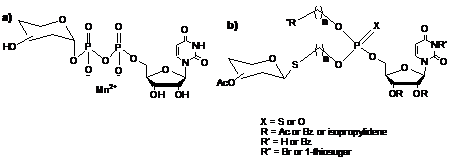 Fig.
1
Fig.
1