| This is an old, no longer maintained version of the website, for new one please visit: http://gsn.io.gliwice.pl |
|
|
|
|
|
|
||||

            |
 |

Gliwice Scientific Meetings 2012 ~~~ Poster abstracts ~~~
Data Analysis and Computer Modelling
1. QUALITY ASSESSMENT OF THE PROBES PLACED ON THE AffyMETRIX MOUSE430_2 MICROARRAY
Anna Cichońska1, Roman Jaksik1, Joanna Polańska1
1Systems Engineering Group, Institute of Automatic Control, Silesian University of Technology, Gliwice, Poland.
Introduction: In all living organisms various genes and proteins are interacting with each other creating greatly complicated but precisely organized biochemical networks. The complexity of the processes at the molecular level dictates a need for development of research methods that allow for an efficient observation of many genes and proteins interactions in a single experiment and a quick interpretation of collected data. Microarrays have become an extremely useful tool as it lets researchers detect and quantify the presence of certain nucleic acids or proteins within a biological sample. Affymetrix high density 3’ expression microarrays are the most popular among all the chips. They allow researchers to look at the global changes in the gene expression levels under the influence of certain factors. Each gene is represented by one or more probe sets consisting of 11 pairs of 25-bp molecular probes. Affymetrix probe sets’ definitions are based on the genomic and transcriptomic knowledge that was available at a time of chip construction in 2002. Their updates, published regularly by Affymetrix, involve only reassignments of the probe sets to another gene with no changes in the probe set composition. Aim: The aim of this study was to assess the quality and the relevance of the probes placed on the Affymetrix 3’ expression chip Mouse430_2. Results: The array contains nearly 500 000 probes organized in 45 101 sets. BLAST (Basic Local Alignment Search Tool) program which finds the regions of local similarity between sequences, was used to see how the probes are aligned to the latest version of the mouse genome. Program call parameters, e.g. masking the low complexity regions in the query, the reward for a nucleotide match, the penalty for a nucleotide mismatch, costs to open and extend the gap, have a significant impact on the results obtained. Different values of the parameters were examined and the finally chosen ones were optimized in order to search the genome database for short nucleotide sequences with the maximum sensitivity. The necessary conditions for obtaining reliable results from the experiments using microarrays are high sensitivity and the specificity of all the molecular probes placed on a given chip. This is equivalent to a statement that a trustworthy probe should be characterized by the lowest possible complementarity degree to any nucleotide sequence that may be present in the analyzed biological sample, except the target sequence. Therfore, in the next step of probe sets evaluation, all the matches found by the BLAST program were linked to the exons and transcripts sequences published in the RefSeq database. To assess the quality of the probes the set of criteria was proposed, basing on the results of probe alignment. The most reliable probe is thought as alingned only to the exons of one gene without any matches to other regions in the genome, and it should be placed within a 3'-most exon. A database containing the assesment of the quality and the relevance of the probes located on the Affymetrix Mouse430_2 chip and the detailed information about the matches of each probe to the mouse genome was constructed. The most reliable probes constitute only 41% of all the probes placed at the examined microarray, 34% of the probes do not match any exon and 7% do not match any sequence present in the mouse genome (mm10 build). Conclusions: The survey demonstrated that original Affymetrix probe set definitions contain unrelevant probes and using them might lead to incorect conclusions while analysing microarray gene expression data.
Acknowledgement: This work was financially supported by grant no. NN519579938.
2. DETECTING miRNA MODIFICATIONS IN HIGH-THROUGHPUT SEQUENCING DATA
Marta Danch1, Knut Krohn2, Krzysztof Fujarewicz3
1Student; Silesian University of Technology, Gliwice, Poland; 2Head of Core Unit DNA Technology, IZKF Univesität Leipzig, Leipzig, Germany; 3Institute of Automatics Control, Silesian University of Technology, Gliwice, Poland.
In this work a new algorithm for miRNA isoforms detection is proposed. The data was obtained using High-Throughput Sequencing. To test the algorithm, small RNA sequencing data from two types of cancerous tissues were used (Follicular Adenoma and Follicular Thyroid Cancer). The algorithm is build to detect modifications of miRNA molecules at the 3’ end. The Algorithm uses bowtie2 a short read aligner and R environment. The aligner was chosen among similar programs based on test alignments using test data generated from miRNA database entries. The algorithm in question allows the detection of differences between samples of any type of tissue, not only cancerous. The obtained results are being used in my master thesis and will be extended in further work. 3. recycling of UNMAPPED READS TO improve knowledge about the human genome
Agnieszka Danek1,
Michał Kabza2, Sebastian Deorowicz1, Michał
Szcześniak2,
1Institute of Informatics, Silesian University of
Technology, Akademicka 16, 44-100 Gliwice, Poland; 2Laboratory of Bioinformatics,
Faculty of Biology, Adam Mickiewicz University, Umultowska 89,
The 1000 Genomes Project provides a database of sequenced genomes of large and diverse set of individuals. The sequencing reads are aligned to the reference genome, to produce a comprehensive resource on human genetic variation. However, there are some reads that do not map to the reference genome. The possible reasons include misassembly of the reference or occurring variations specific to the sequenced individual (and thus not present in the reference). Here we present our approach to recycle the unmapped reads to search for undiscovered variations in the human genome, possibly specific to certain populations. We are making use of the reads that did not map to the reference genome. Unmapped reads are assembled to obtain contigs, which are then grouped into clusters based on their similarity. Finally, consensus sequences are constructed within each cluster. These sequences are further investigated as potentially new/unknown pieces of the human genome. Part of our studies focuses on detecting population specific retropositions of protein coding genes. It is done by aligning obtained sequences to the set of human proteins from Ensembl and retrogene candidates are identified as single, intronless alignments showing greatest similarity to multi-exon proteins. Moreover, we are interested in locating found retrogenes and other insertions or deletions in the human genome. For that purpose we are checking if the edges of the analysed sequence align to the reference close enough to each other, taking also into account read coverage at the investigated region. By applying the described methods we were able to find some sequences that are not present in the reference human genome or available variations set, even though they are retrogenes and/or they fit into the reference (based on the alignment of edges) as insertions. Where possible, the results were verified experimentally.
Acknowledgments: This work was supported by the European Union from the European Social Fund (grant agreement number: UDA-POKL.04.01.01-00-106/09) A.D. and by the Polish National Science Center under project DEC-2011/01/B/ST6/06868 M.K., S.D., M.Sz., W.R., I.M., A.P.. 4. ON STABILITY AND SENSITIVITY OF FEATURE RANKINGS FOR LARGE-SCALE BIOLOGICAL DATA
Danuta Gaweł, Krzysztof Fujarewicz
Institute of Automatic Control, Silesian University of Technology,44-100 Gliwice, ul. Akademicka 16, Poland.
Information on the differences of gene expression in various cells types is important in studies of the human genome. In the initial stage of molecular studies a microarray experiment (as well as deep sequencing) is often performed to estimate gene expression level in different cells types. On the basis of the results of the experiment gene lists are created. The top gene on the gene list distinguishes the most, in terms of expression, between groups of cells (e.g. cancer cells from healthy ones). Based on that gene list we can reduce the number of genes to be examined in further research. Gene lists can be created with univariate and multivariate methods. We focused on most common univariate methods such as: Fold Change (FC), Probability Fold Change (PFC), Intensity-Conditioned Fold Change (CFC), Student’s t-test, Welch t-test, Bayesian t-test, Significance Analysis of Microarrays (SAM) and Signal to Noise ratio (SN). It is known that on the basis of the same data set gene lists created with different ranking methods differ from each other. To determine which one of those lists is most reliable in the biological sense we can consider their stability. We say that ranking method A is more stable than method B if the gene lists generated with method A on the basis of original data set and the changed data set are more homogeneous than lists generated with method B. The data can be perturbed in different ways. For example the original data set may be re-sampled using bootstrap technique, or changed by adding noise. To evaluate the stability of ranking methods one can use indexes that compare the original list (created on the basis of original data set) with the list generated on the basis of perturbed data set (e.g. indexes as s, s1,s2 and plots CAT and BBFR). However, method used to change the data has significant impact on the value of stability indexes. The new sensitivity index W allows to assess the stability of gene lists without changing the original data set. Stability assessment itself is not sufficient, it cannot be properly interpreted without evaluation of classifier performance. For this reason we have implemented two classifiers: Support Vector Machine (SVM) and Diagonal Linear Discriminant Analysis (DLDA). For classifier performance assessment we use specificity, sensitivity, accuracy and area under ROC curve (AUC). Results of our studies show that there is no universal method to rank genes. The ranking method considered as the most stable on the basis of obtained values of indexes s, s_1, s_2 and plots BBFR and CAT, most frequently is not the same as the one we would choose comparing values of W. This is due to the fact that each of these indicators assesses the impact of different changes in the original data. Only the sensitivity index W does not require changing the data set. Moreover, if the values of indexes s,s1, s2 are all similar, so we cannot distinguish the one most stable ranking method, only sensitivity index W lets us choose one particular ranking method. Additionally, sensitivity index W is very useful when our data set consists of a small number of observations (too small to use bootstrap method for generating probes). Minimal number of observations in this case is determined by ranking methods (for mentioned methods the minimum number of observations is four - two in each group).
The work was supported by the Silesian University of Technology under grant BK 214/Rau1/2011/t.3. 5. NUCLEOSEQ 2.0 AN ENCHANTED WEB SERVICES CLIENT APPLICABLE TO COMPLEX NUCLEOTIDE SEQUENCE ANALYSIS TASKS
Roman Jaksik
Institute of Automatic Control, Silesian University of Technology, Akademicka 16, 44-100 Gliwice, Poland.
In the information-driven era the possibility of harnessing publicly available data resources is of great importance. The overwhelming amounts of data and their frequent updates make it very difficult to maintain comprehensive up-to-date local databases. Web services therefore become of great importance providing sophisticated methods of data retrieval based on uniform formats and transfer methods, allowing to utilize most recent data gathered from various sources. In this work we present NucleoSeq 2.0, a web services client utilizing the SRS (Sequence Retrieval System) and DAS (Distributed Annotation System) protocols which allow to programmatically gather RNA and DNA annotations and sequence data from the most popular databases maintained by NCBI, EMBL-EBI and UCSC. The retrieved sequences are utilized by the application which allows to perform various analysis scenarios including single sequence comparison, batch sequence analysis and even comparison between two large sets of sequences or specific sequence fragments like the 5’/3’ untranslated transcript regions, coding sequences or promoter regions. NucleoSeq allows to search for both specific and unspecific sequence motifs in various formats including IUPAC notation based motifs and Position-Weight-Matrices (PWMs). What distinguishes NucleoSeq from other similar applications is its simplicity achieved by the use of user-friendly interface allowing performance of complex analysis scenarios on the most up-to-date sequences with minimum user assistance. NucleoSeq is a standalone application, available at: www.bioinformatics.aei.polsl.pl
This work was supported by the National Science Centre (NCN) grant number 2011/01/N/NZ2/05358. 6. Detection of novel microRNA in deep sequencing data from thyroid cancer
Kornel Labun1, Tomasz Stokowy1,2, Michał Świerniak2, Bartosz Wojtaś2, Knut Krohn3, Barbara Jarząb2, Krzysztof Fujarewicz1
1Systems Engineering Group, Institute of Automatic Control, Silesian University of Technology, Gliwice, Poland; 2Nuclear Medicine and Endocrine Oncology Department, Cancer Center and Institute of Oncology, Gliwice Branch, Poland; 3Interdisciplinary Center for Clinical Research, University of Leipzig, Leipzig, Germany.
High-throughput sequencing (HTS) using next generation sequencing (NGS) techniques became useful in digital gene expression profiling. Short read length and high coverage are especially suited for counting miRNA prevalence and calculating differential expression. Compared to qPCR the quantification HTS offers a genome wide approach and allows overcoming the limitations of array based analysis which is restricted to miRNA molecules provided by databases and suffers from cross-detection prone hybridization methods. Latest research shows that miRNA sequences have high potential as biomarkers, including thyroid tumors diagnosis. Our study aims at finding all of previously undescribed miRNAs and evaluate their usefulness in differentiation of follicular thyroid tumors. We use Illumina miRNA sequencing of 50 samples from benign follicular adenoma (FA) and malignant follicular thyroid carcinoma (FTC). We analyze available miRNA detection software (Dario Web Server and miRDeep2) and compare it to our algorithm with PL-GRID computational infrastructure. We detected three potentially novel miRNAs which meet the classification requirements set by miRBase. We compared the usefulness of the Dario Web Server and miRDeep2 to our algorithm in different steps in analysis. We will present secondary structure for all predicted hairpins of detected novel miRNAs. Our results require laboratory validation to prove the computational analysis. The validation should be carried with isoform-specific technique to ensure precise description of novel miRNA profile.
7. Novel Strategies for the Discovery of GENETIC SIGNATURE OF RADIOSENSITIVITY - METHODS for data analysis span style='font-size:12.0pt; color:black;text-transform:uppercase'> Joanna Zyla1, Paul Finnon2, Robert Bulman2,
Simon Bouffler2, Christophe Badie2,
1Silesian University of Technology, Institute of Automatic Control, 44-100 Gliwice, ul. Akademicka 16 Poland; 2Health Protection Agency, Centre for Radiation, Chemical & Environmental Hazards, Chilton, Didcot, Oxfordshire OX11 ORQ United Kingdom.
Aim: The aim of the study was to develop data analysis strategy for the discovery of genetic background of radiosensitivity. Identification of polymorphisms and genes responsible for organism’s radiosensitivity increase the knowledge about the cell cycle and the mechanism of radiosensitivity which in the future may allow researchers to understand better the process of carcinogenesis especially among breast cancer patients.
Material and methods: The initial data for radiosensitivity evaluation were the results of G2 chromosomal radiosensitivity test (G2CR). The test was performed on 14 mice strains and the measurements were collected in 1, 2, 3, 4 and 5 hours after irradiation (dose 0.5 Gy).
The kinetics of the chromosomal aberrations’ repair was modeled as the exponential function in time, with two parameters k (gain) and T (time constant, related to the speed of the repair process) estimated with the use of least squares technique. The distribution of individual values of these two parameters, together with AUC (area under the curve) were subjected to a Gaussian mixture model decomposition (Fig. 1), which allowed for the detection of two subpopulations of mice (Fig 2). Fig.1. Decomposition of density function for k parameter. Fig.2. The exponential models of G2CR kinetics. CGD SNPdb database was used as the resource for inter-mouse genetic variation study. The database contains 7.85 million SNPs genotyped for 14 mice strains of our interest. The relevant SNPs, differentiating two detected subpopulations were found, and only nonsynonymous SNP (nsSNP) were selected for further analysis. Using widely available algorithms to predict an effect of nsSNP to protein function (PHANTER, PhD-SNP, SIFT, SNAP and PolyPhen-2) it was possible to check the role of obtained nsSNP and select the candidate polymorphisms and genes. Furthermore, the knowledge of genetic signature of radiosensitivity allowed for in silico prediction of other radiosensitive mice strains.
Conclusions: The proposed strategy for data analysis, which is a combination of mathematical modeling and data mining techniques allowed for discovery of the genetic signature of radiosensitivity. The knowledge on genes and polymorphisms involved in the process of mice diversification allows for in silico prediction of candidate-radiosensitive strains.
Acknowledgement: This work was financially supported by grant no. NN519579938. 8. PARALLEL COMPUTATION OF MATHEMATICAL MODEL OF TUMOUR GROWTH – MPI AND CUDA IMPLEMENTATION
Damian Borys, Sebastian Student, Krzysztof Psiuk-Maksymowicz
Institute of Automatic Control, Silesian University of Technology, ul. Akademicka 16, 44-100 Gliwice, Poland.
The microvascular network is an essential component in the development of solid tumours. It constitutes a source of nutrients and growth factors necessary for sustained tumour growth. However, due to fast metabolism of tumour cells, hypoxic regions may appear leading to necrosis. The phenomenon of hypoxia is important because it may lead to the process of angiogenesis which is the reason of lowered efficiency of different therapies. The main interest of the authors was to develop efficient numerical methods for simulations of vascularised tumour growth under the influence of different types of therapies. A system of partial differential equations was introduced in order to simulate growth of tumour and normal cells as well as the dynamics of the diffusing nutrient and anti-angiogenic or chemotherapeutic factors within the tissue. The equations originate from the multiphase theory. In order to provide physiological picture the heterogeneity of concentration of the nutrient and xenobiotics is ensured. Simulations of a mathematical model of tumour growth are highly time-consuming and, in some cases, depending on the complexity of the problem, can take many months. There are many different numerical techniques employed in order to perform simulations. In our work we use the finite difference time-domain method (FDTD). This is a numerical method that is accurate and robust. Among the variants of this method we can find one- and two-step Lax-Wendroff methods. Our previous studies showed that the two-step Lax-Wendroff method ensures better numerical stability. For this reason only the two-step Lax-Wendroff algorithm was taken into account in the present work. Performed tumour growth simulations are time-consuming and for this reason we use parallel implementation. We compared two different strategies of parallel computing: implementation on graphical processor units (GPUs) and multicore central processor units (CPUs) for solving the FDTD algorithm. For the GPUs implementation we use parallel computing platform and programming model CUDA created by NVIDIA. We use either computer cluster with general purpose computational nodes or NVIDIA Tesla with 448 computational units. The code was written in Matlab with appropriate toolboxes (Parallel Computing Toolbox and Distributed Computing Server) and launched on the Ziemowit Cluster at the Silesian University of Technology (http://ziemowit.hpc.polsl.pl). In all cases the use of parallel implementation speedups the simulation time in comparison to the standard implementation on a single processor computer. Our results showed that we can significantly reduce the simulation time when using parallel computing, especially in the case of GPUs’ implementation. The speedup depends on the size of the computation domain, available memory size and type of used processors and realization accuracy.
This work was supported by Grant No. N-N519-647840 from the National Science Centre (NCN), Poland. 9. Geometry modeling support for Monte Carlo simulation in nuclear medicine with Blender software
Justyna Pieter1, Kamil Gorczewski2, Damian Borys1
1Institute of Automatic Control, Silesian University of Technology, ul. Akademicka 16, 44-100 Gliwice, Poland; 2Department of PET Diagnostics, Maria Skłodowska-Curie Memorial Cancer Center and Institute of Oncology, Gliwice Branch, ul. Wybrzeże AK 15, 44-100 Gliwice, Poland.
Monte Carlo simulation can be very effective and useful method for a very broad range of applications where it is impossible to find any analytical solution due to the random nature of examined process. It is very often used in medicine. In nuclear medicine, Monte Carlo simulations can improve the quality of imaging process and provide information about absorbed dose by the examined subject. For this purpose, and not only, one can choose one of several MC codes, for example: SimSET [1], SIMIND [2] or Geant4 [3] with GATE[4]. The last option provides maximum flexibility carried by the universal Geant4 library with a very wide range of energy of the particles and any geometry needed to perform the simulation, whereas GATE simplifies the use of Geant4 in nuclear medicine (SPECT, PET). The use of above-mentioned MC simulation environment is very helpful. Nevertheless, the user has to take care of the modeling geometry and establish simulation parameters. In GATE everything has to be done in a scripting language, which means that the geometry can be seen only after modeling (using for example OpenGL drivers). Visualisation is not available on the fly during the modeling process. Similarly, the user interface and interaction after showing it with GATE is quite complicated and limited to script or console. Our proposal is to use the open source modeling software (Blender) to create the geometry of simulation on the basis of the idea of „what you see is what you get” (WYSIWYG). Blender is 3D computer graphics software that can be used to 3D modeling, texturing, fluid and smoke simulation, particle simulation, animating, camera tracking, rendering and many more. Furthermore, an extension to Blender software in the form of the Python script has been created in such a way that it alows to build GATE script with geometry described inside. It facilitates modeling geometry, reduces the time of simulation script preparation and also gives the opportunity to use GATE package by people who are not keen on programming.
References: [1] Harrison R. L. et al. (1993) A public-domain simulation system for emission tomography: photon tracking through heterogeneous attenuation using importance sampling, J. Nucl. Med. 34, 60P [2] Bahreyni Toossi M. T. (2010) SIMIND Monte Carlo simulation of a single photon emission CT, J. Med. Phys. 35, 42–47 [3] Agostinelli S. et al. (2003) GEANT4—a simulation toolkit, Nucl. Instrum. Methods A 506, 250–303 [4] Jan S. et al. (2004) GATE: a simulation toolkit for PET and SPECT, Phys. Med. Biol. 49, 4543–4561
This work was supported by the Institute of Automatic Control under Grant No. BKM-233/RAu1/2012/t.20.
10. REGULATION OF P53 SIGNALING PATHWAY IN MALIGNANT CELLS BASED ON RNA INTERFERENCE
Krzysztof Puszyński, Roman Jaksik, Andrzej Świerniak
Institute of Automatic Control, Silesian University of Technology, Akademicka 16, 44-100 Gliwice, Poland.
RNA interference is a mechanism which, by utilizing small non coding RNAs, can increase transcript degradation rate or impair the efficiency of translation process. Nucleotide sequence based target recognition system, used by RNA interference, allows to control the expression level of selected gene achieving very high specificity level. This allows to minimize very severe side effects which usually accompany gene therapies taking advantage of usefulness of RNA interference as molecular biology tool. In this work we present our in silico experiments concerning the possibility of a single gene regulation by a specific small interfering RNA (siRNA) which allows to increase radio-sensitivity of cancer cells, showing PTEN gene deficiency that impairs the p53 signaling pathway. Our simulations, originating from experimentally validated regulatory events, indicate that siRNA based decay of the p53 inhibitor MDM2, enhances the radiation treatment by inducing apoptosis in cancer cells on a level normally achievable only with high radiation doses. By introducing an additional, siRNA-based control signal which accompanies the radiation treatment it is possible to restore the proper functioning of the negative feedback loop, which through PTEN leads to apoptosis in response to DNA damage. Our studies present the possibilities and methodology of introducing a supporting therapy based on RNA interference, which can be adopted to cells shoving deficiencies of various genes involved in carcinogenesis.
This work was supported by the National Science Centre (NCN) grant number N N519 647840. 11. Virtual Screening of HIV integrase inhibitors and azanaphthalene compounds in a search for privileged substructural motifs
Agata Kurczyk, Andrzej Bak, Tomasz Magdziarz, Jarosław Polanski
Institute of Chemistry, University of Silesia, 40-006 Katowice, Szkolna 9 Street, Poland. akurczyk@us.edu.pl
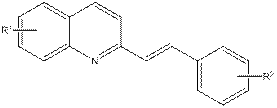
Determining the relation between chemical, biological and pharmacological space is nowadays one of the challenges in drug discovery. The use of molecular fragments that enables a widespread examination of chemical space is one of the approaches that can be employed to investigate more profitable paths to discovery. Effective modeling work is related to the availability of essential structural and experimental data, and yet a number of molecular databases are publicly available and can be used in drug design. Mining small molecule databases relevant to drug discovery could be a fruitful method for classifying chemical compounds as being drug-like and/or lead-like. In some cases it is possible to identify common molecular fragments, so-called privileged motifs, which ease ligand binding to an individual receptor or particular receptor family. Although privileged substructures are intended to be target class-specific it has been shown that these separated molecular subunits also appeared in compounds active against other target families. Frequency of occurrences of that kind generic drug-like molecular fragment among drug populations and bioactive compounds ensembles could be a valuable index of privileged structures estimation. By screening databases we can estimate the population of privileged (sub)structural motifs. This forced us to perform comprehensive exploration of azanaphthalene polypharmacology to designate privileged structural drug architecture and fragmental drug-likeness topology in this class of compounds [1]. Quinoline scaffold is frequently used in drug design. One would wonder how it compares to other possible “fragmental” azanaphthalens. We attempted to test the attractiveness of the different azanaphhthalene scaffolds in chemical space. Hence, we analyzed a number of the PubChem registered compounds having a given azanaphthalene scaffold. Quinoline appeared the most frequent hit. What is the origin of this popularity: practical applications, synthetic availability or else? To test the different possibilities, we considered two parameters: range of interest and b-value, representing respectively the number of compounds tested to all hits and active to tested ratio (b-value), which are the simplest measures of attractiveness and drug-likeness.
References: [1] Polanski J., Kurczyk A., Bak A., Musiol R. (2012) Privileged structures – dream or reality: preferential organization of azanaphthalene scaffold., Curr. Med. Chem. 19, 1921-1945
Agata Kurczyk acknowledges a scholarship from the SWIFT Project (POKL.08.02.01-24-005/10) co-financed by the European Social Fund. 12. PARALLEL SIMULATIONS FOR FINDING CHEMIOTHERAPY AND ANTI-ANGIOGENIC THERAPY SCHEDULE
Krzysztof Psiuk-Maksymowicz, Damian Borys, Sebastian Student
Institute of Automatic Control, Silesian University of Technology, ul. Akademicka 16, 44-100 Gliwice, Poland.
As a result of oxygen deficiency within the tissue, due to increased metabolism of the tumour cells hypoxic regions arise. In order to prevent this unwelcome phenomenon cells send pro-angiogenic signals (such as vascular endothelial growth factor), which stimulate growth of the blood capillaries. Hypoxia is additionally a reason of lower efficiency of different therapies. In order to increase the effectiveness of anticancer treatment chemotherapy is presently being combined with the anti-angiogenic therapy. However, the best treatment protocol of such a combined therapy is unknown. Authors main interest was to study the effectivness of different combined treatment schedules and to develop the best method of finding the most satisfactory one. The presented problem is not a trivial one because blood capilaries on the one hand are the source of growth factors and nutrients for cells, and from the other thay are the source of killing agents. A set of partial differential equations was introduced in order to simulate growth of tumour and normal cells as well as the dynamics of the nutrient, anti-angiogenic and chemotherapeutic particles diffusing within the tissue. The equations for cell dynamics originate from the multiphase theory. Among the explicit numerical methods one-step Lax-Wendroff method for transport equations was chosen, and standard forward time centered space for the diffusion equations. We have implemented, tested and compared three heuristic methods in order to find an optimal therapy schedule. These are: simulated annealing, genetic algorithm and ant colony algorithm. All above-mentioned methods are very time consuming, that is why parallel implementation of all the algorithms was desirable. Simulations were performed on the multicore processor computer cluster available in our laboratory, Matlab environment with appropriate toolboxes (Parallel Computing Toolbox, Distributed Computing Server). The results show the comparison of all tested methods.
This work was supported by Grant No. N-N519-647840, National Science Centre (NCN), Poland.
13. Evaluation of usefulness of rigid transformation for intrasubject registration of PET/CT images for evaluation of metabolic response
Aleksandra Niewiadowska1, Damian Borys1,2, Kamil Gorczewski2
1Institute of Automatic Control, Silesian University of Technology, ul. Akademicka 16, 44-100 Gliwice, Poland; 2Department of PET Diagnostics, Maria Skłodowska-Curie Memorial Cancer Center and Institute of Oncology, Gliwice Branch, ul. Wybrzeże AK 15, 44-100 Gliwice, Poland.
PET is a diagnostic method capable of revealing metabolic processes in human tissues. Application of positron radiation ensures high sensitivity of the method which provides response before any structural changes could be visible in CT. This high sensitivity of the method can also be used to evaluate a response to oncological treatment. However, a methodological effort must be made to ensure proper validation and control over acquired data. Thus, it is necessary to provide reliable means of data coregistration that can take into account and properly evaluate changes between time points of the treatment. A group of patients with neuro-endocrine tumours was selected. Each patient underwent 90-Y treatment. Prior to the therapeutic administration of radioisotope, a diagnostic scan was performed with 68-Ga-DOTATAE or 99m-Tc-tectrotide. Diagnostic scan was necessary to evaluate the presence of somatostatin receptors on tumour cells. After the treatment, a PET/CT scan was performed to validate the distribution of 90-Y during the treatment. The CT based registration was used by means of rigid-body registration with affine transformations and Mutual Information method [1] as a measure of goodness of registration. Pathological uptakes were compared in both before and after time-points.
References: [1] Viola P., Wells W.M. (1997) Alignment by maximization of mutual information, Int. J. Comp. Vision 24, 137 – 154
This work was supported by Grant No. N N519 647840, National Science Centre (NCN), Poland..
14. Creation of THE STRUCTURE OF vascular network BASED ON MAGNETIC RESONANCE AND COMPUTED TOMOGRAPHY angiograms
Małgorzata Prejs, Damian Borys, Krzysztof Psiuk-Maksymowicz
Institute of Automatic Control, Silesian University of Technology, ul. Akademicka 16, 44-100 Gliwice, Poland.
The most popular methods of visualizing blood vessels are magnetic resonance imaging and computed tomography angiography. The analysis of vascular network, separated from the background image allows obtaining a lot of important information like detection of geometric deformations or abnormal narrowing of the blood vessels. The main aim of this study was to create efficient algorithm that determines the structure of blood vessels’ network from two-dimensional digital images. Each analyzed image underwent skeletonization, determination of nodal- and end-points, creation of adjacency matrix and calculation the width of the branches. The algorithm’s result is adjacency matrix with averaged width for each branch of blood vessels network. Obtained vascular tree structure can complement mathematical model describing vascular growth of tumours, mathematical modeling of blood flow or models describing creation and growth of the blood vessels (e.g. angiogenesis).
This work was partially supported by the Grant (for DB and KPM), No. 2011/03/B/ST6/04384 from National Science Centre (NCN), Poland.
15. IMproving Visualization of the Mammogram images
Krystian Radlak, Natalia Radlak
Institute of Automatic Control, Silesian University of Technology, 44-100 Gliwice, Akademicka 16, Poland.
The mammogram research allows for early detection of the breast cancer and improves the breast cancer prognosis, because the causes of diseases are still not fully known. However, the analysis of mammograms is a difficult task and expert knowledge is required. Therefore, the image processing algorithms are increasingly becoming widespread in medical diagnosis. The enhancement of the visualization quality of the mammogram images can facilitate analysis and localization the region of interest (ROI). In order to improve quality of the mammograms we propose a novel scheme for deriving optimized visualization of the mammograms data and a new quality measure based on image colorfullness and the local gradients of the colorized image. The present study has shown that the pseudocolor visualization algorithm can be used to obtain visually pleasing mammograms image, which can be useful for the presentation and help the radiologists interpret the mammograms.
Acknowledgement: The work of Krystian Radlak has been supported under "DoktoRIS Scholarship program for innovative Silesia" part-financed by the European Union under the European Social Fund. 16. Analysis of nuclear magnetic spectroscopy by use of computer software
Michał Staniszewski1, Franciszek Binczyk2, Joanna Polańska2, Andrzej Polański1
1Institute of Informatics, Silesian University of Technology, Gliwice, Poland; 2Institute of Automatic Control, Silesian University of Technology, Gliwice, Poland.
The aim of the project was to design and implement an automatic tool for basic processing Nuclear Magnetic Resonance (NMR) spectra. Magnetic resonance spectroscopy (MRS) is currently used in oncology to investigate a number of cancers including brain, breast and prostate malignancies. The method gives scientists biochemical information about analyzed tissues and tells how aggressive the tumor can be. Signal detected in MRS is exposed to radio frequency pulse and transformed into a spectrum. In order to use results of MRS as a diagnostic tool several improvements are necessary. Low signal to noise coefficient is caused by few limitations of measurement such as low concentration of metabolites and limited time of observation. Currently, there are many commercial products that are used by scientists to analyze NMR spectra. The aim of the project is to develop computer software in Matlab platform that might be used for future researches. NMR signal processing is divided into few steps. At first, the designed tool has to read raw data coming from different types of devices and save the results in one common order. After measurement, methods called pre-processing techniques are used for the enhancement of the signal and that step is performed on the software side. The pre-processing techniques include filtering, removal of water signal, phase correction, base-line correction and signal modeling. For future diagnosis processed data has to be transformed into frequency domain thanks to Fourier Transform. There are many solutions that may be applied. The authors proposed a few of them based on their research. As a result of this project authors obtained a functional system for processing NMR spectra. After a series of experiments the authors observed that the obtained results are satisfactory, according to the assumed quality criterion. However precision of used algorithms may be still improved. Since the software was warmly welcomed by the cooperating physicians, the authors decided to continue research on the proposed system in their future work.
Acknowledgments: Both Ph.D. student authors received a grant under the project DoktoRIS - Scholarship program for innovative Silesia co-financed by the European Union under the European Social Fund.
Cell and Cancer Biology
17. IGFR-1 GENE EXPRESSION IN CLEAR CELL RENAL CELL CARCINOMA
M. Białożyt1, R. S. Braczkowski2, M. Plato3, W. Duda1, E. Mazurek 3
1E. Michałowski Memory Hospital, Dept. of Urology, Katowice, Poland; 2Silesian Medical University, Dept. Public Health, Katowice, Poland; 3Silesian Medical University, Dept. of Molecular Biology, Katowice, Poland.
Introduction & Objectives: Renal cell cancer, which accounts for 85% of kidney cancers, represents 3 – 4 % of all human malignant neoplasms. Clear cell renal cell carcinoma (CCRCC) is a distinct and the most frequent subtype of renal cell carcinoma. There are still no specific biomarker for this type of cancer. Insulin like growth factors I and II (IGFs) have strong promitotic and antiapoptotic effect. There are number of evidence indicating that IGFs can promote growth of many cancers. IGFs effects on growth of normal and transformed kidney cells. All these facts suggests that IGFs may play an important role in the development and growth of renal cancer. The authors aimed at finding differences in IGF receptor I gene expression between cRCC and kidney free of cancer. Another aim was to find expression differences in material from patients at different stages of TNM classification.
Material & Methods: Patients qualified to radical nephrectomy, aged 25 – 65, were included to the study. 64 patients suffered from kidney cancer were included in the examined group and 18 patients (age 32 -63) nephrectomized for reasons other than cancer were included into control group. Al patients have been conducted according to the protocol approved by the institutional committee on ethics in human investigation. Only materials obtained from patients with tumors qualified as CCRCC were included in further examination. Finally, 52 patients were qualified into examined group. Expression of genes for IGF receptors were evaluated by real time PCR, in specimens coming from tumors, tissue of tumor area free of cancer and from kidney nephrectomized because of reason other than cancer. Studied parameters were calculated for the mean and standard error of the mean (SEM), median and dispersion. Since the distributions of the parameters did not exhibit the characteristics of normality (checked-Smirnov normality test of Kolmogorov), the results were compared by non-parametric Mann-Whitney U test. Calculated frequency of expression of the parameters were compared by Chi-square test with Yates's correction, depending on the expected calculated value. The accepted level of statistical significancy was p <0.05.
Results: Expression of IGF-R1 gene in clear cell carcinoma occurs slightly more often than in kidney without tumor (p=0,249), but if it does exist, the number of transcripts in cRCC is much higher. The expression does not depend of TNM grade.
18. DIFFERENTIATION OF ALVEOLAR RHABDOMYOSARCOMA CELLS LEADS TO DOWNREGULATION OF MET RECEPTOR AND CHANGE THE BIOLOGY OF THE CELLS
Anna Jagiełło, Małgorzata Sekuła, Katarzyna Miękus, Marcin Majka
Department of Transplantation, Polish – American Institute of Pediatrics, Jagiellonian University Medical College, Cracow, Poland
Rhabdomyosarcoma (RMS) is the most common soft-tissue sarcoma among children. It is divided into two main subtypes: alveolar (ARMS) and embryonal (EMRS). RMS originates from myogenic precursors that are unable to differentiate and continue proliferation. It has been shown that downregulation of MET receptor influences the differentiation of rhabdomyosarcoma cells so this receptor can be a good target in RMS treatment. The MET tyrosine kinase receptor (also known as HGF receptor) is a well known proto-oncogene receptor which plays a key role during carcinogenesis in many cancer types. It makes the cancer cells to become malignant by the induction of proliferation, anti-apoptotic properties and pro-migratory signaling pathways. The aim of this study was to describe the influence of ARMS differentiation on MET receptor expression levels and investigate the behavior of differentiated cells. The differentiation of ARMS cells was obtained by culturing cells for 10 days in DMEM low glucose supplemented with 2% horse serum and 100nM TPA or DMEM high glucose with 5µM MET inhibitor. To investigate proliferation activity, cells were counted using hemocytometer. The protein levels of MET and CXCR4 receptors were tested by FACS analysis. mRNA expression levels of differentiation markers and MET receptor were verified by quantitative RT-PCR. The changes in cell morphology were observed as well. We observed reduced proliferation activity after differentiation of ARMS cells. The expression levels of MET and CXCR4 receptors on the cell surface decreased after differentiation process. Quantitative RT-PCR confirmed downregulation of MET receptor and the increase in differentiation markers level. We observed the significant changes in cell morphology after 10 days of differentiation. The results showed that differentiation process is connected with downregulation of MET receptor and it can be one of the therapeutic targets in RMS treatment. 19. INFLUENCE OF TYRPHOSTIN AG1296, A SELECTIVE INHIBITOR A PLATELET-DERIVED GROWTH FACTOR RECEPTOR, ON BIOLOGY OF RHABDOMYOSARCOMA CELLS
Małgorzata Lasota1,2, Walentyna Balwierz1, Andrzej Klein2
1Department of Pediatric Oncology and Hematology,
Polish-American Institute of Pediatrics, Faculty
An important early event in the development of the neoplastic phenotype is the induction of genes involved in autocrine growth regulation, such as growth factors and their receptors. Platelet-derived growth factor (PDGF) and its receptors are involved in a variety of diseases. In all cases enhanced signaling of the receptor is the hallmark. Therefore, the family of PDGFs receptors emerges as an attractive target in anti-cancer therapy. The aim of the study was to evaluate possible anticancer effect of tyrfostin AG1296, a selective inhibitor platelet-derived growth factor receptor (PDGFR) on rhabdomyosarcoma cells. We evaluated influence of investigated compound on proliferation, viability and proteins expression. RMS cells were cultured in serum-free DMEM/F12 medium. Modified crystal violet (CV) and MTT methods were used to determine the RMS cells’ proliferation and viability. Influence of the investigated inhibitor on cell apoptosis or necrosis was determined by differential staining with Hoechst No. 33258 and propidium iodide. The level of activation of p53, Akt and Erk1/2 proteins was evaluated using Western Blot analysis. MTT and crystal violet staining (CV) methods showed that tyrphostins significantly inhibit proliferation of investigated cell line. The AG1296 inhibitor affects RMS cell proliferation in a dose-dependent way in the 1–100 μM concentration range. At concentrations above 25 μM there was 100% inhibition of growth of these cells and a cytotoxic effect was noticed. 50% inhibition of RMS cell proliferation (IC50) was observed at concentration 7.76 ±0.35 μM. Differential staining with Hoechst 33258/PI showed that PDGFR inhibitor induces apoptosis of rhabdomyosarcoma cell. Finally, we observed that tyrphostin AG1296 decreases the level of activated p53, Akt and Erk1/2 proteins. The results of these experiments indicate that autocrine growth of RMS cells is regulated by at least one autocrine loop, involving platelet-derived growth factor (PDGF) and its receptor (PDGFR). The fact that tyrphostin AG1296 is able to complete inhibition of RMS cell growth in vitro gives a chance for providing a new group of antitumor drugs, which may be more effective than the medicines used so far.
20. ABSORPTION AND METABOLISM OF GENISTEIN DERIVATIVES IN THE HUMAN INTESTINAL CACO-2 MODEL
Katarzyna Papaj1, Aleksandra Rusin2, Wiesław Szeja1
1Department of Organic Chemistry, Bioorganic Chemistry
and Biotechnology, Silesian University
Caco-2 cell line shows many characteristics of the human small intestine epithelium and serves as an in vitro model of drug transport through the intestine wall. Caco-2 cells have the ability to form tight junctions on lateral side of plasma membrane, produce enzymes, which take part in transport and metabolism of compounds, and excrete small amounts of intestinal mucus on the apical surface. This cell line is used to define the rate of absorption, total amount of transported substance in time, the type of transport (passive or active) and intracellular accumulation of compounds [1]. In our study we assessed the bioavailability and metabolism of new genistein derivatives, comprising polyphenols connected to a sugar moiety via linkers of different length and structure. These compounds show ability to inhibit proliferation of cancer cells in vitro at the concentration several-fold lower than genistein. In our research, we used Caco-2 cell line cultured in 24-well plates with porous membranes, until we obtained tight monolayer. The integrity of epithelial layer was estimated by transepithelial electrical resistance (TEER) measurement. When the monolayer was obtained, the culture medium was replaced by Hank’s buffer. The examined derivatives of genistein were applied to the apical part of the container. Next, at 2-hour intervals, samples were collected from basoteral chambers. The concentration of derivatives in collected samples was determined using HPLC. Chromatographic analysis was performed on a water column L-column C18 (150 ×4.6 mm, 3.0 mm). Mobile phase was composed of water with 0.1% formic acid: acetonitrile. Full scan mode was used to detect and verify the chemical and molecular structure of target compounds among the other chemicals in cell culture media. The MS conditions were individually fitted for each compound. Our studies allow to conclude that metabolism and bioavailability of genistein derivative depends on their chemical structure.
References: [1] Shah P., Jogani V., T. Bagchi, A. Misra (2006) Biotechnol. Prog. 22, 186-198
Acknowledgement: Research studies part-financed by the National Science Centre (2011/01/N/NZ4/01141). 21. THE INTERACTION BETWEEN CXCR4 AND CXCR7 RECEPTOR IS CRUCIAL FOR CERVICAL CARCINOMA DEVELOPMENT
Małgorzata Sekuła, Katarzyna Miękus, Marcin Majka
Department of Transplantation, Polish – American Institute of Pediatrics, Jagiellonian University Medical College, Cracow, Poland. e-mail: malgorzata_sekula@wp.pl
Cervical carcinoma (CC) is one of the most frequently diagnosed cancer among women worldwide. CC cells demonstrate the expression of G-protein coupled seven transmembrane domain receptors. These include CXCR4 and CXCR7 chemokine receptors. CXCR4/CXCR7/ stromal cell–derived factor-1 axis (CXCR4/CXCR7/SDF-1) and CXCR7/ interferon-inducible T-cell alpha chemoattractant axis (CXCR7/I-TAC) play an important role in cell proliferation, migration, adhesion and cancer progression. The aim of this study was to investigate the role of CXCR4 and CXCR7 receptor in biology of the CC cell line HTB-35. HTB-35 cell line with stable down-regulation of CXCR4 and CXCR7 gene (single and double knockout) was prepared using lentiviral RNAi - expression system. To verify gene knockout real-time RT-PCR, western blot and FACS analysis were performed. To investigate proliferation MTT assay and cell counting in hemocytometer was done. Chemotaxis was estimated using modyfied Boyden chamber. Colony-forming assay was used to indentify the ability of propagation in vitro. Mouse model was used to examine the influence of CXCR4 and CXCR7 receptor on tumor growth. We observed that simultaneous downregulation of CXCR4 and CXCR7 gene activity resulted in decreased proliferation. CXCR4 and CXCR7 gene knockout results in the increase number of “paraclone” like colonies and decrease in the number of “holoclone” like colonies. Downregulation of CXCR4 receptor results in statistically significant reduction of tumor growth in NOD-SCID mouse. The results suggest that CXCR4 and CXCR7 receptors play an important role in many biological pathways of the CC cell line. Colony forming assay indicated that CXCR4 and CXCR7 receptors might contribute to cancer stem cells survival. Therapy based on blocking activity of not only one but more targets might be a potential new strategy for CC treatment.
Acknowledgments: This study was supported by research grant from the Polish Ministry of Science and Higher Education NN 401010036.
22. OVEREXPRESSION OF miR-155 ENHANCES CELL GROWTH BY TARGETING THE TBRG1 GENE IN B-CELL LYMPHOMA
Izabella Slezak-Prochazka1,2,
Joost Kluiver1, Debora de Jong1, Melanie Winkle1,
1Department of Pathology and Medical Biology, University Medical Center Groningen, 9700RB Groningen, Hanzeplein 1, The Netherlands; 2Department of Public Health, Czestochowa University of Technology, 42-200 Częstochowa, al. Armii Krajowej 36b, Poland.
MicroRNAs (miRNA) are small noncoding RNA molecules that negatively regulate expression by binding to 3’untranslated region (UTR) of target mRNAs. The functional mature miRNAs are part of the RNA-induced silencing complex (RISC), which also includes one of the Argonaute (Ago) proteins. In silico predictions reveal many putative miRNA targets, but until now only a limited number of these targets have been proven experimentally. MiR-155 is an important regulator of B-cell development and deregulation of miR-155 contributes to B-cell lymphomagenesis. High miR-155 levels are observed in several types of lymphoma, including Hodgkin lymphoma (HL). In contrast, Burkitt lymphoma (BL) is characterized by very low miR-155 levels. To determine the function of miR-155 in B-cell lymphoma, we studied the effect of miR-155 induction on BL cell growth and identified miR-155 target genes in BL and HL. Overexpression of miR-155 enhanced growth of ST486 BL cells but not of Ramos BL cells in a GFP competition assay. Ago2-RIP-CHIP in miR-155-transduced or empty vector-transduced cells revealed 54 miR-155 target genes in ST486 and 15 in Ramos cells. Besides the higher number of targets, also the fold enrichments were much higher in miR-155-ST486 as compared to miR-155-Ramos. In silico validation of the 54 genes identified in ST486 cells indicated that 32% of the genes were predicted as miR-155 targets by TargetScan and 77% contained the 6mer miR-155-binding motif in the 3’UTR. We confirmed miR-155 targeting for the 5 most enriched genes, i.e. DET1, TBRG1, TRIM32, HOMEZ and PSIP1, and a known miR-155 target, JARID2, using luciferase reporter assays in ST486 cells. Inhibition of miR-155 in KM-H2 HL cells using a sponge construct revealed that DET1, TBRG1, TRIM32, HOMEZ and JARID2 are indeed targeted by endogenous miR-155 in KM-H2 cells. To determine if the identified miR-155 target genes were involved in the observed enhanced growth of ST486 cells upon miR-155 overexpression, we inhibited the 6 selected genes by shRNA constructs and showed that inhibition of the TBRG1 enhanced growth of ST486 cells. In conclusion, we identified novel miR-155 targets in BL and HL and showed that miR-155 promotes growth of BL cells by targeting the TBRG1 gene.
23. microRNA expression profiling - the great beginning of the discovery of new factors in HNSCC pathogenesis
Marcin Szaumkessel1, Joanna Janiszewska1, Kinga Pelińska1, Magdalena Kostrzewska-Poczekaj1, Małgorzata Jarmuż-Szymczak1, Maciej Giefing1, Krzysztof Szyfter1,2
1Institute of
Human Genetics, Polish Academy of Sciences, Department of Environmental
Mutagenesis,
MicroRNAs (miRs, miRNAs) – a relatively new class of expression regulators have been discovered in the early 90s. Ever since, the involvement of these particles has been proved in a majority of processes in cells and also connected with cancer pathogenesis. Thus, miRNA expression profiling in cancer is considered as valuable tool in prediction and prognosis of onco-specific parameters. Head and neck squamous cell carcinomas (HNSCC) are still an important medical concern as the efficiency of treatment have not been substantially improved since decades. The main aim of our study was to delineate miRNA significantly involved in HNSCC. Statistical analysis based on miRNA expression microarrays data (Agilent Human Microarray miRNA Expression 60K) has identified differences in particular miRNA relative expression between examined probes (16 laryngeal squamous cell carcinoma cell lines and 5 primary larynx cancer cases versus 3 commercially available healthy epithelial cells). miRNAs: miR-21, miR-100, miR-133a, miR-98, miR-196, miR-1246, miR-1290 and miR-4317 were shown to be significantly altered in expression. Whereas, three miRNAs (miR-1246, miR-1290 and miR-4317) having no HNSCC literature background and being significantly up-regulated have been determined for further studies. Additionally, the selected miRNAs and their target genes have been analyzed by comparing them with scores from two different platforms performed on the same cell lines material: mRNA expression microarray (Affymetrix U133 plus 2.0) and DNA copy number microarray (Agilent array-CGH 244K and 44K). We will show the findings with potential gene-miRNA connection and potential functional consequences. Comparison of chromosomal localization of selected miRNA and chromosomal alterations has proved that array-CGH could at least partially elucidate a reason for decreased or increased expression of miRNA. The analysis of linkage of miRNA alteration and level of expression of their predicted target genes has showed probable impact on crucial cell functions such as: apoptosis, cell invasiveness and cell signaling. Profiling of miRNA expression provides a great opportunity to find new factors involved in carcinogenesis. Combining this approach with in silico analyses of possible target genes for selected miRNAs and comparison between different microarray platforms are an excellent beginning for further researches. 24. THE LIPID PEROXIDATION PRODUCT, 4-HYDROXY-2-NONENAL COVALENTLY MODIFIES HUMAN RECQ HELICASE ASSOCIATED WITH PREMATURE AGING PHENOTYPE, WERNER PROTEIN, AND AFFECTS ITS ACTIVITY
Jolanta Czerwińska1, Janusz Dębski1, Vilhelm A. Bohr2, Barbara Tudek1,3, Elżbieta Speina1
1Institute of Biochemistry and Biophysics,
Polish Academy of Sciences, Warsaw, Poland; 2National Institute
4-Hydroxy-2-nonenal (HNE) is an endogenous product of lipid peroxidation known to play a role in cellular signaling throught protein modification and is a major component of the pathogenesis in a spectrum of diseases involving oxidative stress. Werner syndrome arises through mutations in both copies of the WRN gene that encode RecQ 3’-5’ DNA helicase and exonuclease essential for genomic stability. This hereditary disease is associated with chromosomal instability, premature aging and cancer predisposition. WRN appears to participate in the cellular response to oxidative stress and cells devoid of WRN display elevated levels of oxidative DNA damage. We investigated the direct influence of HNE on purified human WRN protein and demonstrate that both helicase and exonuclease activities of WRN protein are modulated, depending on HNE concentration. Western blot, immunoprecipitation and mass spectrometry were used to identify and characterize the in vitro and in vivo covalent modifications of WRN by HNE. Data revealed adduct addition to several cysteines and histidines, including the helicase domain. We will further apply molecular modeling analysis of HNE adducted to His and Cys residues to provide a potential mechanism of dysregulation of WRN enzymatic activity. 25. SeRCHING FOR MOLECULAR SIGNALS OF BYSTANDER EFFECT INDUCED BY UVA, UVB AND UVC RADIATION
Aleksandra Krzywon, Karolina Gajda, Magdalena Skonieczna, Maria Widel
Institute of Automatic Control, Silesian University of Technology, Akademicka 16 Street, 44- 100 Gliwice, Poland.
Bystander effect, which is manifested mainly as disruptive events in cells not exposed to radiation but being in the vicinity of the irradiated cells, is relatively well known in the case of ionizing radiation, but little is known about the UV induced bystander effect. UV radiation covers three spectrum ranges: UVA, 320-400 nm (long wave ), UVB 280-320 nm (middle wave), and UVC 200-290 nm (short wave). UVA rays constitute ~95% of solar radiation that reaches the Earth, UVB (above 300 nm) only ~ 5% of the solar spectrum, and the shortest band- UVC is almost completely absorbed by the protective ozone layer. UV radiation is known etiologic factor for skin carcinomas and malignant melanoma, and it is probable that UV induced bystander effect contributes to cancer development. The aim of this project was to compare the direct action of three UV wavelengths and induction of bystander effects in normal human dermal fibroblasts (NHDF). The transwell co-incubation system was used in experiments. Cells growing on 6-well plates were exposed to different doses of UV radiation (UVA - 20 KJ/m2, UVB – 10 KJ/m2 and UVC - 200J/m2). Immediately after irradiation the irradiated plates were combined with inserts in which the non-irradiated cells were grown. The viability of irradiated and bystander cells was evaluated by MTS assay and apoptosis was measured by flow cytometry using Anexin V assay. The reactive oxygen species, nitric oxide and superoxide radical anion, as potential mediators of bystander effect were measured by flow cytometry after labeling with specific fluorescent dyes. Bystander effect was observed after three bands of UV radiation as diminution of cell survival and apoptosis induction, however it appeared with different severity at the doses used. The results show that main mediators of bystander effect(s) are reactive oxygen species (ROS). However, whereas UVA was the most effective in generation of cellular ROS in UV-exposed and bystander cells, UVC wavelength did not show induction of ROS in directly exposed cells, but induced ROS in bystanders. In contrast, superoxide radical anion was effectively generated by UVC rays. Nitric oxide seems not to be the mediator of UV-induced bystander effect in our experimental model.
Supported by the grant No N N518 497 639 from the Polish Ministry of Science and Higher Education and grant BKM 233/ RAU1/ 2012 from Silesian University of Technology. 26. ANALYSIS OF LYSOSOMAL MEMBRANE STABILITY IN HEPATOCYTES FOLLOWING EXPOSURE OF A MOUSE HEART TO RADIATION
Anna Wieczorek1, Teodora Król1, Małgorzata Łysek-Gładysińska1, Monika Pietrowska2, Anna Walaszczyk2
1Department of Cell Biology, Institute of Biology, The
Jan Kochanowski University, Świętokrzyska 15,
Over the last decade, the lysosome has emerged as a significant component of the cellular death machinery (Johansson et al., 2010). A series of papers by Brunk and co-workers (Kurz et al., 2008; Terman et al., 2006) established that the extent of lysosomal damage determines cell;s fate. A limited release of lysosomal enzymes results in cell death by apoptosis, while a massive lysosomal rupture leads to necrosis (Johansson et al., 2010). Obviously, it is the lysosomal membrane composition that plays a key role in the maintenance of lysosomal integrity. Damage to lysosomal membrane components or changes in the membrane structure and fluidity could result in lysosomal membrane destabilization and, consequently, in the increase in its permeabilization, which causes a release of cathepsins and other hydrolases, as well as hydrogen ions (causing acidification of the cytosol) from the lysosomal lumen to the cytosol. Lysosomal membranes are especially susceptible to free radical damage. An increased production of free radicals in a cell may lead to destabilization of the lysosomal membrane via massive peroxidation of membrane lipids. Lysosomal membrane permeabilisation induced by oxidative stress is a contributing factor in apoptic cell death caused by ionizing radiation. Liberation of lysosomal enzymes can serve as a general marker for radical attack on cellular membranes. The aim of the experiment was to analyse lysosomal membrane stability in hepatocytes following exposure of a mouse heart to ionizing radiation. 8-week-old male C57BL/6 mice were used in our experiment. Mice were housed in a temperature - controlled room (21°C) with a 12h light –dark cycle and were fed standard mice food and water ad libitum. The mice were divided into 4 groups: · 1: control mice (mice without irradiation), · 2, 3, and 4: experimental mice whose hearts received a single fraction of radiation of 8 Gy dose. The mice of groups 1 and 2 were killed 12 h after irradiation, the animals of group 3 after 36 h, while the mice from group 4 - after five days. The segments of liver were immediately taken for biochemical studies. They were homogenized and fractionated by differential centrifugation. In the obtained lysosomal fractions (pellet) and supernatant fractions of hepatocytes, total protein level was determined by Lowry’s method modified by Kirschke and Wiederanders (1984). The activity of lysosomal enzymes (Cat D and L, AcP, BGRD, HEX, LeuAP, ArgAP) was estimated using specific synthetic substrates according to the methods described by Langner et al. (1973), Hollander (1970), Barrett (1972), McDonald and Barrett (1986) (methodology in numerous papers). The activity of the enzymes was expressed in μmoles/mg of protein/hour. The results were statistically analysed using Student’s t-test. We observed that the irradiation of the animals’ hearts with a single fraction of 8Gy dose caused a statistically significant increase in the activity of analyzed hydrolases in the liver lysosomal fractions compared to control group. The strongest changes were observed 36 h after radiation. In supernatants of the lysosomal pellets, the activity of hydrolases, in the majority of cases, decreased as compared to control group. There was no radiation - induced damage (labilization) to the lysosomal membranes of hepatocytes. We can conclude that the lysosomal membranes were intact.
References: [1] Johansson A.-Ch., Appelqvist H., Nilsson C., Kågedal K., Roberg K., Öllinger K. (2010) Regulation of apoptosis-associated lysosomal membrane permeabilization. Apoptosis 15, 527–540 [2] Kurz T., Terman A., Gustafsson B., Brunk U. (2008) Lysosomes in iron metabolism, ageing and apoptosis. Histochem Cell Biol.129, 389–406 [3] Terman A., Kurz T., Gustafsson B., Brunk U. (2006) Lysosomal labilization. IUBMB Life 58, 531–539
This project was supported by the 7.FP EURATOM 211403 CARDIORISC. 27. The INFLUENCE OF heat shock factor 1 on the nf-kB SIGNALING PATHWAY
Patryk Janus1, Magdalena Kalinowska-Herok1, Katarzyna Szołtysek1, Roman Jaksik2,
1Maria Sklodowska-Curie Memorial Center and Institute
of Oncology; Gliwice, Poland; 2Silesian University
NFκB- and HSF1-dependent pathways are the major components of cellular responses to stress. They play the important role in response to therapeutic treatments and pathogenesis of serious human diseases, including cancer. Both of these transcription factors regulate several genes involved in apoptosis, cell proliferation and inflammatory responses. Here we aimed to identify NFκB-dependent genes which expression is affected by the active HSF1. Activation of the NFκB pathway and expression of NFκB-dependent genes was analyzed in U2-OS human osteosarcoma cells stimulated with TNFα cytokine. Cells were either preconditioned with hyperthermia to activate endogenous HSF1 (wild type) or engineered to express a constitutively active form of HSF1 in the absence of heat shock (tg type). The expression of NFκB-dependent genes was analyzed by microarrays and quantitative RT-PCR, using both NFκB-pathway-oriented PCR-Array and gene-specific reactions. Binding of HSF1 to promoters of NFκB-dependent genes was analyzed by chromatin immunoprecipitation assay (ChIP) with anti-HSF1 Ab (genes with hypothetical sites of HSF1 binding were pre-selected based on bioinformatics analysis). We have found that hyperthermia resulted in a general blockade of activation of NFκB signaling. In contrast, the presence of constitutively active HSF1 also did not block TNFα-induced activation of the NFκB. However, microarrays-based analysis revealed that expression of certain (potentially) NFκB-dependent genes was modulated by either endogenous or transgenic HSF1. In silico analysis of their promoter sequences revealed that some of these genes have previously undescribed hypothetical HSE motifs. We concluded that expression of several NFκB-dependent genes is modulated by HSF1-dependent mechanisms. Some of these genes could be directly co-regulated by HSF1 due to the binding of this transcription factor to the promoter regions of such genes. 28. Dual role of γH2AX in heat shock response
N.V.Petrova, A.K. Velichko, S.V. Razin, O.L. Kantidze
Institute of Gene Biology RAS, Moscow, Russia
Since its discovery, γH2AX has been considered to be a marker of double-stranded DNA breaks (DSBs) that recruits repair factors to the sites of DNA damage. However, this interpretation had been brought into question by the results obtained during the last few years. In particular, it was shown that H2AX might be phosphorylated in a DSB-independent manner under hypoxic, heat-shock and replication-arrest conditions. Nevertheless, it should be mentioned that the data regarding H2AX phosphorylations outside the DNA DSBs remain controversial and the idea that γH2AX marks not only DSBs is not universally accepted. Here we showed that H2AX might be phosphorylated in response to heat shock both in DSB-dependent and -independent modes in one cellular population. Moreover, the results of our inhibitor analysis suggested that γH2AX formation was mediated by different PIKKs: ATM/ATR triggered the DSB-associated phosphorylation, while DNA-PK triggered the replication arrest/delay-associated phosphorylation. As to DSB-associated γH2AX, its functional role seems to be clear: it acts as a DNA damage secondary sensor, as described elsewhere. In the case of replication arrest, it appears that phosphorylation of H2AX directly protects replication forks rather than participating in a signaling cascade.
This work was supported by the Ministry of Science and Education of the Russian Federation (grant 8126).
29. Heat Shock Transcription Factor 1 enhances motility of mouse melanoma B16F10 cells by regulating focal adhesion signaling
Agnieszka Toma, Wieslawa Widlak, Natalia Vydra
Center for Translational Research and Molecular Biology of Cancer, Maria Skłodowska-Curie Memorial Cancer Center and Institute of Oncology, Gliwice Branch, Gliwice, Poland.
Heat Shock Transcription Factor 1 (HSF1) is a main regulator of the heat (stress) response. It activates heat shock genes, which encode heat shock proteins (HSPs). HSPs function as molecular chaperones by folding proteins during cellular stress. Beyond the classical induction of HSPs, HSF1 binds to broad array of non-HSP genes, associated with cell signaling, cytoskeleton organization and energy production. This activity of HSF1 seems to be important for its role in carcinogenesis. To study the role of HSF1 in tumor growth, we have constructed a model of mouse B16F10 melanoma cells with an overexpression of constitutively active, human HSF1, with deletion of regulatory domain (amino acids 221-315; aHSF1). Simultaneously we have constructed mouse melanoma B16F10 cells with down-regulated HSF1 expression using shRNA particles specific for 3’UTR and coding sequences of mouse HSF1. The expression of aHSF1 in stably transfected cells led to activation of several inducible Hsp genes (Hsph1, Hspb1, Hspa1), what was confirmed on mRNA and protein level. Transfection with HSF1 shRNA constructs was connected with decreased level (down to 50-70%) of HSF1 protein and inhibition of inducible Hsp genes’ expression. We have found that expression of constitutively active HSF1 enhanced anchorage-independent growth of B16F10 cells, while cells with down-regulated expression of HSF1 had the same ability to form colonies in soft agar as nonmodified cells. Using Boyden chamber assay we showed that cells expressing aHSF1 had higher ability to migrate. To determine the expression profile of genes associated with cell motility, specific RT2PCR array was applied. We found that expression of several genes involved in focal adhesion (Vin, Cav1, Capn1, Ptk2) was decreased in cells expressing aHSF1, but did not change in cells with down-regulated expression of HSF1. We conclude that HSF1 activation might support cell motility and enhance tumor metastasis via influence on the cytoskeleton of cell connections to the extracellular matrix.
A.T. was supported by the European Community from the European Social Fund within the INTERKADRA project UDA - POKL-04.01.01-00-014/10-00.
30. Expression of ABC transporters is elevated in cultured melanoma cells overexpressing Heat Shock Transcription Factor 1
Natalia Vydra, Agnieszka Toma, Magdalena Glowala-Kosinska, Agnieszka Gogler-Piglowska, Wieslawa Widlak
Center for Translational Research and Molecular Biology of Cancer, M. Sklodowska-Curie Memorial Cancer Center and Institute of Oncology, Wybrzeże Armii Krajowej 15, Gliwice, 44-100, Poland.
Heat Shock Factor 1 (HSF1) is a transcription factor activated under stress conditions. In turn, it regulates heat shock gene expression and expression of a broad array of non-HSP genes, associated with cells signaling, cytoskeleton organization and energy production. This activity of HSF1 seems to be important for its role in supporting tumor growth. Other role of HSF1 in carcinogenesis could be associated with cell drug resistance due to ability of HSF1 to regulate ABCB1 (MDR-1) gene expression (Vilaboa et al., 2000). The aim of the present study was to find out the role of HSF1 in the development of multidrug resistance of cancer cells. We have constructed a model of mouse (B16F10) and human (1205Lu, WM793B) melanoma cells with an overexpression of full form of human HSF1 (wild type). Mouse and human melanoma cells with wtHSF1 overexpression were treated with increasing concentration of doxorubicin, vinblastin, paclitaxel, cisplatin and bortezomib. Cells survival was estimated by MTT test and IC50 was calculated. We found that the viability of all tested melanoma cells was comparable in the case of treatment with cisplatin, vinblastin or bortezomib while the overexpression of wtHSF1 enhanced survival of cells treated with doxorubicin and also, to a lesser extent, with paclitaxel. We found that expression of several ABC transporters (ABCB1, ABCC1 and ABCC2) was elevated in mouse and human melanoma cell overexpressing wtHSF1. Melanoma cells with wtHSF1 overexpression were also characterized by the more effective efflux of compounds from the cells. We can conclude that HSF1 overexpression enhances resistance of melanoma cells to doxorubicin, which is correlated with elevated expression of several ABC genes and more effective ability of cells for drug efflux.
A.T. was supported by the European Community from the European Social Fund within the INTERKADRA project UDA - POKL-04.01.01-00-014/10-00.
31. ACTIVATION OF p53 PATHWAY IN CELLS EXPOSED TO CAMPTOTHECIN OR ACTINOMYCIN D IS STRONGLY ATTENUATED BY RAPAMYCIN – A SPECIFIC INHIBITOR OF mTOR KINASE
Artur Zajkowicz, Małgorzata Krześniak, Iwona Matuszczyk, Marek Rusin
Center for Translational Research and Molecular Biology of Cancer, Maria Skłodowska-Curie Memorial Cancer Center and Institute of Oncology, Gliwice Branch, 44-144 Gliwice, Poland
TP53 is the major tumor suppressor gene frequently mutated in human cancers. The p53 protein coded by TP53 is a crucial element of signaling pathways that sense various forms of cellular stress and respond to it by arresting the cell cycle, increasing the DNA repair capacity or by inducing cellular senescence or apoptosis. The p53 status and activation level can modulate the sensitivity of cancer cells to the cytotoxic activity of various chemotherapeutic agents. Previously we showed that rapamycin, an inhibitor of mTOR kinase and an anticancer drug, attenuated the activation of p53 pathway in cells exposed to AICAR – a substance that mimics metabolic stress. In this work we explored if rapamycin could modulate the activation of p53 pathway by two agents that inhibit transcription and are used as anticancer agents. Actinomycin D at low concentration inhibits transcription of ribosomal RNA genes by RNA polymerase I. Camptothecin as topoisomerase I inhibitor interferes with transcription and DNA replication. We found that rapamycin attenuated the activation of p53 pathway induced by camptothecin or actinomycin D. In cells treated with actinomycin D, rapamycin blocked the activating phosphorylation of the p53 protein on serine 46. Treatment with rapamycin was associated with strong activation of Akt kinase, which is the major pro-survival and anti-apoptotic protein. Our data generate the hypothesis that rapamycin attenuates the activation of p53 pathway by upregulating the activity of Akt kinase.
32. ENDOGENOUS FACTORS RESPONSIBLE FOR THE FENOTYPE OF CELLS DEFECTIVE IN FANCONI ANEMIA PATHWAY AND RECQ FAMILY HELICASES
Elżbieta Speina1, Konrad Kosicki2, Jolanta Czerwińska1, Dominika Pszczółkowska2, Wojciech Niedźwiedź3, Barbara Tudek1,2
1Institute of Biochemistry and Biophysics, Polish Academy of Sciences, Pawinskiego 5a, 02-106 Warsaw, Poland; 2Institute of Genetics and Biotechnology, Warsaw University, Pawinskiego 5a, 02-106 Warsaw, Poland; 3Weatherall Institute of Molecular Medicine, University of Oxford, Oxford OX39DS, UK.
Fanconi anemia (FA), Bloom syndrome (BS) and Werner syndrome (WS) are complex inherited disorders characterized by increased incidence of cancer and premature senescence. The diseases are caused by mutations in distinct genes, which encode proteins engaged in DNA metabolism. Cells derived from FA, BS and WS patients are characterized by genomic instability and display increased sensitivity to DNA crosslinking agents and oxidative stress. The hallmark feature of FA, Bloom (BLM) and Werner (WRN) cells is elevated level of free radicals. However, it is unknown whether endogenous DNA damage may constitute a substrate for FA, BLM and WRN proteins. Here, we address the question about the potential source of endogenous DNA damage that contributes to the pathogenesis of FA, BLM and WRN syndromes. Reactive oxygen species (ROS) produced during metabolic processes cause the oxidation of polyunsaturated fatty acids in membrane lipid bilayers, which are one of the early targets of ROS. Lipid peroxidation (LPO) products are good candidates as mediators of oxidative stress effect on FA, BLM and WRN deficient cells. The results show that chicken transformed lymphocytes DT40 deficient in FANCC, D2, L, J and M as well as in BLM and WRN are hypersensitive to physiological concentrations of a LPO product, 4-hydroxy-2-nonenal (HNE), and the proliferation the cells is strongly decreased. Using FACS analysis, we revealed that, in a dose and time dependent manner, HNE influenced cell cycle of WT, FANCD2, FANCM, FANCJ, BLM and WRN deficient lines. In WT and FANCD2, FANCM and FANCJ deficient cells the amount of phosphorylated histone H2AX (γH2AX), a marker of double-stranded DNA damage, increased significantly in a time dependent manner being especially strong in FANCD2-/- cells. This is probably because of perturbed DDR in FANCD2-/- cells in response to HNE. Sites of γH2AX staining may represent collapsed replication forks that cannot be restarted and are processed into DSBs, being an intermediate during DNA repair by HR. 33. Induced Pluripotent Stem cells (iPS) - 2012 Nobel Prize
Maciej Sułkowski1, Danuta Jarocha1, Paweł Konieczny1, Marcin Majka1
1Department of Transplantation, Medical College Jagiellonian University, Kraków, Poland.
The 2012 Nobel Prize in Physiology or Medicine was awarded jointly to John B. Gurdon and Shinya Yamanaka "for the discovery that mature cells can be reprogrammed to become pluripotent". In 2006 Yamanaka for the first time established induced Pluripotent Stem cells (iPS) by introducing exogenous reprogramming factors – genes for transcription factors necessary for pluripotency – into adult somatic fibroblasts. Since then, many groups acquired iPS cell lines by different methods – including non-viral and non-integrative approaches. Because iPS cells are a perfect substitute for embryonic stem cells (ESC) in terms of ethical issues they hold great promise for regenerative and personalized medicine. As pluripotent they can differentiate into almost every cell type and possess unlimited proliferative potential. Thanks to their traits they can potentially found application in clinic but also as in vitro models of disease or in basic studies focused on development. Protein-induced
Pluripotent Stem Cells (p-iPS, System Biosciences) were cultured on feeder
layer of mouse embryonic fibroblasts (MEFs) in ES medium. Expression of
embryonic stem cells markers was analyzed at mRNA and protein level by We show that p-iPS cells cultured and expanded in our Department had morphology typical for embryonic stem cells. They expressed embryonic transcription factors: OCT-3/4, KLF-4, c-Myc and NANOG as well as surface antigens: SSEA-3, SSEA-4, Tra-1-81, Tra-1-60. They also had expression of functional alkaline phosphatase (AP). When cultured in suspension, p-iPS cells formed embryoid bodies, without feeder layer they spontaneously differentiated into cells of different morphology and upon treatment with specific medium they differentiated into functional cardiomyocytes. Moreover, transplanted into immuno-compromised mice they formed teratoma. Our results show that p- iPS cells resemble ESC in almost every feature. They express molecular and surface markers characteristic for ESC cells. Ability to form teratoma proves their pluripotency. In 2012 The Nobel Assembly decided to honor the father of iPS cells. His discovery opened new strategy in medicine – an approach which in the near future can lead to many regenerative therapies for numerous disorders for which there is no successful treatment at the moment. In nearby future we plan to differentiate these p-iPS cells into dopaminergic neurons and assess their usefulness in treatment of Parkinson’s disease on rat and mouse models.
34. Preliminary genetic investigation of the patient with atypical long (55 years) malignant melanoma process
Mirosław Dobrut1, Małgorzata Jaremko3, Maria Konopacka2, Jacek Rogoliński2, Tadeusz Dobosz3
1Clinic
of Oncological Surgery and 2Center of Translational Research and
Molecular Biology of Cancer in: Maria Skłodowska - Curie Memorial Institute of
Oncology, Branch in Gliwice, Wybrzeże Armii Krajowej 15,
The skin melanoma is usually connected with rather poor outcome as well poor overall survival. For that reason the case of melanoma patient X with 55 years long oncological history is an unexpected medical phenomenon. In order to explain the basis of such long period of recurrence of the disease with good outcome in between consecutive surgeries we compared, using comet assay, the radiation sensitivity and repair capacity of peripheral blood lymphocytes irradiated in vitro with 2 Gy of X-rays, and obtained from patient X, four healthy donors, and two other melanoma patients. Within the cancer patients’ group we observed in lymphocytes a higher level of basal damage and decreased DNA repair capacity, compared to controls. Although the initial DNA damage induced by radiation in cells from patient X was high, the kinetics of strand breaks rejoining during 180 min. of incubation was faster than those present in other melanoma patients studied. Following the hypothesis that polymorphism of some cytochrome P450 enzymes may influence the susceptibility to malignant melanoma, we genotyped polymorphisms of CYP2PD6 (*3, *4), CYP3C9 (*2, *3), CYP2C19 (*2) by TaqMan technology in DNA obtained from patient X. With the expection of CYP2C9*2, we determined all of the genotypes as heterozygotic.
Key words: melanoma malignum, ultra-late recurrence, DNA damage, comet assay 35. aNALYSIS of lipidomE PROFILES iN SERUM OF CANCER PATIENTS TREATED WITH ionizing radiation; APPLICATION OF MALDI-TOF MASS SPECTROMETRY
Małgorzata Roś1,2, Karol Jelonek1,2, Łukasz Marczak3, Robert Gajowski4, Piotr Widłak1
1Maria Skłodowska-Curie Memorial Cancer Center and Institute of Oncology, Gliwice, Poland; 2Polish-Japanese Institute of Information Technology, Bytom, Poland; 3Polish Academy of Science, Institute of Bioorganic Chemistry, Poznań, Poland; 4Silesian University of Technology, Gliwice, Poland.
Lipids are common organic compounds present in human cells in tissues, hence lipidomics is one of the fastest growing branch of metabolomics. They play a number of important biological roles in human organism being involved in the cell membrane structure, storage of energy, and signal transduction. Lipids are also engaged in processes leading to the genesis of human diseases, including cardio-vascular diseases and cancer. In the presented work we searched for signatures of serum lipidome characteristic for humans exposed to ionizing radiation. Blood samples were collected from 57 patients with locally advanced head and neck squamous cell carcinoma (no metastasis) at different stages of radiotherapy: (A) before the treatment, (B) during RT (after 25 Gy) and (C) about one month after the end of RT (average total dose 66 Gy). Total lipids were extracted from serum according to modified Folch method. Extracts dissolved in chloroform were registered using MALDI-TOF/TOF spectrometer in positive ion mode using DHB as matrix. Statistical tools (SVM algorithm, T-Student and Kolmogorov-Smirnov tests) used for analysis of mass profiles allowed us to characterize lipidome changes in blood of individuals exposed to ionizing radiation due to anticancer treatment. Two lipids belonging to phospholipid class showed statistically significant change. The level of LPC(18:0) was decreased in samples collected during and after radiotherapy (compared to samples collected before treatment), whereas the level of PC(18:0/22:6) was decreased in samples collected after the end of radiotherapy (compared to samples collected before and during the treatment). Radiation induces both direct response of irradiated tissues and indirect effects connected with the whole organism response (e.g. acute response and late effects of IR). Changes in the lipidome of body fluids (e.g., blood) reflect such response of the whole organism. Changes in lipidomics patterns can be measured by mass spectrometry methods that are characterized by higher resolution and better sensitivity compared to other approaches, allowing the detection of new clinically relevant candidate biomarkers.
This work was supported by the European Community from the European Social Fund within the INTERKADRA project UDA - POKL-04.01.01-00-014/10-00 (to M. Roś and K. Jelonek).
Markers and Therapy
36. LYMPHOCYTE SUBPOPULATION CHANGES IN GASTRIC CANCER PATIENTS DURING RADIOTHERAPY AS A POTENTIAL PROGNOSTIC AND PREDICTIVE MARKER
Agnieszka Gdowicz-Kłosok1, Agata Chwieduk2, Iwona Domińczyk1, Agnieszka Namysł-Kaletka3, Jerzy Wydmański3
1Center for
Translational Research and Molecular Biology of Cancer; 2Department
of Bone Marrow Transplantation; 3Radiotherapy Department ,
Maria Skłodowska-Curie Memorial Cancer Center and Institute
Gastric cancer is one of the most common malignant tumors in Poland. Because of few specific symptoms it is usually diagnosed in an advanced stadium and only 36-50% of cases are qualified for radical treatment. Although statistics have shown systematic decrease of occurrence within past few years, effectiveness of treatment was not significantly improved. Gastric cancer is not only a serious issue from epidemiological standpoint, but also from therapeutic and diagnostic perspective. The only reasonable solution of this problem seems to rely on individualized and combined modality treatment. The treatment results may also be significantly improved by identifying new diagnostic and predictive markers. Patients with gastric cancer show compromised immunity with decreased lymphocyte T proliferation. Applying of combined modality treatment with, for example, preoperative chemotherapy, allows reducing tumor size and improving resection, but it usually induces inflammation and loss of immunological equilibrium. Disturbance in homeostasis of the immune system may subsequently compromise radiotherapy effectiveness as well as tissue regeneration. The aim of the following project is to analyse of lymphocyte subpopulation changes in gastric cancer patients during radiotherapy and effect of different ionizing radiation doses on lymphocyte functioning in vitro. As study material we used peripheral blood collected from 30 gastric cancer patients treated at the Center of Oncology in Gliwice, and 10 healthy volunteers. The lymphocyte subpopulation analysis was performed during the whole 35-day long cycle of radiotherapy. Total radiation dose was 45 Gy given in 25 fractions. Different lymphocyte subpopulation changes were analyzed before radiotherapy and after each treatment week. Lymphocyte phenotype was analyzed using fluorochrome labeled antibodies against human surface antigens CD45, CD3, CD4, CD25, CD16+CD56, CD19 and CD8. Analysis of phenotype and percentage of different lymphocyte subpopulations were performed using a FACSCanto flow cytometer. Comparison of lymphocyte subpopulations in peripheral blood of gastric cancer patients before treatment and healthy volunteers showed statistically significant differences in the quantity of undifferentiated T lymphocytes - cytotoxic/suppressors (CD3+CD4+CD8+) as well as B lymphocytes (CD19+). The level of T lymphocytes and B lymphocytes in blood of healthy volunteers was respectively ten times and twice higher than in cancer patients. Obtained results were correlated with clinical data. Monitoring the percentage of different lymphocyte subpopulations during the treatment and individual assessment of ionizing radiation susceptibility may become a significant predictive marker allowing cancer treatment individualization. 37. Metastasis associated genes in ovarian cancer and other malignancies
Katarzyna Lisowska1,
Katarzyna Kujawa1, Magdalena Olbryt1, Alexander Cortez1,
1Center for Translational Research and Molecular Biology of Cancer, Maria Skłodowska-Curie Memorial Cancer Center and Institute of Oncology, Gliwice Branch, Gliwice, Poland; 2Department of Automatic Control, Silesian Technical University, Gliwice, Poland; 3Department of Experimental Pathology, Maria Skłodowska-Curie Memorial Cancer Center and Institute of Oncology, Warsaw, Poland.
One of the tasks of experimental oncology is to understand biological and molecular mechanisms of cancer progression and metastasis. Several microarray experiments were designed to investigate this problem. In our previous study we analyzed gene expression profile of 100 ovarian cancer samples and found a potential prognostic gene signature correlated with overall survival of these patients. Sixteen genes were selected for further studies, including Q-PCR validation in the independent set of cancer samples, as well as immunohistochemical validation and in vitro studies concerning the role of these genes in stimulation of cancer proliferation, motility, chemotherapy resistance, etc. When we compared our prognostic signature with the gene lists selected in several other microarray studies, we discovered that 13 out of our 16 genes are repeatedly found among the genes connected with metastasis in different types of cancer. These genes are mostly connected with extracellular matrix structure and function. This indicates the principal role of microenvironment in regulating tumor aggressiveness and ability to metastasize. Interestingly, tumors from different anatomical locations may share a common metastasis-associated gene signature.
This work was partially supported by the grant 2012/04/M/NZ2/00133 and by the European Community from the European Social Fund within the RFSD 2 project.
38. Quantification of circulating-free DNA (cfDNA) in the plasma of lung cancer patients by means of QPCR analysis
Magdalena Pierzyna1, Agnieszka M. Mazurek1, Grzegorz Woźniak2, Rafał Kawczyński2, Grzegorz Głowacki2, Barbara Masłyk3, Ewa Małusecka1
1Center for Translational Research and Molecular Biology of Cancer; 2Department of Radiotherapy; 3Analytics and Clinical Biochemistry Department, Maria Skłodowska-Curie Memorial Center and Institute of Oncology, Gliwice Branch,44-101 Gliwice, ul. Wybrzeże Armii Krajowej 15, Poland. e-mail: Agnieszka Mazurek <amazurek@io.gliwice.pl>
High level of cell-free DNA (cfDNA) has been found in blood of cancer patients. Thus, cfDNA may have potential application as a non-invasive, rapid and sensitive tool for molecular diagnosis and monitoring response to therapy. Among men the most common type of cancer in industrialized countries is lung cancer. Despite the rapid development of diagnostic tests, lung cancer is often diagnosed when it is too late for an effective treatment. The purpose of our research was to calculate the concentration of cfDNA in the plasma by using a TaqMan-based QPCR assay. The obtained results were grouped so as to estimate the correlation between the stage of tumor, node involvement, distant metastasis and other clinical features. Additionally, we compared efficacy of 3 commercially available kits for DNA purification and then we evaluated the influence of Master Mix on cfDNA measurement. All blood samples were collected from patients of the Institute of Oncology, Gliwice Branch. Blood samples were immediately centrifuged and plasma was frozen in -80°C. The concentration of cfDNA was measured by real-time PCR method using TERT gene. Amplification of TERT was therefore used as a marker of the total amount of DNA present in the plasma samples. A standard curve consisting of known concentrations of human genomic DNA was generated to quantify the concentration of cfDNA in each sample. Among 57 patients with lung cancer the concentration of cfDNA in the plasma was between 11-1125 ng/ml and comparable to data in other publications. There was no statistically significant correlation between the cfDNA concentration and age of the patients (r=0.079254, p=0.557862). CfDNA concentration was higher for SCLC patients (294.8 ng/ml) than for NSCLC patients (104.5 ng/ml), but this difference was not statistically significant. Among NSCLC cases, concentration of cfDNA was the lowest in planoepithiale cases (94.0 ng/ml) as compared to other NSCLC patients (120,1 ng/ml), but this difference was not statistically significant. There was no statistically significant relationship between tumor stage and nodal involvement, but in case of distant metastases concentration of cfDNA was markedly higher (264.5 ng/ml) than in cases without metastases (82.1 ng/ml). The comparison of commercial DNA extraction kits showed comparable efficiency of Genomic Mini AX Body Fluids (A&A Biotechnology) and QIAamp Circulating Nucleic Acid Kit (Qiagen). The concentration of cfDNA in plasma was 12.5 ng/ml (median 6.7 ng/ml) for Genomic Mini AX and 7.4 ng/ml (median 7.4 ng/ml) for QIAamp Circulating. No significant differences were found in DNA concentration measurement when using either TaqMan Universal Master Mix or TaqMan Genotyping Master Mix.
This work was supported by a grant N N402450039 (A. Mazurek) form the State Committee for Scientific Research in Poland.
39. effectiveness of First-line chemotherapy for ovarian cancer
Natalia Radlak1, Ewa Grzybowska2, Karolina Tęcza2
1Institute of Automatic Control
Silesian University of Technology Gliwice, Poland; 2Center
for Translational Research and Molecular Biology of Cancer, Maria
Skłodowska-Curie Memorial Center and Institute
Ovarian cancer is one of the most prevalent genital malignancies in women. Method of treatment for advanced ovarian cancer consists of removing the tumor followed by platinum-based postoperative chemotherapy. However, the relevant clinical problem in the treatment of ovarian cancer is the detoxification of platinum-based drugs, which are now the largest class of drugs used to treat cancer. Platinum-based drugs (e.g. cisplatin, carboplatin) and taxanes (e.g. paclitaxel) are the primary first-line therapies for the treatment of ovarian cancer. The glutathione S-transferases (GSTs) involvement in cancer cell growth and differentiation, and in the development of resistance to anticancer agents, has made them attractive drug targets. This review is focused on the inhibition of GSTs, in particular GSTP1, as a potential therapeutic approach for the treatment of cancer and other diseases associated with aberrant cell proliferation. In GSTP1 gene, a polymorphism of A315G encodes substitution of the wild type isoleucine to valine at position 105 (Ile105Val).
Purpose: The purpose of this research was to investigate the relationship between polymorphisms Ile105Val in GSTP1 gene and survival and response in ovarian cancer patients. The genotyping data generated was subjected to statistical reconstruction analysis using environment R (http://www.r-project.org/). Mutation in BRCA1 gene, a prognostic factor, increases the predisposition to hereditary cancer, including breast and ovarian cancer. The treatment group included carriers of mutations in the BRCA1 gene.
Experimental Design: We determined genetic variants for GSTP1 enzyme by RFLP-PCR. We conducted Kaplan-Meier and Cox-proportional hazard analyses to examine whether the SNP: Ile105Val in GSTP1 gene are related to over-survival and/or progression-free-survival, and logistic regression analysis to explore whether the studied polymorphisms are associated with ovarian cancer risk. We computed Cox proportional hazard regression method to estimate the effect of Ile105Val in GSTP1 gene polymorphisms on survival in ovarian cancer patients.
Result: There was a decrease in risk of developing ovarian cancer in individuals with GSTP1 G/G genotype with ORs equal to 0.19 (95% CI 0.07-0.51; 0.00095), despite appearing mutation in BRCA1 gene. The analysis of the genotype distribution showed a significantly increased risk with GTSP1 A/A with ORs equal to 4.57 (95% CI 1.6-13.1; p=0.0046). For patients with genotype GSTP1: G/G and GSTP1: A/G survived longer than did the rest of the group (median survival “not achieved”, p=0.025). The progression-free survival interval was more favorable for patients with GSTP1 GG/AG genotyping than with GSTP1 AA. Hazard ratio in this group is lower in patients with genotype GSTP1 G/G or GSTP1 A/G than patients with the homozygous genotype (HR=0.52 CI: 0.27-0.99).
Conclusion: The summary conclusion from these studies is that in patients with ovarian cancer of genotype GSTP1 G/G confers a survival advantage. The study suggests that characterization of the drug-metabolizing genetic individual profile can be of great interest for clinical oncology. The results show that it is possible to define optimal chemotherapy for each patient, which contributes to improved efficiency and reduces the incidence of drug toxicity. 40. Immunohistochemical assessment of MFAP5, SRFP2, FN1 and PLAU expression in ovarian cancer: validation of potential prognostic significance of these protein markers
Natalia Wojtyla1,
Tomasz Kujawa1, Ewa Zembala-Nożyńska2, Tomasz Horzelski3,
1Center for Translational Research and Molecular
Biology of Cancer; 2Tumor Pathology Department; Maria
Skłodowska-Curie Memorial Cancer Center and Institute of Oncology, Gliwice
Branch, Gliwice, Poland,3Department of Obstetrics, Gynaecology and
Gynaecological Oncology, Medical University of Silesia, Bytom, Poland, 4Department
of Experimental Pathology, Maria Skłodowska-Curie Memorial Cancer Center
Ovarian cancer is one of the leading causes of death from gynecological malignancies in Western countries. Scientific efforts are focused on finding new diagnostic markers suitable for early detection of the disease as well as development of a set of prognostic and predictive markers that will support patient-tailored therapies. In our previous study we analyzed gene expression profile of 100 ovarian cancer samples and we found a prognostic gene signature correlated with overall survival of the patients. Current project was aimed to validate selected potential prognostic markers using a separate set of ovarian cancer samples. We performed immunohistochemical analysis of the expression of four genes in formalin-fixed paraffin embedded cancer samples. These genes were: MFAP5 (microfibrillar associated protein 5), SRFP2 (secreted-frizzled protein 2), FN1 (fibronectin 1) and PLAU (plasminogen activator). Our preliminary results suggest that high expression of FN1 may be associated with higher grade, while MFAP5 is correlated with the type of tumor growth (solid versus papillary). Both features (high grade and solid tumor architecture) are usually linked with worse prognosis. This suggests that FN1 and MFAP5 may be potentially useful as a markers of bad prognosis. Two other proteins (PLAU and SRFP2) did not show correlation with the analyzed clinical features. These are preliminary results that need to be confirmed on the larger group of patients.
This work was partially supported by the grant 2012/04/M/NZ2/00133.
41. DETERMINATION OF ANTITUMOR ACTIVITY OF GLYCOSYL URIDINE DERIVATIVES
Marta Grec1, Roman Komor1, Katarzyna Papaj1, Gabriela Pastuch1, Aleksandra Rusin2
1Silesian University of Technology, Department of
Organic Chemistry, Bioorganic Chemistry
Glycosyltransferases are enzymes responsible for the formation of the glycosidic bond in living systems. They transfer the sugar unit from a nucleoside diphosphate sugar (NDP-sugar e.g. UDP-glucose) to a specific hydroxyl group of the acceptor substrate [1]. Modification of many structures through addition of sugars unit can have a significant impact on their physical, chemical or biological properties. It is obvious that glycoconjugates on the surface of cells have pivotal functions in various cellular recognition systems involving cell differentiation, development, inflammation, immune response, bacterial/viral infections, and many other intercellular communication [2]. Moreover, increase in the glycosylation of endogenous surface glycoprotein occurs during transformation from normal cells to tumor cells. The relation between high levels of surface glycosyltransferases and metastasis was noted. On the surface of metastatic cells these enzymes are involved in production of a special class of glycoproteins or glucosaminoglycans, which act as a receptor site [3]. These properties allows the synthesis of glycosyltransferases inhibitors to provide the control of glycosylation. Analogues of NDP-sugar can have an important role as new drugs. Our recent research led us to obtain of wide range of uridine glycoconjugates: glycosylthiophosphoesters derivatives of 1-thio-D-glucose or 1-thio-D-galactose as well as 1-thioglycosides derivatives of D-glucose, D-galactose, 2-deoxy-D-glucose and 2-deoxy-D-galactose connected to uridine through the amide bond. Obtained products have been subjected to the biological tests. The compound cytotoxicity was determined using MTT assay. This test is based on determination of a product – formazan which is formed after adding 3(4,5-dimethylthiazol-2-yl)-2,5-diphenyltetrazolium bromide to the cell culture. Cytotoxicity tests were performed using three cell lines: HCT 116, DU 145 and Beas-2B cultured in 96-well plates for 24h. After 24h cells were treated by the tested compounds dissolved in dimethylformamide (DMF) and incubated for 72h. Then medium was removed from wells and replaced with solution of MTT in medium. After incubation with MTT the absorbance of samples was measured at 570 nm.
References: [1] Zhu X., Stolz F., Schmidt R. R. (2004) J. Org. Chem. 69, 7367-7370 [2] Hosoguchi K., Maeda T., Furukawa J., Shinohara Y., Hinou H., Sekiguchi M., Togame, H., Takemoto, H., Kondo, H., Nishimura, S.-I. (2010) J. Med. Chem. 53, 5607–5619 [3] Vaghefi M. M., Bernacki R. J., Dalley N. K., Wilson B. E., Robins R. K. (1987) J. Med. Chem. 30, 1383-1391
Acknowledgement: Research studies part-financed by the European Union within the European Regional Development Fund (POIG.01.01.02-14-102/09). 42. TARGETING GD2 GANGLIOSIDE AND AURORA A KINASE AS A DUAL STRATEGY LEADING TO IMR-32 AND LAN-1 CELL DEATH
Irena Horwacik, Małgorzata Durbas, Elżbieta Boratyn, Hanna Rokita
Faculty of Biochemistry,
Biophysics and Biotechnology, Jagiellonian University, Gronostajowa 7,
Despite the expansion of the knowledge on neuroblastoma (NB) in recent years, the therapeutic outcome for children with a high-risk NB and patients with relapse of the disease has not significantly improved. Clearly, novel therapeutic approaches are needed to improve survival of the patients. This might be achieved by aiming future efforts at recently proposed targets for NB therapy. One of the major target molecules is GD2 ganglioside, an antigen that is highly expressed on neuroblastoma cells with limited distribution on healthy tissues. GD2 constitutes an ideal target for both active and passive immunotherapy. Our recent studies showed that the GD2-specific 14G2a monoclonal antibody (mAb) exhibits cytotoxic effects on IMR-32 cell line by induction of apoptosis. Other important targets are AURORA kinases that regulate key stages of mitosis and are overexpressed in various human cancers. In our project, we aimed to analyze changes in Aurora kinases expression levels in IMR-32 and LAN-1 cell lines upon treatment with the 14G2a mAb. We observed significant inhibition of expresion of both phosphorylated and unphosphorylated Aurora A, B and C kinases upon 24 and 48 hours of GD2-specific Ab treatment. Additionaly we studied expression levels of several substrates of Aurora A kinase such as N-Myc, p53 and PHLDA1. We showed that levels of Aurora kinases decrease along with destabilization of MYCN protein in cytoplasm, after 48 hours of treatment with 14G2a mAb as confirmed by Western blot. Downregulation of Aurora A-mediated oncogenic pathway is associated with PHLDA1 and p53 proteins upregulation in 14G2a-treated IMR-32 cells. Our further studies focused on the possibility of combining the GD2 specific 14G2a mAb with a new Aurora A inhibitor (MK-5108). It was shown that combination of both agents exerts enhanced cytotoxic effect on IMR-32 and LAN-1 cells in vitro as determined by measurements of cellular ATP content. The results of these studies may contribute to broadening of current treatment strategies and may improve the outcome of NB patients.
The study was supported by grant no. N301 158635 from the Polish Ministry of Science and Higher Education. 43. NEW CHLORIN DERIVATIVE FOR APPLICATION IN PHOTODYNAMIC THERAPY - STUDY OF GENERATION OF SINGLET OXYGEN AND FREE RADICALS
M. Kempa1, T. Oleś2, M. Rams-Baron1, D. Bauer3, F.-P. Montforts3, A. Szurko1, T. Sarna2, A. Ratuszna1
1August Chelkowski Institute of Physics, University of
Silesia, 40-007 Katowice, Uniwersytecka 4, Poland; 2Department of
Biophysics, Faculty of
Biochemistry, Biophysics and Biotechnology, Jagiellonian University,
In photodynamic therapy cancer cells are destroyed by oxidation of biomolecules. Responsible for this effect are the reactive oxygen forms (singlet oxygen and free radicals), produced during photochemical reaction. That is why effectiveness of the therapy is connected mainly with the ability of generating these products by the compounds being used – photosensitizers. There are different reasons for searching for new, ideal photosensitizers. One of the main stages of researching these compounds is checking their ability of forming ROS. Nowadays, a group of photosensitizers called chlorins seem very promising due to their physicochemical properties. In the conducted experiment the abilities of generating ROS by the new chlorin derivative was analyzed. Initially, absorption spectra were investigated in different environments: hydrophilic (PBS), hydrophobic (PBS+1%TritonX100) and aprotic (DMSO). Laser flash photolysis technique was used to determine the singlet oxygen quantum yield. The investigation was conducted for the compound dissolved in ethanol. Moreover, measurements connected with detection of free radicals generated during photochemical reactions were performed using EPR technique. Measurements of oxygen photoconsumption were performed – using mHCTPO the changes in concentration of oxygen in time (dissolved in solution of analyzed compound) taking place under the influence of irradiation with wavelength from the range 326-440 nm were measured. Next, kinetics of generated radicals were performed with spin trapping method using DMPO and Tiron. The measurements were conducted for the compound in different model systems. It was observed that the compound in hydrophilic environment is present in an aggregated form. The determined value of singlet oxygen quantum yield was equal to 0.73. During the compound irradiation the hydroxyl radical and superoxide radical were detected. Depending on the environment, in which the photoreaction takes place, different ROS products are created. Results obtained in the described experiments make the analyzed photosensitizer a compound that may have a potential for photodynamic therapy. 44. A COMPARISON OF THE ANTIPROLIFERATIVE ACTIVITY OF IMATINIB, NILOTINIB, MIDOSTAURIN AND DASATINIB IN HUMAN ACUTE MYELOID LEUKEMIA CELL LINE (Kasumi-1)
Małgorzata Lasota, Walentyna Balwierz
Department of Pediatric
Oncology and Hematology, Polish-American Institute of Pediatrics, Faculty
Mutations affecting genes for tyrosine kinases and their signaling pathways result in abnormal proliferation and lead to acute myeloid leukemia (AML). In spite of continuous progress in the therapy of acute leukemia, relapses still occur frequently both in children and adults. The aim of work was to determine the influence of selected inhibitors of c-kit receptor tyrosine kinase, on growth of acute myeloid leukemia cells. Kasumi-1 cells were cultured in RPMI 1640 with 20% fetal bovine serum (FBS). Growth inhibition was measured by using MTS (Promega) assay. Kasumi-1 cells were resuspended in 100 μM culture medium and seeded in each well of a 96-well microplate. After 24h, cells were treated with imatinib, nilotinib, midostaurin and dasatinib over the concentration range of 0.1-50 μM/L for 48h. Drugs were individually diluted in the culture medium to the desired concentration and 20 μM were added to each well. The exposure of acute myeloid leukemia cell to investigated inhibitors at the concentration ≥ 0.1μM resulted in a dose-dependent suppression of proliferation compared to the control. Imatinib, nilotinib, midostaurin and dasatinib completely inhibited growth of Kasumi-1 cells at the concentration: 2.5 μM; 1 μM; 0.5 μM and 0.1 μM respectively. Midostaurin and dasatinib are more potent inhibitors of cellular proliferation than imatinib and nilotinib. Tyrosine kinase inhibitors such as imatinib, nilotinib, midostaurin and dasatinib represent a promising class of therapeutic agents for the treatment of AML. 45. TRAIL/APO2L-SMAC/DIABLO FUSION PROTEIN EXERTS HIGH CYTOTOXIC ACTIVITY AGAINST CANCER CELLS
Jerzy
Pieczykolan, Sebastian Pawlak, Piotr Rózga, Bartłomiej Żerek, Anna Pieczykolan, Michał Szymanik, Albert Jaworski, Marlena Gałązka, Katarzyna Wiciejowska,
Drug Discovery Department, Adamed Group, Pieńków 149, 05-270 Czosnów, Poland.
Introduction: Tumor necrosis factor-related apoptosis-inducing ligand (TRAIL/Apo2L) and its receptors became promising targets for the selective targeting of tumor cells while omitting normal cells. However it occurs that many cancer cell lines have developed a number of resistance mechanisms to TRAIL. Among recently discovered, overexpression of X-linked IAP (XIAP) molecules is considered as the main cause of TRAIL resistance. There are many strategies, regarding chemo- and radio-sensitization, enhancing TRAIL efficacy, however combining TRAIL with chemotherapy may also sensitize normal cells to TRAIL induced apoptosis. Therefore, less toxic agents or combination(s) of medicaments are needed to increase the antitumor potential of TRAIL. Here we present a recombinant variant of TRAIL
fused with the peptide derived from Smac/DIABLO protein. The peptide we used is
responsible for the interaction with BIR domains of IAP molecules. The fusion
protein contains membrane transduction motif followed by sequences recognized
by tumor-specific proteases (MMPs, uPa). General mechanism of action of this
protein is considered as specific targeting the tumor by TRAIL, followed by
activation (release) and transduction of pro-apoptotic peptide into cancer
cells. Delivery of the Smac/DIABLO peptide blocks X-linked IAP (XIAP) protein
Methods: TRAIL/APO2L-SMAC/DIABLO fusion protein was expressed in E. coli and purified by IEC chromatography. The obtained protein was characterized biochemically and biophysically using CD spectroscopy, HPLC-SEC, protease cleavage and MTT cell cytotoxicity assays. For in vivo potential we examined the efficacy of fusion protein on mice xenograft model of colorectal adenocarcinoma (Colo205) cell line in comparison to reference – active TRAIL. Results: We obtained a molecule with well-defined secondary and quaternary structure and to some extent verified its mechanism of action. Our Smac/DIABLO-TRAIL fusion variant showed in vitro specific cytotoxic effect on various cancer cell lines at the level of IC50 below 0.1 ng/mL. In contrast to IC50 values obtained for cancer cell lines the fusion molecule showed no or very low activity on normal cells. The fusion protein showed superior effect displaying significant tumor volume regression up to 98.7 % on the 33rd day of experiment after 6 i.v. administrations at dose of 30 mg/kg compared with TRAIL showing tumor volume growth inhibition of 18.7 %. Obtained tumor volume regression was persistent with minimal regrowth at 47 day in two individuals only.
Conclusion: Our results confirm that we developed a very promising molecule with high potential of pro-apoptotic activity that could be considered as a novel anticancer therapeutic agent showing clear synergistic effect of TRAIL and pro-apoptotic peptide.
Acknowledgments: This work was supported by The National Centre for Research and Development (Grant No. POIG.01.04.00-00-002/08). 46. Novel TRAIL\Apo2L-VEGF-antagonist fusion molecule with high antiangiogenic and anticancer activity
Jerzy Pieczykolan, Sebastian Pawlak, Piotr Rózga, Bartłomiej Żerek, Anna Pieczykolan, Michał Szymanik, Albert Jaworski, Marlena Gałązka, Katarzyna Wiciejowska, Wojciech Strożek, Małgorzata Teska-Kamińska, Łukasz Kutner, Anna Grochot-Przęczek, Alicja Józkowicz
Drug Discovery Department, Adamed Group, Pieńków 149, 05-270 Czosnów, Poland.
Introduction: For almost two decades tumor necrosis factor-related apoptosis-inducing ligand (TRAIL) has been under intense scientific evaluation because of its remarkable ability to induce apoptosis in cancer cells while omitting normal cells. However its activity was too low to become the effective single therapy agent. Tumor growth is tightly related to the new blood vessel formation and tissue remodelling. Vascular endothelial growth factor (VEGF) is important for vascular development and neovascularization in physiological and pathological processes. Blockade of VEGF pathway has been shown to inhibit both pathological angiogenesis and tumor growth. Based on this research, we decided to increase the TRAIL anticancer activity by arming its structure with an antiangiogenic effector being the VEGF receptors antagonist. The proposed new fusion protein consists of the recombinant variant of TRAIL, which is linked to the doubled effector peptide sequence and the motif recognized by tumor-specific proteases (MMP’s, uPa) in between. The effector peptide is a 7-amino acid long and corresponds to the VEGF ligand interface responsible for binding with the natural VEGF receptors. Peptide is able to bind to the VEGF receptors but it is devoid of angiogenic activity. As a consequence, angiogenic activity of VEGF is blocked, there is no stimulation of new blood vessels formation and tumor growth is inhibited.
Methods: TRAIL\Apo2L-VEGF-antagonist fusion protein was expressed in E. coli and purified by IEC chromatography. Obtained protein structure was characterized biochemically and biophysically using CD spectroscopy, HPLC-SEC, protease cleavage and MTT cell cytotoxicity assays. The proapoptotic effect was tested with Annexin-V/7AAD and active caspase 3 staining. In vivo antitumor activity was examined on mice xenograft models of human colorectal adenocarcinoma (Colo205), human multidrug resistant uterine sarcoma (MES-SA/Dx5) and human pancreatic carcinoma (MIA PaCa-2). To prove the direct antiangiogenic activity of the novel fusion molecule the aortic ring assay was used.
Results: We obtained a molecule with well-defined secondary and quarternary structure and established mechanism of action. TRAIL\Apo2L-VEGF-antagonist fusion protein showed potent cytotoxic effect on various cancer cell lines in vitro. The protein was tested on the panel of 23 different cancer cell lines. Among them 11 cell lines were very sensitive to the molecule with IC50 value <0,0001 ng/ml, for 10 cell lines IC value was in the range of 0,0005 to 163,4 whereas 2 cell lines showed weak sensitivity or remained resistant. Cytotoxic activity of TRAIL was significantly lower in comparison to novel fusion molecule (15 cell lines remained resistant to TRAIL). We demonstrated that TRAIL\Apo2L-VEGF-antagonist fusion protein is a very potent apoptosis activator. It induces a strong phosphatidylserine translocation and activation of caspase 3 in both moderate sensitive cell line (NCI-H460) and TRAIL-resistant cell line (A549). At the same dose TRAIL showed a negligible activity. Additionally, its direct antiangiogenic activity was confirmed with the aortic ring assay. Strong antitumor activity of novel fusion molecule was also confirmed on xenograft model of multidrug resistant human uterine sarcoma MES-SA/Dx5 where our protein caused complete tumor remission and showed much higher efficacy than TRAIL alone. The similar effect was observed with human colorectal adenocarcinoma Colo205. High antitumor potency of our fusion molecule was also observed on human pancreatic carcinoma model MIA PaCa-2.
Conclusion: Our results prove that we had developed a very promising molecule with high potential of anticancer activity that could be considered as a novel therapeutic agent.
Acknowledgments: Research supported by the grant of Polish National Centre for Research and Development. 47. NOVEL CHIMERIC TRAIL – BASED PROTEIN OVERCOMES RESISTANCE TO TRAIL-INDUCED APOPTOSIS IN CANCER CELLS IN VITRO AND IN VIVO BY ACTIVATION OF MITOCHONDRIAL PATHWAY OF APOPTOSIS INDEPENDENTLY OF TRAIL
Jerzy Pieczykolan, Sebastian Pawlak, Bartłomiej Żerek, Piotr Rózga, Anna Pieczykolan, Michał Szymanik, Albert Jaworski, Marlena Gałązka, Wojciech Strożek, Katarzyna Wiciejowska, Małgorzata Teska–Kamińska, Łukasz Kutner
Drug Discovery Department, Adamed Group, Pieńków 149, 05-152 Czosnów, Poland
Introduction: Tumor necrosis factor–related apoptosis-inducing ligand (TRAIL/Apo2L) is a promising antitumor agent, but its clinical utility in human malignancies is limited by the resistance of many cancers to TRAIL-induced apoptosis. Bid protein is well known proapoptotic factor able to form selective ion-channels similar to Bax protein after activation by caspases 8 or 10 cleavage. Bid may also promote apoptosis in a way other than inhibiting Bcl-2 proteins and independent from its BH3 domain. AD-O57.4 is a fusion protein consisting of a short peptide derived from Bid protein linked to an amino terminus of soluble TRAIL domain. The linking sequence contains additional motif recognized by MMPs and uPa proteases that enables cutting-off of the proapoptotic peptide in tumor environment.
Methods: Cytotoxic activity was examined using a MTT assay. Apoptosis was analyzed by caspase 3 activation and mitochondrial membrane potential change using flow cytometry methods. The expression of Bid was determined by Western Blot analysis. In vivo antitumor activity was analyzed on the xenograft model of human uterine sarcoma (MES-SA/Dx5) – a multidrug resistant cell line.
Results: 18 cell lines were very sensitive to AD-O57.4 protein with IC50 value between 0.06-173 ng/ml, whereas 5 cell lines showed weak sensitivity or remained resistant. Cytotoxic activity of TRAIL was significantly lower in comparison with AD-O57.4 protein (13 cell lines remained resistant). AD-O57.4 induced relatively strong mitochondrial depolarization both in moderate sensitive cell line (NCI-H460) and TRAIL-resistant cell line (A549). Analysis of caspase 3 activation and expression of Bid protein showed very fast induction of apoptosis by AD-O57.4 in comparison to TRAIL protein. Strong antitumor activity of AD-O57.4 fusion protein was also confirmed on xenograft model of multidrug resistant human uterine sarcoma (MES-SA/Dx5), where AD-O57.4 caused almost complete tumor regression and showed much higher efficacy than TRAIL alone or standard chemotherapeutic agent.
Conclusion: We demonstrated that AD-O57.4 protein has broad in vitro cytotoxic activity against a panel of cancer cell lines and in vivo antitumor activity on xenograft model. Sensitization by AD-O57.4 was dependent on short peptide derived from Bid protein indicating its role for mitochondrial signal amplification in the proapoptotic TRAIL activity. The use of a peptide derived from Bid protein causes a significant increase in potency of TRAIL activity and therefore TRAIL resistant cancer cells can be sensitized by the fusion peptide which can connect extrinsic and intrinsic pathways of apoptosis.
Acknowledgments: This work was supported by The National Centre for Research and Development (Grant No. POIG.01.04.00-00-002/08) 48. The application of heteroaromatic thiosemicarbazones in cancer treatment
Maciej Serda1,
Robert Musiol1, Anna Mrozek-Wilczkiewicz1, Jaroslaw
Polanski1,
1Institute of Chemistry, Department of Organic Chemistry,
University of Silesia, Katowice, Poland; 2School
Iron, due to its unique biochemical and biophysical properties, is present in the most important processes within human cells. The transport of oxygen and its presence in complex proteins, such as transferrin and ferritin, can be used to highlight the role of iron. It has been shown that most of cancer cells have a higher requirement for iron than normal cells as they rapidly proliferate. Hence, iron metabolism is altered within these cells. This fact is reflected by higher number of Tf receptors on their cell surface, mediating a high rate of iron uptake. Therefore, depleting iron from rapidly dividing cancer cells through the implementation of iron chelators deprives these cells of the DNA precursors necessary for replication. Since early 1950s thiosemicarbazones (TSC) are described as a class of compounds with a wide spectrum of biological properties. Due to ease of their preparation and purification heterocyclic thiosemicarbazones are interesting compounds with pharmaceutical applications (antibacterial, antiviral, antifungal activities). Furthermore, TSC can be perceived as convenient N,N,S- donor ligands, creating various metal complexes. All compounds were synthesized in microwave reactor (CEM-DISCOVERY®) and the purity of final products was determined by HPLC. The structures of final compounds were confirmed by NMR spectroscopy and HRMS spectroscopy. Novel iron chelators based on thiosemicarbazone moiety have been synthesized and tested for antiproliferative activity. They were found to be active against HCT116 p53+/+and p53 -/- and SK-N-MC cancer cells (nanomolar cytotoxicity). Moreover the ability to induce cellular iron release and inhibit iron uptake from the iron-binding protein, transferrin, was at the same level that the most active iron chelator Dp44mT The anti-proliferative activities of the tested compounds were higher than DFO but lower than Dp44mT. However, several compounds have demonstrated high chelation efficiency in terms of mobilizing cellular iron and preventing iron uptake from Tf in the same level than Dp44mT. These preliminary results have shown a high potential of the synthesized compounds in terms of inhibiting growth of cancer cell lines. Thus, further investigation of these compounds should be conducted.
Chemical Synthesis and Analysis
49. SYTHESIS AND BIOLOGICAL ACTIVITY OF NEW QUINOLINE DERIVATIVES
Wioleta Cieślik, Robert Musioł
Institute of Chemistry, University of Silesia, Szkolna 9, 40-007 Katowice, Poland.
Over the past several decades, significant changes in the epidemiology of fungal infections can be observed. The number and diversity of new threatening fungal infections increased dramatically during this time [1]. Some causes for this phenomenon are known, such as growing population of immunocompromised patients and appearance of new, drug resistant fungal strains. Fungal infections caused by common and unusual fungi pathogens are occurring with increasing frequency and result in both significant morbidity and mortality. The majority of these infections are caused by Candida spp., Aspergillus fumigatus and Cryptococcus neoformans. Less common (but emerging) pathogens include Zygomycetes, Fusarium spp, Trichosporon beigelii, Blastoschizomyces, Scedosporium, Acremonium and some dematiaceous fungi [2]. Thus, searching for novel drugs remains to be one of the major challenges for modern science. In spite of broad arsenal of drugs we have still an urgent need for new, more effective antifungal drugs with less side effects [3]. Quinoline family compounds possess a wide spectrum of biological activities such as antifungal, antineoplastic and herbicidal activity [4]. For this reason quinoline moiety may be regarded as privileged structure - especially valuable for drug design [5]. Simple derivatives of quinoline have a long history as antifungal agents and some of them are still in use [3]. In our approach styrylquinolines were used for their similarity with allylamines, known antifungals. We are exploring the styrylquinoline derivatives as possessing strong antifungal activity, especially derivatives containing 5,7-dichloro-8‑hydroxyquinoline were found interesting in our former research.
References: [1] Beck-Sauge C. M., Jarvis W. R. (1993) J. Infect. Dis. 167, 1247 [2] Kauffman C. A. (2004) Clin. Infect. Dis. 39, 588 [3] Musiol R., Serda M., Hensel-Bielowka S., Polanski J. (2010) Curr. Med. Chem. 17, 1960 [4] Musiol R., Jampilek J., Polanski J. et al. ( 2007) Bioorg. Med. Chem.15, 1280 [5] Polanski J., Kurczyk A., Bak A., Musiol R. (2012) Curr. Med. Chem. 19, 1921
Acknowledgement: The author received a grant from the DoktoRIS and UPGOW- Scholarship programs, financed by the European Union under the European Social Fund. 50. ENZYMATIC SYNTHESIS OF ΒETA-2-DEOXYGLYCOSIDES BY Β-GLYCOSIDASES FROM DIFFERENT STRAIN OF FUNGI
Przemysław Hahn, Anna Kasprzycka, Wiesław Szeja
Silesian University
of Technology, Faculty of Chemistry, Department of Organic Chemistry,
Although there has been remarkable progress in chemical glycoside synthesis in recent years, the formation of glycosidic linkages still remains a challenging task. The potential of enzymes to assist in glycoside synthesis has been the focus of much research in recent 20 years. Glycosyltransferases have demonstrated their usefulness as an alternative to the multistep reaction sequences and protecting group strategies that are characteristic of chemical synthesis. However, due to the limited availability of glycosyltransferases, research has also focused on large family of glycosyl hydrolases, also named as glycosidases. Although glycosidases normally hydrolyze glycosidic linkages, under certain conditions, they are able to catalyze the stereospecific formation of glycosidic bond. The increasing interest in the synthesis of biologically active derivatives of sugars stimulate searching for new, more effective methods of glycosylation. Alkyl α- or β-2-D-deoxyglucosides are known to occur in many antibiotics. The anomerically selective enzymatic synthesis of β-2-D-deoxyglucosides is an interesting approach. Based on the research on commercially available β-galactosidase, we decided to expand the base of the preparations from different strains of fungi during two types of culture like solid state fermentation and submerged culture. The focus of the study was on the culture of microorganism for the production of β-glycosidases and their application in synthesis reaction, making the enzyme a potent vehicle for various industrial, pharmaceutical and research purposes. The results show that the waste biomass as a major component of culture media plays a significant role in production of enzymes such as glycosidases which can be applied in the reactions of synthesis β-D-2-deoxyglucosides.
References: [1] Abbott D. W., Macauley M. S., Vocadlo D. J., Boraston A. B. (2009) J Biol Chem. 17, 11676 [2] Vic G., Hastings J., Crout D.H.G. (1996) Tetrahedron: Asymm. 7, 1973 [4] Hou D., Lowary T. L. (2009) Carbohydr. Res. 344, 1911-1940 [5] Trincone A., Pagnotta E., Rossi M., Mazzone M. (2001) Tetrahedron: Asymm. 12, 2783–2787 [6] Petit J. M., Paquet F., Beau J. M. (1991) Tetrahedron Lett. 32, 6125–6128
Acknowledgement: Research studies were part-financed by the European Union within the European Regional Development Fund (POIG. 01.01.02-14-102/09). 51. DESIGN, SYNTHESIS AND DETERMINATION OF ANTICANCER ACTIVITY OF GLYCOCONJUGATES OF GENISTEIN
Radosław Kitel1,2, Aleksandra Rusin2, Wiesław Szeja1
1Department of Organic Chemistry, Bioorganic Chemistry
and Biotechnology, Silesian University
Among many examples of flavonoids and isoflavones, genistein is the most investigated compound. Genistein displays antitumor and antimetstetic properties reported in many experimental in vitro and in vivo models. This is due to pleiotropic activity of genistein which is a result of its interaction with many molecular targets. Therefore genistein is one of the most investigated natural compound which could lead for the development of novel anticancer drugs. Unfortunately, genistein has some weaknesses, among which the most frequently mentioned is poor solubility. Nevertheless, proper chemical derivatisation could lead to obtain compounds with improved properties, pharmacological activity and novel mode of action. Based on our previous results we have designed a set of derivatives with strong proapoptotic activity and started an interdisciplinary project form the area of anticancer drug discovery. The Project’s research program covers the field of anticancer drug discovery and its main objective is to obtain apoptotic inducers which could serve as innovative structures for further development. This project consists of three main interrelated parts which include almost all aspects of modern drug discovery process: computer-based drug discovery, synthesis and extensive biological evaluation of synthesized compounds in order to identify the exact mechanism of action of them. Since the implementation of the drug to be sold to patients is beyond the scope of entire Project, results obtained from it will be patented and could be sold to interested pharma and biotech companies. The outcomes of the Project (not covered in patent) will be published in scientific journals and conferences.
Project is supported by the Ventures Program
(VENTURES/2012-9/6) of the Foundation for Polish Science,
52. SYNTHESIS OF 1-α-THIOGLYCOSIDES FROM 1,6-ANHYDROSUGARS AND THEIR APPLICATION IN SYNTHESIS OF GLYCOSYLTRANSFERASES NATURAL SUBSTRATE ANALOGUES
Roman Komor, Gabriela Pastuch, Wiesław Szeja
Silesian University of Technology, Faculty of Chemistry, Department of Organic Chemistry, Bioorganic Chemistry and Biotechnology, ul. Krzywoustego 4, 44-100 Gliwice, Poland
The tremendous complexity of the various oligosaccharide structures found in nature is derived from coordination of the enzymatic formation of glycosidic linkages achieved by glycosyltransferases (GTs). Carbohydrates are typically synthesized by glycosyltransferases, which are a group of enzymes that transfer a monosaccharide from an activated sugar nucleotide to acceptor oligosaccharides found on glycoproteins, glycolipids or polysaccharides [1]. Because of the importance of glycosylation in biological systems they are interesting targets for the development of their specific inhibitors which might have the potential to precisely modify the structures of any class of cell-surface glycoconjugate. For this reason, considerable effort has been directed toward the design of glycosyltransferase inhibitors [2, 3]. GTs donor type natural substrates generally consist of three different moieties that can be distinguished: carbohydrate part, diphosphate linkage and nucleoside moiety (mostly uridine). Synthesis of GTs donor type natural substrate analogues, in which carbohydrate moiety is connected to aromatic aglycon (nitropyridine derivative) via 1-α-thioglycosidic bond is very challenging and purification of final products can cause many difficulties. In our previous research on synthesis of glycoconjugates serving as potential glycosyltransferases inhibitors we focused on 2-deoxysugar derivatives with 1-α-thioglycosidic bond in the carbohydrate part [4]. Our recent studies led us to utilize 1,6-anhydrosugars in the synthesis of optically pure 1-α-thioglycosides and their use as glycoconjugates building blocks.
[1] Weijers C., Franssen M., Visser G. (2008) Biotechnol. Adv. 26, 436 [2] Jung K. H., Schmidt R. R. (2003) Glycosyltransferase Inhibitors, in: Carbohydrate-Based Drug Discovery; Wong, C.-H., Ed.; Wiley-VCH 23, 609-659 [3] Varki A., Cummings R., Esko J. (1999) Glycosyltransferases, in: Essentials of Glycobiology; Cold Spring Harbor (NY): Cold Spring Harbor Laboratory Press [4] Komor R., Pastuch-Gawołek G., Sobania A., Jadwiński M. (2012) Acta Polon. Pharmaceut. – Drug Res. (in press)
Acknowledgement: Research studies part-financed by the European Union within the Structural Funds in Poland (POIG.01.01.02-14-102/09). 53. synthesis of potential inhibitors of fucosylotransferase
Agata Ptaszek-Budniok, Anna Kasprzycka, Kinga Skrzeczyna, Wiesław Szeja
Silesian University
of Technology, Faculty of Chemistry, Department of Organic Chemistry, Corresponding author: agata.ptaszek@polsl.pl
Fucosylation is one of the most common modifications involving oligosaccharides on glycoproteins or glycolipids. Fucosylation comprises the attachment of a fucose residue to N-glycans, O-glycans, and glycolipids. O-Fucosylation, a special type of fucosylation, is very important for Notch signaling. The regulatory mechanisms for fucosylation are complicated. Oligosaccharides containing fucose residue are of significant importance in biological system, and are of particular interest in biochemical and pharmaceutical research. For that reasons the chemical synthesis of fucosyl glycosides, especially an efficient method for the formation of 1,2-cis glycosidic bond is a challenging task. The numbers of complex sugars biologically active constitute L-fucose in the form of α-L-fucopyranoside. Formation of this bond is not easy. Over recent years, N-alkyl thiocarbamates of glycopyranoses have proved to be useful starting points in the stereoselective synthesis of O-glycosides. In this communication we report the novel and stereoselective fucosylation of using O-fucosyl N-alkyl thiocarbamates as glycosyl donors. These compounds are readily obtained from anomerically-unprotected L-fucose by reaction with commercially available N-alkyl isothiocyanates in the presence strong base. The method of preparation of glycosyl donor or flavonoids and synthesis of alkyl α-L-fucopyranosides di- and trisaccharides and glycoconjugates containing L-fucopyranosyl residue will be presented.
References: [1] Becker D. J., Lowe J. B. (2003) Fucose: biosynthesis and biological function in mammals. Glycobiology 13, 41R-53R [2] Ma B., Simala-Grant J. L., Taylor D. E. (2006) Fucosylation in prokaryotes and eukaryotes. Glycobiology 16, 158R-184R [3] Niittymäki J. (2007) GDP-L-fucose: synthesis and role in inflammation. University of Helsinki, Department of Bacteriology and Immunology Glycoscience Graduate School [4] Barili P. L., Catelani G., D’Andrea F., De Rensis F., Falcini P. (1997) Carbohydrate Res. 298, 75-84 [5] Ott A. J., Brackhagen M., Davtyan A., Nolting B., Boye H., Schoknecht A., Vogel Ch. J. (2001) Carbohydrate Chem. 20, 611-636 [6] Abbas S. A., Barlow J. J., Matta K. L. (1981) Carbohydrate Res. 88, 51-60 [7] Kasprzycka A., Szeja W. (2005) Polish J. Chem. 79, 329-333 [8] Kasprzycka A., Szeja W., Grynkiewicz G. (2005) Carbohydrate Res. 340, 2443-2447
Acknowledgement: Research studies part-financed by the European Union within the Structural Funds in Poland (POIG.01.01.02-14-102/09).
54. GLYCOCONIUGATES DERIVATIVES OF TRI-HYDROXYANTRAQUNON (PURPURIN) AS POTENT FLUOROPHORES FOR BIOLOGICAL RESEARCH – SYNTHESIS
Sebastian Budniok, Krzysztof Z. Walczak
Department of Organic Chemistry, Bioorganic Chemistry and Biotechnology, Silesian University of Technology, Krzywoustego 4, 44-100 Gliwice, Poland.
Purpurin, 1,2,4-trihydroxyanthraquinone has been reported to exhibit various pharmacological and biological activities including anticancer [1], antiviral [2], antifungal [3] and enzyme regulatory function [4, 5]. The purpurin derivatives have been considered as a specific inhibitor of spermidine-induced autoactivation of pro-PHBP (Plasma hyaluronan-binding protein, factor VII activating protease) responsible for the activation of blood coagulating factor VII [6]. Purpurin is also a competitive inhibitor of cytochrome P450 inhibiting the mutagenicity of a number of heterocyclic amines in the Ames test and therefore decreases the rate of their degradation [7]. In our experiments purpurin was regioselectively alkylated using azidoalcohols of a different carbon chain length under basic conditions (Scheme1). The reaction of alkylation proceeded exclusively on the 2-hydroxyl group of the purpurin molecule as confirmed by NMR spectra. The next step experiments we addition of the propargyl alcohol to the protected D-glucal catalysed by triphenylphosphine hydrobromide gave an access to new glycosides with high enantioselectivity (Scheme 2). This reactions proceeded the expected product as the anomeric mixture with the predominating α-anomer [8, 9]. Finally we synthesized new glycoconiugates using the Huisgen cycloaddition reaction catalysed by copper iodide(I) [10] (Scheme 3).
Scheme 1
Scheme 2
Scheme 3
References: [1] Son J. K., Jung S. J.,
Jung J. H., Fang Z., Lee C. S., Seo C. S., Moon D. C., Min B. S., Kim M. R., [2] Brinkworth R. I., Fairlie D. P. (1995) Biochem. Biophys. Acta 1253, 5-8 [3] Kang K., Fong W. P., Tsang P. W. K. (2010) Med. Mycol. 48, 904-911 [4] Hiipakka R. A., Zhang H. Z., Dai W., Dai Q., Liao S. (2002) Biochem. Pharm. 63, 1165-1176 [5] Hao N. J., Huang M. P., Lee H. (1995) Mutation Res. 328, 183-191 [6] Nishimura N., Takai M., Yamamoto E., Hasumi K. (2010) Biol. Pharm. Bull. 33, 1430-1433 [7] Marczylo T., Hayatsu T., Arimoto-Kabayashi S., Tada M., Fujita K., Kamataki T., Nakayama K., Hayatsu H. (1999) Mutation Res. 444, 451-461 [8] Bolitt V., Mioskowski Ch. (1990) J. Org. Chem. 55, 5812–5813 [9] Pierwocha A. W., Walczak K. (2008) Carbohydr. Res. 343, 2680–2686 [10] Nascimento W. S., Camara, C. A., Nascimento De Oliveira R. (2011) Synthesis 20, 3220 – 3224 55. IMPORTANT ROLE OF SILYL PROTECTING GROUP AFFECTING BIOLOGICAL ACTIVITY
Katarzyna Komor1, Radosław Kitel1,2, Aleksandra Rusin2, Wiesław Szeja1
1Department of Organic Chemistry, Bioorganic
Chemistry and Biotechnology, Silesian University
Silyl protection of hydroxyl groups in alcohols and phenols is a well accepted strategy for stereoselective organic synthesis. Data from the literature from the last ten years suggest that silicon-containing groups could not only serve as temporary protective groups, but they could also be considered as substituents which could enhance drug activity and modulate mechanism of action.[1] Compounds containing silicon have increased lipophilicity based on high lipophilic character of silicon, which may modulate drug cytotoxicity via increasing cellular uptake.[2] Cytotoxic compounds like genistein derivatives are widely examined in possible cancer therapy.[3,4] The main reasons for slow progress in pharmaceutical development are their physicochemical properties, low bioavailability and unfavorable metabolism. In the present study we report the synthesis of new genistein derivatives containing tert-butyldimethylsilyl protecting group. They are characterized by increased lipophilicity and different cytotoxic effects in comparison to parent compounds. All genistein derivatives were tested in preliminary in vitro screening for antiproliferative and proapoptotic activity in cancer cells. Inhibition of proliferation was assessed with MTT assay, cell cycle was studied with flow cytometry. Mitotic and apoptotic indices and cell senescence were determined by microscopic observation.
References: [1] Padron J. M., Donadel O. J., Leon L. G., Martin T., Martin V. S. (2006) Lett. Drug Design Discover. 3, 29-34 [2] Donadel O. J., Martin T., Martin V. S., Villarc J., Padron J. M. (2005) Bioorg. Med. Chem. Lett. 15, 3536–3539 [3] Polkowski K., Mazurek A. (2000) Acta Polon. Pharmaceut.– Drug Res. 57, 135-155 [4] Rusin A., Zawisza-Puchałka J., Kujawska K., Gogler-Pigłowska A., Wietrzyk J., Świtalska M., Głowala-Kosińska M., Gruca A., Szeja W., Krawczyk Z., Grynkiewicz G. (2011) Bioorg. Med. Chem. Lett. 19, 259-305
Acknowledgement:
Research studies were part-financed by the European
Union within the Structural Funds 56. PHYSICOCHEMICAL STUDIES OF A CHLORIN DERIVATIVE AS A POTENTIAL ANTICANCER DRUG
P. Kozub1, M. Kempa1, A. Szurko1, F. P. Montforts2, D. Bauer2, A. Ratuszna1
1A. Chelkowski Institute of Physics, University of Silesia, 40-007 Katowice, Uniwersytecka 4, Poland; 2Institute of Organic Chemistry, University of Bremen, D-28359 Bremen, Germany.
Chlorin derivatives are used as photosensitizers in photodynamic therapy, which aims to destroy cancer cells. To improve the effectiveness of PDT, new photosensitizers with better physicochemical properties are being searched for. The ideal drug should be selectively accumulated in the target tissue, have maximum of absorption in the 650-800 nm range, where tissue penetration by light is relatively high, be rapidly removed from the body, have a short time interval between administration and maximum accumulation in the tissue, be chemically pure and safe for patient and not cause any toxic effect or allergic reaction. Additionally, the photosensitizer molecule in excited singlet state should have high efficiency of transition to excited triplet state and high quantum yield of singlet oxygen generation, which destroys cancer cells. In this study the palmityl chlorin derivative was investigated using different spectroscopic techniques. Absorption spectra and stability of this chlorin were measured using the UV-Vis spectroscopy. The Hitachi F-7000 spectrophotometer was utilized to obtain the emission spectra and determine the fluorescence quantum yield. The measurements were carried out over the spectrum range of 350 nm to 700 nm (absorption) and 600 nm to 780 nm (emission). Tetraphenylporphyrin TPP was using as the standard with well-defined value of fluorescence quantum yield (Φtoluene = 0.11). The lifetime of photosensitizer molecule in triplet state and singlet oxygen quantum yield was determined using the laser flash photolysis technique. This method allows for measuring the mechanisms and kinetics of very fast reactions initiated by short laser pulses. Phenalenone was used as a reference sample with well-defined value of the singlet oxygen quantum yield (ΦΔ = 0.97 in methanol). All measurements were performed for test compound dissolved in different solvents at room temperature. The value of the molar absorption coefficient of last absorption band of the test sample is high and the quantum yield of generation singlet oxygen is almost 55%. Moreover the palmityl chlorin derivative dissolved in dimethylsulfoxide is stable during storage for a long period even up to two weeks. Experimental data obtained from studies may suggest the use of this compound as potential photosensitizer for photodynamic therapy.
Miscellaneous
57. THE P2A PEPTIDE AS A NOVEL APPROACH IN POLYCISTRONIC GENE DELIVERY SYSTEMS
Tomasz Adamus, Paweł Konieczny, Małgorzata Sekuła, Marcin Majka
Department of Transplantation, Polish – American Institute of Pediatrics, Jagiellonian University Medical College, Cracow, Poland. e-mail: t.adamus@me.com
Efforts in generation of multiple gene expression vectors for gene therapy and biomedical research have met with incomplete success. The necessity of tracking intracellular pathways has prompted to fluorescent proteins usage as localization markers. Advanced molecular cloning techniques allowed to generate fusion proteins from fluorescent markers and transcription factors involved in many signaling pathways. Depending on fusion strategy, the protein expression levels and nuclear transport ability are significantly different. The aim of this study was to compare two different strategies involving GFP (green fluorescent protein) and SNAI1 gene fusion, to examine transgene transport effectiveness from cytoplasm to nucleus as well as mRNA expression level. Two fusion strategies were used, first the P2A `self cleaving` motif (Porcine teschovirus-1) and the second polynucleotide chain comprising between GFP and SNAI1. To obtain expression vectors, sticky ends ligation, PCR amplification and site-specific recombination were performed. 293T and HTB-35 cell lines were used for plasmid transfection. mRNA and protein expression levels were analyzed respectively by qRT-PCR and Western Blot, while nuclear localization was determined by fluorescent microscopy. The results showed that P2A motif usage allows higher protein expression in nucleus than conventional fusion gene linker provides. Interestingly, there is no difference between mRNA expression levels, which demonstrates posttranscriptional nature of P2A motif cleavage. Due to small size and high cleavage efficiency, the P2A motif seems to be a perfect candidate to replace conventional strategies in polycistronic vectors generation in order to study transcriptional regulation of various genes. 58. GENE TRANSFER METHODS AND PROMOTERS’ ACTIVITY AFFECT GENE EXPRESSION IN STABLE CELL LINES ESTABLISHMENT
Tomasz Adamus*, Małgorzata Sekuła*, Maciej Sułkowski*, Paweł Konieczny, Marcin Majka
Department of Transplantation, Polish – American Institute of Pediatrics, Jagiellonian University Medical College, Cracow, Poland
Application of plasmid vectors allows to interfere with cell signaling pathways through controlled in vitro transgene expression. Introducing exogenous DNA into various types of eukaryotic cells using lipid transfection reagents has a low efficiency and still remains at unsatisfactory level. There is also a problem with insufficient promoters’ activity in transcription processes. The aim of this study was to determine the correlation between usage of various lipid transfection reagents for efficient introduction expression vectors into normal cells and established cell lines. The obtained results allowed to compare marker protein expression level depending on popular promoters, as well as potential changes in its transcriptional activity during time period. The materials used in the experiment were: hMSC (Human Mesenchymal Stem Cells), HUVEC (Human Umbilical Vein Endothelial Cells), HeLa (human cervical cancer cell line) and 293FT (human embryonic kidney cell line). Lipofectamine 2000 (Invitrogen), X-tremeGENE 9 oraz X-tremeGENE HP (Roche) as lipid transfection reagents were used. The efficiency of introducing exogenous DNA into cells was defined as percentage of cells that showed expression of green fluorescent protein reporter gene (eGFP). Transcription activities of CMV and UbC promoters were examined by comparing reporter gene (eGFP) mean fluorescence intensity (MFI) in transducted HeLa cells. The obtained results showed that normal cells are a difficult material for transfection in comparison to established cell lines. There are differences in transfection effectiveness between various lipid transfection reagents. As it was expected, CMV promoter allows higher level of transcript expression of introduced transgene. However, changes in promoters’ transcription activities in stable transfected HeLA cell lines were observed during the time. The percentage of cells expressing eGFP reporter gene under CMV promoter was lowering continuously. Differences in transcription activity between CMV and UbC promoters might be connected with methylation processes. Therefore, despite of high activity of CMV promoter, it is not always the best choice in stable cell lines establishment. This phenomenon should be taken under consideration while carrying out every experiment with this promoter. Moreover, transfection methods have to be individually optimized depending on cell type.
* authors contributed equally to this project 59. EFFECT OF VARIOUS ACTIVATORS ON THE SALIVARY AMYLASE ACTIVITY
Gabriela Dudek, Anna Strzelewicz, Aleksandra Rybak, Monika Krasowska
Department of Physical
Chemistry and Technology of Polymers, Faculty of Chemistry, Silesian University
In our research we investigated changes in salivary amylase activity, caused by various activators. This has been tested on a group of 100 people. Saliva was collected in the fasting state and after consumption of the following products: black tea, red cabbage, red wine, red grapes, white beans, red beans, pears, berries, cocoa, raspberries, strawberries and green tea. For each case, the activity of salivary amylase activity was determined by Wohlgemuth method. The mean of α-amylase activity values indicates that all the products are amylase activators. Pears, red grapes, strawberries, red wine and berries have the strongest activating effect. The weakest activators are raspberries and red cabbage. 60. Spectrophotometric determination of pigments in herbs
Gabriela Dudek, Anna Strzelewicz, Aleksandra Rybak, Monika Krasowska
Department of Physical
Chemistry and Technology of Polymers Faculty of Chemistry, Silesian University
In this paper we tried to review the current status of research on the spectrophotometric technique for determination of pigments in herbs. Three main groups of pigments i.e.: chlorophyll pigments, carotenoids and flavonoids were investigated. Twenty herbs were tested, inter alia: dandelion, plantain, stinging nettle, thyme, dill and others. We found a certain regularity, namely herbs containing the highest amounts of chlorophylls, also contain a large amount of carotenoids. A good example is the stinging nettle and lemon balm. 61. CONSTRUCTION OF A BACTERIAL EXPRESSION VECTOR ENCODING HSPA2 PROTEIN
Marcin Herok1,2, Wojciech Pigłowski2, Zdzisław Krawczyk1,2
1Department of Organic Chemistry, Bioorganic Chemistry and Biotechnology, Faculty of Chemistry, Silesian University of Technology; 2Center For Translational Research and Molecular Biology of Cancer, Maria Skiodowska-Curie Memorial Cancer Center and Institute of Oncology, Gliwice Branch, Wybrzere Armii Krajowej 15, 44-101 Gliwice, Poland.
Genetic engineering provides tools which allow us to produce recombinant proteins identical with those occurring in human body, animals or other organisms. Many different types of protein expression systems are now available. The most widely used systems are bacteria-based. Production of recombinant proteins in prokaryotic organisms is relatively easy and inexpensive. The main disadvantage of those systems is lack of post-translational modifications. The aim of the study was to prepare a bacterial expression vector encoding HSPA2 protein. Human HSPA2 protein is a member of HSPA (HSP70) family of heat shock proteins (HSPs). Highest levels of the protein were detected in spermatocytes and spermatids where it is involved in spermatogenesis. Underexpression of HSPA2 protein has been connected with male infertility. Recent studies have shown that HSPA2 is present in certain somatic cell-types in a tissue-specific manner. The protein was also found in several tumor cell lines and primary tumors. At physiological temperature, HSPA2 protein was localized in cytoplasm of cancer cells but during heat shock it was translocated into the nucleus and accumulated in centrosomes and nucleoli. However, the function and mechanism of cytoprotective action of HSPA2 protein is still unknown. Constructed expression vector was based on commercially available bacterial pET-41a(+) vector. The insert containing human HSPA2 gene was prepared using PCR. Final vector was encoding fusion protein containing HSPA2 and three tags (GST-tag, His-tag, S-tag) on the N-terminus. After transformation and identification of positive clones, the vector was checked by restriction analysis and DNA sequencing. Correct recombinant plasmid was transferred to BL21(DE3) bacteria, a strain for protein expression which contains a chromosomal copy of the T7 RNA polymerase gene under control of the lacUV5 promoter. Recombinant protein expression was inducted by addition of isopropyl-β-D-thiogalactopyranoside (IPTG) to bacterial culture. Bacterial lysate obtained after induction of expression was analyzed by SDS-PAGE and Western blotting to confirm the protein product properties. The results show that the fusion protein obtained in bacteria from constructed expression vector has the expected molecular mass and antigenicity of human HSPA2 protein. 62. PROFENS AND AN EVIDENCE OF THEIR ACTION IN A DIFFERENT KIND OF FLOWS
Magdalena Knaś1, Mieczysław Sajewicz2, Teresa Kowalska2, Jarosław Polański1
1Department of Organic Chemistry; 2Department
of General Chemistry and Chromatography, Institute
In our studies we have focused on profens, that can act as molecular propellers. Molecular and chiral rotors are molecules able to produce a variety of special effects, due to their ability for the specific rotational motion. In this work we show how the chiral molecules can deviate their migration route from the expected straight-line direction in the thin-layer chromatography (TLC) systems. Planar chromatography plays a significant role in the analysis of chiral compounds and in exposing their ability to assume a propeller-like motion on solid-liquid interfaces: the microcrystalline chirality of silica gel, and lateral relocation of chiral analytes in planar chromatography systems with the silica gel stationary phases. We also wish to draw wider attention to the phenomena of molecular rotors from the field of polarimetry. In this paper we show physical phenomena (i.e., gelation of organic solvents by small organic molecules, the effect of molecular rotors, and oscillatory interconversion of chiral analytes) which might obstruct quantification of chiral molecules with HPLC and polarimetric detection. These studies present the selected experimental examples of the specific rotation of R(-)-naproxen in the function of time, when dissolved in the organic and the aqueous organic solvent, and measured for the stagnant solutions, and also for those under the forced flow of the different flow rates. Research of chiral propellers is an important part of nanotechnology, where the application of molecular mechanisms, mimicking the real macroscopic objects, such as aircraft propellers or windmills, plays a key role. Technology based on the proposed theory of molecular propellers can be used for the profens’ separation. The identification of specific properties of various chemical compounds, in this case of rotation, may allow for implementation of new nanotechnology solutions in the pharmaceutical industry. It can be used in the manufacture of drugs, development of new technologies and the economy.
63. APPLICATION OF CAPILLARY ELECTROPHORESIS FOR THE IDENTIFICATION OF POLYMORPHISMS IN SULPHIDOGENOUS MICROORGANISMS ON THE EXAMPLE OF SULPHATE REDUCING BACTERIA (SRB)
Paweł Kowalczyk1, Agnieszka Rożek2, Dorota Wolicka2 1 Warsaw University of Life Sciences, Faculty of Agriculture and Biology, Autonomous Department of Microbial Biology. Nowoursynowska 166 street, 02-787 Warsaw, Poland; 2Faculty of Geology, University of Warsaw, Żwirki i Wigury 93 street, 02-089 Warsaw, Poland.
Capillary electrophoresis (CE) is a highly efficient analytical tool to ensure accurate and repeatable separation of molecules both with and without electric charge. CE enables qualitative and quantitative analysis of macromolecules (proteins, nucleic acids, polysaccharides, lipids) and low molecular weight compounds, such as vitamins, flavonoids, inorganic anions, cations, mineral composition from the rocks and other chiral compounds. It has been common to study polymorphisms and genotyping of strains of Sulphidogenous microorganisms such as sulphate reducing bacteria (SRB). Analysis of the IGS regions in different SRB strains and other putative pathogens showed that the variability in areas of IGS (intergenic spacer) allows to distinguish between strains, which have identical 16S rRNA nucleotide sequences, although strains differ morphologically, physiologically and biochemically in the API tests. Hence, the analysis of IGS can be used as a cheap and quick way to molecular differentiation of strains, an alternative to expensive, time-consuming API testing. Sulphidogenous microorganism communities were isolated from selected oilfield waters and mud in the Flysch Carpathians of south-eastern Poland. Bacteria were incubated in two media: minimal medium and modified Postgate C medium with monocyclic hydrocarbons from the BTEX group (benzene, toluene, ethylbenzene, and xylene) as the sole carbon source. Activity of sulphidogenous, autochthonous microorganism communities (capable of biodegrading BTEX group) was noted only on Postgate medium. Next, bacterial genomic DNA was extracted using an isolation kit according to the manufacturer’s instructions. Approximately 100 ng of DNA was used as the template for PCR amplification of nearly full-length bacterial 16S rRNA gene fragments using the universal primers 27F and 1492R. The PCR products were directly separated by capillary electrophoresis. Molecular analysis of the mineral composition of the residues by capillary electrophoresis system, confirmed the presence of elemental sulphur, testifying for the active reduction of sulphates by incompletely oxidizing sulphate reducers assigned to the SRB group as e.g. Desulfobacterium, Desulfovibrio, Desulfomonas. The results show that the physical and chemical properties of the oilfield waters and mud are favourable for the growth and development of sulphidogenous microorganism assemblages and mineral-forming processes conducted by them. The presence SRB with other putative pathogens in periodontal pockets may be an important indicator for human periodontal disease. These bacteria occur in humans and animals gastrointestinal tract’s. In people, the SRB belongs to normal microflora in human oral cavity.
64. CLONING AND THE INITIAL CHARACTERIZATION OF A NEW MURINE 3110001I22Rik GENE EXPRESSION
Anna Naumowicz, Joanna Korfanty, Wiesława Widłak
M. Skłodowska-Curie
Memorial Cancer Center and Institute of Oncology, Gliwice Branch, Center
A mouse 3110001I22Rik gene is located on chromosome 16 in the first intron of the Bfar (bifunctional apoptosis regulator) gene. Data from the BioGPS database (http://biogps.org/#goto=genereport&id=66598) show a high expression of the 3110001I22Rik gene mainly in cells with a low level of differentiation (oocytes, fertilized egg, stem cells-like cells), and the immune response cells (T-cells, B-cells, NK-cells). In this study, the expression of 3110001I22Rik was analyzed by RT-PCR in mouse liver, testes, isolated spermatocytes, kidneys, gastrointestinal tract, and several cell lines. The analysis revealed a generally slight expression of the gene at physiological temperature: the strongest expression was observed in stomach, small intestine and in HECa10 cell line (endothelial cells of peripheral lymph nodes). However, the gene was activated following heat shock at 43°C. This activation is probably not dependent on HSF1 (heat shock transcription factor 1), which is the main regulator of the heat shock response. Although a slight binding of HSF1 to the 3110001I22Rik promoter was stated by chromatin immunoprecipitation (ChIP) in HECa10 cells, analysis in the transgenic mice testes with overexpression of active HSF1 did not revealed stimulation of the 310001I22Rik transcription. The 3110001I22Rik gene encodes a hypothetical protein LOC66598 containing serine-rich domain. The protein consists of 312 amino acids, its calculated molecular weight is 35.22 kDa. To determine the LOC66598 protein molecular weight by Western blot, the 3110001I22Rik cDNA was cloned in a frame with the HA coding sequence and anti-HA antibody was used. Molecular weight of the LOC66598 protein was experimentally assessed as approximately 45 kDa. In order to identify the intracellular localization of the protein, 3110001I22Rik cDNA was cloned in frame with the EGFP coding sequence (under the control of the CMV promoter). After the transient transfection of the construct to the NIH3T3 cells, the LOC66598-EGFP fusion protein was observed mainly in the nucleus and, to a lesser extent, in the cytoplasm. To silence the 3110001I22Rik gene expression, three different shRNA sequences were designed, cloned and stably introduced into HECa10 cells. The effect of 3110001I22Rik silencing on the cells phenotype and heat shock response was studied. The obtained results indicate that 3110001I22Rik could support induction of the Hsp70 following stress.
Acknowledgements: This work was supported by the Ministry of Science and Higher Education, Grant N N301 002439. J.K. was supported by the European Community from the European Social Found within the INTERKADRA project UDA-POKL-04.01.01-00-014/10-00.
65. THE EFFECT OF CHLORACETALDEHYDE ON M13MP18 PHAGE REPLICATED IN ESCHERICHIA COLI JM 105 ALKB STRAIN
Karol P. Ruszel1, Paweł Kowalczyk2, Agnieszka M. Maciejewska1, Jarosław T. Kuśmierek1
1Institute of Biochemistry and Biophysics PAS, 5A Pawińskiego street, 02-106 Warsaw; 2University of Life Sciences, Faculty of Agriculture and Biology, Autonomous Department of Microbial Biology, Nowoursynowska 166 Street, 02-787 Warsaw, Poland.
We have studied the effect of chloroacetaldehyde (CAA) induced mutations using M13mp18 vector lacZ system. We compared the survival, mutagenesis and mutation pattern of the phage replicated in E. coli wt and alkB cells. CAA may introduce exocyclic adducts in DNA, among them 1,N6-ethenoadenine, 3,N4-alpha-hydroxyethanocytosine (HEC), 3,N4-ethenocytosine, 1,N2-ethenoguanine N2,3-ethenoguanine. Single stranded DNA of M13mp18 was modified in vitro by CAA in 0-200 mM concentration range. A part of modified DNA was subjected to dehydratation procedure to convert hydroxyethano- into etheno adducts. Modified DNA samples were transfected into E. coli JM105 wt and alkB strain by electroporation. DNA of mutants was isolated and sequenced using the Sanger method with specific primer BT3 for lacZ gene. Transformation of alkB strain with phage DNA modified with 200 mM CAA resulted in lower survival (at 17%) and higher mutation frequency (8-fold) in the E. coli JM105 alkB than in unmodified phage DNA. Our preliminary results show that in CAA modified non-dehydrated DNA the most frequent spontaneous mutations in JM105 alkB were substitutions (64%). Major base substitutions were C®T (30%) and G®A (10%) transitions. Frameshifts and deletions were present in total of 25% and 10% respectively. In CAA modified, non-dehydrated DNA main type of mutation were substitutions (64%) were C®T and C®A were predominant (both 9.37%). Frameshifts and deletions were present in total 39% and 7.8% respectively. In CAA modified dehydrated DNA the most frequent spontaneous mutations in JM105 alkB were frameshifts (58%). Base substitutions were observed in total of 29%. Deletions were present in total of 13%. In comparision with JM 105 wt we found that in JM105 alkB CAA modified non-dehydrated DNA of M13mp18 has higher mutagenesis and lower survival than in wild type. Interestingly, no significant differences in dehydrated M13mp18 DNA survival in both bacteria strains were observed. 66. APPLICATION OF MIXED MATRIX MEMBRANES FOR THE AIR SEPARATION
Aleksandra Rybak,
Monika Krasowska, Gabriela Dudek, Anna Strzelewicz,
Department of Physical Chemistry and Technology of Polymers, Faculty of Chemistry, Silesian University of Technology, Strzody 9, 44-100 Gliwice, Poland.
Although oxygen is normally present in the air, higher concentrations are required to treat many disease processes. Over the past few decades, membrane separation process was found to be promising for various medical and industrial applications (air separation, hydrogen recovery and CO2 removal). In order to combat the limitations of polymer and inorganic membranes research is underway for alternative membrane materials. A very promising strategy for improving the mass transport through polymer films is the incorporation of inorganic materials (zeolites, carbon molecular sieves and silica nanoparticles) into a polymer matrix. They are called mixed matrix membranes (MMMs), a new class of membrane materials that offers a significant potential in membrane separation technology. In this paper, we continue the work on polymer membranes filled with various magnetic powders (magnetic membranes) used for an air enrichment. The idea of magnetic membranes is based on the observation that oxygen and nitrogen have quite different magnetic properties i.e. oxygen is paramagnetic, whereas nitrogen is diamagnetic, what gives a real chance for their separation. Membranes of various polymer matrices (EC, LPI, HBPI) with dispersed magnetic powder MQP-14-12 (Nd-Fe-Nb-B alloy) were cast in an external magnetic field of a specially designed coil (magnetic induction up to 0,04 T). For final magnetization, a strong field magnet of about 2,5 T, was used. All these membranes were examined for nitrogen, oxygen and air permeability in the experimental setup with a gas chromatograph HP 5890A. Data analysis was carried out using Time Lag method and D1-D8 system analysis. The effect of magnetic powder particles on the gas transport properties of heterogeneous membranes was studied. Permeability and diffusion coefficients of O2, N2 and synthetic air components were estimated for homogeneous and heterogeneous membranes. The results showed that the membrane permeation properties were improved with the magnetic neodymium particle filling. It was observed that the magnetic ethylcellulose and polyimide membranes showed higher gas permeability, while their permselectivity was rather maintained or slightly increased. The results also showed that the magnetic powder addition enhanced significantly gas diffusivity in EC and polyimide membranes. 67. APPLICATION OF lc-ms TECHNIQUES FOR PROFILING AND STRUCTURAL ANALYSIS OF PHENOLIC SECONDARY METABOLITES PRESENT IN DiFFERENT MEXICAN LUPINE SPECIES
Anna Wojakowska1, Anna Piasecka2, Piotr Kachlicki2, Maciej Stobiecki1
1Institute of Bioorganic Chemistry PAS, 61-704 Poznań, Noskowskiego 12/14, Poland; 2Institute of Plant Genetics PAS, 60-479 Poznań, Strzeszyńska 34, Poland
Flavonoid glycoconjugates constitute an abundant class of secondary metabolites that are ubiquitous in the plant kingdom. These natural products are diphenylpropanes (C6C3C6) with different numbers of hydroxyl groups attached to the ring structures. Another substitutions in the phenyl ring are different glycosidic, alkyl or acyl moieties, giving rise to more than 9000 metabolites. Profiling of secondary metabolites is a challenging task from an analytical point of view. The application of LC/ESI/MSn techniques allows to separate and identify numerous flavonoid glycoconjugates. The aim of this work was profiling and structural analysis of flavonoid secondary metabolites in the complex extracts obtained from leaves and roots of different Mediterranean and North America lupine species. Seedlings of plants were grown in greenhouse under controlled conditions. For LC/MS analysis, the frozen tissues were homogenized and extracted in methanol. For the separation and identification of isomeric flavonoid compounds two systems, LC/IT-MS (low resolution) and LC/qToF-MS (high resolution) were used. Hyphenation of separation techniques with mass spectrometers, especially those equipped with collision-induced dissociation capabilities (CID MS/MS), allowed to separate and identify numerous isomeric and isobaric flavonoid glycoconjugates. The registered high resolution spectra permitted to establish elemental composition of the glycoconjugate molecules from exact m/z values of protonated/deprotonated molecules ([M+H]+/[M-H]‑). The elucidation of the MSn spectra enabled location of substituents on different parts of the molecule and the identification of the flavonoid aglycone on the basis of its fragmentation pattern. High resolution mass spectra registered in both positive and negative ion mode, at different collision energies, allowed to obtain information about the structure of aglycone, the type of subunit of sugar and place of its substitutions, the type of interglycosidic linkages, or acyl substituent. Profiling of flavonoid glycoconjugates in Mexican lupine species was reported earlier only two times [1,2]. In our present work 175 flavonoid and isoflavonoid glycoconjugates were detected in extracts of lupines. In the extract samples were present glycosides of isoflavones (2`-hydroxygenistein, genistein, luteone, wighteone) flavones (acacetin, apigenin, chrysoeriol, luteolin), flavonols (isorhamnetin, keampferol, quercetin), flavanones (eriodictyol, naringenin). There were observed differences in the glycosylation and sugar acylation pattern in profiles of flavonoid between roots and leaves. Information obtained from the flavonoid conjugates profiles was used as a tool for chemotaxonomic analysis of studied lupine species.
References: [1] García-López P. M., Kachlicki P., Zamora-Natera F., Ruiz-Moreno J., Stobiecki M. (2006) ,Profiling isoflavone conjugates in different organs of Lupinus exaltatus Zucc. Phytochem. Anal. 17, 184-191[2] Stobiecki M., Staszków A., Piasecka A., Garcia-Lopez P. M., Zamora-Natera F., Kachlicki P. (2010) LC-MSMS Profiling of Flavonoid Conjugates in Wild Mexican Lupine, Lupinus reflexus J. Nat. Prod. 73, 1254–1260
ADDENDUM 68. MODELLING OF dNA REPAIR UNDER IN-VIVO CONDITIONs
Krzysztof Łakomiec1, Krzysztof Fujarewicz1, Sławomir Kumala2, Ronald Hancock2
1Silesian University of Technology, Gliwice, Poland; 2Laval University Cancer Research Centre, Hôtel-Dieu Hospital, Québec, QC, Canada
This work describes a model of DNA repair which implies the existence of factors causing further DNA damage after irradiation. This model fits better to existing experimental data in comparison with other existing models, and it indicates that there might be some factors in cells (like radiation-excited molecules, the bystander effect or active DNA repair processes) which cause further DNA damage. The model contains a system of five ordinary differential equations and assumes that the effect of secondary DNA damage is exponentially decreasing through time. The numerical parameter estimation of the analyzed models of DNA repair is performed by using MATLAB software and C language. In order to gain a better fit we utilize the adjoint sensitivity analysis to obtain a gradient of the quadratic fit index. To increase the speed of the estimation process we implemented a function that calculates the fit index and its gradient in C language and compiles it to special MEX files which are usable to execute in MATLAB minimization procedures.
This work was supported by the Polish National Science Center under grant 2012/04/A/ST7/00353. 69. Regulation and role of osteopontin gene in human colon cancer cells
Sebastian Student, Anna Lalik, Magdalena Skonieczna, Joanna Rzeszowska-Wolny
Biosystems Group, Institute of Automatic Control, Silesian University of Technology, 44-100 Gliwice, Poland.
Osteopontin, a phosphorylated glycoprotein, plays a crucial role in the progression of several cancer types and in various aspect of metastasis. Regulation of the osteopontin gene is incompletely understood but it is suggested that the regulatory mechanism of osteopontin is cell type-dependent. Using Affymetrix HG-U133A microarray and Agilent SurePrint G3 platforms, we studied the relationships between expression level of osteopontin gene and the apoptosis signaling pathway in human colon cancer cells. We also investigated the role of microRNAs in the regulation of osteopontin gene (SPP1) expression level. Culttures of HCT116 and p53-mutated HCT116 cells were
irradiated using ionizing radiation (4Gy), which induces DNA damage and
activates the p53-dependent apoptosis signaling pathway. The list of genes
involved in apoptosis signaling pathways was prepared based on Biocarta model.
We observed high correlation between SPP1 expression level and genes expression from
NFκB and ATM/p53 pathways. The highest negative correlation was observed
between SPP1 and PTEN genes. It suggests that SPP1 plays an important role in
phosphatidylinositol 3-kinase PI3K regulation. The results,
confirmed also by real To study the role of miRNA in osteopontin expression regulation, the miRNA expression levels in wild and p53-mutaded HCT116 cell lines were estimated by Agilent SurePrint G3 Human V16 miRNA microarrays. Using the miRanda approach and mirSVR score smaller than -1 we have identified 5 miRNA interfering with SPP1 gene. Only the miR-181a was expressed in Hct 116 and it showed negative correlation with SPP1 gene. We observed that expression level of miR-181a in the HCT116 p53 mutated cell line was about 2 times higher than in the HCT116 wild-type. Our results show that the SPP1 expression level depends strongly on the p53 status of colon cancer cells, and can be regulated by miR-181a. Other results suggest that osteopontin plays an important role in phosphatidylinositol 3-kinase PI3K regulation, and in this way can affect the apoptosis pathway.
This work was supported by grants No. NN514411936 and NN518 287540 from NCN. 70. Expression of a reporter gene containing let-7-targeted motives in cells exposed to ionizing radiation
Dorota Hudy, Krzysztof Biernacki, Magdalena Skonieczna, Karolina Gajda, Joanna Rzeszowska-Wolny
Biosystems Group, Institute of Automatic Control, Silesian University of Technology in Gliwice, Poland.
Micro RNAs (miRNAs), short 22-24 bp-long RNA molecules, influence the regulation of almost all cellular functions through binding to the RISC complex, protein machinery which inhibits the translation of cognate mRNAs or causes their degradation. The goal of our work was to compare how the presence of let-7 miRNA-targeted sites influence the expression of a reporter gene in two human cell lines, HCT116 (colon cancer) and Me45 (melanoma) exposed to ionizing radiation. Cells were transfected with vectors containing a modified version of the renilla luciferase gene with or without eight recognition sites for let-7 miRNA in its 3'-UTR. Transfected cells were exposed to 4 Gy of X-rays, and after different times the levels of luciferase transcripts and proteins were assessed by RT-qPCR and by the Dual-Luciferase Assay System respectively. In HCT116 cells the luciferase mRNA level strongly depended on irradiation and on the presence of let-7-targeted sites. In melanoma cells the level of this mRNA was more uniform and slightly higher when the gene did not contain let-7- targeted motives. Both cell lines showed similar changes in protein levels after exposure to X-rays, which did not depend strongly on the presence of let-7-targeted sites in mRNA 3’UTRs. Starting from 12 h after irradiation the level of luciferase mRNA, but not protein, declined in both cell lines. The results will be discussed in the context of effects of ionizing radiation on the control of transcription and translation by miRNAs.
71. new Image Analysis application for Detection of DNA double-strand breaks based on γ-H2AX Assay
Piotr Wojciechowski, Artur Bal
System Engineering Group, Institute of Automation
Silesian University of Technology Akademicka 16, e-mails: piotr.wojciechowski@polsl.pl, artur.bal@polsl.pl
The main aim of the project was to create an application to automate the process of counting foci of histone γ-H2AX in microscope images. Foci are the places where H2AX protein phosphorylation occurred on Ser139 in response to DNA double-strand breaks (DSBs). In a γ-H2AX genotoxic test the number of foci per a single cell is counted. The proposed application works in three stages. First step it is calibration of application parameters to the analyzed set of images. This step can be supervised by the user and his intervention could improve the quality of the calibration results. The objective of the second stage is detection of regions representing cell nuclei in microscopic image. To achieve this, a fusion of three binarization methods (entropy method, triangle method and minimum error method) is used. The pixel is classified as object’s pixel when at least two methods give such results. For future improvement of the segmentation results the morphological filter is used. The results usually comprise regions representing single cells and sets of agglomerated cells. For separation of agglomerated cells into regions representing only one cell a method based on Hough transform, modified watershed segmentation and region classify method is used. The final result contains only regions representing single cells. In the third stage for each single cell region the fluorescent foci area are found by the usage of watershed segmentation on the pseudogradient image in combination with local maxima method. The application has a user-friendly interface. The user also has the opportunity to make changes and corrections in the case of unsatisfactory results from program’s automatic action. The program outcome contains full information needed for analysing results of γ-H2AX test. The application was tested on real experimental data. The obtained results suggest that the numbers of foci of as a function of time after irradiation are similar to the test results of non-lethal DNA damages found in the literature. This test, and the results of other tests which were performed, show that the presented method yields good results. 72. Role of different interaction partners of Akt on its signaling cascade
Mayur Vilas Jain, Marek Los
Dept. Clinical & Experimental Medicine, Integrative Regenerative Med. Center (IGEN), Faculty of Health Science, Linköping University, Sweden
Akt or PKB fulfils diverse cellular functions such as cell growth, survival, proliferation and cell death, through regulation of cellular signaling pathways. Phosphorylation and localization of Akt plays an important role in developmental stages of cancer. Activated Akt isoforms are localized into cytoplasm, plasma membrane or nucleus in about 50% of cancers. Since Akt does not possess nuclear localization signal (NLS), the mechanism(s) behind Akt’s nuclear translocation are not clear. In search of possible mechanisms, our group has already shown the transfer of Akt into nucleus after Apoptin treatment. In the presented preliminary study, we have developed phosphorylation-deficient and activation–mimicking mutant Akt constructs. In order to test the possible role of 14-3-3sigma and Foxo proteins in Akt’s nuclear translocation, we have developed knock down 14-3-3sigma, and Foxo cell lines. Consequently, we will be examining and quantifying the subcellular localization of Akt mutants by confocal microscopy and iCys-laser-scanning cytometry in breast cancer cell lines. The planned in-depth study will help us to understand the significance of unknown interacting partners of Akt in its nuclear translocation, and defining its role in cell signaling pathways upon nuclear transfer. Furthermore, unknown interaction partners, once identified, would be used as target for specific cancer treatment.
73. Crosstalk between NFkB- and p53-dependent signaling pathways – functional interference in human colon carcinoma cell line (HCT116)
Katarzyna Szołtysek1, Anna Walaszczyk1, Patryk Janus1, Krzysztof Puszyński2, Marek Kimmel2, Piotr Widłak1
1Maria Sklodowska-Curie Memorial Cancer Center and Institute of Oncology; Gliwice, Poland; 2Silesian University of Technology; Gliwice, Poland.
Signaling pathways that depend on p53 or NFkB transcription factors are essential components of cellular responses to stress. In general, p53 is involved in induction of apoptosis, while NFkB exerts mostly anti-apoptotic functions. A mathematical model describing functional interactions between these pathways has been recently constructed by Puszynski et. al. (2009), suggesting different functional output (enhanced survival or apoptosis) depending on the time sequence of each pathway activation. Here we aimed to verify experimentally effects of activation NFkB-dependent pathway on induction of apoptosis and expression levels of p53-dependent genes and proteins. Colon carcinoma HCT116 cells were incubated with TNFa cytokine to induce NFkB, and/or treated with UV/IR radiation to induce p53 pathway; both factors were used in two different time combinations: TNF stimulation was placed either before or after irradiation. Cells were analyzed at 24 hour time point after irradiation. DNA damage-induced apoptosis was determined by measurement of the sub-G1 cell fraction, expression levels of selected p53-dependent genes (TP53, CDKN1A, NOXA) and proteins (p53, p21) were assessed by QRT-PCR and Western-blotting. We observed that pretreatment with TNFa plays anti-apoptotic, cytoprotective function (reduction in the frequency of apoptotic cells in UV-irradiated p53-proficient cell line and down-regulation of p53 protein). Cell treatment with TNFa after irradiation, caused up-regulation of pro-apoptotic NOXA gene and down-regulation of p21 protein, suggesting that activation of NFkB which precedes activation of p53 signaling pathway, plays pro-apoptotic cytotoxic function.
This work was supported by the Ministry of Science and Higher Education: Grant NN 301 264536 and NN 518 287540. 74. Characterization of radiation-induced damage in mice heart tissue
A. Walaszczyk1, K. Jelonek2, K. Szołtysek1, M. Pietrowska1, D. Gabryś1, J. Polańska3, P. Widłak1
1Maria Sklodowska-Curie Memorial Cancer Center and Institute of Oncology; Gliwice, Poland; 2Polish Japanese Institute of Information Technology, Bytom Branch, Aleja Legionow 2, 44-902 Bytom, Poland; 3Institute of Automatic Control, Silesian University of Technology, Gliwice, Poland
Radiation-induced damage of cardiovascular system is one of reported side effects of radiotherapy. Heart failure related to radiotherapy most possibly involves long-term effects of damage to cardiac microcirculation, yet detailed mechanism of such damage remains unclear. Here we aimed to analyze long-term effects of ionizing radiation upon cardiac cells in mouse system. To characterize changes induced by ionizing radiation we have used mouse heart model. Adult male C57BL/6J mice were irradiated with 0.2, 2, 8, 16Gy doses delivered in one fraction to whole volume of a heart, and sacrificed at different time points after irradiation (12h to 60 weeks after the treatment). Cardiac fibrosis was analyzed by Gomori Trichrome protocol. Density of microvasculature and level of Hsp70i proteins was compared in control and irradiated heart tissue after immunostaining with anti-CD31Ab and anti-Hsp70iAb. Induction of apoptosis in irradiated heart tissue was assessed by TUNEL test. In addition to histochemical studies we analyzed activity of autophagic marker LC3, and changes in blood plasma using MALDI-ToF mass spectrometry. We observed slight increase of collagen fibres in irradiated hearts, and slight decrease in microvessel denstity. Inducible heat shock protein HSP70i was observed in irradiated heart tissue at longer times after the exposure (20-60 weeks). Induction of apoptosis in irradiated heart tissue was observed at short times (12–120 hrs) after irradiation. MALDI–ToF analysis also did not show significant changes in blood plasma from irradiated and control mice.
This work was supported by the SP5-Euroatom 221403 Grant CARDIORISK and The Ministry of Science and Higher Education, Grant NN 402 685640.
75. DIFFERENTIATION OF INDUCED PLURIPOTENT STEM CELLS INTO THE CORNEAL EPITHELIAL LINEAGE THROUGH A BIOMIMETIC COLLAGEN SCAFFOLD AND REPLICATION OF THE IN VIVO NICHE
Caspar Bundgaard-Nielsen1,2
1Department of Health Science and Technology, Laboratory of Stem Cell Research, Faculty of Medicine, Aalborg University, Denmark, 2 Dept. Clinical & Experimental Medicine, Integrative Regenerative Med. Center (IGEN), Faculty of Health Science, Linköping University, Sweden
Approximately 10 million people suffer from severe visual impairment worldwide as a result of corneal diseases or injuries. Corneal allograft transplant might restore vision, but there is a global lack of corneal donor tissue. The corneal damage can be aggravated if the limbal region containing the limbal epithelial stem cells (LESCs) is destroyed, leading to a condition known as limbal stem cell deficiency. Here the regenerative potential of the corneolimbal epithelium is lost and instead, the non-transparent vascular conjunctival epithelium replaces the corneal epithelium. This can manifest as significantly reduced visual acuity, inflammation and stromal scarring. LESCs have been isolated from limbal biopsies and have successfully been expanded ex vivo and implanted into affected eyes. The use of LESCs is, however, limited by a low yield from limbal biopsies and the necessity of using autologous donor tissue in cases of bilateral limbal stem cell deficiency. Induced pluripotent stem (iPS) cells have been shown to possess the ability to differentiate towards the corneal epithelial lineage, but further optimization of the protocol is needed. Furthermore without a method to restore the transparency of the underlying stroma, the visual improvements would be limited. In the present preliminary study, the Yamanaka factors OCT4, Sox2, Klf4 and c-Myc are used to reprogram human fibroblasts into iPS cells. A differentiation protocol is suggested that combines mitotically inactivated limbal fibroblast conditioned medium, addition of BMP-4 during the first four days, different oxygen tensions and the use of a zerolength, cross-linked collagen-based corneal substitute. To investigate the corneolimbal epithelial differentiation of iPS cells, the expression of early and late markers will be examined using fluorescent microscopy and RT-qPCR at different time points. The planned study will potentially lead to the formation of a biosynthetic scaffold carrying iPS cell derived LESCs and corneal epithelium. This could improve the current treatment options for severe corneolimbal damages. |
 |
|